How to Train Back with Dumbbells at Home
Training your back with dumbbells at home is one of the smartest moves you can make for overall strength and posture. You do not need a gym membership or fancy machines. With just a pair of dumbbells, you can target your lats, traps, rhomboids, and lower back through a variety of powerful exercises. This guide walks you through the best back exercises, a sample routine, and tips to avoid common mistakes.
Your back is one of the largest muscle groups in your body. It plays a role in almost every movement you do, from pulling doors open to carrying grocery bags. Yet many people ignore it or struggle to train it effectively at home.
The good news? Training back with dumbbells at home is simple, effective, and incredibly convenient. You do not need a pull-up bar, a cable machine, or a massive home gym. A single pair of adjustable dumbbells is all you need to build a powerful, well-defined back. Whether you are a beginner or have some training experience, this guide covers everything you need to know.
Key Takeaways
- Dumbbells are enough: You can build a strong, muscular back using only dumbbells and minimal space at home.
- Key muscles targeted: Dumbbell back exercises work the lats, traps, rhomboids, teres major, and erector spinae.
- Proper form matters most: Focusing on technique prevents injury and maximizes muscle activation.
- Progressive overload drives results: Gradually increasing weight or reps keeps your back growing over time.
- Consistency beats intensity: Training your back 2 to 3 times per week with good recovery yields the best long-term gains.
📑 Table of Contents
- Why Train Your Back with Dumbbells at Home?
- The Key Back Muscles You Will Train
- Best Dumbbell Back Exercises for Home
- Sample Dumbbell Back Workout Routine
- Common Mistakes to Avoid
- Tips for Building a Bigger Back at Home
- How to Structure Your Weekly Routine
- Quick Tips for Maximum Back Gains
- Final Thoughts
Why Train Your Back with Dumbbells at Home?
Before diving into exercises, let us talk about why home back training with dumbbells is so valuable. First, convenience is unbeatable. You can train whenever you want without commuting or waiting for equipment. Second, dumbbells allow a greater range of motion than machines, which means you engage more muscle fibers. Third, unilateral training with a single dumbbell helps fix strength imbalances between your left and right sides.
Many people also think they need expensive equipment to build a big back. That is simply not true. Some of the most effective back exercises with dumbbells require nothing more than a flat surface and a pair of weights. The lat pulldown at home with dumbbells is a perfect example of how a simple movement can target your lats without any cable machine.
The Key Back Muscles You Will Train
Understanding which muscles you are working helps you train smarter. Your back is made up of several layers of muscle, each with a specific role.
Latissimus Dorsi (Lats)
The lats are the widest muscles in your back. They give your torso that V-shaped look and are responsible for pulling movements. Every time you row or pull something toward your body, your lats are doing the heavy lifting.
Trapezius (Traps)
The traps run from your neck down to your mid-back. They help with shrugging, rotating your shoulders, and stabilizing your spine during heavy pulls. Dumbbell shrugs are one of the best ways to isolate this muscle.
Rhomboids
These sit between your shoulder blades. They pull your shoulders back and help with posture. Weak rhomboids often lead to rounded shoulders, especially if you sit at a desk all day.
Teres Major and Minor
The teres muscles sit beneath your lats and assist with shoulder rotation and arm movement. You can effectively target these with specific dumbbell exercises like external rotations and rows. For a deeper look at training these muscles, check out our guide on how to train teres minor and major with dumbbells.
Erector Spinae
This group runs along your spine and helps you maintain an upright posture. They also protect your lower back during bending and lifting movements.
Best Dumbbell Back Exercises for Home
Now let us get into the exercises. These movements cover your entire back and require nothing but a pair of dumbbells. Each one targets different areas, so combining them gives you a complete workout.
Bent Over Dumbbell Row
The bent over row is arguably the king of dumbbell back exercises. It hits your lats, rhomboids, traps, and rear delts all at once. To perform it, hinge at the hips with a slight bend in your knees, keep your back flat, and pull the dumbbells toward your lower chest. Squeeze your shoulder blades at the top of each rep.
This movement is so effective that it has its own dedicated guide. If you want step-by-step instructions, read our article on the bent over row with dumbbells for detailed form cues and common errors to avoid.
Single-Arm Dumbbell Row
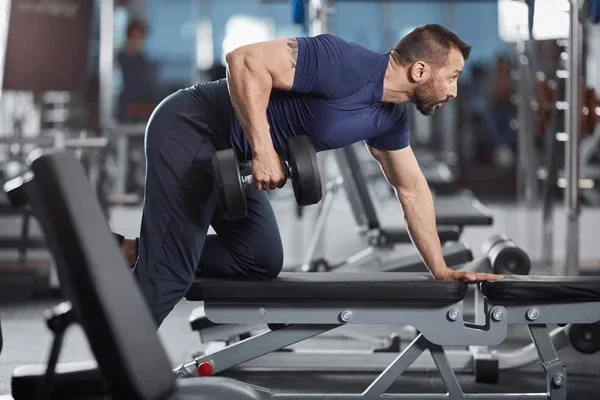
The single-arm row lets you focus on one side at a time, which is great for fixing imbalances. Place one hand and knee on a bench or chair, hold a dumbbell in the other hand, and row it up to your hip. Keep your elbow close to your body and rotate your torso slightly at the top.
Dumbbell Reverse Fly
This exercise targets the rear delts and rhomboids. Lean forward slightly with a dumbbell in each hand and raise your arms out to the sides until they are parallel to the floor. Control the movement on the way down. This is a great finisher for your upper back.
Dumbbell Shrugs
Shrugs are one of the simplest yet most effective trap exercises. Stand tall, hold a dumbbell in each hand, and lift your shoulders toward your ears. Hold for a second at the top, then lower slowly. Do not roll your shoulders backward, as this reduces tension on the traps.
Dumbbell Pullover
The pullover is a unique exercise that stretches and builds the lats and serratus muscles. Lie on a flat bench or the floor, hold one dumbbell with both hands above your chest, and lower it slowly behind your head. Bring it back to the starting position with control. This movement also engages your core and chest, making it a great multi-muscle exercise.
Prone Dumbbell Row
Lie face down on an incline bench or the floor and row the dumbbells up toward your hips. This variation removes momentum and forces your back muscles to do all the work. It is excellent for building thickness in your mid-back.
Sample Dumbbell Back Workout Routine
Here is a simple but effective routine you can do at home. It hits all the major back muscles in about 30 to 40 minutes.
| Exercise | Sets | Reps | Rest |
|---|---|---|---|
| Bent Over Dumbbell Row | 4 | 10-12 | 60 sec |
| Single-Arm Dumbbell Row | 3 | 10-12 each side | 60 sec |
| Dumbbell Reverse Fly | 3 | 12-15 | 45 sec |
| Dumbbell Shrugs | 3 | 12-15 | 45 sec |
| Dumbbell Pullover | 3 | 10-12 | 60 sec |
Start with lighter weights to nail your form. Once you can complete all sets with good technique, increase the weight by 5 to 10 pounds. This principle of progressive overload is essential for building back muscle over time.
Common Mistakes to Avoid
Even the best exercises can become ineffective if you make these common errors:
- Using too much momentum: Swinging the dumbbells reduces tension on your back muscles. Slow down and control every rep.
- Rounding your lower back: This puts unnecessary stress on your spine. Keep a slight arch and hinge at the hips.
- Shrugging your shoulders up to your ears during rows: This recruits your traps too much and takes work away from your lats. Keep your shoulders down and back.
- Neglecting the mind-muscle connection: Focus on squeezing your back muscles at the peak of each movement. Do not just go through the motions.
- Skipping warm-ups: Cold muscles are more prone to injury. Spend 5 to 10 minutes doing light cardio and dynamic stretches before your workout.
Tips for Building a Bigger Back at Home
Building a muscular back at home requires more than just picking up dumbbells. Here are some expert-backed tips that make a real difference.
Train your back twice per week. This frequency gives your muscles enough stimulus to grow while allowing adequate recovery. Spread your sessions across the week, leaving at least 48 hours between workouts.
Vary your grip and angle. Changing your hand position or body angle shifts the focus to different parts of your back. A wide grip targets the upper lats, while a narrow grip emphasizes the mid-back and teres muscles.
Add tempo training. Slowing down the eccentric (lowering) phase of each rep increases time under tension, which is a key driver of muscle growth. Try a 3-second lowering phase on your rows.
Do not ignore your posterior chain. Your lower back and glutes work together as a unit. Strengthening your erector spinae with exercises like back extensions and good mornings with dumbbells supports better performance in all your pulling movements.
Track your workouts. Write down the weights, sets, and reps you use each session. This helps you apply progressive overload systematically and ensures you are always making progress.
How to Structure Your Weekly Routine
A well-rounded weekly plan balances your back with other muscle groups. Here is a simple split that works well for home training:
- Day 1 (Push): Chest, shoulders, and triceps
- Day 2 (Pull): Back and biceps with dumbbells
- Day 3 (Rest or cardio): Light activity or active recovery
- Day 4 (Legs): Quads, hamstrings, and glutes
- Day 5 (Pull): Back and biceps again
- Days 6-7 (Rest): Full recovery
On pull days, your back workout with dumbbells can follow the sample routine above. Add a couple of bicep exercises to complete the session. This balanced approach ensures no muscle group gets neglected.
Quick Tips for Maximum Back Gains
- Always start with a weight you can control for the full range of motion.
- Focus on squeezing your shoulder blades together during every row.
- Breathe out on the pull and inhale on the release.
- Use a mirror or record yourself to check your form.
- Pair back exercises with bicep work for a complete upper body session.
- Rest 60 to 90 seconds between sets for optimal muscle building.
- Stay hydrated and eat enough protein to support muscle recovery.
Final Thoughts
Training your back with dumbbells at home is one of the most efficient ways to build strength, improve posture, and develop a powerful physique. You do not need a fancy gym or complicated equipment. The exercises in this guide, combined with consistent effort and proper form, will deliver real results.
Start with the sample routine, focus on your technique, and gradually increase the challenge over time. Your back is a large muscle group that responds well to consistent training. Stay patient, stay dedicated, and you will see the difference. Now grab those dumbbells and get to work!
Frequently Asked Questions
Can I build a strong back with just dumbbells at home?
Absolutely. Dumbbells allow you to target every major back muscle through exercises like rows, shrugs, and pullovers. You do not need machines or a gym membership to build a strong, muscular back at home.
How often should I train my back with dumbbells?
Training your back 2 to 3 times per week is ideal for most people. This gives your muscles enough stimulus to grow while allowing proper recovery between sessions. Listen to your body and adjust as needed.
What weight dumbbells do I need for a back workout?
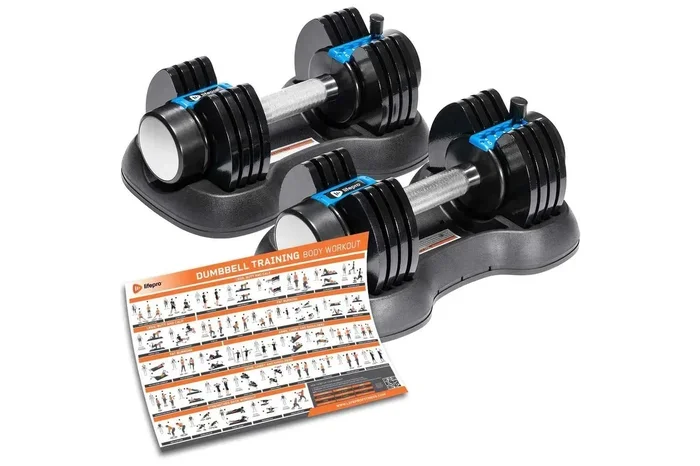
Start with a weight that challenges you for 10 to 12 reps while maintaining good form. As you get stronger, increase the weight gradually. Adjustable dumbbells are a great investment for home training.
Are dumbbell back exercises effective for beginners?
Yes, dumbbell exercises are excellent for beginners because they allow you to learn proper form with manageable weights. Start light, focus on technique, and progressively increase the load over several weeks.
Can dumbbell back exercises help with posture?
Definitely. Strengthening your rhomboids, traps, and erector spinae with dumbbell exercises pulls your shoulders back and supports a more upright posture. This is especially helpful for people who sit for long hours.
How long does it take to see results from dumbbell back training?
Most people notice improvements in strength within 2 to 3 weeks. Visible muscle changes typically appear after 4 to 6 weeks of consistent training combined with proper nutrition and recovery.
=== CONCLUSION ===
Training back with dumbbells at home gives you everything you need: convenience, effectiveness, and real results. The exercises covered in this guide target every part of your back, from the lats to the traps to the lower spinal muscles. By following the sample routine, avoiding common mistakes, and staying consistent, you will build a stronger, more defined back without ever leaving your house.
Remember, progress comes from showing up regularly and challenging yourself gradually. Pick up those dumbbells, apply what you have learned, and enjoy the journey to a stronger back.