How to Put Air in the Bike Tire

Knowing how to put air in your bike tire is one of the simplest yet most important skills for every cyclist. This guide walks you through choosing the right pump, identifying your valve type, and reaching the correct tire pressure. You will also learn common mistakes to avoid and quick fixes when you are on the go.
Every cyclist needs to know how to put air in a bike tire. It sounds simple, right? But plenty of people get stuck at the pump. They wrestle with valves, guess at pressure levels, or worse, damage their tires by making a mistake. This guide removes all the guesswork. You will learn exactly what to do, which tools to use, and how to keep your tires in great shape every single time.
Whether you ride a road bike, a mountain bike, or a simple commuter bike, the basics of bike tire inflation stay the same. The difference is in the valve type and the recommended tire pressure. Once you understand those two things, you are golden. Let us dive in and make you a pro at this essential bike maintenance task.
Key Takeaways
- Know your valve type: Schrader and Presta valves require different pump attachments and inflation techniques.
- Check tire pressure before every ride: Proper inflation improves safety, speed, and tire life.
- Use the right pump: A floor pump with a pressure gauge gives the best results at home.
- Avoid overinflation and underinflation: Both can cause flats, poor handling, and unnecessary tire wear.
- Portable options exist: Hand pumps and CO2 inflators work great for on-the-go emergencies.
- Maintenance matters: Regularly inspect valves, rims, and tire beads to keep your setup working smoothly.
- Follow manufacturer guidelines: Every tire has a recommended PSI range printed on the sidewall.
📑 Table of Contents
- Why Proper Tire Inflation Matters
- Understanding Your Bike Tire Valve
- Tools You Need to Inflate a Bike Tire
- Step-by-Step: How to Put Air in Your Bike Tire
- Common Mistakes People Make When Inflating Bike Tires
- How Much Air Should You Put In?
- When and How to Inflate Tires on the Go
- Keeping Your Tires in Top Shape
- Conclusion
Why Proper Tire Inflation Matters
Getting the right amount of air in your bike tire is not just about convenience. It directly affects how your bike feels, how safe it is, and how long your tires last. Underinflated tires create extra rolling resistance, which makes pedaling harder. Overinflated tires ride harsh and are more likely to blow out on rough surfaces.
Here is why inflation matters so much:
- Safety: Properly inflated tires grip the road better and reduce the risk of pinch flats.
- Speed: Correct tire pressure PSI lets you roll faster with less effort.
- Comfort: The right pressure absorbs bumps and gives you a smoother ride.
- Tire Life: Tires that are always at the right pressure wear evenly and last longer.
- Control: You handle your bike better when the tires have the proper amount of bike tire air.
Think of it like shoes. If your shoes are too tight or too loose, your whole experience changes. Tires work the same way. They need the right amount of support to perform their best.
Understanding Your Bike Tire Valve
Before you grab a pump, you need to know what kind of valve your tire has. There are two main types, and each one works a little differently. Let us break them down.
Schrader Valves
The Schrader valve is the wider, shorter valve that looks like the kind on a car tire. You will find these on most hybrid bikes, mountain bikes, and children’s bikes. They have a small pin in the center that you press to release air. Inflating a Schrader valve is straightforward because most pumps fit them without any adapter.
Here is what to know about Schrader valves:
- They are durable and easy to find pump fittings for.
- The air chuck presses straight onto the valve.
- You can use a gas station air pump in a pinch.
- A screw-on dust cap protects the valve from dirt.
Presta Valves
The Presta valve is thinner and taller. You will usually find these on road bikes and higher-end bikes. They have a small nut at the top that you must loosen before inflating. The valve opens when you press the small pin inside the top.
Key things to know about Presta valves:
- They hold air better because of their narrow design.
- You need a special pump head or an adapter to fit a standard pump.
- The locknut must be loosened before you start pumping.
- They are more fragile than Schrader valves, so handle them gently.
If you are unsure which valve you have, just look at the tire. The difference is obvious at a glance. Check out our detailed guide on Presta valves for more specific tips on inflating them correctly.
Tools You Need to Inflate a Bike Tire
You do not need a lot of gear to inflate a bike tire. A few basic tools make the job quick and easy. Here is what you should have on hand.
Floor Pump with a Pressure Gauge
A floor pump is the best tool for home use. It inflates tires fast and has a built-in tire pressure gauge so you can hit the exact PSI you need. Look for a pump that has a dual head — one side fits Schrader valves and the other fits Presta valves. This way, you are ready for any tire.
Hand Pump (Portable)
A hand pump is small enough to carry on rides. It is perfect for emergencies. However, hand pumps take more effort because they have a smaller barrel. You will need to pump more strokes to reach the right tire pressure. Some hand pumps also include a pressure gauge, which is very helpful.
CO2 Inflator
A CO2 inflator uses small cartridges of compressed carbon dioxide to fill a tire fast. These are popular among road cyclists and mountain bikers who want a quick fix on the trail. They are lightweight and compact. The downside is that you cannot control the pressure as precisely, and the cartridges are single-use.
Air Compressor
If you have access to an air compressor, you can inflate your tires quickly at home. Just be careful not to overinflate. Compressors deliver air fast, so check the pressure often. Here is a helpful guide on filling air in bike tires at home if you want more details on using a compressor safely.
Step-by-Step: How to Put Air in Your Bike Tire
Now for the part you have been waiting for. Here is the exact process to follow every time you inflate your tires. Follow these steps and you will never second-guess yourself again.
Step 1: Remove the Valve Cap
Start by twisting off the small cap on top of the valve. Put it somewhere safe so you do not lose it. The cap protects the valve from dirt and dust, so keep it in your pocket or bag.
Step 2: Check the Current Pressure
If your pump has a gauge, press it onto the valve and read the current pressure. This tells you how much air you need to add. If you do not have a gauge, press the valve with your thumb. It should feel firm but slightly give. If it feels completely soft, you need a lot of air.
Step 3: Attach the Pump Correctly
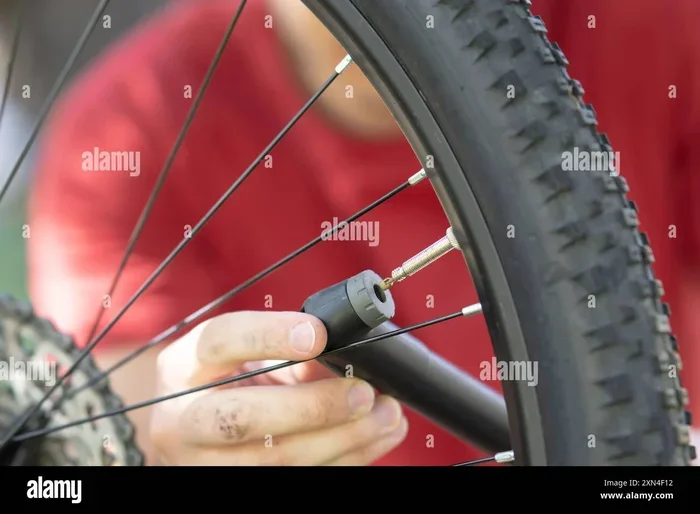
For a Schrader valve, line up the pump head and press down firmly until it clicks into place. For a Presta valve, loosen the locknut first, then attach the pump head that fits Presta valves. Make sure the seal is tight so no air escapes during pumping.
Need help with this step? This guide covers pump attachment in detail and shows exactly how to get a snug fit every time.
Step 4: Pump to the Recommended PSI
Look at the sidewall of your tire for the recommended PSI range. It usually looks something like “40-65 PSI” or “80-130 PSI.” Start pumping and check the gauge frequently. Stop when you reach the middle of the recommended range, then adjust as needed.
Use smooth, steady strokes. Do not slam the pump handle down hard. A controlled, steady rhythm works best and protects the valve.
Step 5: Detach the Pump and Replace the Cap
Once you reach the right pressure, pull the pump head off quickly and straight up. You should hear a small hiss — that is normal. Immediately screw the valve cap back on. This keeps dirt out and seals the valve properly.
Step 6: Check the Pressure Again
Give the tire a quick squeeze or check the gauge one more time. This final check confirms everything is in order. If the pressure dropped a lot when you removed the pump, you may have a small leak or a loose valve connection.
Common Mistakes People Make When Inflating Bike Tires
Even experienced riders sometimes make mistakes at the pump. Here are the most common errors and how to avoid them.
- Overinflating the tire: This is the number one mistake. Too much pressure makes the tire rigid, reduces traction, and increases the risk of a blowout. Always stay within the recommended PSI range.
- Underinflating the tire: Low pressure causes the tire to squirm on turns and increases the chance of pinch flats. Your tires lose air slowly over time, so check them often.
- Forgetting to loosen the Presta locknut: If you do not loosen the nut, air cannot enter the tire no matter how hard you pump. Always double-check this step for Presta valves.
- Using the wrong pump head: Forcing a pump head that does not fit can damage the valve. Make sure your pump matches your valve type or use an adapter.
- Ignoring the recommended PSI: Every tire is different. What works for your mountain bike will not work for your road bike. Always check the sidewall markings.
- Not checking for leaks: If you keep losing air, there may be a slow leak in the tire, the tube, or the valve. Inspect these areas regularly.
Quick Tip: If you are ever unsure about the right pressure, start at the lower end of the recommended range and add air gradually. You can always add more, but you cannot take it out easily without a pressure release tool.
How Much Air Should You Put In?
The right amount of air depends on your tire size, your bike type, and your personal preference. The manufacturer prints the recommended range on the tire sidewall, and that is your best starting point.
Here is a general guide:
- Road bike tires: Usually 80-130 PSI. Higher pressure reduces rolling resistance for speed.
- Mountain bike tires: Typically 30-65 PSI. Lower pressure gives better grip on trails.
- Hybrid bike tires: Often 50-70 PSI. A balance between comfort and efficiency.
- Gravel bike tires: Usually 40-80 PSI depending on terrain and rider weight.
Your body weight also plays a role. Heavier riders generally need slightly higher pressure to avoid bottoming out. Lighter riders can often run lower pressure for more comfort and grip.
If you want a deeper dive into this topic, check out our guide on how much air to put in a bike tire. It covers PSI ranges for different bike types in full detail.
Also, keep in mind that temperature affects tire pressure. Air expands when it is hot and contracts when it is cold. You may notice your tires feel softer in winter and firmer in summer. This is completely normal and just part of regular bike maintenance.
When and How to Inflate Tires on the Go
Sometimes you are miles from home and your tire goes flat. Knowing how to handle this situation is a lifesaver. Carrying a portable pump or a CO2 inflator in your saddlebag or jersey pocket can save your ride.
Here is what to do when you are on the road:
- Find a safe spot away from traffic.
- Remove the wheel if needed (practice this at home first).
- Check the tire for any visible damage like glass, thorns, or cuts.
- Attach your hand pump or CO2 inflator to the valve.
- Inflate to the minimum safe pressure to get you home or to a bike shop.
- Replace the wheel and continue riding carefully.
For more on inflating tires without a traditional pump, read our guide on putting air in a bike tire without a pump. It covers creative solutions for emergency situations.
Keeping Your Tires in Top Shape
Inflating your tires is just one part of tire care. Regular maintenance keeps your tires performing well and helps you avoid flat tires altogether.
Here are a few simple habits to build:
- Check pressure before every ride: A quick squeeze takes only a few seconds.
- Inspect the tire surface: Look for embedded debris, cuts, or worn treads.
- Clean the valves: Wipe them down to prevent dirt buildup that can cause leaks.
- Replace tires when needed: Worn tread and frequent flats mean it is time for new tires.
- Store your bike indoors: Temperature swings cause air pressure changes and can weaken tires over time.
These small habits add up over time. They keep your bike rolling smoothly and save you from unexpected breakdowns on the road or trail.
Conclusion
Learning how to put air in your bike tire is one of the easiest and most valuable skills you can develop as a cyclist. It takes just a few minutes, requires minimal tools, and makes a huge difference in how your bike rides. You will feel safer, go faster, and get more miles out of your tires when you keep them properly inflated.
Remember the basics: know your valve type, use the right pump, check the recommended PSI, and make it a habit to check your pressure before every ride. Whether you use a floor pump at home or a hand pump on the trail, the process is the same. Attach, pump, check, cap. That is all it takes.
Now that you have this knowledge, get out there and give your tires the air they need. Your bike — and your rides — will thank you for it.
Frequently Asked Questions
How do I know if my bike tire needs air?
The easiest sign is a soft or squishy tire when you press it with your thumb. You may also notice that your bike feels sluggish, harder to pedal, or less responsive in turns. Some tires have a pressure gauge on the valve stem, but most do not, so a regular squeeze test works well. Make it a habit to check before every ride.
Can I use a gas station air pump for my bike tire?
Yes, you can, but with caution. Gas station pumps work best with Schrader valves. The air flow is very strong, so you can easily overinflate your tire. Use short bursts and check the pressure frequently. Always stay within the recommended PSI range printed on your tire sidewall.
How often should I inflate my bike tires?
You should check your tire pressure before every ride. Tires naturally lose air slowly over time, sometimes losing 1-2 PSI per day. Road tires tend to lose air faster than mountain bike tires. If you ride frequently, a weekly inflation check is a good baseline routine.
What is the difference between a Schrader and a Presta valve?
A Schrader valve is wider and has a spring-loaded pin in the center. It looks like a car tire valve. A Presta valve is thinner, taller, and has a small locknut at the top. Presta valves are common on road bikes and require a special pump head or adapter. Both are reliable, but Presta valves are better at holding air pressure over time.
Can I overinflate a bike tire?
Yes, overinflation is a real risk. Too much air makes the tire rigid, reduces traction, and increases the chance of a blowout, especially on rough roads or trails. Always inflate within the PSI range listed on the tire sidewall. If you are unsure, start at the lower end and add air gradually.
What should I do if my tire keeps losing air?
A tire that keeps losing air may have a slow leak. Check for embedded debris like glass or thorns, inspect the valve for damage, and look at the tire bead for cracks. You can also submerge the tube in water and look for bubbles to find the leak. If the valve is faulty, replacing it or the entire tube is usually the quickest fix.