How to Maintain Car Batteries
Car battery maintenance is simple and essential for keeping your vehicle running reliably. Regular cleaning, testing, and proper charging can extend your battery life by years and prevent costly replacements. This guide covers everything you need to know about how to maintain car batteries in easy, actionable steps.
Key Takeaways
- Inspect terminals regularly: Corrosion on battery terminals is the number one cause of starting problems
- Keep it clean and dry: Dirt and moisture accelerate battery drain and terminal damage
- Test voltage often: A healthy battery reads 12.6 volts or higher when fully charged
- Drive regularly: Short trips do not give your battery enough time to recharge fully
- Replace on schedule: Most car batteries last 3 to 5 years with proper care
- Store properly in winter: Cold weather is the biggest enemy of battery health
📑 Table of Contents
Why Car Battery Maintenance Matters
Your car battery is the heart of your vehicle’s electrical system. It powers everything from the ignition to your headlights. Yet most drivers ignore it until something goes wrong. A dead battery can leave you stranded on a cold morning or in the middle of a busy road.
Learning how to maintain car batteries takes just a few minutes each month. The payoff is huge. You avoid unexpected breakdowns. You save money on replacements. You keep your vehicle running smoothly all year long.
Battery health directly affects your daily driving experience. A weak battery means slow cranking. It means dim lights. It means unreliable performance in cold weather. Simple maintenance habits can prevent all of these problems.
Most car owners replace their batteries every 3 to 5 years. But with proper car battery maintenance, you can push that timeline further. You can also catch problems early before they become expensive repairs.
How Long Does a Car Battery Last?
The average car battery lasts between 3 and 5 years. However, this varies based on driving habits, climate, and maintenance. Drivers in hot climates often experience shorter battery life. Cold weather also takes a toll on battery health.
Regular testing helps you track your battery’s condition over time. Many auto parts stores offer free battery testing. This is an easy way to monitor your battery health without any special tools.
How To Inspect Your Car Battery
A visual inspection is the first step in battery care. You should check your battery at least once a month. This only takes a few minutes and requires no special skills.
What To Look For
Start by opening the hood and locating your battery. Look for these key signs:
- Corrosion on terminals: White or blue-green powdery buildup around the posts
- Swollen case: A battery that looks puffy or bloated may be failing
- Leaking fluid: Any visible liquid dripping from the battery is a red flag
- Damaged cables: Frayed or cracked wires connected to the battery
- Loose connections: Terminals that wiggle or feel unstable
If you notice any of these issues, address them right away. Early detection prevents bigger problems down the road.
Checking Battery Fluid Levels
Some car batteries have removable caps that let you check the fluid inside. The electrolyte level should cover the lead plates. If the level is low, you may need to add distilled water.
Always wear gloves and safety glasses when checking fluid levels. Battery acid is corrosive and can cause burns. If your battery is sealed and maintenance-free, skip this step entirely.
Cleaning And Corrosion Prevention
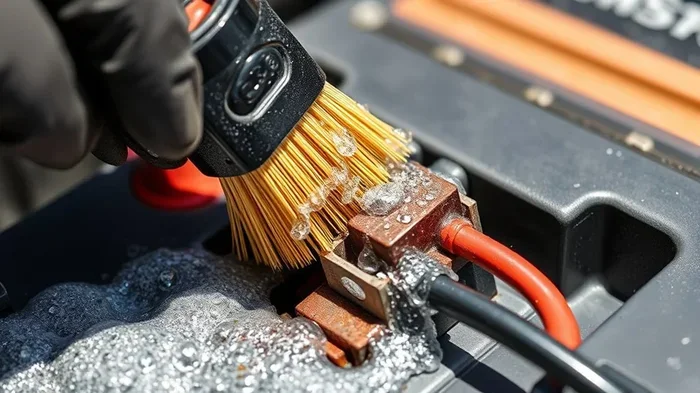
Battery corrosion is the most common problem car owners face. It appears as a chalky, white or greenish substance around the terminals. Corrosion builds up over time and can block the electrical connection.
How To Clean Battery Terminals
Cleaning your battery terminals is straightforward. Here is what you need and how to do it:
- Disconnect the negative cable first, then the positive cable
- Mix baking soda with water to create a paste
- Apply the paste to the corroded areas
- Let it sit for 5 to 10 minutes
- Scrub gently with a wire brush or old toothbrush
- Wipe clean with a damp cloth
- Dry the terminals completely
- Reconnect the positive cable first, then the negative
After cleaning, apply a thin layer of petroleum jelly or terminal grease. This creates a protective barrier against future corrosion.
Quick Tips
- Always disconnect the negative cable first to prevent short circuits
- Use a battery terminal cleaner brush for best results
- Check your battery cables for fraying while you are at it
Common Mistakes When Cleaning
Many people make avoidable errors during battery cleaning. Here are the mistakes to skip:
- Using too much water, which can cause further corrosion
- Forgetting to disconnect the cables before cleaning
- Using metal tools that can scratch the terminals
- Ignoring the root cause of the corrosion
Testing Your Battery Health
Regular battery testing tells you exactly where your battery stands. You do not need to be a mechanic to do this. A simple multimeter or battery tester gives you clear answers.
Using A Multimeter
A multimeter measures your battery voltage. Here is how to use one:
- Turn off your car and all electrical accessories
- Set the multimeter to DC voltage
- Touch the red probe to the positive terminal
- Touch the black probe to the negative terminal
- Read the display
A reading of 12.6 volts means your battery is fully charged. A reading below 12.4 volts means it needs charging. Anything below 12.0 volts signals a weak or dying battery.
Understanding Your Alternator
The alternator charges your battery while the engine runs. If your alternator fails, your battery will drain quickly. Testing the alternator is a separate process, but it is just as important for overall car battery care.
You can test the alternator by measuring voltage at the battery terminals while the engine is running. A healthy alternator should produce 13.8 to 14.4 volts. If the reading is lower, your alternator may need attention.
Charging And Storage Best Practices
Proper charging habits extend your battery life significantly. Many drivers unknowingly damage their batteries through poor charging practices.
How To Use A Battery Charger
A battery charger is a valuable tool for any car owner. Use it when your vehicle sits idle for long periods. Follow these steps for safe charging:
- Place the charger on a flat, stable surface
- Connect the positive clamp to the positive terminal first
- Connect the negative clamp to a metal ground point on the engine
- Set the charger to the correct voltage (usually 12V)
- Charge until the charger indicates a full battery
- Disconnect the negative clamp first, then the positive
Never leave a charger connected overnight without a smart charger that auto-shuts off. Overcharging can damage your battery and create safety hazards.
Cold Weather Battery Care
Cold weather is tough on batteries. Low temperatures slow down the chemical reactions inside the battery. This reduces your battery’s ability to hold a charge. A cold weather battery with a high cold cranking amp (CCA) rating performs better in winter.
Consider using a battery maintainer or trickle charger during winter months. This keeps your battery at full charge even when the car is not driven regularly. Parking in a garage also helps protect the battery from extreme cold.
Expert Insight
Battery sulfation occurs when a battery sits too long at a low charge. The sulfate crystals build up on the plates and reduce capacity. Using a maintainer charger prevents this common problem and keeps your battery ready to go.
When To Replace Your Battery
Even with the best care, every battery eventually needs replacement. Knowing the signs of a failing battery saves you from being stranded.
Warning Signs Your Battery Needs Replacing
Watch for these clear signals that your battery replacement is coming:
- The engine cranks slowly when you turn the key
- Your dashboard lights dim when the engine is off
- The battery is more than 4 years old
- You need frequent jump-starts
- The case shows visible swelling or cracking
- The check engine light comes on
How To Choose The Right Replacement
Not all batteries are the same. When shopping for a replacement, consider these factors:
| Factor | What To Look For |
|---|---|
| Group Size | Matches your vehicle’s specifications |
| CCA Rating | Higher is better for cold climates |
| Reserve Capacity | Higher means longer backup power |
| Battery Type | Standard lead-acid or AGM for modern vehicles |
| Warranty | Longer warranty signals better quality |
Always check your owner’s manual for the recommended battery group size. Installing the wrong size can cause fitment issues and performance problems.
Proper Battery Disposal
Old car batteries contain toxic chemicals and must be recycled properly. Never throw them in the trash. Most auto parts stores accept used batteries for recycling. Some shops will even take your old battery when you purchase a new one.
Handling an old battery requires care. Wear gloves and avoid tipping it, as acid can leak. Transport it upright in a secure container to prevent spills.
Simple Maintenance Schedule
Consistency is the key to long-lasting battery life. Here is a simple battery maintenance schedule you can follow:
- Weekly: Quick visual check for any visible damage or leaks
- Monthly: Inspect terminals for corrosion and clean if needed
- Every 3 months: Test battery voltage with a multimeter
- Every 6 months: Check alternator output and cable connections
- Annually: Full battery load test at an auto parts store
Following this schedule takes very little time. But it adds up to significant benefits. You will notice fewer starting problems and a longer overall battery life.
Quick Tips For Busy Drivers
If you do not have time for a full inspection, remember these three quick habits:
- Turn off all lights and accessories before shutting off the engine
- Take your car on a longer drive at least once a week
- Keep your battery terminals clean and tight
These small actions make a big difference over time. They keep your battery voltage stable and your electrical system running strong.
Frequently Asked Questions
How often should I check my car battery?
You should visually inspect your battery at least once a month. A full battery test with a multimeter should be done every three months. If you live in an extreme climate, check more frequently. Hot and cold temperatures both accelerate battery wear.
Can I jump-start my car in the rain?
Yes, you can jump-start your car in the rain, but you must take extra precautions. Keep all cables and clamps away from standing water. Make sure your hands and the battery terminals are dry before connecting the cables. Always follow the proper connection order to avoid sparks.
What causes battery corrosion?
Battery corrosion is caused by acid vapor escaping from the battery and reacting with the metal terminals. It happens naturally over time but is worsened by overcharging, high temperatures, and cracked battery cases. Regular cleaning and terminal grease application help prevent buildup.
Does driving short trips hurt my battery?
Yes, short trips can hurt your battery. The alternator needs time to fully recharge the battery after a start. Short drives do not give it enough time. If you mainly take short trips, consider using a battery maintainer charger to keep your battery topped off.
How do I know if my alternator is bad?
Signs of a failing alternator include dimming headlights, a warning light on your dashboard, and a dead battery that keeps going flat even after charging. You can also test the voltage at the battery terminals while the engine is running. A reading below 13.5 volts usually indicates an alternator problem.
Is it safe to clean battery terminals with baking soda?
Yes, baking soda and water is a safe and effective way to clean battery terminals. The mild abrasive and alkaline properties of baking soda neutralize the acid corrosion. Just make sure to rinse the area with a damp cloth afterward and dry it completely before reconnecting the cables.