How to Fill Bike Tire with Air Compressor

Filling your bike tire with an air compressor is fast, easy, and saves you from walking home with a flat. This guide walks you through everything you need to know about using an air compressor to inflate your bike tire, from choosing the right equipment to avoiding common errors. You will learn the step-by-step process, essential safety tips, and expert advice to keep your tires properly inflated every time.
There is nothing worse than a flat bike tire when you are about to head out for a ride. Whether you are commuting to work or heading out on a weekend trail, a deflated tire can ruin your whole day. The good news is that filling your bike tire with an air compressor is quick, simple, and something anyone can do at home.
Using an air compressor to inflate your bike tire saves you time and effort. You do not need to carry a heavy floor pump on long rides anymore. With the right setup and a few basic steps, your tire will be fully inflated in just a couple of minutes. In this guide, we walk you through everything you need to know, from picking the right equipment to avoiding common mistakes.
Key Takeaways
- Fast and Convenient: An air compressor fills your bike tire in minutes, making it ideal for quick top-ups and emergency situations.
- Know Your Valve Type: Different valves (Presta and Schrader) require different adapters, so check your valve before you start.
- Check Pressure First: Always use a tire gauge to verify the correct PSI before inflating to avoid overfilling.
- Avoid Common Mistakes: Overinflation, using the wrong fitting, and ignoring the valve type are the most frequent errors.
- Maintenance Matters: Regularly checking and maintaining tire pressure extends the life of your tires and improves your ride.
- Safety First: Never exceed the recommended PSI and always stand clear of the compressor hose during inflation.
📑 Table of Contents
Why Use an Air Compressor to Fill Your Bike Tire?
Many cyclists still rely on traditional hand pumps or floor pumps to inflate their tires. But an air compressor offers several clear advantages. First, it is incredibly fast. What takes several minutes with a hand pump takes less than a minute with a compressor. Second, most garages and homes already have one, so you do not need to buy extra equipment.
Another big benefit is consistency. Air compressors deliver steady compressed air, which helps you reach the exact tire pressure you need without extra effort. This is especially helpful when you need to inflate multiple tires or check your PSI levels frequently. If you want to learn more about the basics, check out our guide on how to use an air compressor to fill bike tire for a deeper dive.
Using an air compressor for bike tires also means you can handle emergencies on the spot. A portable compressor fits in your trunk or workshop, making it easy to inflate bike tires wherever you are. This is a game changer for anyone who deals with flats often or rides in areas far from bike shops.
Speed and Efficiency
Time is your biggest asset, especially when you are in a hurry. An air compressor can go from completely flat to fully inflated in under two minutes for most bike tires. Compare that to the several minutes of pumping with a hand or floor pump. The efficiency of a compressor means less downtime and more time riding.
Precision and Control
Most modern air compressors come with pressure gauges built in. This lets you monitor the tire pressure in real time as you inflate. You can stop exactly at the recommended PSI without guessing. Overinflating a tire is just as bad as underinflating it, so having this level of control is essential for safety and performance.
What You Need Before You Start
Before you plug in your compressor, make sure you have everything ready. Gathering your tools ahead of time makes the whole process smoother and faster. Here is a simple checklist of what you will need.
Essential Equipment
- Air compressor: A standard portable or garage compressor works great. Make sure it has enough power to reach the PSI levels your bike tire requires.
- Inflation adapter: This is the small fitting that connects the compressor hose to your bike valve. You may need a Presta adapter, a Schrader adapter, or a universal one.
- Tire gauge: Even if your compressor has a built-in gauge, a separate tire gauge gives you a second opinion and helps you double-check the air pressure.
- Valve cap: Do not lose this small piece. It keeps dirt and debris out of your valve.
Know Your Valve Type
Bike tires use two main types of valves: Presta valves and Schrader valves. Presta valves are slim and tall, commonly found on road bikes and higher-end bikes. Schrader valves are shorter and wider, similar to what you see on car tires. Knowing which one you have is important because you will need the correct adapter to connect your compressor hose properly.
If you are unsure about your valve type, check the bike tire sidewall or look at the valve stem. Presta valves have a small nut at the top that you unscrew before inflating. Schrader valves have a spring-loaded pin in the center. Using the wrong adapter can damage your valve or cause air leaks, so take a moment to confirm before you start.
Step-by-Step Guide to Filling Your Bike Tire with an Air Compressor
Now that you have your equipment and know your valve type, it is time to fill your tire. Follow these steps carefully for a safe and effective inflation every time.
Step 1: Remove the Valve Cap
Start by unscrewing the valve cap and setting it aside in a safe place. The cap protects the valve from dirt and moisture. Without it, debris can work its way into the valve and cause slow leaks over time. Keep the cap somewhere you will not lose it.
Step 2: Check the Current Tire Pressure
Before you add any air, check what your tire pressure currently is. Press the tire gauge against the valve stem and read the display. This tells you how much air you need to add. You can find the recommended PSI range on the sidewall of the bike tire. Typical road bike tires need 80 to 130 PSI, while mountain bike tires usually require 30 to 50 PSI.
For more information on the right pressure for your specific tire, see our article on how much air to put in a bike tire to get the exact numbers for your setup.
Step 3: Attach the Adapter and Hose
Screw the appropriate adapter onto the valve stem. For Presta valves, you will usually need a small converter that screws onto the valve. For Schrader valves, the adapter pushes on directly. Once the adapter is secure, connect the compressor hose to the adapter. You should hear a slight click when it locks into place.
Step 4: Start Compressing
Turn on the air compressor and let it run. Hold the hose steady and keep the adapter firmly pressed against the valve. Watch the pressure gauge on the compressor or your separate tire gauge as the air pressure rises. Add air in short bursts rather than one long continuous fill. This gives you better control and helps you avoid overinflation.
Step 5: Check the Pressure
After adding a small amount of air, pause and check the tire pressure with your gauge. Compare the reading to the recommended PSI on the tire sidewall. Keep adding air in short bursts until you reach the target pressure. Do not rely solely on the compressor gauge, as these can sometimes be slightly off.
Step 6: Disconnect and Replace the Cap
Once you reach the correct pressure, turn off the compressor. Carefully pull the hose away from the adapter. You may hear a small hiss of air escaping, which is completely normal. Screw the valve cap back on tightly. Give the tire a quick visual check to make sure the tire bead is seated properly all the way around the rim.
Step 7: Do a Final Check
After inflating, give the tire a gentle squeeze to feel the firmness. Push down on the bike and see how it feels. The tire should feel firm but give slightly under pressure. If it feels too hard or too soft, adjust the air pressure accordingly. A properly inflated tire makes your ride smoother, faster, and safer.
Common Mistakes to Avoid When Using an Air Compressor
Even though filling a bike tire with a compressor is straightforward, people make mistakes that can cause problems. Here are the most common ones and how to avoid them.
Overinflating the Tire
This is the number one mistake. Overinflation can cause the tire to blow off the rim, which is dangerous and can damage your rim and tire. Always inflate to the recommended PSI range and never exceed the maximum pressure listed on the tire sidewall. If you are unsure, it is better to add a little less air than too much.
Using the Wrong Adapter
Forcing the wrong adapter onto your valve can strip the threads or damage the valve stem. Make sure you have the correct adapter for your valve type. If you have a Presta valve, do not use a Schrader adapter without the proper converter. Taking the extra few seconds to get the right fitting saves you from costly repairs.
Ignoring Air Leaks
If you hear a hissing sound while inflating, stop and check the connection. A loose adapter or a damaged valve can cause air to leak out. Tighten the adapter or replace the valve core if needed. Ignoring small leaks means you will never get the right tire pressure, and your ride will suffer.
Skipping the Tire Gauge
Some people rely only on the compressor gauge and skip using a separate tire gauge. Compressor gauges are not always accurate. Using a dedicated tire gauge gives you a reliable reading and helps you maintain the correct inflation level every time.
Expert Tips for Better Results
Here are some pro tips that will make your inflation process even smoother and help you get the best performance out of your tires.
Check Tire Pressure Before Every Ride
Get into the habit of checking your tire pressure before each ride. Tires naturally lose air over time, sometimes as much as 2 PSI per week. A quick check takes only a few seconds and can prevent flats, improve your rolling speed, and make your ride more comfortable. If you often forget, keep your gauge and compressor in the same spot so it becomes part of your routine.
Use a Portable Compressor for On-the-Go Inflation
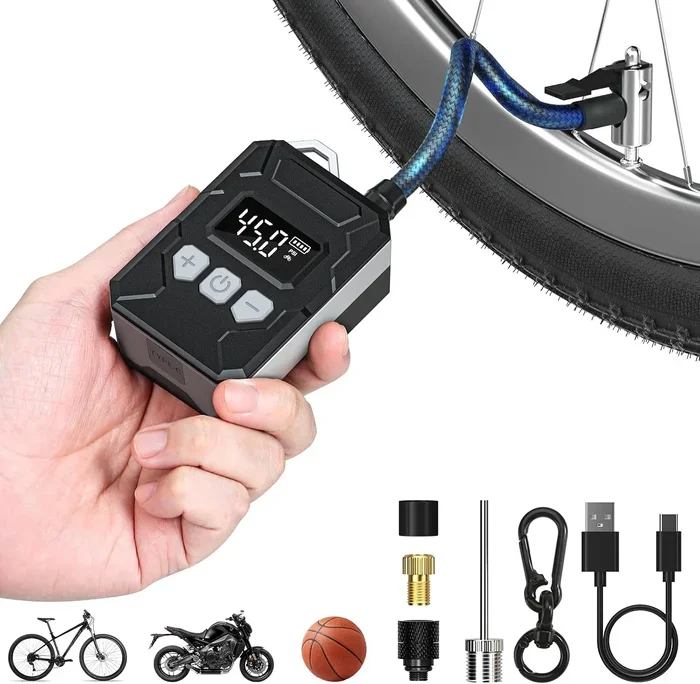
Portable compressors are small, lightweight, and perfect for carrying on rides or keeping in your car. They are a great alternative to putting air in a bike tire without a pump and give you the same speed and precision as a larger garage unit. A portable compressor can be a lifesaver on long rides when you get a flat far from home.
Keep Your Valves Clean
Dirt and grime can build up around the valve stem and prevent a proper seal with the adapter. Wipe the valve area clean before each inflation. This small habit goes a long way in preventing slow leaks and ensuring accurate pressure readings every time.
Know When to Replace Your Tire
Even with perfect inflation habits, tires wear out over time. If you notice your tire losing air frequently despite no visible punctures, it might be time for a replacement. Worn tires also have less grip and are more prone to flats. Keep an eye on the tread and the sidewall for signs of wear.
How to Know When Your Bike Tire Needs Air
Checking your tire pressure regularly is important, but how do you know when it is time to add air? There are a few simple signs that your tire is running low. First, if the bike feels sluggish or harder to pedal, the tires might be underinflated. Second, a visual check can reveal a tire that looks slightly soft or has a slight wobble when you squeeze it. Third, if you hear a faint squishing sound when riding on smooth surfaces, that is a clear sign your tire needs more air.
The best practice is to check your tire pressure at least once a week with a tire gauge. Do not wait until the tire is completely flat. Regular checks help you catch slow leaks early and keep your ride smooth and safe. For more guidance on recognizing low tire pressure, check out our article on how to tell if a bike tire needs air.
If you ever find yourself in a situation where you do not have access to a compressor or pump, there are still ways to get air into your tire. You can use a CO2 inflator, a manual hand pump, or even put air in a bike tire without a pump using alternative methods. Knowing your options gives you confidence no matter where your ride takes you.
For road bike riders specifically, maintaining the right pressure is even more critical because road tires have higher PSI requirements. Check out our guide on how to fill up air in road bike tires for road-specific tips and recommendations.
Remember, proper tire inflation affects everything from your speed and handling to your comfort and safety. Taking a few extra minutes to fill and check your tires correctly makes a huge difference in every ride. An air compressor is one of the best tools you can have for this job, and with the steps outlined above, you are fully equipped to do it right every single time.
Frequently Asked Questions
Can I use any air compressor to fill my bike tire?
Most standard air compressors work fine for bike tires. Just make sure the compressor can reach the PSI range your tire requires. Portable compressors are especially convenient for cyclists who want a quick and easy inflation solution on the go.
What is the difference between a Presta and Schrader valve?
Presta valves are slim and tall, commonly found on road bikes. Schrader valves are shorter and wider, similar to car tire valves. You need the correct adapter for each type when using an air compressor to avoid damaging the valve or causing air leaks.
How often should I check my bike tire pressure?
You should check your tire pressure at least once a week. Tires naturally lose air over time, and riding on underinflated tires can cause flats, poor handling, and increased rolling resistance. A quick check before each ride is the best habit to build.
What happens if I overinflate my bike tire?
Overinflation can cause the tire to blow off the rim, which is dangerous and can damage your wheel. It also reduces traction and makes for a harsh, uncomfortable ride. Always inflate to the recommended PSI range listed on the tire sidewall.
Do I need a special adapter to use an air compressor with my bike tire?
Yes, you typically need an inflation adapter that matches your valve type. Presta valves require a Presta-to-compressor adapter, while Schrader valves may need a different fitting. Using the right adapter ensures a secure seal and proper inflation every time.
Is it better to use an air compressor or a hand pump for bike tires?
An air compressor is faster and more convenient, especially for emergency inflation or topping up tires before a ride. A hand pump gives you more control and is better for precise pressure adjustments. Both tools have their place, and many cyclists keep both on hand.
=== CONCLUSION ===
Filling your bike tire with an air compressor is one of the easiest and most useful skills a cyclist can learn. It saves time, keeps your rides smooth, and helps you avoid the frustration of a flat tire. By following the steps in this guide, you can confidently inflate any bike tire at home or on the go.
Remember to check your valve type, use the right adapter, and never exceed the recommended PSI. Regular maintenance and proper tire pressure will keep your bike running at its best for miles to come. Keep your compressor and gauge in an easy-to-reach spot, and make tire checks part of your riding routine.
With the right tools and a little practice, you will never have to worry about a flat tire slowing you down again. Happy riding!