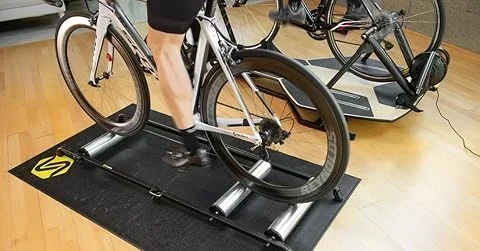
How to Do Cardio on a Stationary Bike

Doing cardio on a stationary bike is one of the easiest and most effective ways to boost your fitness. This guide covers everything from setting up your bike and finding the right intensity to building a routine that actually works. Whether you are a complete beginner or looking to level up, you will find practical tips to get moving and burn calories.
Key Takeaways
- Stationary bike cardio is low impact and joint-friendly: It is a great option for people of all fitness levels who want to protect their knees while getting a solid workout.
- Heart rate zones are key to effective training: Knowing your target zones helps you train smarter, not harder, and burn more calories during every session.
- Interval training boosts results fast: Alternating between high and low intensity keeps your workouts exciting and maximizes fat burning.
- Proper bike setup prevents injury: Adjusting your seat and handlebars correctly makes a huge difference in comfort and performance.
- Consistency beats intensity: A regular routine with steady effort delivers better long-term results than sporadic intense sessions.
📑 Table of Contents
How to Do Cardio on a Stationary Bike
Cardio on a stationary bike is one of the simplest ways to improve your health. You do not need a gym membership. You do not need fancy equipment. All you need is a bike, some space, and the willingness to start moving. Whether you are recovering from an injury or just getting back into fitness, a stationary bike makes it easy to build a cardio exercise routine that fits your life.
Indoor cycling has exploded in popularity over the last few years. And it is easy to see why. It is convenient, it is effective, and it is gentle on your joints. A stationary bike workout can help you burn calories, strengthen your heart, and build endurance without pounding your knees and ankles like running does. In this guide, we will walk you through everything you need to know to get started and keep improving.
The beauty of indoor cycling is that you can tailor every session to your goals. Want to lose weight? You can focus on longer, steady rides. Want to build endurance? You can push your workout intensity with intervals. The flexibility is what makes the stationary bike such a powerful tool for cardiovascular health. Let us dive in and explore how to make the most of your time on the bike.
Why Choose a Stationary Bike for Cardio?
Not everyone loves running on a treadmill. And that is perfectly okay. A stationary bike offers a low impact cardio alternative that still delivers serious results. Your feet stay in the pedals, which means less stress on your joints. This makes it ideal for people with knee pain, arthritis, or those who are carrying extra weight.
Here are some of the top reasons to choose a stationary bike for your endurance training:
- Joint-friendly exercise: Unlike running or jumping, cycling puts minimal strain on your knees and hips.
- Convenient and accessible: You can hop on your bike anytime, rain or shine, without leaving your home.
- Easy to track progress: Most modern bikes display speed, distance, calories burned, and heart rate.
- Safe for beginners: You cannot fall off a stationary bike, which makes it less intimidating for fitness beginners.
- Burns calories efficiently: A solid session can help you achieve significant calorie burn in a short amount of time.
If you are serious about your health, adding regular bike sessions to your exercise plan is a smart move. You do not have to choose between effectiveness and safety. A stationary bike gives you both.
Setting Up Your Stationary Bike Correctly
Before you start pedaling, take a few minutes to set up your bike properly. A good setup improves your comfort and prevents injuries. It also helps you pedal more efficiently so you can go longer without feeling fatigued.
Adjusting the Seat Height
Your seat height is the most important adjustment. When you sit on the bike with your heels on the pedals, your legs should be fully extended. When you switch to the balls of your feet (the normal pedaling position), you should have a slight bend in your knees. If your seat is too low, your knees will ache. If it is too high, you will rock your hips side to side.
Not sure how to get it right? Check out our detailed guide on how to adjust the seat on a stationary bike for step-by-step instructions. A proper seat position also helps you maintain the right pedal speed throughout your ride.
Setting the Handlebar Position
Your handlebars should be at a height where your arms feel relaxed. If they are too low, you will put unnecessary strain on your back and shoulders. For a more upright and comfortable position, raise the handlebars. For a more aggressive riding posture, lower them slightly. The goal is to feel stable and relaxed from the very first pedal stroke.
Foot Placement and Pedal Straps
Place the ball of your foot over the pedal axle. This gives you the most power and the most comfort. If your bike has toe clips or pedal straps, use them. They help you pull up during the pedal stroke, which makes your cycling routine more efficient. Just make sure they are snug but not too tight.
Understanding Heart Rate Zones for Stationary Bike Cardio
One of the best ways to make your stationary bike workout more effective is to train in the right heart rate zone. Your heart rate tells you how hard your body is working. By staying in the correct zone, you can burn more fat, build endurance, and avoid overtraining.
What Are Heart Rate Zones?
Heart rate zones are ranges of heartbeats per minute that correspond to different levels of exercise intensity. Here is a simple breakdown:
- Zone 1 (50-60% of max heart rate): Very light. This is your warm-up zone. You can easily hold a conversation.
- Zone 2 (60-70% of max heart rate): Moderate. This is the fat-burning zone. Perfect for steady-state rides.
- Zone 3 (70-80% of max heart rate): Hard. You are building cardiovascular endurance here.
- Zone 4 (80-90% of max heart rate): Very hard. This is where interval training lives.
- Zone 5 (90-100% of max heart rate): Maximum effort. Only for short bursts and advanced athletes.
How to Find Your Target Heart Rate
A simple formula is to subtract your age from 220. That gives you your estimated maximum heart rate. From there, you can calculate your zones. For example, if you are 35 years old, your max heart rate is about 185 beats per minute. Your fat-burning zone (Zone 2) would be between 111 and 130 bpm.
Many stationary bikes come with built-in heart rate monitors. Some even have handles with sensors on them. If you want more accurate readings, consider using a chest strap or a wrist-based heart rate monitor. Training in the right zone makes every minute on the bike count toward your fitness goals.
Building a Stationary Bike Cardio Routine
Now that your bike is set up and you understand heart rate zones, it is time to build a routine. The best part about indoor cycling is that you can customize every session to match your current fitness level and goals.
Beginner Routine: Steady State Riding
If you are just starting out, steady state riding is your best friend. This means pedaling at a consistent, moderate pace for an extended period. Here is a simple routine to try:
- Warm up: Pedal slowly for 5 minutes at a relaxed pace.
- Main ride: Maintain a steady, moderate effort for 15 to 20 minutes. Aim for Zone 2.
- Cool down: Reduce your pace gradually for 5 minutes. Let your heart rate come back down.
As you get more comfortable, you can extend the main ride to 30 or even 40 minutes. The key is consistency. Showing up regularly matters more than going all out in a single session. If you want more ideas for building an effective routine, check out our article on how to get a good workout on stationary bike.
Intermediate Routine: Adding Intervals
Once you have built a base level of fitness, intervals can take your cardio exercise to the next level. Intervals alternate between high-effort bursts and recovery periods. This type of training boosts your metabolism and improves your cardiovascular fitness faster than steady riding alone.
Here is a sample interval workout:
- Warm up: 5 minutes of easy pedaling.
- Interval 1: 30 seconds of fast pedaling (Zone 4), followed by 90 seconds of easy pedaling (Zone 2). Repeat 6 times.
- Interval 2: 1 minute of moderate-hard pedaling (Zone 3), followed by 1 minute of easy pedaling. Repeat 4 times.
- Cool down: 5 minutes of slow pedaling.
For a deeper dive into interval training techniques, read our guide on how to do interval training on a stationary bike. Intervals keep your workouts exciting and help you break through plateaus.
Advanced Routine: HIIT on the Bike
If you are already fit and looking for a serious challenge, high-intensity interval training (HIIT) is the way to go. HIIT pushes you into Zone 4 and Zone 5 with short, intense bursts followed by very short recovery periods. These workouts are short but incredibly effective.
A typical HIIT session lasts only 20 to 25 minutes, but the afterburn effect means you continue burning calories long after you stop pedaling. For specific HIIT protocols and tips, our article on how to do HIIT training on a stationary bike covers everything you need to know.
How to Maximize Your Calorie Burn
Most people start cycling on a stationary bike because they want to burn calories. And who can blame them? It is one of the most efficient ways to create a calorie deficit and work toward your weight loss goals. But how do you actually maximize the burn?
Increase Resistance Gradually
One of the simplest ways to boost your calorie burn is to increase the resistance on your bike. Higher resistance means your muscles work harder, which means you burn more energy. Start with a comfortable level and increase it every few minutes. Do not jump to maximum resistance right away, or you risk straining your muscles.
Focus on Pedal Cadence
Your pedal cadence, or the speed at which you turn the pedals, plays a big role in how many calories you burn. A cadence of 60 to 80 RPM is great for steady-state rides. For interval training, you can push up to 100 RPM or more during the high-effort bursts. Finding the right balance between resistance and speed is what makes a stationary bike workout truly effective.
If you are curious about how different speeds and durations affect your calorie burn, we have detailed guides on topics like how to burn more calories on a stationary bike and how long on a stationary bike to burn 500 calories. These resources can help you plan sessions that match your specific goals.
Use Full Body Engagement
Do not just focus on your legs. Engage your core by keeping your abs tight while you ride. Use your upper body by lightly gripping the handlebars and keeping your posture upright. This full-body engagement not only burns more calories but also improves your balance and coordination over time.
Common Mistakes to Avoid
Even though a stationary bike is simple to use, people make mistakes that can slow their progress or lead to injury. Here are some common errors to watch out for:
- Skipping the warm-up: Jumping straight into high intensity without warming up can strain your muscles and joints. Always start with 5 minutes of easy pedaling.
- Riding with poor posture: Slouching or hunching over the handlebars puts unnecessary strain on your back and neck. Sit up tall and keep your shoulders relaxed.
- Setting the seat too low: A seat that is too low puts extra pressure on your knees. Take the time to get the height right before every session.
- Neglecting resistance: Pedaling with no resistance is like driving with your foot off the gas. Add enough resistance to challenge your muscles.
- Overtraining: Doing intense sessions every single day without rest can lead to burnout and injury. Rest days are just as important as workout days.
Avoiding these mistakes will help you stay consistent and make steady progress. Remember, the best workout is the one you can do safely and regularly over the long term.
Quick Tips for Better Stationary Bike Cardio
Here are some quick, actionable tips to get more out of every session:
- Stay hydrated: Keep a water bottle nearby and take small sips throughout your ride.
- Wear proper shoes: Athletic shoes with a firm sole give you better support and pedaling efficiency.
- Use music or podcasts: A good playlist or an interesting podcast can make your workout fly by.
- Track your progress: Use a notebook or an app to log your rides, distances, and how you felt.
- Cool down properly: Always end with 5 minutes of easy pedaling and some light stretching.
- Mix up your routines: Alternate between steady rides, interval sessions, and HIIT to keep things fresh and challenge different muscle groups.
Conclusion
Doing cardio on a stationary bike is one of the smartest choices you can make for your health. It is accessible, effective, and kind to your joints. Whether you are a complete beginner or a seasoned athlete, there is always a way to challenge yourself and see results. Start with a proper setup, train in the right heart rate zones, and build a routine you actually enjoy. Consistency is the secret ingredient. Show up, do the work, and trust the process. Your heart, your lungs, and your body will thank you.
Now that you have all the tools and knowledge, it is time to hop on that bike and start moving. Your best cardio workout is just a pedal stroke away.
Frequently Asked Questions
How long should I do cardio on a stationary bike each session?
For beginners, 20 to 30 minutes per session is a great starting point. As your fitness improves, you can gradually increase to 45 or 60 minutes. The key is to listen to your body and build up slowly. Consistency matters far more than duration.
Is 30 minutes of stationary bike cardio enough to lose weight?
Thirty minutes of moderate-intensity cycling can burn a significant number of calories, especially when combined with a healthy diet. The exact number depends on your weight, intensity level, and resistance settings. For more specific guidance on calorie burn, check out our article on how to calculate calories burned on a stationary bike.
Can I do stationary bike cardio every day?
You can do light to moderate stationary bike cardio most days of the week. However, it is important to include rest days or lighter recovery rides to allow your muscles and joints to recover. Overtraining can lead to burnout and injury, so balance is key.
What is the best time of day to do cardio on a stationary bike?
The best time is whenever you can consistently show up. Some people prefer morning rides to energize their day, while others find evening sessions help them unwind. The most important factor is making it a regular habit that fits your lifestyle.
Do I need to warm up before a stationary bike cardio session?
Yes, warming up is essential. A 5-minute easy pedal at low resistance prepares your muscles, increases blood flow, and reduces the risk of injury. Skipping the warm-up is one of the most common mistakes people make, and it can lead to muscle strain and poor performance.
How can I make my stationary bike cardio more challenging?
You can increase the challenge by raising the resistance, adding interval bursts, increasing your pedal cadence, or extending the duration of your ride. Mixing these elements together in a single session creates a well-rounded and progressively challenging workout that keeps your body adapting and improving.