How to Air Up a Road Bike Tire
Learning how to air up a road bike tire is one of the simplest skills every cyclist needs. This guide walks you through valve types, the right PSI levels, and the best tools to get your tires ready for the road. Whether you use a hand pump or an air compressor, you will find clear steps that make the process fast and easy. Keep your ride smooth, safe, and efficient with our expert tips.
Key Takeaways
- Know your valve type: Presta and Schrader valves require different approaches to inflate road bike tires correctly.
- Check the recommended PSI: Road bike tires typically need higher pressure than other bike types for optimal performance.
- Use the right tool: A floor pump, hand pump, or air compressor all work, but each has its own advantages.
- Check pressure before every ride: Regularly checking tire pressure prevents flats and improves your ride quality.
- Avoid common mistakes: Overinflating or underinflating can damage your tire and affect your safety on the road.
- Maintain your pump and valves: Proper care of your inflation tools ensures consistent results every time.
📑 Table of Contents
- How to Air Up a Road Bike Tire
- Why Tire Pressure Matters for Road Bikes
- Understanding Valve Types: Presta vs. Schrader
- Tools You Need to Inflate a Road Bike Tire
- Step-by-Step: How to Air Up Your Road Bike Tire
- Common Mistakes to Avoid When Inflating Road Bike Tires
- Expert Tips for Maintaining Your Road Bike Tire Pressure
- Frequently Asked Questions
- Conclusion
How to Air Up a Road Bike Tire
Riding a road bike feels amazing. The wind in your face, the smooth pavement beneath you, and the quiet hum of well-inflated tires. But here is the thing many riders forget: proper tire pressure makes all the difference. A tire that is not fully inflated can slow you down, feel sluggish, and even cause a flat. That is why knowing how to air up a road bike tire is such an essential skill.
Whether you are a beginner just getting into cycling or a seasoned rider who wants to sharpen your routine, this guide has you covered. We will walk you through every step in plain, simple language. You will learn about valve types, the right pressure levels, the best tools to use, and common mistakes to avoid. By the end, you will feel confident handling your bike tires like a pro.
The process of inflating a road bike tire is not complicated. It takes just a few minutes once you understand the basics. Let us dive in and get your tires ready for the road.
Why Tire Pressure Matters for Road Bikes
Road bike tires are narrow and designed to roll fast on smooth surfaces. To perform at their best, they need the right amount of air. Too little pressure and your tire will drag against the road. Too much and you lose grip and comfort. Finding the sweet spot is the key to a great ride.
How PSI Affects Your Ride
PSI stands for pounds per square inch. This is the unit we use to measure tire pressure. Most road bike tires recommend a range between 80 and 130 PSI. The exact number depends on your tire width, your weight, and the riding conditions. You can usually find the recommended bike tire PSI printed on the side of the tire.
When your tires are properly inflated, you will notice several benefits:
- Faster rolling speed on paved roads
- Better cornering grip and control
- Lower rolling resistance, which saves energy
- Reduced risk of flats from pinch punctures
- A smoother, more comfortable ride
On the other hand, riding with low tire pressure can cause your tube to pinch against the rim. This is called a pinch flat or snake bite. It is one of the most common reasons cyclists get a flat tire on the road. Keeping your bike tire air at the right level prevents this problem entirely.
When to Check Your Tire Pressure
Air slowly leaks from bike tires over time. Even a brand new tube can lose a few PSI per day. This means you should check your pressure before every ride. It only takes a few seconds and can save you from a lot of trouble on the road.
If you want to learn more about how to tell when your tire needs air, check out our guide on how to tell if a bike tire needs air. It covers the visual and tactile signs of low pressure.
Understanding Valve Types: Presta vs. Schrader
Before you start pumping air, you need to know what kind of valve your road bike has. There are two main types, and each one works a little differently. Understanding your valve is the first step to successfully inflating your tire.
Presta Valves
Presta valves are the most common type on road bikes. They are slender and tall, with a small nut at the top that you must open before inflating. To use a Presta valve, follow these steps:
- Remove the valve cap.
- Unscrew the small brass nut at the top.
- Press the valve stem down firmly to release any air lock.
- Attach your pump head to the valve.
- Inflate to the desired pressure.
- Screw the nut back down and replace the cap.
Many riders prefer Presta valves because they are lightweight and hold air well. If you want a deeper dive into this valve type, our article on how to air up a Presta valve bike tube offers detailed instructions.
Schrader Valves
Schrader valves look like the valves on car tires. They are shorter and wider, with a spring-loaded pin in the center. You do not need to unscrew anything before attaching a pump. Simply push the pump head onto the valve and start inflating. Schrader valves are less common on road bikes but still found on some models and hybrid bikes.
How to Tell Which Valve You Have
It is easy to tell the difference. If the valve is thin and has a nut on top, it is a Presta. If it looks like a car tire valve, it is a Schrader. Knowing this simple difference saves time and frustration at the bike shop or on the side of the road.
Tools You Need to Inflate a Road Bike Tire
You do not need a lot of fancy equipment to air up a road bike tire. A few basic tools will get the job done quickly and reliably. Let us look at the most common options.
Floor Pump
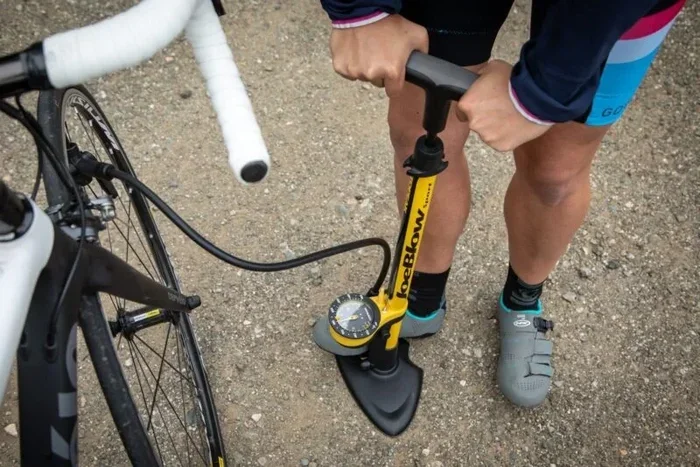
A floor pump is the go-to tool for most cyclists. It sits on the ground, has a long hose, and delivers a lot of air with each stroke. Most floor pumps come with a pressure gauge so you can monitor your tire pressure as you pump. They are fast, efficient, and perfect for home use.
When choosing a floor pump, make sure it has a head that fits both Presta and Schrader valves. Many modern pumps come with an adjustable head that works with both types.
Hand Pump
A hand pump is compact and portable. It is a great option for carrying on rides or keeping in your bike bag. Hand pumps take more effort than floor pumps, but they get the job done in an emergency. If you want to learn more about using one, see our guide on how to air up bike tires with a hand pump.
Air Compressor
An air compressor is the fastest way to inflate a road bike tire. You can find them at most gas stations and bike shops. However, be careful when using one. Compressors can inflate a tire very quickly, and it is easy to overinflate if you are not paying attention. If you want to try this method, our article on how to air up a bike tire with an air compressor provides helpful safety tips and step-by-step guidance.
CO2 Inflators
CO2 inflators use small cartridges of carbon dioxide to quickly fill a tire. They are popular among race cyclists and commuters who need a fast solution. CO2 inflators are lightweight and compact, but the cartridges are single-use. They are a great backup option to keep in your saddlebag.
Step-by-Step: How to Air Up Your Road Bike Tire
Now that you know your valve type and have your tool ready, let us walk through the full process. Follow these steps and you will have your tires properly inflated in no time.
Step 1: Remove the Wheel
For most road bikes, you will need to remove the wheel to access the valve more easily. Use your quick-release lever or thru-axle to detach the wheel from the frame. Set the bike on its handlebars and seat so it stays upright while you work.
Step 2: Remove the Valve Cap
Take off the small plastic or metal cap on top of the valve. Set it aside in a safe place so you do not lose it. The cap protects the valve from dirt and debris, so keep it handy for when you are done.
Step 3: Check the Current Pressure
If your pump has a gauge, attach it to the valve and note the current pressure. This tells you how much air you need to add. If you do not have a gauge, you can press the valve with your thumb to feel how firm the tire is.
Step 4: Attach the Pump Head
Connect your pump head to the valve. For Presta valves, make sure the pump head is fully seated over the valve stem. For Schrader valves, push the head down firmly until it clicks into place. A good seal is essential for efficient pumping.
Step 5: Pump Air
Start pumping in smooth, steady strokes. If you are using a floor pump, this should feel easy and rhythmic. Keep an eye on the pressure gauge and stop when you reach the recommended PSI for your tire. For most road tires, this is somewhere between 80 and 130 PSI.
If you are using an air compressor to fill bike tire at a gas station, use short bursts and check the pressure frequently. Compressors can inflate a tire much faster than a hand pump, so stay alert.
Step 6: Remove the Pump and Replace the Cap
Once you reach the target pressure, carefully remove the pump head. You should hear a small hiss of air, which is completely normal. Screw the valve nut back down if you have a Presta valve, and replace the valve cap on both types.
Step 7: Reattach the Wheel
Put the wheel back on the bike. Make sure it is seated properly in the dropouts and that the quick-release or thru-axle is tight. Give the tire a quick spin to make sure it is running straight and true.
Common Mistakes to Avoid When Inflating Road Bike Tires
Even experienced riders sometimes make mistakes when inflating their tires. Knowing what to avoid saves time, prevents damage, and keeps you safe on the road.
Overinflating the Tire
This is one of the most common errors. Overinflating a road bike tire makes the ride harsh and uncomfortable. It also reduces your contact patch with the road, which means less grip. In extreme cases, an overinflated tire can blow off the rim, which is very dangerous. Always stay within the recommended PSI range printed on the tire sidewall.
Underinflating the Tire
Riding with low pressure causes the tire to flex too much. This creates excess rolling resistance and makes you work harder. It also increases the chance of pinch flats and can cause the tire to come off the rim during hard cornering. Make it a habit to check your pressure before every ride.
Using the Wrong Pump Head
Not all pump heads fit all valves. Using the wrong attachment can damage the valve or fail to create a proper seal. Always check that your pump head matches your valve type before you start pumping.
Forgetting to Release Air When Switching Valves
If you ever need to switch from one pump head to another while the tire is inflated, release a small amount of air first. This relieves the pressure on the valve and makes it much easier to detach the pump head without damaging the valve stem.
Expert Tips for Maintaining Your Road Bike Tire Pressure
Keeping your tires properly inflated is not a one-time task. It is part of regular road bike maintenance that keeps your ride safe and efficient. Here are some expert tips to help you stay on top of your tire pressure.
- Get a good pressure gauge. A quality gauge takes the guesswork out of inflation. Many modern floor pumps include built-in gauges that are accurate and easy to read.
- Know your recommended pressure range. Every tire is different. Check the sidewall for the manufacturer’s recommended PSI range and choose a pressure that suits your weight and riding style.
- Carry a hand pump or CO2 inflator on rides. flats happen to everyone. Having a portable inflation tool with you means you can handle a flat and get back on the road quickly.
- Check pressure at least once a week. Even if you do not ride every day, air escapes slowly from tires over time. A weekly check keeps your tires in top shape.
- Store your bike in a cool, dry place. Temperature changes affect air pressure inside tires. A bike stored in a garage that gets hot in the afternoon may have higher pressure than one stored in a cool basement.
If you are preparing your bike for a trip, you might also want to learn about how to pack a road bike for air travel. Proper packing protects your tires and wheels during transit.
Frequently Asked Questions
How often should I air up my road bike tires?
You should check your tire pressure before every ride. Air naturally escapes from tubes over time, so even if you ride frequently, a quick check each time ensures your tires are always at the right pressure. Most riders benefit from a full inflation session at least once a week.
Can I use a car tire pump to air up a road bike tire?
You can, but it requires caution. Car tire pumps deliver a large volume of air quickly, which makes it easy to overinflate a road bike tire. If you must use one, add air in short bursts and monitor the pressure closely with a gauge. A dedicated bike pump is always the safer and more precise option.
What happens if I overinflate my road bike tire?
Overinflating makes the tire very hard, which reduces comfort and grip. The ride becomes harsh, especially on rough roads. In worst cases, the tire can blow off the rim, which is dangerous. Always stay within the PSI range recommended by the tire manufacturer.
Do I need a special pump for Presta valves?
Most modern bike pumps work with both Presta and Schrader valves. They come with adjustable heads or interchangeable adapters. If your pump does not fit a Presta valve, you can buy a cheap Presta adapter that screws onto the valve and allows you to use any standard pump head.
How do I know the right PSI for my road bike tire?
Look at the sidewall of your tire. The manufacturer prints a recommended PSI range there. Your weight, riding style, and road conditions all play a role in choosing the right pressure within that range. Heavier riders generally need higher pressure, while lighter riders can go lower for more comfort.
Is it normal for road bike tires to lose air quickly?
A small amount of air loss is normal. Tubes lose a few PSI per day even without a puncture. If your tire is losing air very quickly, you may have a slow leak or a small puncture. In that case, remove the tube, inflate it, and listen for escaping air to find the leak. You can also submerge the tube in water and look for bubbles.
Conclusion
Learning how to air up a road bike tire is one of the most valuable skills you can develop as a cyclist. It is quick, simple, and makes a huge difference in how your bike feels and performs. From understanding your valve type to choosing the right pump and hitting the correct PSI, every step matters.
Make it a habit to check your tire pressure before every ride. Keep a quality pump at home and a portable option in your bike bag. Avoid the common mistakes of overinflation and underinflation, and your tires will last longer and perform better.
Your road bike is a precision machine, and properly inflated tires are the foundation of every great ride. Take a few minutes today to check your pressure, and you will feel the difference on your next outing. Happy riding!