Moving an elliptical isn’t as simple as picking it up and going. The cost typically ranges from $200 to $1,000+, heavily influenced by distance, stairs, and disassembly needs. While DIY moving seems cheaper, professional movers offer safety and convenience, often worth the investment for this heavy, awkward gym equipment. Understanding all potential fees and preparing properly are key to avoiding surprise bills and ensuring your machine arrives safely.
Key Takeaways
- Base Costs Vary Widely: Expect to pay $200-$400 for a simple local carry or $400-$1,000+ for long-distance moves with stairs and disassembly.
- DIY Savings Come with Major Risks: Renting a truck ($50-$200) and doing it yourself avoids labor fees but risks injury and costly damage to your elliptical or home.
- Professional Movers Include Value: Their price covers disassembly, tools, insurance, transport, and reassembly, providing peace of mind for complex moves.
- Hidden Fees Inflate the Price: Stairs, long carries, elevator fees, and improper disassembly by unproven movers can add $100-$300+ to your quote.
- Preparation is Non-Negotiable: Measuring doorways, clearing paths, and having the model manual ready saves time and prevents damage, whether you DIY or hire pros.
- Insurance is Critical: Always verify the mover’s liability coverage and consider your own renter’s/homeowner’s policy for full protection of your expensive equipment.
- Get Multiple, Detailed Quotes: An in-home or video estimate is essential for accuracy. Compare itemized breakdowns, not just total cost.
[FEATURED_IMAGE_PLACEHOLDER]
📑 Table of Contents
- So, You’re Moving Your Elliptical: The Big Question
- The Core Factors That Dictate Your Final Price
- DIY Moving vs. Hiring the Pros: A True Cost-Benefit Analysis
- Unmasking Hidden Fees and Unexpected Costs
- How to Save Money (Without Sacrificing Safety)
- The Essential Pre-Move Checklist: Your Preparation Guide
- The Final Word: Is It Worth the Investment?
So, You’re Moving Your Elliptical: The Big Question
You’ve invested in your health, committed to your routine, and that elliptical has become a trusted partner in your fitness journey. Then comes the news: you’re moving houses. The excitement of a new home quickly gets tangled with a very practical, very heavy problem. How on earth are you going to move that giant, awkward piece of metal and plastic? And more importantly, what’s the cost to move an elliptical? This isn’t like moving a couch. An elliptical is a precision machine with sensitive electronics, electronic displays, and moving parts that can be easily thrown out of alignment. The price you pay depends on a puzzle of factors, from the number of stairs in your old apartment to whether your new basement has a tight turn. Let’s break down every single piece of that puzzle so you can budget accurately, avoid nasty surprises, and get your fitness gear safely set up in your new space.
The Core Factors That Dictate Your Final Price
Think of the cost to move an elliptical as a recipe. The base ingredients are distance and labor, but the spices—stairs, disassembly, and access issues—can dramatically change the flavor and the price tag. Professional moving companies don’t just look at the item; they assess the entire journey from point A to point B. Understanding these variables empowers you to get accurate quotes and identify where you might save money.
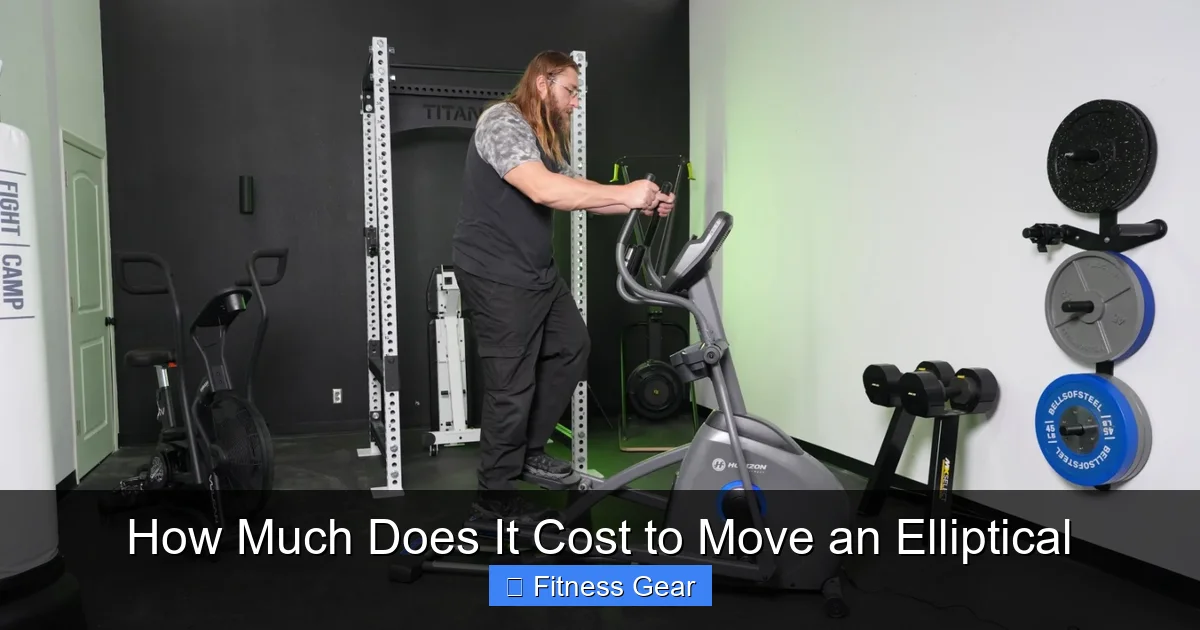
Visual guide about How Much Does It Cost to Move an Elliptical
Image source: barbend.com
Distance: Local vs. Long-Distance Moves
This is the most obvious driver. A local move within the same city or town is billed by the hour, typically with a minimum. For an elliptical, expect 1-3 hours of labor for a simple ground-floor-to-ground-floor move. The cost to move an elliptical locally often falls between $200 and $500, depending on the other factors below.
Long-distance moves—anything crossing state lines or over 50-100 miles—are priced by weight and distance. An elliptical can weigh 150-300 pounds. While the weight charge is part of it, the “linehaul” cost (the base transport fee) dominates. For a cross-country move, you could be looking at $600 to $1,500 or more, especially if it’s part of a larger household shipment where it’s just one item on a pallet.
The Staircase Tax: Why Flights Matter
Stairs are the single biggest price inflator for moving heavy fitness equipment. Movers call this a “flight fee.” There’s no industry standard, but most companies charge per flight, often $50-$100 per flight each way (out of the old place and into the new one). So, if you have a basement elliptical at your old house (one flight down) and you’re moving it to a second-floor bedroom in your new home (two flights up), that’s three flights total. Just the stair fee could add $150-$300 to your bill. Spiral staircases or very narrow, winding stairs may incur even higher charges or be deemed impassable by some movers, requiring creative solutions like hoisting through a window.
Disassembly & Reassembly: A Necessary Evil?
Most standard residential ellipticals are not designed to be moved in one piece. The arms, console, stride assembly, and sometimes even the main frame are meant to be taken apart. If you don’t have the original tools and manual, this becomes a significant hurdle.
- Professional Service: Most full-service movers will include basic disassembly and reassembly in their quote. However, complex models with internal wiring or electronic connections might require a specialist, which can be an extra $50-$150.
- DIY Approach: If you’re brave, you can do this yourself ahead of time. You’ll need socket wrenches, screwdrivers, and Ziploc bags for hardware. This saves labor costs but adds your time and risk of improper re-assembly, which can ruin the machine’s alignment.
Pro Tip: Search online for “[Your Elliptical Brand & Model] assembly manual PDF.” Brands like NordicTrack, ProForm, and Schwinn often have digital copies. Having this on your phone on moving day is a lifesaver.
Access and “Extra Long Carry” Fees
How far can the movers park the truck? The standard “carry” is often 50-75 feet from the truck to the door. If your elliptical is in a back room, down a long hallway, or your home is set far back from the street, you’ll be charged an “extra long carry” fee, typically $1-$2 per foot over the standard distance. Similarly, if there are obstacles like multiple doors, tight corners, or the need to go through a garage, these can add time and cost.
The Weight and Size Factor
A heavy, commercial-grade elliptical will cost more to move than a lightweight, compact home model. Weight directly impacts the number of movers needed (usually 2-3 for an elliptical) and the equipment they use (furniture dollies, moving pads, a forearm forklift). Very large or heavy models might require a specialized appliance dolly or even a freight elevator in an apartment building, which has its own fee.
DIY Moving vs. Hiring the Pros: A True Cost-Benefit Analysis
This is the central debate. The appeal of saving a few hundred dollars by doing it yourself is strong. But for an elliptical, the risks are uniquely high. Let’s compare the real cost to move an elliptical via each method.

Visual guide about How Much Does It Cost to Move an Elliptical
Image source: fitnessfactor.com
The DIY Route: What You Actually Pay For
It’s not just a truck rental. Here’s a typical DIY cost breakdown for a local move:
- Truck Rental (U-Haul, Penske, etc.): $30-$100 per day, plus mileage and fuel. For a half-day, you’re looking at $50-$200.
- Moving Supplies: Heavy-duty moving pads/blankets ($20-$50), ratchet straps ($30-$60), a furniture dolly ($40-$80 to buy or $15-$30 to rent). Total: $50-$150.
- Your Time & Labor: The hidden cost. This is a 2-4 hour job for two able-bodied people, involving lifting, maneuvering, and potential disassembly/reassembly. It’s physically grueling.
- Risk Cost: This is the big one. Dropping an elliptical can shatter the console, bend the frame, or misalign the internal flywheel. Repair costs start at $200 and can exceed $1,000. Damaging a doorframe, wall, or staircase can mean expensive repairs. A personal injury from improper lifting could lead to medical bills far outweighing any professional mover’s fee.
Total DIY Estimate: $150-$500 in direct cash outlay, plus immense personal risk and time investment.
The Professional Mover Route: What’s Included in the Quote
A quote from a reputable company that handles fitness equipment will typically be all-inclusive for the labor and transport:
- Disassembly: Taking it apart safely, labeling parts, and protecting electronics.
- Protective Wrapping: Using thick moving pads and stretch wrap to prevent scratches.
- Specialized Equipment: They bring the right dollies, forearm forklifts, and straps for heavy, awkward items.
- Loading & Transport: Skilled lifting, secure placement in the truck, and transport.
- Unloading & Reassembly: Hauling it to the exact room, putting it back together, and leveling it.
- Basic Liability Insurance: Usually covering $0.60 per pound per item. (More on insurance below).
- No Hidden Physical Risk to You: The biggest value. You avoid the strain and danger.
Total Pro Mover Estimate: $300-$1,000+ for the full service. The upfront cost is higher, but it bundles expertise, equipment, insurance, and peace of mind.
Unmasking Hidden Fees and Unexpected Costs
That initial quote might seem great, but the final invoice can tell a different story. Being aware of potential add-ons helps you ask the right questions before you book.
Visual guide about How Much Does It Cost to Move an Elliptical
Image source: fitnessfactor.com
Stair and Elevator Fees
As mentioned, per-flight fees are standard. If you live in a high-rise, there may be an “elevator reservation fee” to reserve the service elevator for your move, which the building management charges and passes on to you. This can be $50-$200.
Long Carry and Shuttle Fees
If the moving truck can’t park directly at your door (common in dense urban areas or on narrow streets), the company will use a smaller “shuttle” van or trailer to ferry items. This shuttle fee can add $150-$400 to the job.
Storage-in-Transit (SIT) Charges
If your new home isn’t ready, the movers may need to store your elliptical in their warehouse. This is billed by the month or week and can be $50-$200 per month for a single item.
Expedited Service or “Guaranteed” Dates
If you need the move on a specific weekend or holiday, expect a premium. Last-minute bookings can also incur rush fees.
The “Not My Job” Fee
If the movers arrive and find the elliptical is still fully assembled, or there’s no clear path, they may charge for the extra time spent dealing with it. Always disclose the exact situation when getting a quote and prepare the item and the path in advance.
How to Save Money (Without Sacrificing Safety)
You want to control the cost to move an elliptical. Here are smart, safe strategies.
Get Three Detailed, In-Person (or Video) Estimates
Never rely on a ballpark phone quote. A good company will want to see the elliptical (in person or via a detailed video call) and assess the stairs, doorways, and path at both locations. Ask for a written, itemized estimate that separates labor, truck, stairs, and any other fees. This allows for apples-to-apples comparison.
Disassemble It Yourself (If You Can)
If you’re comfortable with basic tools and have the manual, disassembling the elliptical the day before the movers arrive can save you $50-$150 in labor. Label every bag and piece with painter’s tape. Just be absolutely sure you can get it back together correctly.
Be Your Own Project Manager
Clear the path from the elliptical to the door at both homes. Remove doors from hinges if needed (a 30-minute job). Have all necessary tools ready. Have the moving pads you bought laid out. Making the movers’ job as efficient as possible can sometimes shave time off the hourly rate.
Move During the Off-Season
Moving companies are busiest (and most expensive) from May through September and on weekends. If you have flexibility, a weekday move in the fall or winter can get you a better rate.
Consider Specialized Fitness Mover Marketplaces
Companies like “Fitness Equipment Mover” or services on platforms like TaskRabbit that specialize in gym equipment often have better rates than general household movers because it’s their niche. They have the know-how and might be cheaper.
The Essential Pre-Move Checklist: Your Preparation Guide
Your actions before the movers arrive are critical to controlling cost and ensuring safety. This checklist applies whether you’re DIY-ing or hiring pros.
Week Before the Move
- Find the Manual: Digital or physical. Have it accessible.
- Measure Everything: Measure the elliptical’s dimensions (length, width, height). Then measure every doorway, hallway, and stairwell width/height at both locations. Know if it will fit through on its side or if you must tilt it.
- Take Photos: Document the elliptical from all angles, especially any existing scratches or wear. This is your evidence for insurance claims if damage occurs.
- Order Supplies: If DIY, rent/buy pads, dollies, straps. If hiring pros, confirm what they provide.
Day Before the Move
- Disconnect & Clean: Unplug it. Wipe it down. Remove any music player attachments or mats.
- Secure Moving Parts: If not disassembling, use strong tape or zip ties to secure the arms and pedals to the frame so they don’t flail. Do not use tape on painted or plastic surfaces directly; pad first.
- Clear the Path: Move furniture, rugs, and obstacles. Create a straight, wide path from the elliptical to the exterior door.
- Protect Your Home: Put corner guards on sharp door edges and stair banisters. Lay down runners or cardboard in high-traffic areas to protect floors.
Moving Day
- Be the Guide: Walk the movers through the path, pointing out potential snags.
- Supervise Reassembly: If pros are reassembling, watch the first few steps. Ensure the stride length is set correctly and the machine is leveled on the new floor. A slight tilt can cause imbalance and wear.
- Do a Post-Move Inspection: Before the movers leave, plug it in. Check the console, listen for odd noises, and ensure the arms and pedals move smoothly. Note any issues on the bill of lading before signing.
The Final Word: Is It Worth the Investment?
The cost to move an elliptical is a necessary line item in your moving budget, not a surprise fee. For most people, hiring professionals is the wisest choice. The average cost of $400-$700 for a standard local move with stairs is a small price to pay for the guarantee that your $1,500-$3,000 machine will arrive intact and ready to use, without you throwing out your back. The DIY path is viable only for the very lightest, simplest models on a flawless, single-floor route. For the vast majority of moves involving basements, second floors, or long distances, the professional fee is a direct investment in the longevity of your equipment and your own well-being. By understanding the pricing drivers, asking detailed questions, and preparing meticulously, you turn an intimidating logistical nightmare into a manageable, predictable expense. Your future self, stepping onto a perfectly aligned elliptical in your new home, will thank you.
Frequently Asked Questions
Does my homeowner’s or renter’s insurance cover elliptical moving damage?
Often, your personal policy may cover accidental damage during a move, but you must file a claim and pay a deductible. Professional movers offer basic liability (typically $0.60/lb), which is usually insufficient for a $2,000 elliptical. Always ask about and purchase their optional “full value protection” plan for comprehensive coverage.
Can I move an elliptical without taking it apart?
It’s highly discouraged. Most ellipticals will not fit through standard doors or navigate stairs intact. Attempting to move it as a single unit almost always results in damage to the machine, door frames, walls, or causes personal injury. Disassembly is the standard, safe procedure.
What’s the biggest mistake people make when budgeting to move an elliptical?
Failing to disclose the full situation—like a basement location, multiple flights of stairs, or a tight turn—when getting an initial quote. This leads to a lowball estimate and a much higher final bill. Always be 100% transparent about access challenges at both addresses.
Should I tip the movers who move my elliptical?
Tipping is not required but is a common and appreciated gesture for exceptional service, especially for difficult jobs involving heavy or complex items like an elliptical. A tip of 10-20% of the total job cost, or $20-$50 per mover for a challenging move, is customary if you’re happy with the work.
How far in advance should I book professional elliptical movers?
For a local move, book 2-4 weeks ahead to secure your preferred date and time, especially during peak season (summer, month-end). For long-distance moves, 4-8 weeks is advisable to ensure space on a truck going your direction.
Do I need to buy special moving pads for my elliptical if I use a professional company?
No. Reputable professional movers will provide their own heavy-duty, quilted moving pads and stretch wrap as part of their service. If you’re DIY-ing, purchasing or renting these pads is one of the most important investments you can make to prevent scratches and dents.