How Long Is an Olympic Barbell in Inches

So, how long is an Olympic barbell in inches? The standard men’s Olympic barbell measures 86.6 inches (7 feet) in total length, while the women’s version is shorter at around 79 inches (6.6 feet). Understanding these Olympic barbell dimensions helps you choose the right equipment for your home gym or competition setup.
Key Takeaways
- Men’s Olympic barbell length: The standard men’s bar is 86.6 inches (7 feet) long and weighs 44 pounds (20 kg).
- Women’s Olympic barbell length: The women’s bar measures approximately 79 inches (6.6 feet) and weighs 33 pounds (15 kg).
- Shaft and sleeve breakdown: The grip shaft is about 47 inches, while each sleeve is roughly 16 inches long.
- Barbell diameter matters: Men’s bars have a 28mm shaft, while women’s bars use a 25mm shaft for easier handling.
- Competition standards: The International Weightlifting Federation (IWF) sets strict rules for Olympic barbell specifications used in sanctioned events.
- Choosing the right size: Your height, training style, and space all factor into selecting the correct barbell length.
- Common mistakes: Many lifters confuse standard barbells with Olympic barbells, leading to incorrect equipment purchases.
📑 Table of Contents
- How Long Is an Olympic Barbell in Inches? The Complete Guide
- Standard Olympic Barbell Dimensions
- Breaking Down the Barbell: Shaft, Sleeves, and Gripping
- Olympic Barbell vs. Standard Barbell: Key Differences
- Why Barbell Length Matters for Your Training
- How to Choose the Right Olympic Barbell
- Common Mistakes Lifters Make With Barbell Length
- Expert Insights on Olympic Barbell Sizing
- Conclusion
How Long Is an Olympic Barbell in Inches? The Complete Guide
If you have ever walked into a gym or shopped for home fitness equipment, you know that barbells come in all shapes and sizes. But when it comes to the Olympic barbell, there is one specific standard that everyone talks about. Whether you are a beginner just starting out or a seasoned lifter preparing for competition, knowing the exact Olympic barbell length in inches is essential.
Why does this matter so much? Because the length of your barbell affects everything. It changes how you grip, how you load weight plates, and even how you perform exercises like squats, deadlifts, and cleans. A bar that is too long or too short for your frame can throw off your form and hold you back from progress. In this guide, we will break down every measurement you need to know about how long an Olympic barbell is in inches.
We will cover the men’s and women’s versions, explain the different parts of the bar, and help you understand why these numbers matter for your training. Let’s get into it.
Standard Olympic Barbell Dimensions
Men’s Olympic Barbell Length
The standard men’s Olympic barbell measures 86.6 inches, which is just over 7 feet. This is the bar you will see in virtually every competitive weightlifting event, CrossFit box, and commercial gym around the world. It weighs 44 pounds (20 kg) and has a total length that allows for proper plate loading on both ends.
Here is a quick breakdown of the key measurements:
- Total length: 86.6 inches (7 feet)
- Weight: 44 lbs (20 kg)
- Shaft diameter: 28mm (1.1 inches)
- Sleeve diameter: 50mm (2 inches)
- Grip shaft length: Approximately 47 inches
- Sleeve length (each): Approximately 16 inches
These numbers are not random. They are set by the International Weightlifting Federation (IWF) and have been standardized over decades of competitive use. If you want to know what is the standard size of an Olympic barbell, these are the numbers to remember.
Women’s Olympic Barbell Length
The women’s Olympic barbell is noticeably shorter and lighter. It measures approximately 79 inches (about 6.6 feet) and weighs 33 pounds (15 kg). The shaft diameter is also smaller at 25mm, making it easier to grip for athletes with smaller hands.
- Total length: 79 inches (6.6 feet)
- Weight: 33 lbs (15 kg)
- Shaft diameter: 25mm (0.98 inches)
- Sleeve diameter: 50mm (2 inches)
- Grip shaft length: Approximately 40 inches
- Sleeve length (each): Approximately 19.5 inches
Both versions follow the same general design philosophy. The sleeves are long enough to accommodate standard 45-pound plates, and the shaft provides adequate grip space for a full grip position. Understanding these differences is critical if you are setting up a gym or choosing equipment for specific training needs.
Breaking Down the Barbell: Shaft, Sleeves, and Gripping
The Shaft
The barbell shaft is the long middle section you hold during lifts. On the men’s Olympic bar, this section is roughly 47 inches long. On the women’s bar, it drops to about 40 inches. This is where the knurling sits, and it is the part that determines your barbell grip width.
Knurling on the shaft can vary. Some bars have full-length knurling for maximum grip, while others have center knurling only. Competition bars typically have a specific knurling pattern approved by the IWF. For general training, full-knurling bars work great because they prevent the bar from slipping during heavy lifts.
The Sleeves
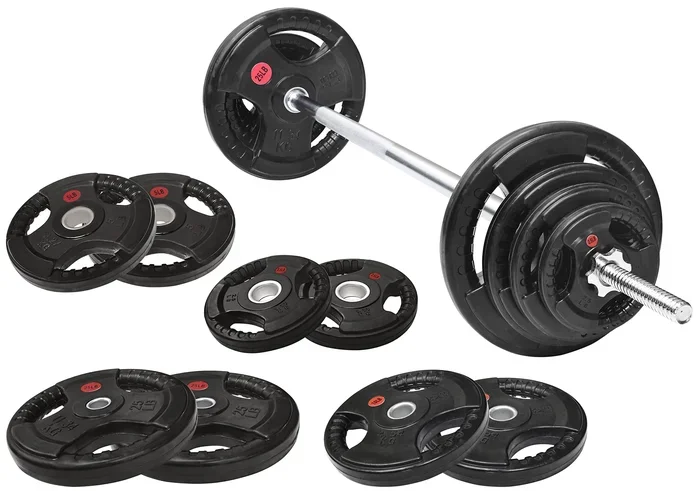
The barbell sleeve length refers to the ends of the bar where weight plates slide on. Each sleeve on a men’s Olympic bar is about 16 inches long, while on the women’s bar, each sleeve extends to roughly 19.5 inches. The sleeves have a larger diameter (50mm) compared to the shaft, and they spin freely thanks to bearings or bushings.
Why does sleeve length matter? Because it determines how many plates you can load. A standard 45-pound plate has a diameter of about 17.75 inches. With a 16-inch sleeve, you can comfortably fit multiple plates on each side while leaving room for a collar. If you are wondering how to know if a barbell is too long for your needs, checking the sleeve-to-shaft ratio is a great starting point.
Grip Width and Comfort
Your barbell grip width plays a big role in lifting comfort. The standard grip width on a men’s Olympic bar is about 36 inches (measured from the center of the knurl to each hand). On the women’s bar, it is closer to 31 inches. These measurements come from the IWF standards for snatch and clean and jerk positions.
If you are doing bench press or bent-over rows, you might prefer a narrower or wider grip than the standard Olympic position. That is perfectly fine for general training. But for competition lifts, sticking to the standard grip width ensures you are using the bar the way it was designed to be used.
Olympic Barbell vs. Standard Barbell: Key Differences
One of the most common mistakes new lifters make is confusing Olympic barbells with standard barbells. They look similar at first glance, but the differences are significant. To understand what is the difference between Olympic and standard barbells, let’s compare them side by side.
| Feature | Olympic Barbell | Standard Barbell |
|---|---|---|
| Total Length | 86.6 inches (men) / 79 inches (women) | 72 inches (men) / 64 inches (women) |
| Weight | 44 lbs / 33 lbs | 25 lbs / 15 lbs |
| Shaft Diameter | 28mm / 25mm | 25mm / 25mm |
| Sleeve Diameter | 50mm | 25mm |
| Sleeve Length | 16 inches / 19.5 inches | 10 inches |
| Plate Compatibility | Olympic plates (2-inch hole) | Standard plates (1-inch hole) |
| Spinning Sleeves | Yes (bearings/bushings) | No (fixed) |
As you can see, the standard barbell is shorter, lighter, and designed for lighter training. Olympic bars are built for serious lifting. The spinning sleeves on Olympic bars reduce torque during rotational movements like cleans and snatches. This protects your wrists and elbows from injury. Standard bars do not spin, which is fine for basic exercises like curls and press movements.
If you are setting up a home gym and want to do serious strength training, investing in a quality Olympic barbell is the way to go. Standard barbells work okay for casual use, but they simply cannot handle the demands of Olympic lifts or heavy compound movements.
Why Barbell Length Matters for Your Training
Matching the Bar to Your Body
Not every lifter fits perfectly into standard barbell dimensions. Taller athletes may find the men’s Olympic bar comfortable, while shorter lifters might prefer the women’s bar even if they are male. Some elite powerlifters actually prefer longer bars for deadlifting, as it allows them to grip the bar without bending as far forward.
Your barbell measurements should match your body proportions and training style. Here are a few tips:
- Tall lifters (6+ feet): The standard 86.6-inch men’s bar usually works well.
- Shorter lifters (under 5’6″): Consider the women’s bar or a shorter training bar.
- Powerlifters: Longer bars (up to 90+ inches) are available for deadlifting.
- Crossfit athletes: The standard men’s or women’s Olympic bar works perfectly for most WODs.
Space Considerations
Another practical reason to know the Olympic barbell length is space. A 7-foot bar needs adequate rack space. If your gym or home setup is tight, measure twice before buying. You need enough room for the bar to sit securely in a squat rack or on a bench. A bar that is too long for your rack can stick out awkwardly and create safety hazards.
Competition Compliance
If you plan to compete in Olympic weightlifting or powerlifting, you must use bars that meet governing body standards. The IWF and the IPF (International Powerlifting Federation) have strict rules about bar dimensions. Using a non-compliant bar in competition can get you disqualified. Always check the specifications before purchasing a competition-grade barbell.
How to Choose the Right Olympic Barbell
Now that you know the standard Olympic barbell dimensions, let’s talk about how to pick the right one for your needs. The market is flooded with options, and not all bars are created equal.
Budget-Friendly Options
Entry-level Olympic bars typically cost between $100 and $200. These bars meet basic length and weight specifications but may have lower-quality knurling or simpler bearing systems. They are great for home gyms and casual lifters. Just make sure the bar is clearly marked as an Olympic barbell and not a standard bar with Olympic-sized sleeves.
Mid-Range Bars
Bars in the $200 to $500 range offer better build quality. You will get superior knurling, smoother spinning sleeves, and a more durable chrome or stainless steel finish. These bars are ideal for dedicated home gym owners and intermediate lifters who want reliable barbell specifications without spending a fortune.
Competition-Grade Bars
Professional competition bars start around $500 and can go well over $1,000. Brands like Eleiko, Uesaka, and Rage produce bars that are IWF-certified. These bars have precise barbell shaft length tolerances, exceptional spin quality, and durability built to handle thousands of heavy lifts. If you are serious about competition, this is where the investment pays off.
Quick Tips for Buyers
- Always check the total length and weight before buying.
- Look for IWF certification if you plan to compete.
- Test the knurling if possible. It should be aggressive but not painful.
- Check sleeve spin quality. Bearings are better than bushings for smooth rotation.
- Read reviews. Real user feedback is invaluable for quality assessment.
Common Mistakes Lifters Make With Barbell Length
Even experienced lifters sometimes get tripped up by barbell sizing. Here are a few common mistakes to avoid:
- Buying the wrong length: Some brands list the total length differently. Always double-check measurements in both inches and millimeters.
- Ignoring women’s bars: Many men assume the men’s bar is the only option. The women’s bar can be better for shorter lifters or those with smaller hands.
- Confusing bar types: A bar that looks like an Olympic bar might not meet official specifications. Always verify the barbell grip width and sleeve dimensions.
- Overloading sleeves: Knowing the barbell sleeve length helps you avoid loading too many plates, which can damage the bar and reduce spin quality.
- Neglecting bar maintenance: A well-maintained bar lasts longer. Clean it after each session, oil the sleeves, and store it properly to prevent rust and wear.
Avoiding these mistakes saves you money, protects your equipment, and keeps your training on track. If you want more details on proper barbell sizing, check out our guide on how to know if a barbell is too long for your specific needs.
Expert Insights on Olympic Barbell Sizing
Coaches and competitive lifters agree on one thing: the standard Olympic barbell dimensions work for the vast majority of athletes. The IWF has refined these numbers over many years through extensive testing and real-world competition use. The 86.6-inch men’s bar and 79-inch women’s bar are not arbitrary choices. They represent the sweet spot for grip comfort, plate loading, and biomechanical efficiency.
That said, individual preferences always come into play. Some elite powerlifters use modified bars that are slightly longer or thicker. Crossfit athletes may prefer a more flexible bar for specific movements. But for 95% of lifters, the standard dimensions are the best starting point.
One piece of advice from experienced coaches: always try to test-lift a bar before buying it. Feel the grip. Check the spin. Make sure the length feels natural in your hands. A bar that looks perfect on paper might not feel right for your body. Personal comfort is just as important as technical specifications.
Conclusion
So there you have it. The answer to how long is an Olympic barbell in inches is 86.6 inches for men and 79 inches for women. These measurements are backed by international standards and have been proven effective across decades of competitive lifting. Understanding these dimensions helps you make smarter equipment choices, improve your lifting form, and avoid common mistakes that slow down progress.
Whether you are building a home gym, preparing for competition, or just curious about your equipment, knowing your barbell specifications gives you confidence. Choose the right bar, maintain it properly, and focus on your training. The bar is just a tool. Your effort and consistency are what drive real results. Now go hit those PRs.
Frequently Asked Questions
How long is a standard men’s Olympic barbell in inches?
A standard men’s Olympic barbell measures 86.6 inches, which is equivalent to 7 feet or approximately 2200mm. This is the bar used in most international weightlifting competitions and is the most common size found in commercial gyms worldwide.
How long is a women’s Olympic barbell in inches?
The women’s Olympic barbell measures approximately 79 inches, or about 6.6 feet. It weighs 33 pounds (15 kg) and has a thinner 25mm shaft diameter compared to the men’s 28mm shaft, making it easier to grip for athletes with smaller hands.
What is the difference between Olympic and standard barbell lengths?
An Olympic barbell is significantly longer than a standard barbell. The men’s Olympic bar is 86.6 inches compared to about 72 inches for a standard men’s bar. Olympic bars also have spinning sleeves with a larger diameter (50mm), while standard bars have fixed sleeves at 25mm and use different plate sizes.
Can I use a women’s Olympic barbell for men’s training?
Yes, absolutely. Many shorter lifters or those with smaller hands prefer the women’s Olympic barbell even if they are male. It is lighter at 33 pounds and has a thinner shaft, which can improve comfort and control for certain lifts, especially overhead movements.
What is the grip width on an Olympic barbell?
The standard grip width on a men’s Olympic barbell is approximately 36 inches (measured from the center knurl to each hand). For the women’s bar, it is roughly 31 inches. These measurements align with the hand positions used in Olympic weightlifting competitions.
How do I know if an Olympic barbell is the right length for me?
Your height and training style are the main factors. Taller lifters generally prefer the standard 86.6-inch men’s bar, while shorter lifters may find the 79-inch women’s bar more comfortable. If you are doing heavy deadlifting, some lifters prefer even longer bars. Always consider your body proportions and the space available in your gym setup.