What to Use to Clean Yoga Mat 2
Keeping your yoga mat clean is essential for hygiene and longevity. You can use simple household items like mild soap, vinegar, baking soda, and even Dawn dish soap to clean yoga mat 2 effectively. This guide covers the best cleaning solutions, step-by-step methods, and expert tips to keep your mat fresh and germ-free.
Your yoga mat takes a lot of abuse. You sweat on it, stretch on it, and press your body into it session after session. Over time, it builds up dirt, bacteria, and odor. That is why knowing what to use to clean yoga mat 2 properly matters so much.
A dirty mat is not just unpleasant. It can actually cause skin irritation, breakouts, and even infections. The good news is that you do not need expensive specialty products to keep your mat fresh. Many of the best yoga mat cleaners are already sitting in your kitchen or bathroom cabinet.
In this guide, we walk you through everything you need to know about cleaning yoga mat 2 the right way. From everyday wipe-downs to deep cleaning methods, you will find practical tips that work. Whether your mat is made of PVC, TPE, rubber, or cork, there is a safe and effective cleaning method here for you.
Key Takeaways
- Mild dish soap and water are the safest and most effective everyday cleaners for your yoga mat.
- Vinegar and baking soda offer natural, chemical-free options for deep cleaning your mat.
- Dawn dish soap works well in small amounts but should be rinsed thoroughly to avoid residue.
- Regular cleaning after every use prevents buildup of sweat, bacteria, and odor.
- Never machine wash or wring out your yoga mat, as this can damage the material and structure.
- Air drying is essential — never roll up a wet mat or it will grow mold and mildew.
- DIY yoga mat sprays are easy to make at home and save money over commercial products.
📑 Table of Contents
- Why Cleaning Your Yoga Mat Matters
- Best Household Products to Clean Your Yoga Mat
- Step-by-Step Guide to Clean Yoga Mat 2
- DIY Yoga Mat Spray Recipes
- What to Avoid When Cleaning Your Yoga Mat
- How to Handle Specific Stains and Odors
- Comparison: Commercial vs. Homemade Yoga Mat Cleaners
- Expert Insights on Yoga Mat Cleaning
- Final Thoughts
Why Cleaning Your Yoga Mat Matters
You might be tempted to skip cleaning your mat after a workout. But regular yoga mat maintenance is one of the simplest ways to protect your health and extend the life of your gear.
Every time you practice, your body transfers oils, sweat, dead skin cells, and bacteria onto the surface. Over time, this buildup creates a breeding ground for germs. It also leads to that musty smell nobody wants to deal with.
Yoga mat hygiene is not just about looks. It directly affects your skin health. If you have ever noticed breakouts on your forearms or knees after practice, your mat could be the culprit. A clean mat supports a safer, more enjoyable practice every single time.
How Often Should You Clean Your Mat
For best results, wipe down your mat after every session. A quick spray and wipe takes less than a minute. Then, do a deeper mat sanitizing once a week or every two weeks, depending on how often you practice.
If you practice hot yoga or intense flows, you should clean your mat more frequently. Sweat accelerates bacteria growth, so a cleaning yoga mat regularly habit is especially important in those cases.
Best Household Products to Clean Your Yoga Mat
You do not need to buy a fancy yoga mat cleaner from the store. Many effective options are already in your home. Here are the top products you can safely use on most yoga mat types.
Mild Dish Soap and Water
This is the gold standard for everyday mat cleaning solution needs. A few drops of gentle dish soap mixed with warm water in a spray bottle works wonders. It cuts through sweat and grime without damaging your mat.
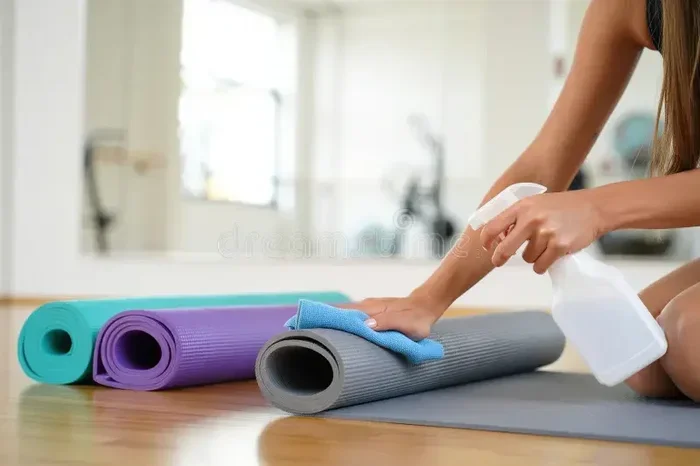
Simply mix a few drops of dish soap with water in a spray bottle. Spray the mat lightly, wipe it down with a soft cloth, and rinse with a clean damp cloth. This is one of the easiest and most affordable ways to clean yoga mat 2 at home.
White Vinegar Solution
Vinegar is a natural disinfectant that kills bacteria and eliminates odors. If you have ever wondered about vinegar to clean my yoga mat, the answer is yes — it works great when used correctly.
Mix one part white vinegar with three parts water in a spray bottle. Spray it lightly over the mat, let it sit for a few minutes, and wipe it off with a damp cloth. The vinegar smell fades as it dries. This is an excellent eco-friendly yoga mat cleaner option.
However, avoid using vinegar on natural rubber mats or cork mats, as the acidity can degrade the material over time. Always check your mat’s care instructions first.
Baking Soda Paste
Baking soda is a gentle abrasive that lifts stains and absorbs odors. For stubborn spots or deep mat cleaning solution needs, a baking soda paste works well.
Mix baking soda with a small amount of water to form a paste. Apply it to the stained area, gently scrub with a soft cloth, and wipe clean. This method is especially useful for yoga mat stain removal and yoga mat odor removal.
Dawn Dish Soap
Many people ask about using Dawn to clean my yoga mat. The answer is yes, but with caution. Dawn is a powerful degreaser that cuts through sweat and body oils effectively.
Use only a small amount — a drop or two is enough. Mix it with warm water, apply it lightly, and rinse thoroughly. The key is to remove all soap residue, as leftover Dawn can make your mat slippery and sticky.
Step-by-Step Guide to Clean Yoga Mat 2
Now that you know what products to use, here is a simple step-by-step process for cleaning yoga mat 2 effectively.
- Gather your supplies. You will need a spray bottle, mild soap or your chosen cleaner, two soft cloths, and access to clean water.
- Spray the mat lightly. Do not soak the mat. A light mist is all you need. Over-wetting can damage the material and make it take forever to dry.
- Wipe down the surface. Use a damp cloth to gently clean the entire surface. Focus on areas where sweat builds up the most, like the center and corners.
- Rinse with a clean cloth. Wipe the mat again with a fresh damp cloth to remove any soap residue.
- Air dry completely. Hang the mat over a shower rod or lay it flat on a clean towel. Make sure it is fully dry before rolling it up.
Following these steps for your yoga mat care tips routine ensures a thorough clean without risking damage to the material.
Quick Tips for Daily Maintenance
- Keep a small spray bottle with water and a few drops of mild soap in your yoga bag.
- Wipe your mat down with a dry towel after each session to remove surface sweat.
- Never roll up your mat while it is still wet.
- Store your mat in a cool, dry place away from direct sunlight.
- Wash your hands before practicing to reduce oil transfer onto the mat.
DIY Yoga Mat Spray Recipes
Making your own homemade yoga mat cleaner is easy, affordable, and customizable. Here are three simple recipes you can try right away.
Recipe 1: Fresh and Simple
Mix one cup of water with one cup of witch hazel in a spray bottle. Add five drops of your favorite essential oil for a pleasant scent. This spray works great for a quick post-practice mat wipe down.
Recipe 2: Deep Clean Spray
Combine one cup of water, one tablespoon of white vinegar, and a few drops of tea tree oil. Tea tree oil is a natural antifungal and antibacterial agent. This spray is perfect for weekly deep clean yoga mat sessions.
Recipe 3: Gentle Daily Spray
Mix two cups of water with one teaspoon of castile soap and three drops of lavender essential oil. This gentle formula is safe for daily use and leaves your mat smelling fresh.
All of these DIY sprays are excellent alternatives to commercial yoga mat cleaners. They are free from harsh chemicals and work well for most mat types.
What to Avoid When Cleaning Your Yoga Mat
Knowing what not to do is just as important as knowing what to do. Here are common mistakes that can damage your mat or reduce its lifespan.
Avoid Harsh Chemicals
Bleach, ammonia, and strong household cleaners can break down the material of your mat. They can also leave behind residues that irritate your skin. Stick to gentle, natural cleaners whenever possible.
Never Machine Wash Your Mat
Even if your mat looks dirty, do not put it in the washing machine. The agitation and heat can warp, tear, or delaminate the material. A gentle hand wash is always the safer choice.
Do Not Use Excess Water
Over-saturating your mat can cause water to seep into the core, leading to mold and mildew growth. Always use a light mist and a damp cloth rather than soaking the mat.
Avoid Direct Sunlight While Drying
UV rays can break down yoga mat materials over time. Let your mat air dry in a shaded, well-ventilated area instead of hanging it in direct sunlight.
How to Handle Specific Stains and Odors
Sometimes your mat needs extra attention beyond a regular wipe-down. Here is how to handle common issues.
Sweat Stains
Sweat stains are the most common issue with yoga mats. A mixture of baking soda and water applied to the stain for 10 minutes, followed by a gentle wipe, usually does the trick. For yoga mat stain removal, this method is gentle and effective.
Pet Odors or Accidental Messes
If your mat has been exposed to pet accidents or strong odors, a vinegar and water solution works well for neutralizing smells. Spray lightly, let it sit for a few minutes, and wipe clean with a damp cloth.
Mold or Mildew
If you notice mold or mildew on your mat, mix a small amount of hydrogen peroxide with water and gently wipe the affected area. Make sure the mat dries completely afterward. For severe cases, it may be safer to replace the mat to avoid skin exposure to mold spores.
Proper yoga mat upkeep prevents most of these issues from arising in the first place. A little regular care goes a long way.
Comparison: Commercial vs. Homemade Yoga Mat Cleaners
Many people wonder whether to buy a commercial cleaner or make their own at home. Here is a quick comparison to help you decide.
| Feature | Commercial Cleaners | Homemade Cleaners |
|---|---|---|
| Cost | Moderate to high | Very low |
| Convenience | Ready to use | Requires simple preparation |
| Chemicals | May contain harsh ingredients | Natural and gentle |
| Customization | Fixed formulas | Adjustable to your needs |
| Effectiveness | Strong and reliable | Effective for most needs |
| Environmental Impact | Varies by brand | Minimal waste |
Both options work well for cleaning yoga mat 2. The best choice depends on your budget, preferences, and how often you clean your mat. Many yoga practitioners use a combination — a homemade spray for daily use and a commercial cleaner for occasional deep cleans.
Expert Insights on Yoga Mat Cleaning
We asked fitness professionals and yoga instructors about their yoga mat care tips. Here is what they recommend.
Always read the manufacturer’s care guide before trying any new cleaning method. Different mat materials respond differently to various cleaners. What works for a PVC mat may not be safe for a natural rubber mat.
Consistency beats intensity. A quick wipe after every session does more for your mat’s longevity than a deep clean once a month. Building a simple habit of cleaning yoga mat 2 after each use keeps your mat in great shape year-round.
Invest in a yoga mat towel if needed. A microfiber yoga towel can absorb excess sweat and protect your mat from heavy soiling. This is especially helpful for hot yoga practitioners or those who sweat heavily during practice.
These small habits add up over time. Your mat will stay cleaner, fresher, and last much longer with consistent, gentle care.
Final Thoughts
Knowing what to use to clean yoga mat 2 does not have to be complicated. With a few simple household products and a regular cleaning routine, you can keep your mat hygienic, fresh, and in great condition for years to come.
Whether you prefer a mild dish soap solution, a natural vinegar spray, or a baking soda paste for tough stains, there is a method that fits your needs. The key is to be consistent and gentle with your mat.
Start with one of the DIY sprays we shared in this guide. Make it part of your post-practice routine. Your mat — and your body — will thank you. Clean yoga mat 2 habits are simple, affordable, and one of the best investments you can make in your practice and your health.
Frequently Asked Questions
Can I use Clorox wipes to clean my yoga mat?
It is best to avoid Clorox wipes on yoga mats. The harsh chemicals can degrade the material over time and leave a residue that may irritate your skin during practice. Stick to gentler options like mild soap and water or a vinegar solution.
How long should I let my yoga mat dry after cleaning?
Let your yoga mat air dry completely before rolling it up. This usually takes one to two hours depending on the humidity and thickness of your mat. Rolling up a damp mat can lead to mold and mildew growth.
Is Dawn dish soap safe for all yoga mat types?
Dawn dish soap is generally safe for PVC and TPE mats when used in small amounts. However, it may be too harsh for natural rubber or cork mats. Always rinse thoroughly and check your mat’s care instructions before using any soap.
What is the best homemade yoga mat cleaner?
A simple mixture of water, white vinegar, and a few drops of tea tree oil makes an excellent homemade cleaner. It is natural, effective, and affordable. You can also use a mild castile soap and water blend for a gentler option.
How can I get the smell out of my yoga mat?
Baking soda is great for absorbing odors. Sprinkle it lightly on the mat, let it sit for 15 minutes, and wipe it off with a damp cloth. A vinegar and water spray also works well to neutralize smells naturally.
Can I use Lysol wipes on my yoga mat?
Lysol wipes contain strong chemicals that can damage your mat and leave harmful residues. It is safer to use natural cleaning solutions like vinegar, mild soap, or baking soda for regular yoga mat maintenance.