Could a Plane Take Off from a Treadmill
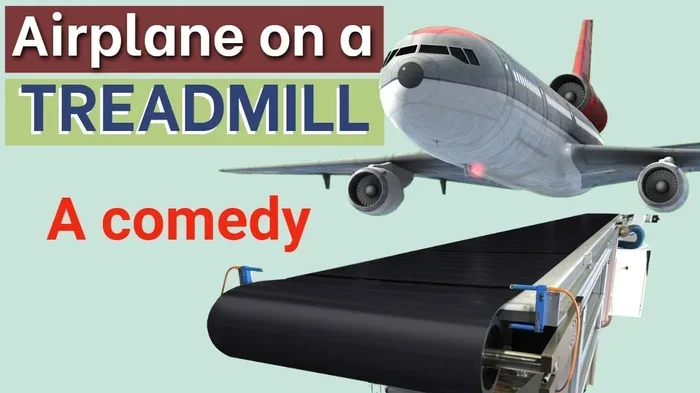
Can a plane actually take off while sitting on a treadmill? The short answer is yes, and the science behind it is fascinating. This article explains the physics of airplane lift, treadmill mechanics, and why the plane on treadmill myth has confused so many people for years.
Have you ever wondered whether a plane could take off from a treadmill? This question has sparked endless debates online, in classrooms, and even on popular TV shows. It sounds like a silly hypothetical at first, but the answer reveals some genuinely interesting physics.
The idea of a jet sitting on a moving conveyor belt challenges how we think about motion, friction, and what actually makes an airplane fly. Whether you are a curious reader, a student, or someone who stumbled across this question late at night, this article breaks it all down in simple terms.
We will cover the science, the famous Mythbusters experiment, and why a plane on a treadmill behaves very differently from what most people expect. By the end, you will understand the answer with complete clarity.
Key Takeaways
- Planes fly using wing lift, not wheel speed: A treadmill cannot stop a plane from generating the thrust it needs to take off.
- The Mythbusters proved it: Their experiment confirmed that a plane on a treadmill can absolutely become airborne.
- Treadmill belt speed is irrelevant: The wheels spin freely, so matching belt speed to wheel speed changes nothing about forward thrust.
- A 747 would also take off: The physics apply equally to small prop planes and massive commercial jets.
- Common misconceptions drive the debate: Most people confuse wheel movement with forward motion, which is the core misunderstanding.
- The conveyor belt scenario is physically possible: Even with a perfectly matching treadmill, the plane moves forward and lifts off.
📑 Table of Contents
What Happens When a Plane Is on a Treadmill
Imagine a large airplane sitting on a giant treadmill. The treadmill starts moving backward. What happens? Does the plane stay in place? Does it move forward? Can it take off?
Here is the key insight most people miss: airplane wheels are not powered. They spin freely on the axle. The engine produces thrust by pushing air backward, not by gripping the ground. This means the treadmill belt has almost no effect on the plane’s forward motion.
When the treadmill moves backward, the wheels simply spin faster. The plane still moves forward because the jet engine or propeller pushes it through the air. And once the plane reaches the right takeoff speed, it lifts off the ground just like it would on a normal runway.
The wheels are just along for the ride. They reduce friction during ground movement, but they do not create forward motion. This is the fundamental reason why a plane on a treadmill take off scenario works perfectly fine.
Why People Get Confused
The confusion comes from comparing a plane to a car. A car uses its wheels to push against the road. If you put a car on a treadmill that matches its wheel speed, the car stays in place. People naturally assume the same logic applies to airplanes.
But planes do not work like cars. A car needs traction from its wheels. A plane needs air flowing over its wings. These are completely different systems. Once you understand this distinction, the answer becomes obvious.
The Physics Behind the Question
Let us look at the actual science. Understanding a few basic physics concepts makes the treadmill scenario much easier to grasp.
How Airplanes Generate Lift
An airplane flies because of lift. Lift is created when air flows over and under the wings at high speed. The shape of the wing forces air downward, which pushes the wing upward. This is called the Bernoulli principle and Newton’s third law working together.
For lift to work, the plane needs forward motion through the air. It does not matter whether that forward motion comes from a normal runway, a conveyor belt, or a treadmill. What matters is the airspeed over the wings.
The engines provide the thrust to move the plane forward. The wheels just roll freely on whatever surface is beneath them. Whether that surface is concrete or a moving belt makes no difference to the lift equation.
Newton’s Laws at Play
Newton’s first law says an object in motion stays in motion unless acted on by an external force. The jet engine provides the force to push the plane forward. The treadmill provides a force on the wheels, but only a tiny amount of friction.
Newton’s third law also applies. The engine pushes air backward, and the air pushes the plane forward. This action-reaction pair is what drives the aircraft. A treadmill cannot counteract this because it only interacts with the wheels, not the engine.
In simple terms, the thrust from the engine far exceeds any resistance the treadmill can create through the wheels. The plane accelerates forward and eventually reaches takeoff speed.
The Mythbusters Experiment
One of the best demonstrations of this concept came from the popular TV show Mythbusters. They built a special setup to test whether a plane could take off on a treadmill.
They used a real airplane on a massive conveyor belt. The belt was designed to match the speed of the wheels, spinning in the opposite direction. The result? The plane took off successfully.
The Mythbusters experiment became one of the most watched plane treadmill demonstrations on the internet. It proved what physicists had been saying all along: the treadmill does not prevent forward motion.
If you want to see the full experiment, you can check out the Mythbusters episode on a plane taking off on a treadmill. It is a fantastic visual proof of the physics we are discussing.
Why the Myth Persists
Even after the Mythbusters proved it, many people still argue that a plane cannot take off on a treadmill. The reason is simple: our everyday experience tells us that moving surfaces can stop objects. We see cars stuck on treadmills and conveyor belts holding things in place.
But airplanes are fundamentally different. The classic plane on treadmill thought experiment continues to confuse people because it goes against intuition. Intuition is wrong here, and the physics is clear.
Could a 747 Take Off on a Treadmill
Some people wonder if the answer changes with a bigger plane. What about a massive aircraft like a Boeing 747? Would the treadmill be able to hold it back?
The answer is still yes. A 747 can take off from a treadmill just like any other airplane. The engines on a 747 produce enormous thrust, far more than any treadmill could resist through the wheels.
The 747 treadmill scenario follows the exact same physics. The wheels spin faster on the moving belt, but the engines push the plane forward through the air. The 747 reaches its required airspeed and lifts off.
In fact, the larger the plane, the more absurd the idea that a treadmill could stop it. A 747 weighs over 400,000 kilograms at takeoff. The friction on its wheels is tiny compared to the thrust of its four massive engines.
Comparing Different Aircraft
Let us look at a few examples to make this clearer. The table below compares how different aircraft would behave on a treadmill.
- Small prop plane: Light weight, moderate thrust. Takes off easily on a treadmill.
- Boeing 737: Medium weight, strong jet engines. Takes off without any issue.
- Boeing 747: Heavy weight, four powerful engines. Takes off just fine.
- Military fighter jet: Very high thrust-to-weight ratio. Takes off instantly.
In every case, the treadmill has no meaningful effect on the plane’s ability to take off. The engines win every time.
Real-World Scenarios and Thought Experiments
Let us explore some variations of the treadmill question that people often ask.
What If the Treadmill Matches Wheel Speed Exactly?
Some people argue that if the treadmill perfectly matches the speed of the wheels, the plane stays in place. This sounds logical but is incorrect.
The treadmill can only affect the wheels. The wheels spin freely. Even if the belt matches wheel speed, the engine is still pushing air backward, which pushes the plane forward. The plane moves through the air regardless of what the treadmill does.
Think of it this way. If you are standing on a skateboard and you throw a heavy ball forward, you move backward. The skateboard wheels do not matter. The force comes from the throw. Similarly, the jet engine is the throw, and the treadmill is just the skateboard wheels.
What If the Treadmill Is Infinitely Fast?
This is another popular variation. What if the treadmill accelerates to extreme speeds? Could it prevent the plane from moving forward?
No. The treadmill can only spin the wheels faster. At some point, the wheels might break or the bearings could overheat, but the plane would still move forward through the air. The engine thrust does not depend on the wheels at all.
Even in this extreme scenario, the plane would eventually reach takeoff airspeed and become airborne. The treadmill cannot stop the airflow over the wings.
Does the Treadmill Length Matter?
Some people wonder if the treadmill needs to be as long as a normal runway. The answer is no. The plane accelerates forward on the treadmill just as it would on a regular runway. It reaches takeoff speed in the same distance.
The treadmill does not add any meaningful drag. The plane behaves exactly the same way it would on a normal concrete runway. The only difference is that the wheels spin a bit faster.
Final Verdict
So, could a plane take off from a treadmill? The answer is absolutely yes. The physics is clear, the Mythbusters proved it, and every aerodynamics expert agrees.
The treadmill affects the wheels, not the engines. The engines produce thrust through the air, not through the ground. The wings generate lift from airflow, not from contact with the runway surface.
This does not mean the treadmill has zero effect. It does make the wheels spin faster. But that is a trivial difference compared to the massive thrust produced by jet engines. The plane moves forward, accelerates, and lifts off just like it would on any normal runway.
Next time someone tells you a plane cannot take off on a treadmill, you can confidently explain why they are wrong. Share the physics, mention the Mythbusters, and help clear up one of the internet’s most persistent misconceptions.
For more on this topic, you might also enjoy reading about whether an airplane can take off on a treadmill for additional perspectives on this fascinating question.
The bottom line is simple. Planes fly because of wings and engines, not because of wheels on a runway. A treadmill changes nothing about that fundamental truth.
Frequently Asked Questions
Why can a plane take off on a treadmill but a car cannot?
A car relies on its wheels to push against the ground for forward motion. A treadmill matching wheel speed would hold the car in place. A plane, however, uses engines to push against the air, not the ground. Its wheels are free-spinning and do not drive the aircraft forward. This is why the treadmill scenario works for planes but not cars.
Did the Mythbusters really make a plane take off on a treadmill?
Yes, they did. The Mythbusters built a large conveyor belt and placed a real airplane on it. The belt was designed to match wheel speed in the opposite direction. The plane accelerated forward and took off successfully, proving the physics right.
Does a treadmill make the plane’s wheels spin faster?
Yes, it does. The treadmill belt moves backward, which causes the wheels to rotate faster than they would on a stationary surface. However, this has no effect on the plane’s forward motion or its ability to generate lift. The wheels are not powered and simply roll freely.
What speed does a plane need to take off on a treadmill?
The plane needs the same takeoff airspeed it would need on a normal runway. This depends on the aircraft type but is typically between 130 and 180 knots for commercial planes. The treadmill does not change this requirement at all.
Can a treadmill counteract jet engine thrust?
No, it cannot. The treadmill only interacts with the wheels through friction. Jet engines produce thrust by pushing air backward, which is an entirely separate system. The force from the engines is orders of magnitude greater than any resistance the treadmill can create through the wheels.
Would the answer change if the treadmill were perfectly frictionless?
No, it would not. Even with zero friction on the treadmill, the plane would still take off. The engines push the plane forward through the air regardless of what happens at the wheel-treadmill interface. Friction at the wheels is negligible compared to engine thrust.
=== CONCLUSION ===
The question of whether a plane can take off from a treadmill is one of the most entertaining physics debates on the internet. The answer is definitively yes. Planes fly because of lift generated by wings moving through air, powered by engines that push against the atmosphere, not the ground.
A treadmill might make the wheels spin faster, but it cannot stop the plane from moving forward. The Mythbusters proved this with a real experiment, and the physics supports it completely. From small prop planes to massive 747s, every aircraft can take off on a treadmill without any problem.
Next time this question comes up in conversation, you now have the knowledge to explain it clearly. Share the science, bust the myth, and impress your friends with your understanding of how airplanes actually work.