Can You Train for a 10k on a Treadmill
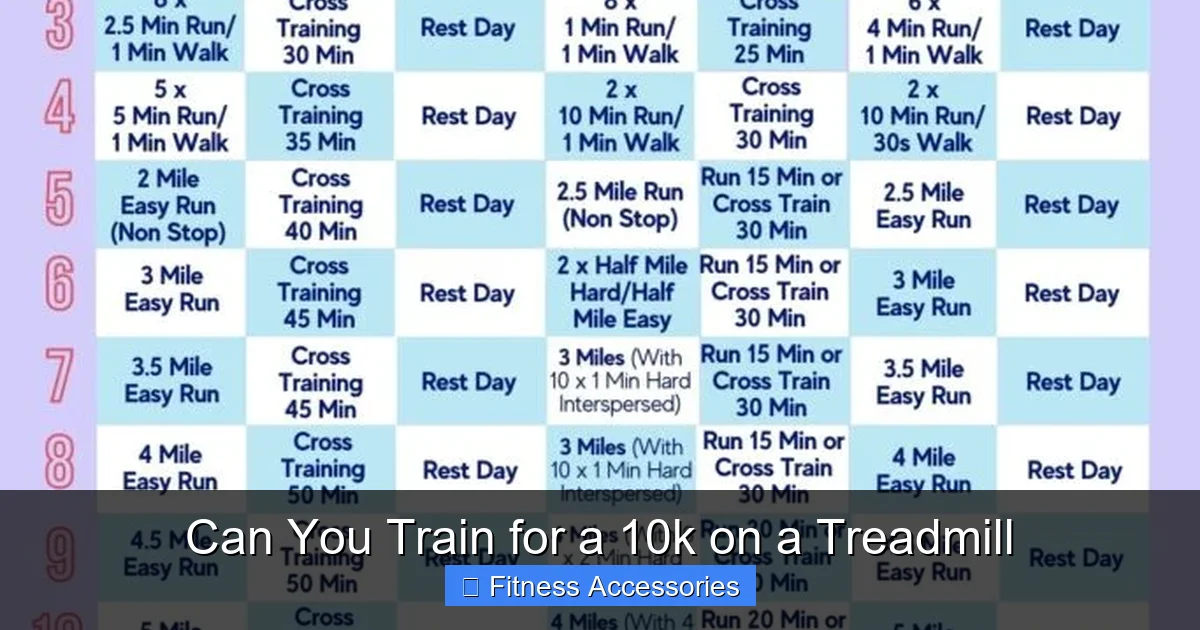
Training for a 10k on a treadmill is not only possible but can be highly effective with the right plan. Treadmills offer controlled conditions for pace, incline, and consistency, making them excellent for building endurance and speed. However, you must address key differences like lack of wind resistance and varied terrain to ensure a smooth transition to race day. With strategic workouts and mental preparation, your treadmill can be the perfect training partner for your 10k goal.
So, you’ve signed up for your first 10k—or maybe you’re chasing a new personal best over the classic 6.2-mile distance. The excitement is real, but then life happens. Early mornings, busy schedules, unpredictable weather, or even safety concerns can make outdoor training feel impossible. This leads to a common question swirling in the minds of aspiring runners: Can you really train for a 10k on a treadmill? The short answer is a resounding yes. But like any good training plan, the devil—and the success—is in the details. Let’s break down everything you need to know to go from treadmill regular to 10k finisher, all without necessarily stepping outside until race day.
Key Takeaways
- Treadmill training is effective: You can build all the necessary aerobic endurance, leg strength, and pace discipline for a 10k entirely on a treadmill.
- It offers unique advantages: Precise pace control, consistent surface, built-in incline, and climate control eliminate external variables, allowing for focused, repeatable workouts.
- It has specific limitations: Lack of wind resistance, a moving belt that assists leg turnover, and a completely flat, predictable surface require adjustments for outdoor racing.
- Variety is non-negotiable: Your plan must include speed intervals, hill repeats, and long, steady runs to mimic 10k demands and prevent plateaus.
- Mental fortitude is key: Treadmill running can be monotonous; developing mental strategies to stay engaged is a critical part of your training.
- Transition practice is essential: At least 1-2 runs per week outdoors (or on a different surface) in the final 4-6 weeks prepares your body and mind for race day conditions.
📑 Table of Contents
- The Truth About Treadmill Training: It’s More Than Just “Easy Mode”
- Building Your Complete 10k Treadmill Training Plan
- Bridging the Gap: Mental Strategies for Treadmill Monotony
- The Non-Negotiable: The Outdoor Transition
- Essential Treadmill Features for 10k Training
- Sample 8-Week Beginner 10k Treadmill Plan (Goal: Finish / Sub-65 min)
- Conclusion: Your Treadmill is a 10k Training Machine
The Truth About Treadmill Training: It’s More Than Just “Easy Mode”
There’s a persistent myth that treadmill running is somehow “lesser” than running outdoors. Some call it “cheating” or say it’s too boring. We’re here to dispel that. A treadmill is a tool—a highly sophisticated, programmable, and controlled training tool. When used intelligently, it can build a rock-solid aerobic engine perfect for the 10k distance. The key is understanding what the treadmill does well and where it falls short, then structuring your plan accordingly.
Why the Treadmill is a Secret Weapon for 10k Training
Think about the core demands of a 10k. It’s a race that sits at the edge of your aerobic capacity. You need a strong heart, efficient lungs, durable legs, and the mental toughness to hold a challenging pace for over an hour for most beginners. The treadmill excels at building these components.
- Pace Discipline Made Easy: On the road, it’s tempting to start too fast. The treadmill’s belt is an honest coach. You set the speed, and you must match it. There’s no “coasting” downhill. This builds incredible pace awareness and discipline, teaching your body what a true 10k effort feels like.
- Perfect Hill Simulation: Modern treadmills offer incline functions that can simulate hills with mathematical precision. You can program a specific grade (like 4-6%) for a set time or distance, something nearly impossible to replicate consistently outdoors unless you have a measured, uninterrupted hill. Hill work builds the glute, hamstring, and calf strength that is crucial for a strong, efficient 10k.
- Controlled Environment: No headwinds to sap your energy. No sudden rain to cut your run short. No traffic lights. No uneven pavement to twist an ankle. This consistency allows for perfect execution of interval workouts and long runs. You can focus 100% on your effort, breathing, and form.
- Safety and Convenience: For many, especially those running alone at dawn or in isolated areas, the treadmill is the only safe option. The convenience of stepping on at home or the gym, anytime, removes the biggest barrier to consistency—and in running, consistency is everything.
The Critical Adjustments You MUST Make
Ignoring the treadmill’s quirks is how you set yourself up for a shock on race day. Here are the three main physiological differences and how to compensate for them.
- The “Belt Assist” Effect: The moving belt helps with leg turnover, essentially doing a tiny bit of the work for you at your feet. This can make treadmill running feel slightly easier at the same pace compared to outdoors. Solution: Set your treadmill pace 10-15 seconds per mile faster than your target 10k race pace for your key workouts. If your goal is a 10k at a 9:00/mile pace, do your tempo runs at 8:45-8:50/mile. This will translate to the correct effort outdoors.
- Zero Wind Resistance: Outside, you’re pushing through air. Indoors, you’re not. This is another factor that makes a given pace feel easier on the treadmill. The pace adjustment above helps account for this as well.
- The Flatland Paradox: A treadmill’s surface is perfectly flat and uniform. A real 10k course has subtle uphills, downhills, turns, and surface changes. Your legs will experience different stresses. Solution: You must incorporate hill workouts (as described) and, if possible, at least one weekly outdoor run to adapt your stabilizer muscles and practice on varied terrain.
Building Your Complete 10k Treadmill Training Plan
Now for the fun part: the actual plan. A solid 10k plan typically spans 8-12 weeks, depending on your starting fitness. We’ll structure this around three key run types each week, plus cross-training and rest. Assume a beginner targeting a finish or a sub-60 minute 10k.
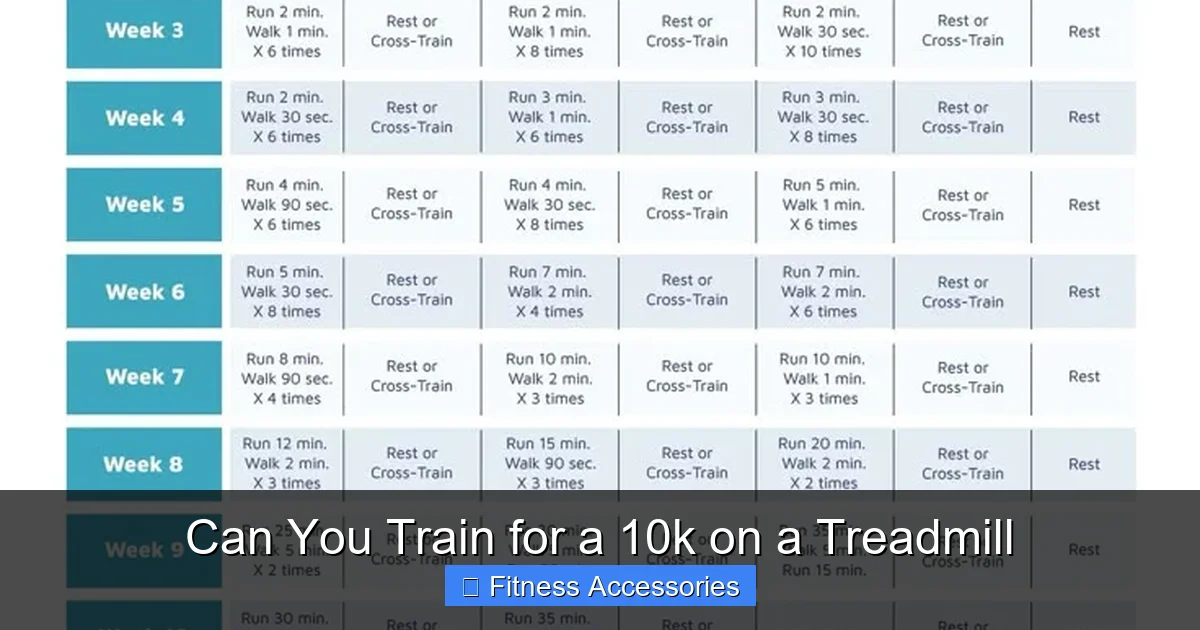
Visual guide about Can You Train for a 10k on a Treadmill
Image source: i.pinimg.com
1. The Foundation: Easy, Weekly Long Run
This is your most important run of the week. Its purpose is to build aerobic capacity, teach your body to burn fat efficiently, and strengthen connective tissues. For a 10k, your long run will peak at about 5-6 miles.
- How to do it on the treadmill: Run at a “conversational” pace—one where you could speak in full sentences. This is typically 60-90 seconds slower than your goal 10k pace. Don’t stress about the exact speed; focus on the feeling.
- Progression Tip: Start your long run at the slower end of your easy pace. For the last 15-20 minutes, increase the incline by 0.5-1% every 5 minutes while holding the same pace. This simulates the fatigue-induced effort increase of a race’s final miles and builds mental toughness.
- Example: Goal 10k Pace: 9:30/mile. Long Run Pace: 10:30-11:00/mile. Week 1: 3 miles. Build by ~0.5-1 mile per week, peaking at 5.5 miles in Week 8, then taper.
2. The Engine Builder: Tempo and Threshold Runs
These runs are where you improve your lactate threshold—the maximum pace you can sustain for about an hour. This directly correlates to your 10k potential.
- What it feels like: “Comfortably hard.” You can say a few words, but not a paragraph. It’s a steady, controlled effort.
- Treadmill Structure: A classic tempo run is 20-40 minutes at your threshold pace. Your threshold pace is roughly what you could hold for a 10-mile race, or about 80-85% of your max heart rate. It’s typically 20-30 seconds/mile faster than your goal 10k pace. Use the pace adjustment mentioned earlier (run 10-15 sec/mile faster on the treadmill than your outdoor goal pace for these efforts).
- Workout Example: 10 min easy warm-up, 25 min at tempo pace (e.g., 9:00/mile on treadmill for a 9:15/mile 10k goal), 10 min easy cool-down.
3. The Speed Demon: Interval Workouts
Intervals improve your top-end speed, running economy, and cardiovascular power. They teach your body to handle higher intensities, making your goal 10k pace feel easier.
- How to structure: Short, fast repeats (400m to 1 mile) with equal or slightly longer recovery jogs.
- Treadmill Specifics: This is where the treadmill shines. Set the speed precisely. Your recovery pace should be your easy jogging pace. Because the belt assists leg turnover, your interval paces need to be aggressively fast. Aim for your 5k race pace or even mile pace on the treadmill.
- Workout Example: 1 mile easy warm-up. 6 x 800m at 5k pace (e.g., 8:30/mile treadmill pace for a 9:00/mile 10k goal) with 400m jog recovery. 1 mile easy cool-down.
4. The Strength Builder: Hill Repeats
As mentioned, hills are non-negotiable. They build strength and power without the impact of extra mileage.
- The workout: Find a challenging but sustainable incline on your treadmill (4-8%). Run at a steady, hard effort for 60-90 seconds up the “hill,” then reduce the incline to 0% and jog for 2-3 minutes to recover. Repeat 6-10 times.
- Key: Focus on maintaining the same effort level (breathing, perceived exertion) on each repeat, not the same pace. Your speed will naturally drop as you get tired. Hold onto the rails lightly if needed for balance on steep grades, but try to maintain a natural arm swing.
Bridging the Gap: Mental Strategies for Treadmill Monotony
Let’s be honest: the biggest challenge of treadmill training isn’t physical, it’s mental. Staring at a wall or a screen for an hour can test the will of any runner. You must develop a mental game plan.
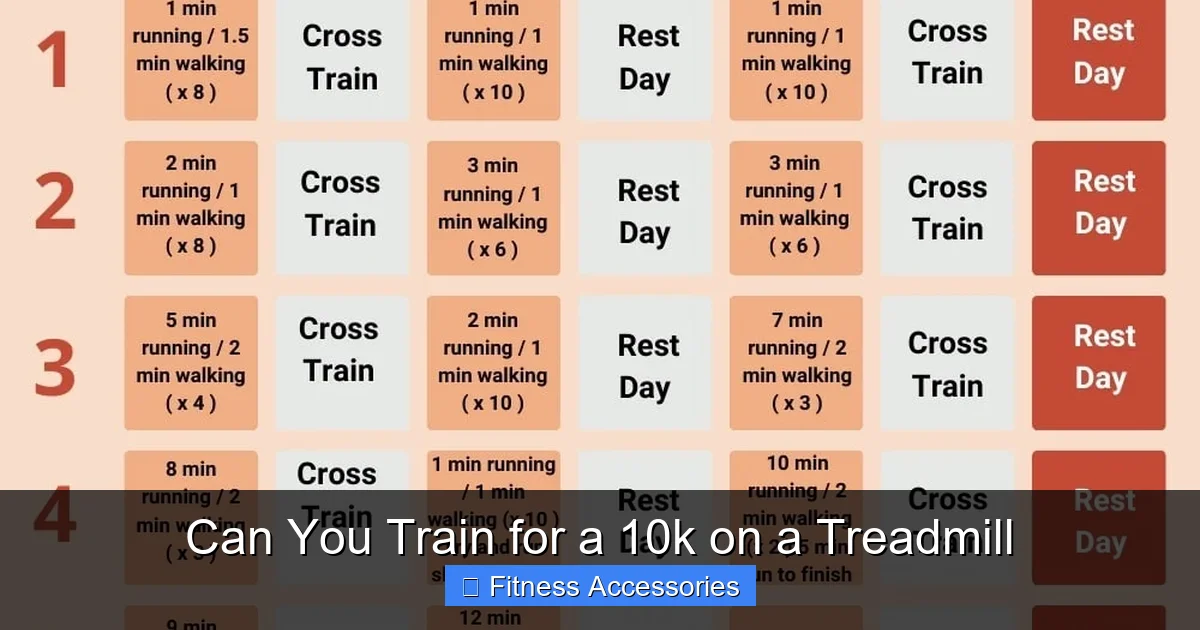
Visual guide about Can You Train for a 10k on a Treadmill
Image source: lovelifebefit.com
Make the Environment Work For You
Don’t just hop on and zone out. Engage your senses.
- Entertainment with Purpose: Use music playlists with a specific BPM (beats per minute) that matches your target running cadence (steps per minute). This can naturally help you maintain form. Alternatively, use podcasts or audiobooks only for your easy long runs. For hard workouts, go audio-free or with instrumental music to stay connected to your breathing and effort.
- The Visual Fix: Place your treadmill facing a window. If that’s not possible, use a tablet to watch scenic running routes on YouTube or apps like Zwift/Streamy that simulate outdoor courses with changing scenery. The visual change, even if artificial, tricks your brain.
- Break It Down: Don’t think “I have to run 5 miles.” Think “I just have to get to the next mile marker,” or “I just have to finish this 10-minute interval.” Chunking the workout makes it psychologically manageable.
Embrace the Data
The treadmill is a data goldmine. Use it to your mental advantage.
- Focus on Metrics: Instead of the miles, focus on hitting your target heart rate zone, maintaining a steady cadence, or holding a precise pace. The pursuit of a specific number on the console can be a powerful distraction and motivator.
- The “Negative Split” Game: Challenge yourself to run the second half of your long run slightly faster than the first. The treadmill makes this easy to track and execute.
- Play the Incline Game: See how long you can hold a certain pace as you slowly increase the incline by 0.5% every 2 minutes. It turns a steady run into a game of incremental challenge.
The Non-Negotiable: The Outdoor Transition
This is the most critical section. If you do all your training on a treadmill and then toe the line at a road 10k, you risk injury, poor pacing, and a miserable experience. Your body needs to adapt to the real world.
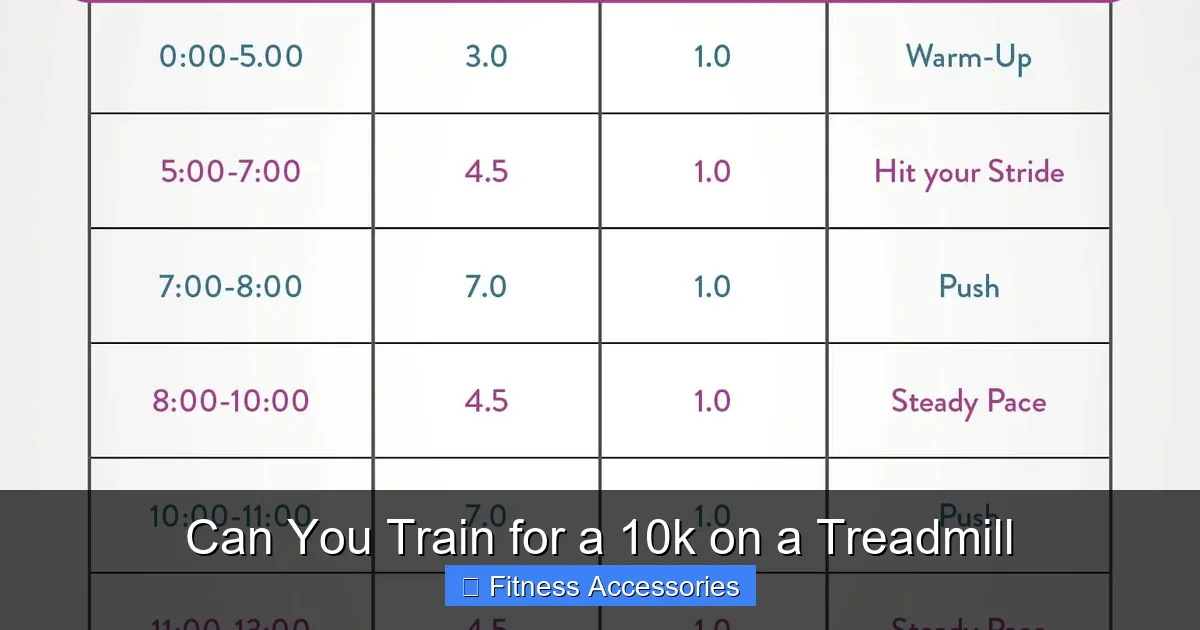
Visual guide about Can You Train for a 10k on a Treadmill
Image source: gethealthyu.com
When and How to Add Outdoor Runs
Start incorporating outdoor runs as soon as your base fitness allows—typically 4-6 weeks before your race, but even 2-3 weeks is better than none.
- The “ form Check” Run: Once a week, replace one of your easier treadmill runs with a short (2-3 mile) easy run outside. Focus on landing softly under your center of gravity, as treadmills can sometimes encourage a longer, heavier stride. This reminds your legs of the different impact and engages your stabilizer muscles.
- The Dress Rehearsal: In the final 2-3 weeks, do one of your key workouts (like your last long run or a tempo run) outdoors. Wear the exact shoes, socks, and clothing you plan to race in. This tests everything from chafing to how your shoes feel on asphalt vs. a treadmill belt.
- Course Simulation: If your race has a known hilly profile, try to find a similar route for your outdoor hill repeats. The specific muscular demand of a real hill is different from a treadmill’s consistent grade.
What to Expect on Race Day
If you’ve made the adjustments:
- Pace: Your first few miles may feel harder than the same pace on the treadmill. You’re fighting wind and a less-forgiving surface. Trust your training. Start conservative—aim for the first mile to be 5-10 seconds slower than your goal pace.
- Legs: They might feel more “beaten up” initially due to the impact. This is why the outdoor transition runs are vital—they pre-condition your legs.
- Mind: The changing scenery, crowd support, and adrenaline will be a huge mental boost if you’ve trained your mind to handle the monotony of the treadmill. You’ll likely find the mental challenge of a race much easier.
Essential Treadmill Features for 10k Training
Not all treadmills are created equal. If you’re investing in a home machine or choosing one at the gym, look for these features to maximize your 10k training:
- Powerful, Quiet Motor (3.0+ CHP): A strong motor maintains speed and incline consistently, especially during hard intervals. A jerky or lagging belt will throw off your pacing and gait.
- Generous Running Deck (22”+ width):strong> You need space to move naturally, especially on inclines. A narrow deck can feel restrictive and force poor form.
- Incline Capability (10%+):strong> To effectively simulate hills and build strength, you need steep grades. 10-15% is ideal.
- Decline Capability (-3% to -5%):strong> While less critical for a 10k, downhill training prepares your quads for the eccentric loading of race day descents. It’s a nice bonus.
- Preset Programs & Metrics: Look for programs like “hill climb,” “interval,” and “pace set.” Crucial metrics include pace (in min/mile or km), incline %, heart rate compatibility (chest strap or grips), and distance.
- Shock Absorption: A good cushioning system reduces joint impact, making higher mileage more tolerable. Test the feel—it should be firm but forgiving, not like running on a trampoline.
Sample 8-Week Beginner 10k Treadmill Plan (Goal: Finish / Sub-65 min)
This plan assumes you can currently run 2-3 miles comfortably. Always include a 5-10 minute dynamic warm-up (leg swings, high knees, butt kicks) before each run and a 5-minute walk/jog cool-down after.
- Week 1: Mon: Rest or Cross-Train. Tue: 3 mi Easy. Wed: Hill Repeats: 10 min easy, 6×60 sec @ 5% incline, jog 2 min recovery, 10 min easy. Thu: Rest. Fri: 2 mi Easy. Sat: 3 mi Long Run (conversational pace). Sun: 2 mi Easy + Core work.
- Week 2: Mon: Rest. Tue: 3 mi Easy. Wed: Tempo: 10 min easy, 15 min at threshold pace (comfortably hard), 10 min easy. Thu: Rest. Fri: 2 mi Easy. Sat: 3.5 mi Long Run. Sun: 2 mi Easy.
- Week 3: Mon: Rest. Tue: 3 mi Easy. Wed: Intervals: 1 mi warm, 5x800m @ 5k pace, 400m jog recovery, 1 mi cool. Thu: Rest. Fri: 2 mi Easy. Sat: 4 mi Long Run. Sun: 2 mi Easy.
- Week 4: Mon: Rest. Tue: 3 mi Easy. Wed: Hill Repeats: 10 min easy, 8×60 sec @ 6% incline, jog 90 sec recovery, 10 min easy. Thu: Rest. Fri: 2 mi Easy. Sat: 4.5 mi Long Run. Sun: 2 mi Easy.
- Week 5: Mon: Rest. Tue: 3 mi Easy. Wed: Tempo: 10 min easy, 20 min at threshold pace, 10 min easy. Thu: Rest. Fri: 2 mi Easy. Sat: 5 mi Long Run. Sun: 2 mi Easy.
- Week 6: Mon: Rest. Tue: 3 mi Easy. Wed: Intervals: 1 mi warm, 6x800m @ 5k pace, 400m jog recovery, 1 mi cool. Thu: Rest. Fri: 2 mi Easy. Sat: 5.5 mi Long Run. Sun: 2 mi Easy.
- Week 7 (Peak): Mon: Rest. Tue: 3 mi Easy. Wed: Hill Repeats: 10 min easy, 10×60 sec @ 6% incline, jog 90 sec recovery, 10 min easy. Thu: Rest. Fri: 2 mi Easy. Sat: 3 mi Easy (taper begins). Sun: 2 mi Easy.
- Week 8 (Race Week): Mon: Rest. Tue: 2 mi Easy with 3×30 sec strides (fast but controlled). Wed: 1.5 mi Easy. Thu: Rest. Fri: 1 mi Easy. Sat: RACE DAY! Sun: Rest or light walk.
Important: Add 1-2 days of cross-training (cycling, swimming, strength training) on rest days if your body feels up to it. Listen to your body—if you’re sore, take an extra rest day.
Conclusion: Your Treadmill is a 10k Training Machine
So, can you train for a 10k on a treadmill? Absolutely. It is a scientifically sound, highly effective, and incredibly convenient method. The treadmill provides the control needed to build specific fitness—pace, endurance, and hill strength—without the variables of the outdoors. The secret sauce lies in three principles: adjust your paces to account for the belt’s assistance, prioritize workout variety to build a complete runner, and religiously incorporate outdoor runs to adapt to real-world conditions.
Embrace the monotony as mental training. Use the data as your coach. Trust the process. When you stand at the start line of your 10k, you will be prepared. Your legs will have endured the simulated hills, your mind will have conquered the long, steady miles, and your lungs will know the rhythm of your goal pace. The finish line is waiting. Your treadmill is the first, and perhaps most reliable, step on the journey there. Now, go set that pace and start running.
Frequently Asked Questions
Is running on a treadmill bad for you if training for a road race?
No, it’s not inherently bad. The main issue is the lack of varied surface impact. To prevent imbalances and prepare your legs for asphalt, you must include 1-2 outdoor runs per week in your training plan, especially in the final month.
How much faster should I run on a treadmill compared to my outdoor 10k goal pace?
For your key workouts (tempos and intervals), set your treadmill pace 10-15 seconds per mile faster than your intended outdoor 10k race pace. This compensates for the belt assist and lack of wind resistance, making the effort equivalent.
Can I simulate a hilly 10k course on a treadmill?
You can simulate the muscle demand. Use the incline function to create hill repeats (e.g., 4-6% grade for 60-90 seconds). For a course-specific simulation, research the race profile and program your treadmill to match the major hill gradients and lengths as closely as possible during your long run.
Do I need to hydrate differently on long treadmill runs?
Yes. Since you’re not exposed to sun and wind, you might sweat less perceptibly, but you’re still losing fluids. Set a timer to take small sips of water or an electrolyte drink every 15-20 minutes during runs longer than 60 minutes, just as you would outdoors.
How can I make treadmill intervals less boring?
Use the “pyramid” or “ladder” format. Instead of 6x800m, try 1 min fast, 2 min jog, 2 min fast, 2 min jog, 3 min fast, 2 min jog, etc. The changing interval lengths keep your mind engaged. Also, use the console data (pace, distance) as a game—try to beat your previous split on the last rep.
What’s the biggest mistake people make when treadmill training for a 10k?
Running all their miles at the same, steady pace. This leads to plateaus. A successful 10k plan requires variety: slow long runs for endurance, fast intervals for speed, and hill repeats for strength. Sticking to one “easy” pace on the treadmill will not prepare you for the specific demands of race day.