Can You Train for a 5k on a Treadmill
Training for a 5k on a treadmill is not only possible but can be highly effective. Treadmill running offers a controlled, low-impact, and weather-proof environment perfect for building consistency and endurance. By strategically using incline, pace, and interval workouts, you can build the cardiovascular fitness and leg strength needed to conquer a 3.1-mile race. The key is to structure your training plan to mimic outdoor conditions and prepare your body for race-day dynamics.
Key Takeaways
- Treadmill training is scientifically valid: The physiological demands on your heart, lungs, and muscles are nearly identical to outdoor running when you account for small variables like belt assistance and lack of wind resistance.
- Consistency is the biggest advantage: The treadmill removes common barriers like weather, traffic, and unsafe neighborhoods, making it easier to stick to a training schedule without interruption.
- Incline is your secret weapon: Strategically adding incline (1-2%) simulates outdoor wind resistance and builds crucial glute and hamstring strength for a faster, more efficient 5k.
- Pace control builds discipline: The treadmill’s precise speed setting helps you learn and hold your target race pace, building the specific muscular endurance needed for a 5k.
- You must practice “running” mentally: Since the treadmill moves for you, focus on an active, upright posture and a slight forward lean from the ankles to engage the right muscles and prevent a “sitting” gait.
- Supplement with strength training: A 5k plan on the treadmill should be paired with 2 days of strength work (squats, lunges, core) to build resilience and prevent injury.
- The transition to race day requires a bridge: Complete at least 1-2 long runs or key workouts outdoors before your event to adapt to uneven surfaces, turns, and self-paced effort.
📑 Table of Contents
- Debunking Myths: Is Treadmill Training “Real” Running?
- The Science Behind Treadmill Training for 5k Success
- Building Your 5k Training Plan on the Treadmill
- Maximizing Treadmill Workouts: Techniques and Variations
- Overcoming Common Treadmill Training Challenges
- From Treadmill to Race Day: Making the Transition
- Conclusion: Your Treadmill is a 5k Training Powerhouse
Debunking Myths: Is Treadmill Training “Real” Running?
Let’s address the elephant in the room right away. If you’ve ever wondered, “Can you really train for a 5k on a treadmill?”, you’re not alone. A persistent myth suggests that treadmill running is somehow “cheating” or less effective than pounding the pavement. This simply isn’t true. From a physiological standpoint, your cardiovascular system, your leg muscles, and your energy systems cannot tell the difference between running on a moving belt or running over solid ground. Your heart rate, oxygen consumption (VO2 max), and calorie burn are virtually identical when you match the effort level.
The core differences are mechanical and environmental. On a treadmill, the belt pulls your foot back, which can slightly reduce the activation of your hamstrings and glutes compared to propelling yourself forward outdoors. There’s also no wind resistance and a perfectly flat, consistent surface. However, these aren’t drawbacks—they’re variables you can control and even use to your advantage. The idea that treadmill running is “less real” is purely psychological. A mile run at a 10-minute pace on a treadmill is a mile run. Period. For the specific goal of a 5k—a short, fast road race—the treadmill provides an unparalleled tool for building the raw speed and endurance base you need, safely and efficiently.
The “Belt-Assist” Myth and How to Counteract It
The most common technical critique is the “belt-assist” phenomenon. Because the belt moves under you, some argue you’re not working as hard. Research shows the difference in energy expenditure is minimal at typical running speeds (less than 5% at a 1% incline). To neutralize it completely and even gain an edge, you should always run with at least a 1% incline. This small adjustment replicates the energy cost of outdoor running by forcing you to lift your body against gravity. It also activates your posterior chain (glutes and hamstrings) more effectively, which is critical for a powerful 5k stride. Think of that 1% not as a hill, but as your baseline for “real” running effort on the machine.
Environmental Factors: The Controlled Advantage
Outdoors, you deal with wind, hills, traffic stops, and uneven surfaces. On a treadmill, you control every single variable. This is a massive benefit for a beginner or someone with a tight schedule. You can execute a precise 3-mile run at exactly your goal pace without a single interruption. You can do a hill repeat workout with a perfectly consistent 6% grade for a full 5 minutes, something nearly impossible to find on most city streets. This control allows for highly targeted training stimulus. You’re not getting “less” running; you’re getting specific running, stripped of all the random noise of the outdoors.
The Science Behind Treadmill Training for 5k Success
Training for a 5k is about improving your lactate threshold—the pace you can sustain before lactic acid builds up and forces you to slow down—and your running economy, which is how efficiently your body uses oxygen. Treadmill training directly and efficiently targets both.
Visual guide about Can You Train for a 5k on a Treadmill
Image source: lovelifebefit.com
Because you can hold a perfectly steady pace and incline, you can spend more time at or near your lactate threshold without the variability of outdoor terrain forcing you to fluctuate. This consistent stimulus is ideal for teaching your body to adapt to a specific speed. Furthermore, the low-impact nature of the treadmill’s cushioned deck reduces the repetitive stress on your joints compared to concrete or asphalt. This means you can often train more frequently with a lower risk of overuse injuries like shin splints or knee pain, allowing for more cumulative training volume—a key driver of 5k improvement.
How the Treadmill Builds Running Economy
Running economy is improved through high-volume, moderate-pace running and specific neuromuscular drills. The treadmill is perfect for the high-volume part. You can easily complete a 30-minute run at a comfortable, conversational pace without worrying about navigation or stopping. For the neuromuscular side, you can use the treadmill for high-cadence drills. Set the speed slightly faster than your normal easy pace (e.g., 30-60 seconds per mile faster) and focus on taking very quick, light steps for 1-2 minute intervals. This teaches your legs to turn over faster, improving your stride efficiency, which translates directly to a smoother, faster 5k pace outdoors.
Heart Rate and Perceived Exertion: Your True Guides
Since treadmill pace doesn’t always perfectly match outdoor pace due to the belt, and because conditions are static, you must learn to listen to your body. Use a heart rate monitor to ensure you’re training in the correct zones. For a 5k, a large portion of your training will be in Zone 3 (moderate effort). The Rate of Perceived Exertion (RPE) scale is equally crucial. On a scale of 1-10, your easy runs should feel like a 3-4 (you can easily hold a conversation). Your tempo runs (at lactate threshold) should feel like a 6-7 (comfortably hard, speaking in short phrases). Don’t become a slave to the displayed MPH; let your heart rate and breathing be your ultimate coach.
Building Your 5k Training Plan on the Treadmill
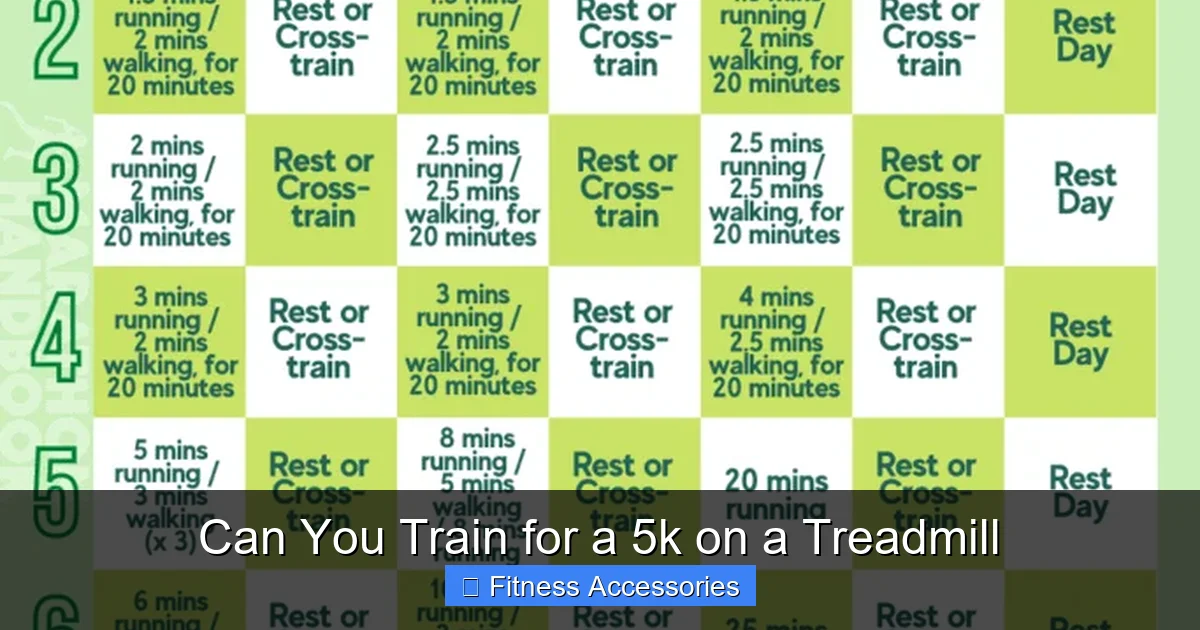
A solid 5k plan typically spans 8-12 weeks, balancing three key workout types: easy runs for aerobic base, speed/tempo work to raise your lactate threshold, and long runs for stamina and mental toughness. Here’s how to structure them on the treadmill.

Visual guide about Can You Train for a 5k on a Treadmill
Image source: marathonhandbook.com
The Weekly Blueprint
A beginner-friendly, 3-day-a-week plan might look like this:
- Day 1 (Tuesday): Easy Run – 20-30 minutes at a conversational pace (RPE 3-4). Focus on time on feet, not speed. Keep the incline at 1%.
- Day 2 (Thursday): Speed/Tempo Workout – This is where you get specific. Examples include:
- Tempo Intervals: 10 min warm-up, 3 x 8 minutes at your “comfortably hard” 5k goal pace (RPE 6-7) with 2 min easy jog recovery, 10 min cool-down.
- Hills: 10 min warm-up, 4 x 3 minutes at a challenging incline (4-6%) at a slower pace than road speed, 2 min flat recovery jog, 10 min cool-down. Builds strength.
- Day 3 (Saturday): Long Run – Start at 30 minutes and increase by 5 minutes each week, building to 40-45 minutes. Keep the pace 30-60 seconds slower than your goal 5k pace. This is aerobic conditioning. Maintain the 1% incline throughout.
Always include a 5-10 minute warm-up (easy jog) and cool-down (walk) around your key workouts.
Progression and Periodization
Don’t just repeat the same workout. Every 3-4 weeks, introduce a “step-back” week where you reduce your long run and intensity volume by about 30% to allow for recovery and supercompensation. Then, build back up. In the final 2-3 weeks before your race, start to sharpen. Reduce the volume (shorter runs) but maintain or slightly increase the intensity (pace) of your key workout to feel fresh and fast on race day. The treadmill makes this periodization easy to track and execute.
Maximizing Treadmill Workouts: Techniques and Variations
Simply running at a steady pace is good, but to truly prepare for a 5k, you need variety. The treadmill is a laboratory for specific stress.

Visual guide about Can You Train for a 5k on a Treadmill
Image source: i.pinimg.com
Mastering the Incline
As mentioned, a 1% incline should be your default for most runs. But use higher inclines strategically:
- Strength Hills: Run at a pace 30-45 seconds slower than your easy pace on a 4-6% incline for 2-4 minutes. This builds monumental leg strength without the downhill pounding that can cause soreness.
- Progression Runs: Start your run at a low incline (1%) and every 5 minutes, increase the incline by 0.5-1% while keeping your pace steady or allowing it to drop slightly. This simulates a race where you might fight fatigue on the later miles.
Precision Speed Work
The treadmill’s biggest strength is pace control. Use it for:
- Goal Pace Rehearsal: Once you’ve determined your target 5k finish time (e.g., 30:00 = 9:41/mile pace), run segments of 1-2 minutes at that exact pace during your easy runs. This neuromuscularly programs the speed.
- Ladder Intervals: A classic track workout you can perfectly replicate. Example: 1 min fast, 1 min easy; 2 min fast, 1 min easy; 3 min fast, 1 min easy; then back down. Set the “fast” pace to your 5k goal pace or slightly faster.
Active Recovery and Form Focus
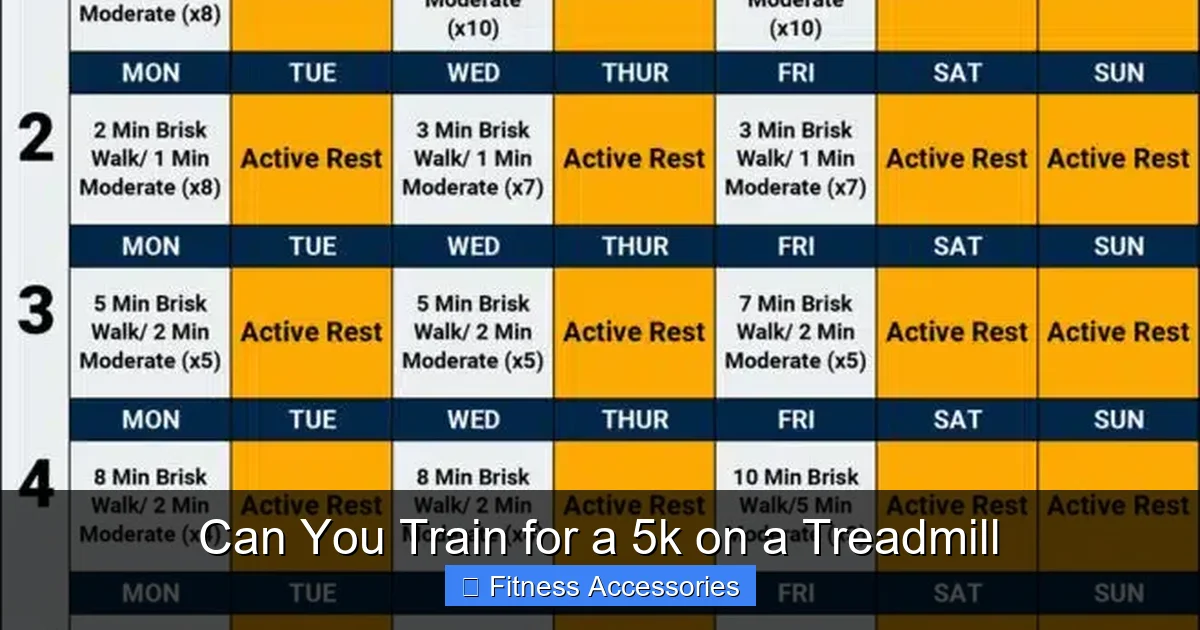
On your non-running days, or as a very easy second run, use the treadmill for walking intervals. Walk at a brisk pace (3.5-4.0 mph) with a high incline (8-10%). This is fantastic for active recovery, improving ankle mobility, and strengthening calves and tibialis anterior without impact. Alternatively, run for 2-3 minutes at an easy pace and consciously focus on one form element: high cadence (steps per minute), relaxed shoulders, or a slight forward lean from the ankles. The controlled environment makes form drills easier to concentrate on.
Overcoming Common Treadmill Training Challenges
Training on a “dreadmill” comes with its own set of mental and physical hurdles. Here’s how to conquer them.
Boredom and Mental Fatigue
This is the number one complaint. The solution is stimulation and segmentation.
- Entertainment with Purpose: Watch a show or listen to podcasts/audiobooks, but only during your easy, steady-state runs. For your hard workouts, music with a driving beat is better, or focus on the metrics on the console.
- Break Up the Time: Don’t just stare at the clock. Use high-intensity interval training (HIIT) principles. A 30-minute run can be: 5 min warm-up, then 10 rounds of (1 min run / 1 min walk), then 5 min cool-down. The time will fly by.
- Virtual Routes and Apps: Use apps like Zwift, Nike Run Club, or Peloton App that offer scenic, interactive runs. The changing landscapes and challenges can make a 30-minute run feel like an adventure.
Gait and Posture Drift
It’s easy to start “sitting” in your stride—leaning back and overstriding—because the belt pulls you. This is inefficient and can lead to injury.
- Check Your Form: Every 5 minutes, do a quick posture check. Your head should be up, shoulders relaxed and down, core engaged. Imagine a string pulling your head toward the ceiling.
- Shorten Your Stride: Focus on a quick, light cadence (aim for 170-180 steps per minute). A higher cadence naturally prevents overstriding. You can use a metronome app to practice.
- Look Ahead: Place the treadmill console at eye level or slightly below. Do not stare at your feet. Look at a spot on the wall or TV 6-10 feet in front of you.
Temperature and Hydration
Treadmill rooms can get hot and stuffy, especially in a home gym. You sweat more, but it’s evaporating into the air, not cooling you as effectively as a breeze.
- Create Airflow: Position a fan directly in front of you. This is non-negotiable for longer runs. It mimics wind resistance and keeps you cool.
- Hydrate Proactively: Drink 16-20 oz of water 1-2 hours before your run. For runs longer than 45 minutes, keep a water bottle within reach and take small sips every 10-15 minutes. Weigh yourself before and after a long run; for every pound lost, drink 16-24 oz of fluid.
- Dress for the Environment: Wear technical, moisture-wicking clothing. You’ll be warmer than outside, so dress lighter than you would for a similar outdoor temperature.
From Treadmill to Race Day: Making the Transition
This is the most critical phase. You’ve built your engine on the treadmill, but a 5k is an outdoor event on a potentially hilly, crowded course. You must bridge the gap.
The Essential Outdoor “Bridge” Runs
Starting 3-4 weeks before your race, begin replacing one of your weekly treadmill runs with an outdoor run. Specifically, make your long weekend run an outdoor run for the last 3-4 weeks of your plan. This does two things: it acclimates your legs and joints to the harder impact and variable surface, and it trains your brain to self-regulate pace without a belt moving for you. You’ll learn what your goal pace actually feels like without a digital readout telling you. If weather or safety prevents an outdoor run, do your key speed workout outside. The priority is to expose your body to the specific demands of road running before race day.
Pacing Strategy for Race Day
Your treadmill training has taught you your pace. Now, apply it. The classic 5k strategy is to start slightly slower than your goal pace for the first mile. Let the crowd carry you, but hold back. By mile 2, you should be at your goal pace. In the final mile (or final 0.5 miles), gradually increase your effort. Your treadmill tempo runs have prepared your body to hold that “comfortably hard” pace. Trust the work you’ve done. Without the belt to set your speed, you must rely on perceived exertion and, if you wear one, your GPS watch. Check it at each mile marker, but don’t obsess over every second.
Mental Preparation and Course Recon
If possible, run or drive the race course beforehand. Know where the hills are, where the turns are, and where the crowd support will be. This mental map is powerful. On race morning, your warm-up should be an easy 10-15 minute jog outdoors (or on the treadmill if absolutely necessary) to feel the ground and activate your legs. The transition from treadmill training to race day is 80% mental. You’ve done the physical work. Now, trust your fitness, stick to your plan, and enjoy the experience of all that outdoor running with other people.
Conclusion: Your Treadmill is a 5k Training Powerhouse
So, can you train for a 5k on a treadmill? The evidence and experience say a resounding yes. It is a legitimate, scientifically sound, and often superior method for building the specific fitness required for a 3.1-mile race. The treadmill’s control, consistency, and low-impact nature allow you to focus purely on effort, build volume safely, and execute precise speed sessions that are harder to replicate outdoors.
The secret to success lies in intentionality. Don’t just run mindlessly. Use the incline, structure your weeks with a mix of easy, hard, and long efforts, and listen to your body’s signals over the console’s numbers. Most importantly, honor the need to transition to the road before your race. Blend the controlled perfection of the treadmill with the gritty reality of outdoor running, and you will arrive at the start line not just prepared, but confident. Lace up, hit start, and build your 5k fitness one controlled, powerful mile at a time. The finish line is waiting.
Frequently Asked Questions
Is running on a treadmill easier than running outside?
Yes, at the same speed, treadmill running is generally slightly easier due to the belt assist and lack of wind resistance. This is why adding a 1% incline is recommended to better simulate outdoor effort. However, the controlled environment can allow for higher-quality, more consistent workouts that ultimately build great fitness.
How do I figure out my 5k goal pace on a treadmill?
Start with a recent 5k or 10k race time if you have one. Use an online pace calculator to find your goal mile pace. If you’re new, use a “run/walk” strategy goal. Once on the treadmill, set the speed to match that calculated pace for your tempo workouts. You’ll quickly learn what that effort feels like (RPE 6-7).
Should I always run with a 1% incline on the treadmill?
For the vast majority of your training runs—especially easy runs, long runs, and tempo runs—yes, a 1% incline should be your default to account for the belt assist and simulate outdoor conditions. You can use higher inclines (2-6%) for specific strength-building hill repeats, and a 0% incline for very easy recovery jogs or walking.
What’s the best way to avoid getting bored on long treadmill runs?
Plan ahead! Create a structured workout instead of a steady jog: try intervals, a progressive incline run, or a “pyramid” speed session. Use entertainment strategically—podcasts for easy miles, high-energy music for hard efforts. Consider using an interactive app like Zwift or Nike Run Club that provides scenic routes and community challenges to keep your mind engaged.
Do I need to drink water during a treadmill 5k training run?
For runs under 45-60 minutes, you likely don’t need to drink mid-run if you’re well-hydrated beforehand. However, because treadmill environments can be warm and you may sweat more than you realize, it’s a smart habit to have a water bottle nearby and take small sips if you feel the need, especially on longer “long run” days. Always hydrate well after your run.
Will I be at a disadvantage if I only train on a treadmill for my first 5k?
You will be well-prepared fitness-wise, but you may face a slight adjustment on race day. The impact of concrete, the need to self-pace, the turns, and the crowd can feel novel. To minimize this, complete your last 2-3 long runs and your final key speed workout outdoors. This simple bridge will make your transition smooth and help you execute your plan on race day.