Can I Put a Treadmill on the Second Floor

Yes, you can often put a treadmill on the second floor, but it requires careful planning and assessment. The primary concerns are the total weight (treadmill + user), potential vibration and noise transmission, and your home’s specific structural capacity. Always verify your floor’s weight limit, prioritize strategic placement over load-bearing walls, and use vibration-dampening accessories. When in doubt, consult a structural engineer to ensure safety and avoid costly damage.
Key Takeaways
- Structural Assessment is Non-Negotiable: Never assume your floor can handle the load. You must understand your home’s construction, joist sizing, and span to determine safe placement.
- Weight is More Than the Treadmill’s Tag: Factor in the maximum user weight plus dynamic impact forces, which can be 1.5-2x the static weight, when calculating total floor load.
- Vibration and Noise are Manageable: With the right combination of a high-quality rubber mat, a specialized treadmill platform, and strategic placement, you can drastically reduce disturbance to rooms below.
- Location Matters More Than You Think: Placing the treadmill perpendicular to joists and on an interior wall, away from shared walls with neighbors, is critical for minimizing risk and nuisance.
- Your Home’s Age and Style Dictates the Rules: Modern homes with engineered joists often have higher design loads than older homes with cut-and-fit lumber or balloon framing, which may require extra caution.
- Professional Validation Brings Peace of Mind: A brief consultation with a structural engineer or experienced contractor is a wise investment to confirm your plan and protect your home’s integrity.
- Alternatives Exist if Risk is Too High: If your second floor is unsuitable, consider basement installation, main-floor placement, a folding treadmill, or a different cardio machine like an exercise bike.
📑 Table of Contents
- So, You Want a Treadmill Upstairs…
- Understanding Your Home’s Skeleton: Floors, Joists, and Load Capacity
- The Dual Dragons: Noise and Vibration
- Weight Limits and Calculating Your Total Load
- Strategic Placement: It’s All About the Map
- When the Second Floor is a Firm “No”: Smart Alternatives
- Expert Tips for Peace of Mind and Long-Term Happiness
- Conclusion: A Confident “Yes, If…”
So, You Want a Treadmill Upstairs…
You’ve done the research, compared models, and finally decided on the perfect treadmill to bring your fitness goals home. The vision is clear: a dedicated space for your daily run, right in the comfort of your own house. But then a simple, yet terrifying, question bubbles up: Can I put a treadmill on the second floor? It’s a common worry for homeowners in split-levels, colonials, and any multi-story abode. The idea of all that machinery, plus your bouncing stride, hovering above the living room or kitchen can spark images of creaking floors and, worse, structural failure. Let’s be clear upfront: for the vast majority of modern homes, the answer is yes, you can. However, that “yes” comes with a very important set of conditions, caveats, and smart strategies. This isn’t about a simple yes or no; it’s about a responsible “yes, if…”
The fear isn’t irrational. A treadmill is one of the heaviest, most dynamically loaded pieces of home fitness equipment. We’re talking 200-300 pounds of machine weight, plus the dynamic impact of a 150-250 pound person running. That’s a significant, rhythmic force transferring into your floor system. But here’s the encouraging part: residential floors are engineered to carry “live loads” (people, furniture) far beyond what a single treadmill imposes. The real issues aren’t typically about catastrophic collapse—that’s extraordinarily rare—but about nuisance (noise, vibration) and long-term stress on an older or uniquely constructed home. This guide will walk you through everything you need to know, from the nuts and bolts of your home’s skeleton to the rubber mats that save your downstairs neighbor’s sanity. We’ll turn that worry into a confident, safe plan.
Understanding Your Home’s Skeleton: Floors, Joists, and Load Capacity
Before you even unbox the treadmill, you need to become acquainted with the bones of your house. Your second-floor floor is not a solid slab; it’s a system. The primary structural members are the floor joists. These are the long, parallel beams (usually wood, sometimes steel) that run from one side of the room or house to the other, supporting the subfloor and everything on it. The capacity of your floor depends almost entirely on these joists: their material (dimensional lumber like 2x10s, engineered I-joists, or old, hand-hewn timbers), their size (depth and width), their length (the “span”), and how closely they’re spaced (typically 16” or 24” on center).
How Much Weight Can a Floor *Really* Hold?
Building codes provide guidelines. For residential upstairs rooms, the typical design load is 40 pounds per square foot (psf) for “live load” (movable objects and people) plus 10 psf for “dead load” (the static weight of the floor itself, walls, etc.). This is a minimum standard. A well-built modern home often exceeds this. To put this in perspective, a 10’x12’ room (120 sq ft) has a design live load capacity of 4,800 pounds (120 sq ft x 40 psf). A heavy treadmill at 300 lbs plus a 200 lb user is 500 lbs. Spread over a small area, that creates a very high “point load” rather than an even distribution, which is the core of the concern. The joist directly under the treadmill’s feet bears the brunt. If that joist is strong, and the load is centered over it or between two joists, the point load is manageable. The risk increases if the load falls near the middle of a long joist span, where the joist experiences its maximum bending stress.
The Critical Role of Joist Direction and Wall Support
Find your joist direction. The simplest way is to look at the floor from below (in a basement or garage) or at the baseboard nails in the room above. Joists typically run perpendicular to the exterior walls. This is your most important piece of information. You want your treadmill’s weight centered over a joist or, even better, placed so its weight is shared between two joists. Why? Because a joist is strongest at its ends, where it bears on a wall or beam. It is weakest in the middle of its span. Placing a heavy point load at mid-span on a long, undersized joist is the scenario that causes excessive sag (deflection) and noise. Therefore, your ideal location is against an interior, load-bearing wall. These walls sit directly over a foundation wall or a primary support beam, meaning the joists end there with solid bearing. Exterior walls are also good bearing points. Avoid placing the treadmill with its weight centered in the middle of a room, especially on a floor with long joist spans (e.g., 14+ feet).
The Dual Dragons: Noise and Vibration
Even if your floor is structurally sound, the second biggest concern (and the one most likely to draw complaints) is the transmission of noise and vibration. A treadmill in operation is not a silent machine. You have the hum of the motor, the thump-thump-thump of the belt, and most critically, the impact forces from each footfall. These vibrations travel efficiently through the building’s frame—through the joists, into the walls, and down to the floors below. What feels like a modest thump to you can sound like a bass drum or a furniture-shaking tremor to someone downstairs. Solving this is about isolation and damping.
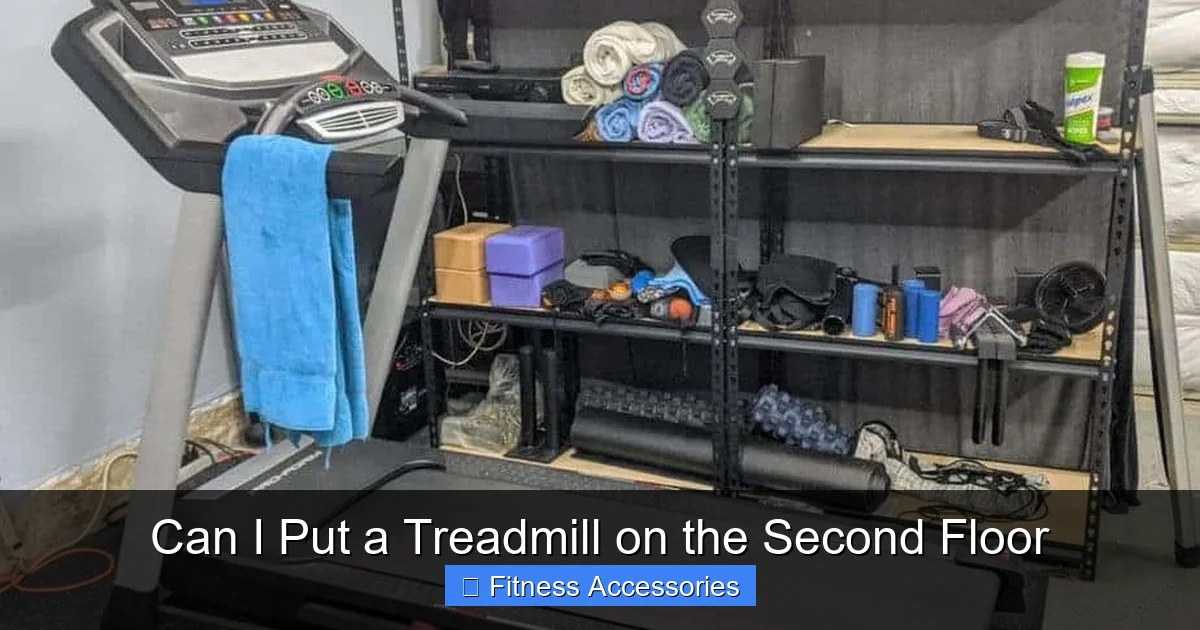
Visual guide about Can I Put a Treadmill on the Second Floor
Image source: gymcrafter.com
Why Your Downstairs Neighbors (or Family) Are Your Best Consultants
Before you do anything else, have a candid conversation with anyone who lives in the space directly below your intended treadmill room. Ask them about their schedule. When are they home? When are they sensitive to noise (working from home, sleeping during the day)? This isn’t just about being a good neighbor; it’s practical intelligence. Their tolerance and routine will dictate your best times to run and the level of mitigation you need. A simple “Hey, I’m planning to put a treadmill up here. I want to be super respectful—are there times that would be particularly bad?” can save you from major conflict later.
The Arsenal of Anti-Vibration Tools
You cannot skip this step. A combination of products is almost always necessary for effective vibration control.
- High-Density Rubber Treadmill Mat (Non-Negotiable): This is your first line of defense. Get a thick (at least 3/4”), dense rubber mat, specifically sold for treadmills or gym equipment. Do not use a thin, foam yoga mat or a cheap PVC mat. The rubber must be dense to absorb impact energy and prevent it from transmitting into the floor. It should extend at least 6-12 inches beyond the treadmill’s footprint on all sides.
- Treadmill Isolation Pads/Platforms: These are specialized pads (often made of Sorbothane or dense rubber composites) that go under each of the treadmill’s feet or leveling pads. They are more effective than a mat alone at decoupling the machine from the floor structure. Some systems use a full platform—a rigid board (like plywood) on top of isolators—to create a stable, floating surface.
- Strategic Flooring: If the room has carpet, the treadmill will sink and become unstable. You must place a hard, smooth surface (like a piece of 1/2” plywood or a commercial treadmill platform) on top of the carpet and under the mat to create a firm, level base. This also helps distribute the load slightly.
The goal is to create a system where the treadmill’s vibration is absorbed by the rubber before it can couple with the rigid floor joists. Think of it as putting the treadmill on a “soft” island within a hard room.
Weight Limits and Calculating Your Total Load
Let’s get specific about numbers. The manufacturer’s listed weight for a treadmill is its “shipping weight” or “product weight.” For a robust home model, this is often 200-350 lbs. The “user weight capacity” is another number, like 300 lbs or 400 lbs. You must consider both together. The worst-case scenario for your floor is the maximum user running at full speed. The dynamic impact force of a running footstrike can be 1.5 to 2 times the person’s body weight. So, a 200 lb person running could impart a 300-400 lb impact force at each step. This is an oscillating, dynamic load, which is more demanding on a structure than a static 400 lb weight sitting still.
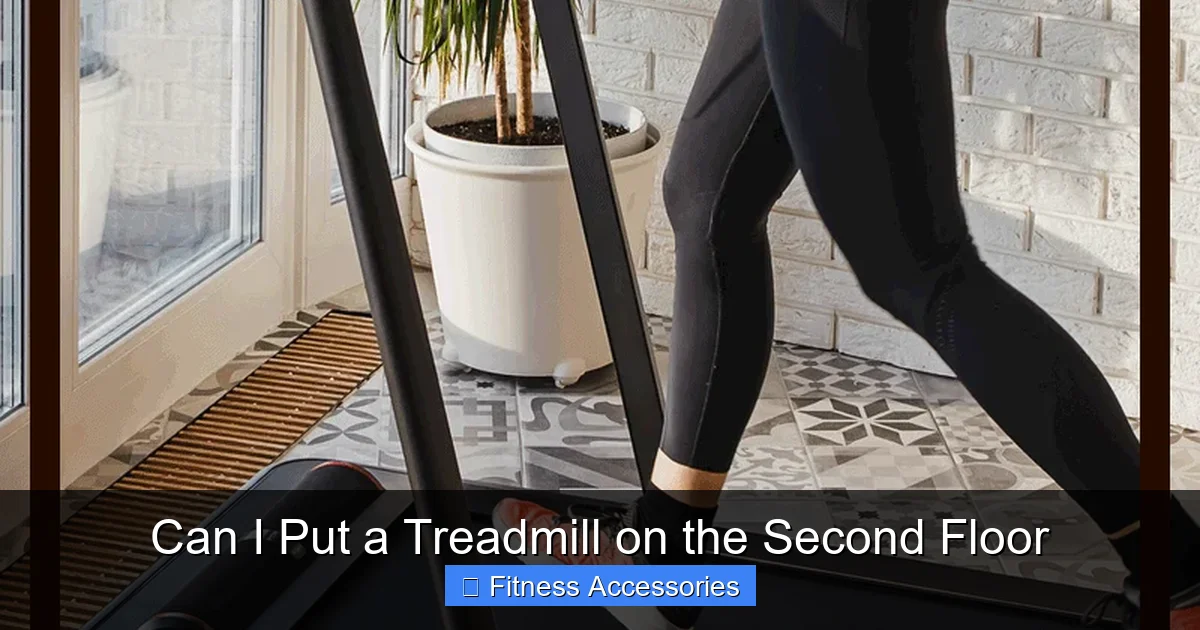
Visual guide about Can I Put a Treadmill on the Second Floor
Image source: uooz.com
Doing the Math: A Simple Safety Check
You can perform a basic sanity check. Find your joist size and spacing (16” or 24” on center is standard). For a common 2×10 joist (actual 1.5”x9.25”) of #2 Southern Pine, spaced 16” apart, spanning 14 feet, its allowable uniform load is quite high. However, we’re dealing with a point load. A conservative rule of thumb for older homes with 2×8 or shorter 2×10 joists is to avoid concentrating more than 300-400 pounds on a single point over a joist. If your treadmill + max user dynamic force approaches 500+ lbs, you need to be more careful. The solution is to distribute the load. Use a thick, rigid platform (like a 3/4” sheet of plywood) that spans across multiple joists (at least two, preferably three or four). Place the treadmill on this platform. The platform’s rigidity spreads the point load from the treadmill’s feet over a larger area of joist, effectively turning a severe point load into a more forgiving, slightly wider uniform load. This is a crucial trick for lighter-framed homes.
Strategic Placement: It’s All About the Map
You’ve assessed your joists, bought your mat and platform. Now, where exactly do you put it? Location is everything.
- Priority #1: Perpendicular to Joists: Position the treadmill so its long sides run across the joists (i.e., the joists run parallel to the short sides of the treadmill). This ensures the weight of the machine and the user is distributed over multiple joists along its length. If you place it parallel to the joists, all its weight may land on just one or two joists along its entire length, creating a massive point load.
- Priority #2: Against an Interior Load-Bearing Wall: As mentioned, this places the heaviest load closest to the joist’s support point (the wall), where the joist is strongest and experiences the least bending.
- Priority #3: Avoid Mid-Span and Exterior Walls on Gable Ends: The absolute worst spot is the center of a large room, especially if your joists have a long, unsupported span. Also, be cautious of placing it against an exterior wall that is not load-bearing (like a gable end wall in a ranch home), as the joists may only be anchored on one end there.
- Priority #4: Stay Away from Shared Walls: If you have a townhome, condo, or apartment, noise transmission through shared walls is a huge issue. Place the treadmill on an exterior wall or an interior wall that does not adjoin your neighbor’s unit.
- Priority #5: Consider the Room Below: If the room below is a kitchen or bathroom with tile, vibration will transmit loudly. A carpeted bedroom or living room is more forgiving. This might influence your room choice.
Use a stud finder to map your joists. Mark their centers on the floor. Drywall can hide blocking or fireplaces, so be aware of potential obstructions. Your final spot should align the treadmill’s feet with joist centers or, better yet, position it so the platform bridges several joists.
When the Second Floor is a Firm “No”: Smart Alternatives
What if your investigation reveals red flags? Maybe you have an old home with 2×6 joists spanning 16 feet. Maybe you’re in a condo with questionable construction. Maybe the downstairs neighbor is a night-shift nurse who sleeps days. Sometimes, the second floor is just not the right spot. Don’t force it. Here are excellent alternatives:
- The Basement: Often the best solution. Concrete slab floors have infinite load capacity. The only concerns are ceiling height and potential for moisture. Vibration is less of an issue as it dissipates into the earth, but you still need a mat to protect the floor and reduce machine wear.
- The Main Floor (Over a Crawl Space or Garage): A first-floor room over a crawl space can be similar to a second floor, but often the joists are larger and the span may be shorter because they are supported by the foundation walls. A room over an unconditioned garage is trickier—garage ceilings are often not designed for heavy live loads, so you must verify the joist sizing above the garage.
- A Folding or Lightweight Treadmill: If space and weight are the primary constraints, consider a high-quality folding treadmill. These often weigh 150-200 lbs and have a smaller footprint, dramatically reducing both static and dynamic load. They are not ideal for heavy runners but are perfect for walkers and light joggers.
- Switch Cardio Modalities: An exercise bike (upright or recumbent), elliptical, or rowing machine can provide a superb cardiovascular workout with a fraction of the weight and impact. An elliptical, for example, has a much smoother, lower-impact motion that generates far less vibration.
- Commercial-Grade “Silent” Treadmills: Some high-end commercial models are engineered specifically for low vibration and noise, with better deck suspension and isolation systems. They are expensive but might be the solution if upstairs installation is non-negotiable and budget allows.
Choosing an alternative isn’t failure; it’s smart homeownership. It protects your investment in your house and your relationships.
Expert Tips for Peace of Mind and Long-Term Happiness
You’ve done your homework. You’ve chosen the spot, bought the mat, and maybe even laid the platform. Here are the final pro-tips to ensure your upstairs gym is a source of joy, not anxiety.
- Get a Professional Opinion (The $300 Peace of Mind): For any home over 20 years old, or if you have any doubt whatsoever, hire a structural engineer for a one-hour site visit. It will cost $300-$500. They will tell you definitively if your joists are adequate, where to place the machine, and if any reinforcement is needed. This is the single best investment you can make. A general contractor can also give a good assessment, but an engineer’s stamp is the gold standard.
- Reinforcement is Possible (But Usually Overkill): If an engineer says your joists are marginal, solutions exist but are invasive. You can sister new joists alongside existing ones (requires removing ceiling drywall below). You can add a support beam and post underneath (may require removing finished basement ceiling). These are major projects. The goal should be to avoid them through smart placement and load distribution.
- Listen and Feel After Installation: After you set up and run for the first time, go to the room below. Have someone run on the treadmill while you stand in various spots. Listen for creaks, feel for vibrations. Does the floor flex noticeably? If so, you may need a stiffer platform or a different location. A little flex is normal; excessive, bouncy movement is not.
- Maintain Your Machine Religiously: A well-maintained treadmill is a quieter, smoother treadmill. Lubricate the belt as per the manual, keep it clean of dust and debris, and tighten all bolts regularly. A squeaky, dry machine will transmit far more noise and vibration than a smooth one.
- Communicate and Be Considerate: Set “quiet hours” for your runs if necessary. A 30-minute run at 6 AM might be your only option, but if it shakes the house, it’s not sustainable. Being proactive and respectful goes a long way.
- Check Your Homeowner’s Insurance Policy: While extremely unlikely, review your policy. Some policies have clauses about damage from “wear and tear” or “gradual deterioration.” A properly installed treadmill should not cause issues, but it’s good to know your coverage.
Ultimately, putting a treadmill on the second floor is a solvable puzzle. It blends an understanding of basic structural principles with practical vibration control. By respecting the engineering of your home and investing in the right isolation tools, you can create a fantastic, convenient upstairs gym that brings you fitness benefits for years without costing you in repairs or neighborly disputes.
Conclusion: A Confident “Yes, If…”
So, can you put a treadmill on the second floor? The definitive answer is: Yes, if you do your homework. This journey began with a simple question but led us through the anatomy of your floor, the physics of vibration, and the art of strategic placement. The core pillars of a successful installation are threefold: Know Your Structure (joist direction, bearing walls, approximate capacity), Control the Vibration (invest in a quality rubber mat and isolation pads/platform), and Choose the Perfect Spot (against an interior wall, perpendicular to joists, avoiding mid-span).
For most homeowners in houses built in the last 50 years, following these guidelines will result in a perfectly safe, quiet, and stable setup. The fear of the floor collapsing is mostly a myth; the real battle is against the thump-thump-thump. That’s a battle you can win with the right gear and positioning. If your home is older, has long joist spans, or you simply feel uneasy, the $300-$500 for a structural engineer’s blessing is the best insurance policy you can buy. It transforms your guess into a guarantee. And if the engineer or your own assessment reveals the second floor is unsuitable, remember the excellent alternatives: the basement, a main-floor room, or a different, lighter piece of cardio equipment. The goal is a sustainable, enjoyable home workout routine, not a source of stress. With this knowledge, you can make that goal a reality, right where you want it.
Frequently Asked Questions
Will a treadmill crack my second-floor ceiling below?
No, a properly installed treadmill on a structurally sound floor will not crack the ceiling below. Ceiling cracks are usually caused by differential settlement of the foundation or major structural issues, not by a single point load like a treadmill. You might cause minor nail pops in the drywall due to vibration, but these are cosmetic and repairable.
Does carpet make a difference for treadmill placement upstairs?
Carpet is a problem, not a solution. It’s unstable and will cause the treadmill to shift, rock, and wear unevenly. You must place a firm, rigid platform (like a piece of 3/4” plywood) on top of the carpet to create a stable base. Then, place your rubber mat and treadmill on that platform. This also helps slightly with vibration distribution.
What is the single most important factor for safe upstairs treadmill use?
Strategic placement relative to your floor joists. Positioning the treadmill so its weight is centered over a load-bearing wall or, at minimum, perpendicular across multiple joists (not parallel to them) is the most critical factor for preventing excessive floor flex and potential long-term stress.
How much does a good vibration-dampening setup cost?
A effective setup includes a high-density 3/4″ rubber mat (~$100-$200), a rigid platform (a sheet of plywood, ~$50), and possibly specialized isolation pads (~$50-$150). Total cost typically ranges from $200 to $500, which is a small price to pay for protecting your home and ensuring peace.
Should I be worried if my home has “cut-and-fit” or “random” lumber joists?
Yes, exercise extra caution. Older homes (pre-1950s) often have joists of inconsistent size and species, with uncertain spans and bearing. These are less predictable than modern, uniform engineered joists. In such homes, professional assessment is highly recommended before installing a treadmill upstairs.
Can I put a treadmill on a second-floor condo or apartment?
You must check your building’s rules and lease/ownership agreement first. Many have specific weight restrictions for upstairs units. Even if allowed, the risk of noise nuisance to downstairs neighbors is extremely high. A very quiet, low-impact machine like an exercise bike is almost always a better choice in multi-unit buildings.