Yes, you are absolutely supposed to wear shoes on a treadmill. Unlike some outdoor surfaces, the moving belt and deck create a unique environment where footwear is a critical safety and performance tool. Going barefoot or in improper socks significantly increases your risk of injury from friction burns, slips, and impact stress. The right athletic shoe provides essential cushioning, traction, and stability, making your workout safer and more effective.
Key Takeaways
- Shoes Are Mandatory: Wearing proper athletic shoes on a treadmill is a non-negotiable safety rule, not a suggestion, to prevent serious foot and leg injuries.
- Treadmill-Specific Design Matters: Look for shoes with good forefoot cushioning, a flexible yet supportive sole, and reliable traction to handle the repetitive, linear motion.
- Barefoot Running is a Different Activity: The biomechanics and risks of barefoot running outdoors on varied terrain do not apply to the consistent, high-friction environment of a treadmill.
- Wrong Shoes Cause Problems: Wearing old, worn-out shoes, shoes with aggressive trail treads, or minimalist “zero-drop” shoes without adaptation can lead to pain and injury.
- Socks-Only is Dangerous: The combination of sweat and a moving belt makes socks-only a fast track to painful blisters and a high risk of slipping off the machine.
- Hygiene and Machine Care: Shoes protect your feet and also keep your treadmill deck cleaner by containing sweat and debris, which extends the machine’s lifespan.
- Listen to Your Feet: If you experience new hot spots, numbness, or pain during a treadmill session, your footwear is the first thing to evaluate and likely replace.
📑 Table of Contents
- The Unwritten Rule That Isn’t Actually Unwritten
- The Anatomy of a Proper Treadmill Shoe
- The Real Risks of Going Shoeless (Or Sock-Footed)
- Special Cases: What About Minimalist Shoes and Barefoot-Style Trainers?
- Expert Opinions and Industry Stance
- Practical Tips: Choosing, Using, and Maintaining Your Treadmill Shoes
- Conclusion: Your Feet Will Thank You
The Unwritten Rule That Isn’t Actually Unwritten
Step into any commercial gym, glance at the rows of treadmills, and you’ll see a universal sight: people wearing running shoes. Yet, a persistent myth swirls in online forums and among new fitness enthusiasts: the idea that maybe, just maybe, you could skip the shoes on a treadmill. Perhaps it’s a carryover from the barefoot running trend, a desire for a “natural” feel, or just the simple thought that “it’s just a flat belt, how bad could it be?” The answer is unequivocal. You are supposed to, and must, wear shoes on a treadmill. It is a fundamental rule of indoor cardio safety, as critical as staying hydrated or starting with a warm-up.
This isn’t about gym etiquette or arbitrary policy; it’s about physics and physiology. The treadmill deck is not a static, forgiving track. It’s a constantly moving surface, often textured for grip, spinning at speeds you control. Your foot strikes it with force repeatedly, sometimes thousands of times in a single session. Without the intermediary of a proper shoe, that force is transmitted directly and harshly into your musculoskeletal system. Furthermore, the friction between skin and the moving belt is a recipe for painful, sometimes severe, abrasions known as “treadmill burn.” Let’s dismantle the myths and build a clear, evidence-based guide to why your treadmill shoes are your most important piece of equipment.
The Anatomy of a Proper Treadmill Shoe
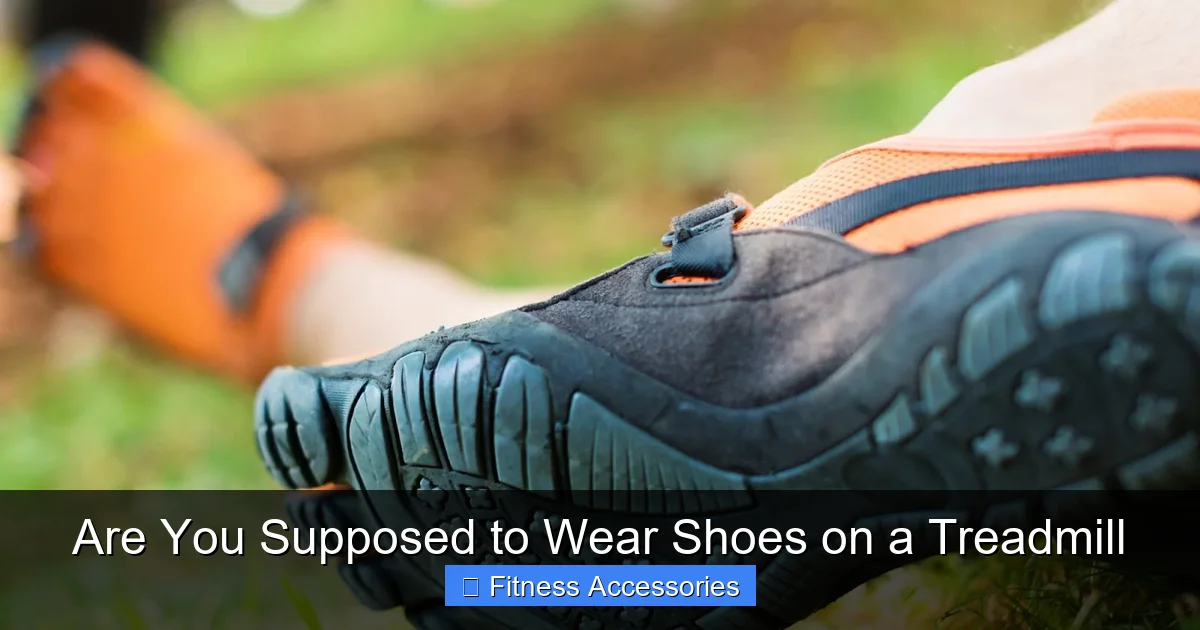
Not all athletic shoes are created equal, and the “right” shoe for a treadmill might differ slightly from your favorite trail runner or court shoe. The ideal treadmill shoe is essentially a reliable road-running shoe. Its primary jobs are to absorb the repetitive impact of heel-toe striking, provide a stable platform for push-off, and offer consistent traction on a predictable, dry surface.
Visual guide about Are You Supposed to Wear Shoes on a Treadmill
Image source: treadmillreviews.com
Cushioning and Impact Absorption
The heel strike of a typical running gait delivers a force of 2-3 times your body weight with each step. Treadmill running, because the belt moves under you, can sometimes feel slightly “softer” than concrete, but it is still a hard impact surface. A shoe with adequate midsole cushioning (the foam layer between the outsole and insole) acts as a shock absorber. It compresses on impact and rebounds, dissipating energy that would otherwise travel up through your ankles, knees, hips, and spine. Look for shoes labeled for “running” or “road running.” These are engineered with this high-impact repetition in mind. The cushioning should feel responsive, not mushy, and should be evenly distributed. Pay special attention to the forefoot cushioning, as this is the last point of contact before your foot lifts for the next stride.
Traction and Outsole Design
The treadmill belt is typically made of rubber or a rubber-like composite with a slight texture. You need a shoe outsole that grips this surface reliably without being so aggressive that it catches. Road running shoes feature a smooth, patterned rubber outsole with shallow flex grooves. This design provides the perfect balance: enough grip to prevent your foot from sliding backward as you push off, but enough flexibility to allow a natural toe-off. Avoid shoes with deep, lugged “trail” treads. These can catch unpredictably on the belt’s texture, potentially twisting your ankle or knee. They also tend to be heavier and stiffer, which disrupts your natural gait cycle on a treadmill.
Stability and Support
Stability is about controlling excessive motion, primarily overpronation (the foot rolling inward too much). A treadmill’s linear motion means you’re not dealing with uneven terrain, but your foot’s natural biomechanics don’t change. If you overpronate, a stability shoe with a firmer medial post (denser foam on the inside midsole) can help guide your foot into a more neutral alignment, preventing strain on your arch and Achilles tendon over thousands of repetitions. For neutral runners, a “neutral” cushioned shoe is perfect. The key is a secure fit. Your heel should be locked in the heel cup with minimal slippage, and the midfoot should feel snugly wrapped by the shoe’s upper material. This prevents internal foot movement that causes blisters and reduces efficiency.
The Real Risks of Going Shoeless (Or Sock-Footed)
Choosing to go without shoes on a treadmill isn’t a quirky personal choice; it’s inviting a host of preventable injuries. The moving belt changes everything from what you experience on a static floor.
Visual guide about Are You Supposed to Wear Shoes on a Treadmill
Image source: treadmillsfans.com
Treadmill Burn: The Most Immediate Threat
This is the classic, graphic injury. It occurs when the skin on your foot, typically the ball of the foot or toes, comes into contact with the moving belt and is dragged along it. The friction is intense and immediate. Within seconds, you can suffer from a painful abrasion that strips away layers of skin. These burns can range from a mild redness to deep, raw wounds that require medical attention and weeks to heal. They are excruciatingly painful and can become infected. The belt’s speed multiplies the damage—a faster speed equals a worse burn in less time. Shoes provide an essential protective barrier between your delicate skin and this abrasive surface.
Impact Injuries and Stress Fractures
Without the cushioning of a shoe, every step sends a sharp jolt up your skeletal system. Over time, this repetitive stress can lead to plantar fasciitis (inflammation of the foot’s bottom tissue), Achilles tendonitis, shin splints, and even stress fractures in the metatarsals (the long bones in your foot). The human foot is a marvel of biological engineering, but it evolved for varied terrain, not for the relentless, identical impact of a treadmill. The shoe’s midsole acts as a necessary attenuator. Going barefoot removes this buffer, forcing your bones, tendons, and ligaments to absorb forces they aren’t optimally designed for in this specific context.
Slipping and Loss of Control
Sweat is a natural byproduct of exercise. Even a small amount of moisture on the bottom of a bare foot or a thin sock creates a near-zero friction coefficient against the treadmill belt. A single slip during a powerful push-off phase can cause your foot to shoot backward from under you. This results in a violent, uncontrolled fall—often backward onto the hard deck or, worse, into the machine’s console or side rails. This can cause bruises, sprains, fractures, or head injuries. Shoes with a rubber outsole maintain traction even when slightly damp, giving you reliable control over your position on the belt at all times.
Blisters and Skin Breakdown
Even if you avoid a full-throttle burn, the constant rubbing of a sock against skin, amplified by the belt’s motion, will cause blisters. The heel is particularly vulnerable as it may lift slightly with each stride. Blisters might seem minor, but they can pop, become infected, and force you to alter your gait to avoid pain, which then creates a chain reaction of strain up your kinetic chain. A shoe’s smooth, seamless interior (especially if paired with proper socks) prevents this shear force on your skin.
Special Cases: What About Minimalist Shoes and Barefoot-Style Trainers?
The rise of minimalist footwear—shoes with little to no cushioning, a low “drop” (height difference between heel and forefoot), and a flexible sole—has blurred the lines for some. Can you use these on a treadmill? The answer is: with extreme caution and only if you are fully adapted.

Visual guide about Are You Supposed to Wear Shoes on a Treadmill
Image source: shoesglide.com
The Adaptation Requirement
Transitioning to minimalist footwear is a slow, deliberate process that can take months or even years. It requires strengthening the intrinsic muscles of your foot and lower leg, and changing your gait to often a more mid-foot strike. Doing this on a treadmill, where you cannot easily see or adjust your footstrike pattern in real-time and are locked into a linear path, is risky. The treadmill’s consistent speed can encourage overstriding (landing with your foot too far in front of your body), which is a primary cause of injury in heel-strikers. A minimalist shoe offers no protection against this impact. If you are not a seasoned barefoot or minimalist runner who has spent hundreds of hours adapting on safe, varied outdoor surfaces, do not use a minimalist shoe on a treadmill. Start with your well-cushioned road shoes.
The Treadmill is Not the Place to Experiment
The treadmill is a fantastic tool for controlled, measurable cardio. It is not an ideal laboratory for testing new running forms or footwear. The risks—the moving belt, the hard deck, the confined space—are too high. If you want to try minimalist running, do it slowly on a soft, natural surface like grass or a synthetic track, where you can stop instantly if you feel pain. Your treadmill sessions should be reserved for footwear you know your body can handle safely.
Expert Opinions and Industry Stance
Ask any podiatrist, physical therapist, or certified running coach, and you will receive a unanimous verdict: wear shoes on the treadmill. The American Council on Exercise (ACE), a leading fitness certification body, explicitly includes proper footwear in its guidelines for safe treadmill use. Their rationale centers on injury prevention and performance.
What the Professionals Say
“The treadmill is a high-repetition stress environment,” explains a common refrain among sports medicine doctors. “The cumulative load is enormous. A shoe is not a luxury; it’s a necessary piece of protective equipment, like a helmet for cycling.” They point to the biomechanics: the shoe corrects minor imbalances, absorbs shock, and manages heat and moisture. Furthermore, major treadmill manufacturers like Life Fitness and NordicTrack include warnings in their user manuals about wearing appropriate, closed-toe athletic shoes. Their warranties often do not cover injuries sustained while not using the equipment as intended, which includes being barefoot. The industry stance is clear and unified on this point.
The Hygiene Factor
Beyond personal safety, there’s a public health and equipment maintenance angle. Shoes contain the sweat and dead skin cells from your feet. Without them, these are deposited directly onto the treadmill belt and deck. This creates a moist, warm breeding ground for bacteria and fungi like those that cause athlete’s foot. It also accelerates the wear and tear on the belt material. For shared gym equipment, this is a significant concern. Wearing clean, dedicated treadmill shoes (or at least clean athletic shoes) is a matter of courtesy to the next user and helps maintain the expensive equipment.
Practical Tips: Choosing, Using, and Maintaining Your Treadmill Shoes
Now that the “why” is clear, let’s focus on the “how.” Making smart choices about your treadmill footwear will define your comfort and safety.
Buy for the Treadmill, Not Just the Activity
If you primarily run on a treadmill, buy a shoe designated for “road running.” If you also run outdoors on pavement, the same shoe will serve both purposes well. Get fitted at a specialty running store if possible. They can analyze your gait (how your foot strikes and rolls) and recommend a neutral, stability, or motion-control shoe. Bring your old shoes with you to show the wear pattern. Replace your shoes every 300-500 miles. The cushioning degrades long before the outsole looks worn. A loss of cushioning is a primary cause of impact-related injuries. Use a dedicated pair for your treadmill workouts to track mileage accurately and keep them dry and clean.
Socks Matter Too
Pair your shoes with proper athletic socks. Avoid cotton, which holds sweat and causes blisters. Choose synthetic blends (polyester, nylon, olefin) or merino wool that wick moisture away from your skin. The sock should fit snugly, without seams that rub, and come up high enough to protect your ankle from the shoe’s collar. Good socks are the second line of defense against blisters and discomfort.
Lace Up Properly
Don’t just tie your shoes haphazardly. Use a secure lacing pattern like the “heel lock” or “runner’s tie” to prevent your heel from slipping up and down inside the shoe. This slippage is a major cause of blisters and instability. The goal is a secure, comfortable fit that feels like an extension of your foot, not a loose bag.
Listen to Your Body and Your Shoes
New, sharp pain in your feet, shins, or knees during or after a treadmill run is a signal. First, check your shoes. Are they worn out? Do they have the right support for you? Second, consider your form. Are you overstriding? Sometimes, pain is the shoe’s fault, not yours. Don’t ignore it. Continuing to run in a shoe that’s causing pain is a direct path to a serious injury that will sideline you for months.
Conclusion: Your Feet Will Thank You
The question “Are you supposed to wear shoes on a treadmill?” has a simple, life-changing answer: yes. It is the single most effective thing you can do to ensure your indoor cardio sessions are safe, comfortable, and sustainable. Your shoes are the critical interface between your body and the machine. They absorb shock, provide traction, prevent catastrophic skin injuries, and support your natural biomechanics. Investing in a good pair of dedicated running shoes and using them every single time you step on the belt is not optional equipment—it’s the foundation of responsible fitness. It protects you from immediate dangers like treadmill burn and falls, and from long-term, nagging overuse injuries that can derail your health journey. So lace up, hit start, and run with confidence, knowing you’ve taken the essential step to safeguard your body and maximize your workout.
Frequently Asked Questions
Can I wear walking shoes or cross-training shoes on a treadmill?
Yes, but with caveats. Walking shoes are fine for walking workouts. Cross-trainers are designed for multi-directional movement and can be heavier and stiffer. For running or jogging, a dedicated running shoe is always the best choice for optimal cushioning and flexibility for that specific motion.
What about “five-toe” shoes or Vibrams? Are they safe for treadmills?
These are minimalist shoes. They are generally not recommended for treadmill use unless you are an extremely experienced user who has fully adapted to barefoot-style running over a long period. They offer no protection from impact or treadmill burn and increase slip risk due to less surface area on the belt.
I only do very light walking at slow speeds. Can I skip the shoes then?
No. Even at slow speeds, the belt is moving. A slip can still happen if your foot is damp. The friction burn risk, while lower, is still present if your foot accidentally drags. Furthermore, the impact, though lighter, is still repetitive. For any duration beyond a few minutes, shoes are necessary for hygiene and basic protection.
I have a home treadmill and use it barefoot in socks for short HIIT sessions. Is that okay?
It is not advisable. HIIT sessions involve explosive movements, rapid accelerations, and high heart rates, which increase sweat production. This dramatically raises your risk of slipping and suffering a severe burn if your foot loses traction. The risk far outweighs any perceived benefit of “freedom.”
Can I use my old, worn-out running shoes that I’ve retired from outdoor runs?
No. Once the midsole cushioning is compressed and the outsole is worn smooth, the shoe has lost its primary protective functions. Using worn-out shoes on a treadmill is a direct cause of impact injuries. A shoe’s lifespan is measured in miles, not years. Replace them when they’ve logged 300-500 miles, regardless of appearance.
What should I do if I get a treadmill burn?
Immediately stop the treadmill and carefully get off. Clean the wound gently with soap and water. Apply an antibiotic ointment and cover with a non-stick bandage. For a deep or large burn, seek medical attention. Do not run with an open wound. Allow it to heal fully before your next session, and this time, double-check your footwear is secure and intact.