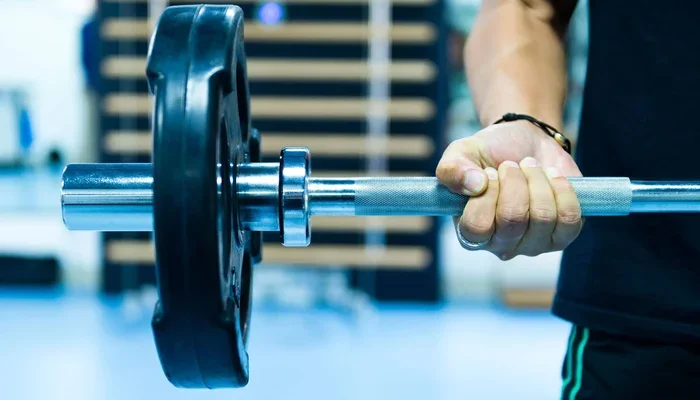
Are Dumbbells Better Than Barbells for Chest 2

Are dumbbells better than barbells for chest development? Both have unique benefits. Dumbbells offer a greater range of motion and better muscle isolation, while barbells allow you to lift heavier loads for raw strength. The best approach often combines both for complete chest development.
Key Takeaways
- Dumbbells provide a greater range of motion: They let your chest muscles stretch more deeply, which can lead to better muscle activation and growth.
- Barbells let you lift heavier: If your goal is raw strength and progressive overload, the barbell bench press is hard to beat.
- Dumbbells reduce injury risk: The natural movement path protects your shoulders and wrists from unnecessary strain.
- Both tools activate chest muscles differently: Research shows dumbbells may recruit more muscle fibers during the pressing phase.
- Combining both is often the best strategy: Use barbells for heavy compound work and dumbbells for isolation and detail work.
- Home lifters benefit more from dumbbells: They are more versatile and take up less space for a effective chest workout at home.
- Proper form matters more than equipment: No tool will build your chest if your technique is off.
📑 Table of Contents
- Are Dumbbells Better Than Barbells for Chest Workouts?
- Understanding the Chest Muscles
- Dumbbells vs Barbells: The Key Differences
- Pros and Cons of Dumbbells for Chest
- Pros and Cons of Barbells for Chest
- Which Is Better for Your Goals?
- How to Combine Both for Best Results
- Common Mistakes to Avoid
- Expert Insights and Real-World Experience
- Conclusion
Are Dumbbells Better Than Barbells for Chest Workouts?
If you have ever stood in a gym wondering whether to grab the dumbbells or load up the barbell for chest day, you are not alone. The debate over are dumbbells better than barbells for chest exercises has been going on for decades. Some lifters swear by the barbell bench press. Others swear by dumbbell presses and flies.
The truth is that both tools have real strengths. Neither one is a magic bullet. Your choice should depend on your goals, your experience level, and what you want to achieve with your chest exercises. This article breaks down everything you need to know.
We will look at muscle activation, range of motion, safety, strength potential, and more. By the end, you will know exactly which tool deserves a spot in your next strength training session.
Understanding the Chest Muscles
Before comparing equipment, it helps to understand what you are training. The chest is made up of the pectoralis major and the pectoralis minor. The larger muscle has three distinct sections.
The Three Parts of the Chest
- Upper chest (clavicular head): This is the top portion. It is often underdeveloped because many lifters neglect it.
- Mid chest (sternal head): This is the main bulk of the muscle. It gets the most attention during standard pressing.
- Lower chest (sternal head, lower fibers): The bottom portion. Incline movements target this area best.
Different equipment hits these areas in different ways. A barbell keeps your arms in a fixed path. Dumbbells let each arm move independently. That simple difference changes everything about how your chest gets worked.
Dumbbells vs Barbells: The Key Differences
Let us get into the real comparison. Below is a side-by-side look at how these two tools stack up across important factors.
| Factor | Dumbbells | Barbells |
|---|---|---|
| Range of Motion | Greater stretch and depth | Limited by bar path |
| Muscle Activation | Higher in some studies | Strong for heavy loads |
| Weight Loaded | Lower max weight | Heavier loads possible |
| Joint Safety | More natural movement | Fixed path can stress joints |
| Balance Requirement | Higher (builds stability) | Lower (more stable) |
| Space Needed | Minimal | Requires rack and bar |
Range of Motion Advantage
One of the biggest arguments for dumbbells is the range of motion. When you press a dumbbell, your arms can travel much farther than with a barbell. At the bottom of a dumbbell press, your chest gets a deep stretch that a barbell simply cannot provide.
This deeper stretch matters. Studies show that stretching a muscle under load can boost muscle growth. The longer time under tension also increases the pump you get during your chest workout at home or in the gym.
With a barbell, the bench press stops when the bar touches your chest. That is a natural stopping point. But with dumbbells, you can go lower and feel that full contraction. Then you press back up through a longer path. More work means more growth potential.
Muscle Activation and Recruitment
Which tool actually activates more muscle? Research gives us some clues. A study published in the Journal of Strength and Conditioning Research found that dumbbell pressing activated the chest muscles more effectively than barbell pressing in certain phases of the movement.
Why is this the case? When you use dumbbells, each arm works independently. Your body has to recruit more muscle fibers to stabilize the weight. This means your chest muscles do more work overall.
Barbells have their own advantage though. Because you can load much more weight on the bar, the intensity is higher. Heavy loads recruit fast-twitch muscle fibers. These are the fibers responsible for raw strength gains and size increases over time.
Pros and Cons of Dumbbells for Chest
Why Dumbbells Work Well
- Better range of motion: You get a full stretch and contraction. This is great for chest development.
- Safer for joints: The natural movement path protects your shoulders and wrists. If you have ever wondered are kettlebell swings good for lower back pain, similar principles apply here, dumbbells reduce joint stress.
- Independent arm movement: Each side works on its own. This fixes strength imbalances between your left and right side.
- More versatile: You can do presses, flies, rows, and many other movements. They are perfect for how to target chest with dumbbells.
- Beginner-friendly: Easier to learn with lighter weights. Great for anyone starting a home workout.
Drawbacks of Dumbbells
- Lower weight ceiling: You cannot easily load 300+ pounds like you can with a barbell. If you are a very advanced lifter, this limits your heavy work.
- Balance challenge: Stabilizing two separate weights takes extra effort. Some of your energy goes to stabilization instead of pure pressing.
- Harder to overload: Progressive overload is slower because dumbbells jump in 2.5 to 5-pound increments. A barbell can add 2.5-pound plates on each side more easily.
Pros and Cons of Barbells for Chest
Why Barbells Work Well
- Heavy loading: The barbell bench press is the king of strength training for the chest. You can add massive amounts of weight over time.
- Easy progressive overload: Adding small plates makes it simple to increase weight week after week.
- Stable movement path: The bar moves in a straight line. This lets you focus purely on pressing without worrying about balance.
- Great for measuring progress: Your bench press number is a classic strength benchmark. It is easy to track over time.
Drawbacks of Barbells
- Limited range of motion: The bar stops at your chest. You miss out on that deep stretch that helps grow muscle.
- Higher injury risk: Heavy barbell pressing can strain your shoulders, especially if your form breaks down. Always use a spotter or safety pins.
- Fixed path: Your arms must travel the same way every rep. This can be tough on wrists and elbows for some people.
- More equipment needed: You need a proper bench and squat rack. This is not ideal for a small home workout setup.
Which Is Better for Your Goals?
The right choice depends on what you are trying to achieve. Let us break it down by common goals.
Goal: Build Maximum Strength
If you want to get stronger and lift heavy weight, the barbell bench press is your best friend. Heavy loading drives neural adaptation. This means your brain gets better at telling your muscles to fire hard. That is how you lift bigger numbers on the bar.
Use barbell work as your main compound lift. Then add dumbbell work as accessory movements. This combination gives you the best of both worlds.
Goal: Build Muscle Size (Hypertrophy)
For building muscle size, dumbbells have a slight edge. The greater range of motion creates more time under tension. The independent arm movement recruits more muscle fibers. These factors support muscle growth and chest development.
That said, barbell pressing is still excellent for hypertrophy when done with moderate weight and higher reps. Do not count it out. Mix both for the best results.
Goal: Work Out at Home
If you are training at home, dumbbells win hands down. They are compact, versatile, and easy to store. You can build a full chest routine with just a pair. You can also easily learn how to do chest press with dumbbells at home without needing a fancy rack.
A barbell setup needs a bench, a rack, and a lot of space. That is not always practical. For most people, a set of adjustable dumbbells is the smarter investment for a home workout.
How to Combine Both for Best Results
The smartest approach many lifters use is a hybrid strategy. Start your session with a heavy barbell compound lift. Then switch to dumbbell exercises for isolation and detail work.
Sample Chest Workout
- Barbell Bench Press: 3 to 4 sets of 5 to 8 reps. This builds raw strength and hits the mid chest hard.
- Incline Dumbbell Press: 3 sets of 8 to 12 reps. Target the upper chest with a deep stretch.
- Dumbbell Fly: 3 sets of 10 to 15 reps. Isolate the chest with a wide stretch.
- Dumbbell Pullover: 2 sets of 10 to 12 reps. Work the lower chest and serratus muscles.
- Push-Ups (on dumbbells):strong> 2 sets to failure. Finish with a burn that hits every fiber.
This kind of program uses the barbell for heavy compound strength. Then it uses dumbbells for the stretch, isolation, and pump. You get the benefits of both tools in one session. It is a proven approach for serious chest exercises.
Quick Tips for Combining
- Always start heavy and compound. Move to lighter, isolation work as you fatigue.
- Do not go too heavy on dumbbell flies. Use controlled movements and feel the stretch.
- Rest 60 to 90 seconds between sets for hypertrophy. Rest 2 to 3 minutes for heavy strength work.
- Keep your shoulders down and back on every rep. Proper form protects your joints and maximizes muscle activation.
Common Mistakes to Avoid
No matter which tool you choose, certain mistakes can hurt your progress. Here are the biggest ones to watch out for.
- Bouncing the bar or dumbbells off your chest: This robs you of muscle tension and can injure your ribs. Always control the weight.
- Flaring your elbows too wide: This puts too much stress on your shoulders. Keep your elbows at about a 45-degree angle from your body.
- Using momentum: Swinging dumbbells or bouncing the bar to lift it is a red flag. Slow and controlled beats fast and sloppy every time.
- Ignoring the upper chest: Most lifters have a weak upper chest. Use incline dumbbell presses to fix that. This is key for overall chest development.
- Skipping warm-ups: Cold muscles on heavy chest work lead to injuries. Do light stretches and warm-up sets before your main lifts.
Expert Insights and Real-World Experience
Most experienced coaches agree on one thing: variety is king. A lifter who only does barbell bench presses will eventually plateau. A lifter who only does dumbbell work may struggle to lift heavy enough to trigger maximum growth.
The best chest exercises programs use both. They also incorporate dips, push-ups, and cable work for additional variety. This approach keeps your muscles guessing. It also builds well-rounded strength and size.
One thing to keep in mind: if you have shoulder pain, dumbbells are usually kinder. The natural movement path reduces impingement risk. Many lifters switch to dumbbells when recovering from shoulder issues. They find they can still train their chest effectively while healing. If you are dealing with discomfort, you may want to read about whether are kettlebell swings good for lower back pain as well, since similar joint-friendly principles apply across exercises.
Conclusion
So, are dumbbells better than barbells for chest? The honest answer is: it depends. Dumbbells offer a better range of motion, safer joint movement, and more muscle fiber recruitment. Barbells allow heavier loading, easier progressive overload, and better strength tracking.
The best approach for most lifters is to use both. Start with barbell pressing for heavy compound strength. Then finish with dumbbell work for isolation, stretch, and detail. This combination gives you complete chest development and keeps your training fresh and effective.
No single tool is the answer. The real answer is consistency, proper form, and smart programming. Pick the right tool for your goal, apply what you have learned here, and your chest will grow. Now go build that powerful chest.
Frequently Asked Questions
Are dumbbells better than barbells for chest muscle growth?
Dumbbells have a slight edge for hypertrophy because they provide a greater range of motion and recruit more muscle fibers through independent arm movement. However, barbells are excellent for heavy compound work that also drives growth. Using both together gives you the best results for muscle building.
Can you build a big chest with just dumbbells?
Yes, you absolutely can. Many lifters build impressive chest development using only dumbbells. They offer enough weight options for most people, and the variety of movements available, from presses to flies, targets every part of the chest. For a home workout, dumbbells are often the most practical choice.
Is the barbell bench press safer than dumbbell pressing?
Neither is inherently safer, but they carry different risks. The barbell bench press is more stable, which reduces balance-related injuries. However, the fixed path can stress the shoulders. Dumbbells move naturally with your body, reducing joint strain. Always use proper form and safety equipment regardless of which tool you choose.
How do I build my upper chest effectively?
Incline pressing is the most effective way to target the upper chest. Use an incline dumbbell press for a deep stretch and better muscle isolation. Set the bench angle between 30 and 45 degrees. Combine this with incline barbell pressing for heavy overload. Consistent upper chest work is essential for complete chest development.
Should beginners start with dumbbells or barbells for chest?
Beginners should start with dumbbells. They are easier to learn, safer for joints, and help build foundational strength and coordination. Once a beginner has mastered proper pressing form, they can gradually introduce the barbell bench press. Learning how to do chest press with dumbbells at home is also a great starting point for beginners.
What if I only have limited equipment at home?
If you only have dumbbells, you can build an excellent chest workout. Focus on dumbbell presses at different angles, dumbbell flies, and push-ups. You can also use a bench or stability ball to increase the range of motion. A simple pair of adjustable dumbbells can deliver real results for your strength training goals.