Choosing the right jump rope length is essential for smooth, efficient workouts. This guide explains how to measure the standard length, adjust it for height, skill level, and activity type, and offers practical tips for beginners and pros alike.
Key Takeaways
- Understanding What Is The Standard Length Of A Jump Rope: Provides essential knowledge
📑 Table of Contents
- Introduction: Why Rope Length Really Matters
- 1. The Basic Height‑Based Formula
- 2. Adjusting for Different Jump Rope Styles
- 3. Step‑by‑Step Guide to Finding Your Perfect Length
- 4. Special Considerations for Different Users
- 5. Common Mistakes and How to Avoid Them
- 6. Maintaining Your Rope Length Over Time
- Conclusion: Find Your Sweet Spot and Jump Confidently
Introduction: Why Rope Length Really Matters
Imagine trying to jump rope with a piece of string that’s either dragging on the floor or snapping up into the air every time you turn. Not only does it ruin the rhythm, it can also lead to bruises, missed reps, and a quick loss of motivation. That’s why knowing what is the standard length of a jump rope is the first step toward a smooth, enjoyable workout.
Whether you’re a kid learning the basic “single‑under,” a CrossFit athlete mastering double‑unders, or a senior looking for a low‑impact cardio option, the right rope length makes the difference between a fluid flow and a frustrating stumble. In this article we’ll break down the science, the simple measuring tricks, and the adjustments you can make for any rope type.
1. The Basic Height‑Based Formula
How to Measure Yourself
Start by standing straight with your feet together. Use a tape measure or a piece of string to mark the distance from the floor to the top of your head. This is your “full height.” Most people find it easiest to have a friend help, but you can also measure against a wall.

Visual guide about What Is the Standard Length of a Jump Rope
Image source: jumpropehub.com
The 2.5× Rule
The most common rule of thumb is:
Rope Length = Height × 2.5
So, if you are 170 cm tall, multiply 170 cm by 2.5. The result is 425 cm, or about 14 feet. This length will place the handles roughly at your armpits when you stand on the rope’s midpoint—a reliable starting point for most users.
When the Rule Needs Tweaking
- Beginners: Add 10–15 cm (4–6 in) to give extra clearance.
- Advanced athletes: Subtract 5–10 cm (2–4 in) for a tighter swing.
- Kids under 120 cm: Use the “knees‑to‑armpit” test instead of the formula.
2. Adjusting for Different Jump Rope Styles
Speed Ropes (Cable or Vinyl)
Speed ropes are thin, light, and designed for rapid rotations. Because they move quickly, a slightly shorter length helps maintain control. Aim for the “handles at chest level” position when standing on the rope.

Visual guide about What Is the Standard Length of a Jump Rope
Image source: cdn.shopify.com
Beaded Ropes
Beaded ropes are heavier and create a louder “clack.” The added weight means you need a bit more length to keep the swing smooth. Stick to the standard height formula, or add 5 cm (2 in) if you feel the rope is pulling you forward.
Weighted Ropes
These ropes have extra mass inside the handles for strength training. The extra weight can cause the rope to sag, so a longer rope (up to 5 cm/2 in extra) prevents the handles from hitting the ground.
Adjustable/Collapsible Ropes
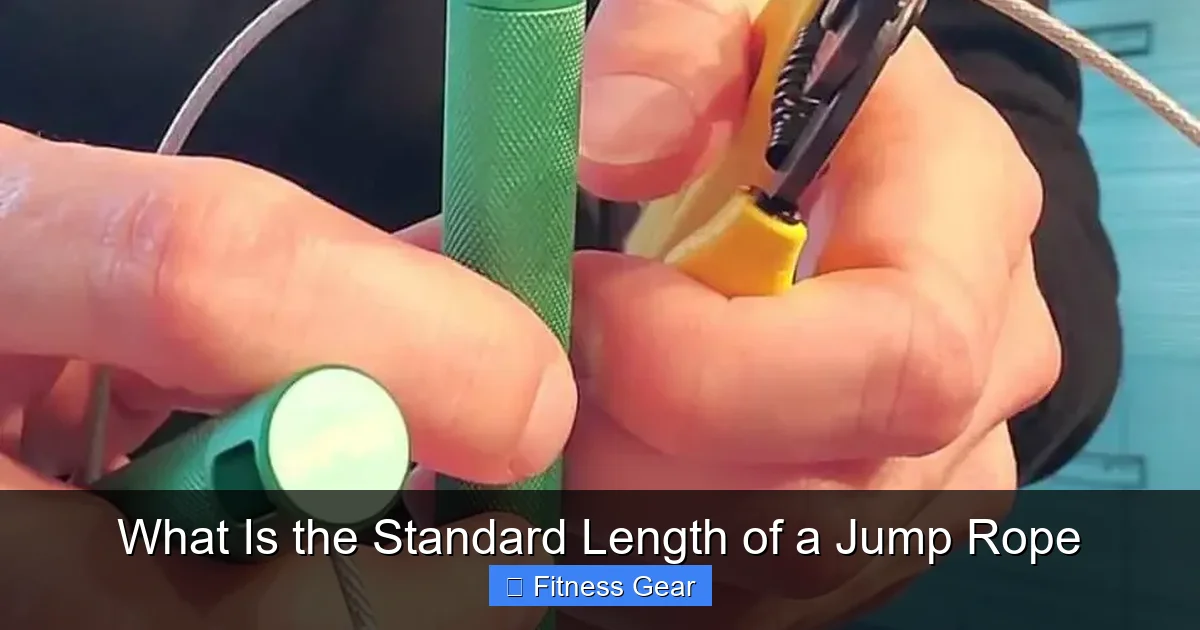
Modern ropes often come with sliding sleeves or knots. Measure your height, set the rope to the calculated length, then tie a secure knot or lock the sleeve. Test the rope by jumping a few times; if the handles rise above your shoulders, trim a little.
3. Step‑by‑Step Guide to Finding Your Perfect Length
Step 1: Stand on the Rope
Lay the rope flat on the floor. Step onto the middle with both feet. Pull the handles upward.
Visual guide about What Is the Standard Length of a Jump Rope
Image source: jumpropehub.com
Step 2: Check Handle Height
Ideal positions:
- Beginners – Handles reach just below the armpits.
- Intermediate – Handles reach the armpits.
- Advanced – Handles reach the chest.
Step 3: Make Small Adjustments
If the handles are too high, pull the rope a little tighter and retie. If they’re too low, loosen the knot or slide the sleeves outward.
Step 4: Test with a Few Reps
Do 10 single‑unders. Notice any “catching” or “dragging.” If the rope hits the floor before you clear it, shorten it a bit. If you constantly step on the rope, lengthen it.
Step 5: Record Your Settings
Write down the exact knot position or sleeve measurement. This makes it easy to reset after a workout or when you switch to a different surface.
4. Special Considerations for Different Users
Kids and Teens
Children grow quickly, so a rope with an adjustable range of 10–12 feet works best. Use the “knees‑to‑armpit” test: when standing on the rope, the handles should reach somewhere between the knees and the armpits.
Adults Over 6 Feet
Taller users often need ropes longer than the standard 14 feet. A 15‑foot or 16‑foot rope gives enough clearance for a full swing without sacrificing speed.
CrossFit and Double‑Under Athletes
For double‑unders, a slightly shorter rope (about 2 in shorter than the height formula) improves turnover speed. Many athletes also prefer a cable speed rope with a 13‑14 foot length, regardless of height.
Seniors and Rehab Users
Low‑impact workouts benefit from a longer rope that reduces the need for high jumps. Aim for the “handle at chest” position, and choose a soft, foam‑covered rope to protect joints.
5. Common Mistakes and How to Avoid Them
Using the Wrong Unit
Mixing inches and centimeters leads to errors. Stick to one system throughout the measuring process.
Ignoring Rope Stretch
Some materials (like PVC) stretch after a warm‑up. Re‑measure after the first 5‑minute session.
Setting the Rope Too Tight
A rope that’s overly tight can snap back quickly, causing wrist strain. Aim for a little “give” when you pull the handles upward.
Not Accounting for Surface
Hard floors (gym wood) vs. soft surfaces (grass) affect how the rope behaves. On softer ground, a slightly longer rope prevents the handles from hitting the ground.
6. Maintaining Your Rope Length Over Time
Regular Inspection
Check the knot or sleeve every few weeks. Wear and temperature changes can loosen the adjustment.
Cleaning Tips
Wipe down a speed rope with a dry cloth after each use. For beaded ropes, rinse with mild soap and let dry completely before re‑adjusting.
Replacing Worn Sections
If the rope frays near the handles, replace just the cable or beads rather than buying a whole new rope. This keeps the length consistent.
Seasonal Adjustments
Cold weather can make PVC contracts slightly, while heat can expand it. Add or subtract a centimeter after a season change to keep the swing smooth.
Conclusion: Find Your Sweet Spot and Jump Confidently
The answer to what is the standard length of a jump rope isn’t a one‑size‑fits‑all number. It starts with a simple height‑based calculation, then gets refined by skill level, rope type, and personal comfort. By following the step‑by‑step guide, testing the handle height, and making small adjustments, you’ll land on a length that feels natural, reduces injury risk, and lets you focus on the rhythm of the jump.
Take a moment now to measure, adjust, and try a few reps. Once you hit that smooth, effortless swing, you’ll understand why the right rope length is the foundation of every great jump‑rope workout.
Frequently Asked Questions
What is the standard length of a jump rope for a beginner?
For most beginners, the rope should be about 2‑4 inches longer than the height‑based formula (height × 2.5). This extra length gives more clearance and makes timing easier.
Can I use the same rope length for indoor and outdoor training?
Yes, but outdoor surfaces often require a slightly longer rope to account for uneven ground. Adding 5 cm (2 in) is usually sufficient.
How do I know if my rope is too long?
If the handles rise above your shoulders when you stand on the rope’s center, the rope is likely too long and will cause tripping.
Do different rope materials affect the ideal length?
Yes. Speed (cable) ropes work best a bit shorter, while beaded or weighted ropes may need a few extra centimeters for smooth swings.
How often should I re‑measure my jump rope?
Check the length after a month of regular use, after any major temperature changes, and whenever the rope shows signs of wear.
Is there a universal rope length for double‑unders?
While many athletes use a 13‑14 foot speed rope, the best length still depends on personal height and skill. A rope 2‑3 inches shorter than the height formula usually works well for double‑unders.