Can You Do 12 3 30 on an Elliptical

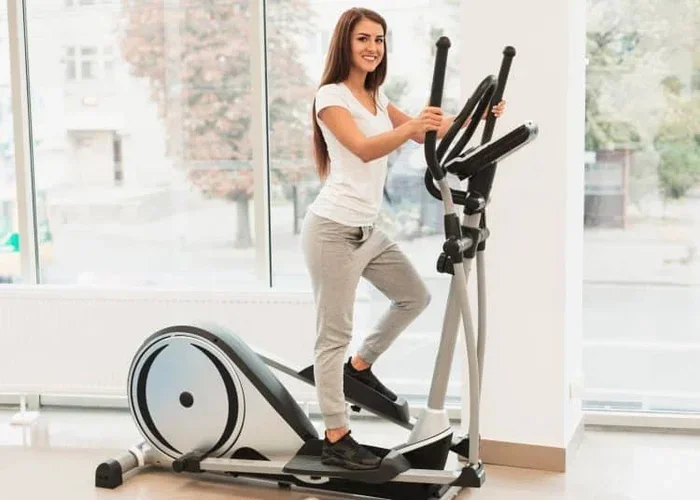
Yes, you can perform a version of the 12-3-30 workout on an elliptical machine, but it requires significant adjustments because ellipticals lack an incline function. Instead of a 12% grade, you’ll use high resistance to simulate the challenging effort. This adapted elliptical workout provides a low-impact, full-body cardio session that can improve endurance and support weight loss, though the muscle engagement and calorie burn will differ from the original treadmill version.
Key Takeaways
- Direct translation is impossible: Ellipticals do not have an incline setting, so you cannot literally do “12% incline, 3 mph, 30 minutes” as on a treadmill.
- Resistance is the key substitute: To mimic the high-effort feeling of a steep treadmill walk, you must increase the elliptical’s resistance to a challenging level (typically 7-10+ out of 10-15 levels).
- Calorie burn and muscle use differ: The elliptical engages more upper body muscles but generally burns fewer calories than a treadmill at the same perceived effort due to the lack of incline and the machine’s momentum.
- It’s a superior low-impact option: The elliptical’s smooth motion is far easier on joints (knees, hips, back) than walking on a steep treadmill incline, making it ideal for those with joint concerns or for active recovery.
- Focus on perceived exertion, not speed: Forget matching the 3 mph speed. Instead, aim for a pace where you can talk in short phrases but feel you are working hard (Rate of Perceived Exertion 7-8/10).
- Structure remains the same: The core principle of a sustained, single-mode cardio session for 30 minutes is preserved, building mental and physical stamina.
- Not for everyone: Those seeking maximal calorie burn per minute or specific glute/hamstring activation from incline walking may prefer the original treadmill version.
📑 Table of Contents
- The Viral Fitness Trend: What Exactly is the “12-3-30” Workout?
- Elliptical vs. Treadmill: Fundamental Differences That Change Everything
- How to ACTUALLY Do “12-3-30” on an Elliptical: The Adaptation Protocol
- The Benefits and Drawbacks of the Elliptical 12-3-30
- Sample Workouts: Putting the Adapted 12-3-30 into Practice
- Who Should Avoid the Elliptical 12-3-30 (or Consult a Doctor First)
- The Verdict: Should You Do 12-3-30 on an Elliptical?
The Viral Fitness Trend: What Exactly is the “12-3-30” Workout?
If you’ve spent any time on fitness social media in the last few years, you’ve undoubtedly seen the hashtag #12330. The 12-3-30 workout, popularized by influencer Lauren Giraldo, is beautifully simple in its prescription: set a treadmill to a 12% incline, walk at 3 miles per hour, and do this for 30 minutes. It promised a “lazy girl’s” way to get results—a steady, low-impact (relatively speaking) session that burns a surprising number of calories and builds leg endurance. Its appeal lies in its simplicity, its lack of complicated intervals, and the potent combination of high incline and long duration.
But what if you don’t have a treadmill? Or what if your knees protest at the thought of pounding away at a steep incline? This is where a very common question emerges from the fitness community: Can you do 12 3 30 on an elliptical? The short answer is yes, but with a critical caveat: you cannot do it literally. An elliptical machine, by its fundamental design, does not have an incline function. The “12” in 12-3-30 refers to the treadmill’s grade, a measure of slope. Since you cannot change the angle of an elliptical’s pedals, the method must be adapted. The spirit of the workout—a long, steady, challenging cardio session—can absolutely be recreated on an elliptical. It requires a shift in thinking from “incline” to “resistance.” This article will be your complete guide to understanding that adaptation, how to execute it properly, and whether this elliptical version delivers the benefits you’re looking for.
Elliptical vs. Treadmill: Fundamental Differences That Change Everything
To understand how to adapt the 12-3-30, we must first appreciate the core mechanical and physiological differences between the two machines. These differences are not minor; they dictate entirely different strategies for creating challenge and intensity.

Visual guide about Can You Do 12 3 30 on an Elliptical
Image source: rinkerpipe.com
The Incline Factor: Gravity’s Role
The treadmill’s magic is in its ability to use gravity against you. A 12% incline means for every 100 feet you travel forward, you elevate 12 feet. This massively increases the work your glutes, hamstrings, and calves must do to lift your body weight against gravity. It’s a pure, unassisted strength-endurance challenge for the posterior chain. The elliptical, in contrast, has a fixed, level path for your feet. There is no vertical component to overcome. The machine’s design keeps your feet in constant contact with the pedals, and the motion is essentially a guided arc. You cannot simulate the gravitational pull of an incline simply by changing a setting.
The Drive System: Momentum vs. Propulsion
On a treadmill, you are the sole engine. At 3 mph, you are walking, and the belt moves under you. Your muscles must constantly initiate motion. On an elliptical, the flywheel and resistance system create a different dynamic. Once you get the pedals moving, there is a significant amount of momentum that carries you through parts of the stroke, especially at lower resistances. This means the work is not as consistently demanding throughout the entire range of motion as it is on a treadmill. To counteract this momentum and create a similar “grind,” you must increase the resistance dramatically.
Muscle Engagement: Lower Body vs. Full Body
The classic 12-3-30 on a treadmill is predominantly a lower-body exercise. While you engage your core for stability, the primary movers are your legs. The elliptical, with its moving handles, actively recruits your chest, back, shoulders, and arms in a pushing and pulling motion. This turns it into a genuine full-body cardiovascular workout. This is a major benefit—you’re building more overall muscular endurance and burning calories from more muscle groups. However, it means the sensation and specific muscle fatigue will feel different. You won’t get that isolated, burning glute and hamstring fatigue from a steep treadmill walk; instead, you’ll feel it in your quads, calves, and upper back.
How to ACTUALLY Do “12-3-30” on an Elliptical: The Adaptation Protocol
So, we’ve established you can’t set an elliptical to “12%.” So what do you do? You translate the *intent* of the workout into elliptical parameters. The intent of 12-3-30 is: sustained, high-effort, moderate-pace cardio for a long duration. Here is your step-by-step adaptation.

Visual guide about Can You Do 12 3 30 on an Elliptical
Image source: dolphyfitness.com
Step 1: Forget the “3” (Speed) and Embrace Resistance
The 3 mph on a treadmill is a brisk walk. On an elliptical, speed is measured in RPM (revolutions per minute) or sometimes MPH, but the feel is different due to the stride length. A more useful metric is your Rate of Perceived Exertion (RPE). For the adapted workout, your goal is an RPE of 7-8 out of 10. You should be breathing heavily, able to speak only in short phrases, and feel like you are genuinely working. To achieve this on an elliptical, you will likely need to set the resistance to a high level. For most machines with 1-20 levels, this means resistance between 8 and 12. For machines with 1-10, aim for 7-9. This high resistance is your substitute for the 12% incline. It forces your muscles to push against significant load with every stride, mimicking the strength requirement.
Step 2: Find Your “Pace” (RPM)
With high resistance, your natural stride speed (RPM) will drop. Don’t fight it. Your goal is not to hit a specific RPM number, but to maintain a steady, controlled cadence that allows you to sustain the high resistance for the full 30 minutes. A good starting point is to aim for 80-100 RPM. If you’re at resistance 10 and can only pedal at 60 RPM, that’s likely too hard—you won’t last 30 minutes. If you’re at resistance 8 and pedaling at 120 RPM, it’s likely too easy—you’re using momentum. Find the sweet spot where the resistance feels heavy but your cadence is consistent and sustainable. This is your personal “3 mph equivalent.”
Step 3: The 30-Minute Steady State
This part is simple. Once you have your high resistance and sustainable RPM set, you pedal for 30 minutes straight. No intervals. No stopping. This sustained effort is what builds aerobic endurance and promotes fat oxidation (the theory behind steady-state cardio). The mental challenge of sticking with it for 30 minutes is a core part of the original workout’s appeal. Use this time for a podcast, an audiobook, or a show you only watch while exercising.
Step 4: Engage Your Upper Body—This is Your Advantage!
On a treadmill, your hands are on the handrails or swinging. On an elliptical, actively use the handles. Push and pull with purpose. Think about engaging your back muscles as you pull and your chest and shoulders as you push. This not only increases the calorie burn by involving more muscle mass but also distributes the fatigue. Your legs won’t be the only thing tired at the end. This full-body engagement is a unique benefit of the elliptical adaptation.
The Benefits and Drawbacks of the Elliptical 12-3-30
Is this adapted workout “as good” as the original? It depends on your goals. Let’s break down the pros and cons.

Visual guide about Can You Do 12 3 30 on an Elliptical
Image source: cdn.mos.cms.futurecdn.net
Benefits: Why You Might Prefer the Elliptical Version
- Joint-Friendly: This is the biggest win. The elliptical’s zero-impact motion eliminates the repetitive heel-strike and joint compression of treadmill walking, even at an incline. It’s excellent for those with knee pain, arthritis, hip issues, or those returning from injury.
- Full-Body Workout: You get an automatic upper-body workout, building endurance in your arms, chest, and back. This can lead to better overall muscular tone and a higher metabolic cost.
- Customizable Challenge: Resistance is a very direct and precise way to control workload. You can fine-tune it in small increments to hit your exact RPE target.
- Reduced Perceived Exertion (Sometimes): Many people find a high-resistance elliptical session at RPE 8 to feel subjectively easier than a treadmill at 12% incline and 3 mph, which can be brutally tough on the lungs and legs. This might help you be more consistent.
Drawbacks: What You’re Missing Compared to the Treadmill
- No Incline = Different Muscle Emphasis: You are not getting the powerful glute and hamstring activation that comes from walking uphill. The elliptical’s motion is more quad-dominant, even with high resistance. If your primary goal is to build a stronger posterior chain, the treadmill is superior.
- Potentially Lower Caloric Burn: Studies and practical experience suggest that for the same RPE, the treadmill (due to incline and body weight support) typically burns 10-25% more calories than an elliptical. The elliptical’s momentum also makes it easy to “coast” if you’re not vigilant with resistance.
- Less Weight-Bearing: The elliptical is non-weight-bearing. While great for joints, it provides less stimulus for bone density improvement compared to the treadmill’s impact (though this is a double-edged sword for those with bone/joint issues).
- Skill and Form Dependent: To get the most out of it and avoid leaning on the machine, you need to maintain good posture—chest up, core engaged, using a full range of motion. Poor form can turn it into a very easy, inefficient workout.
Sample Workouts: Putting the Adapted 12-3-30 into Practice
Let’s make this concrete. Here are two sample protocols for the elliptical “12-3-30.” The key is to start conservatively and adjust based on feel.
The Beginner’s Adapted Session
If you are new to the elliptical or the 12-3-30 concept, start here. The goal is to learn the sensation of high-resistance steady state.
- Resistance: Start at level 6 out of 10 (or 10 out of 20).
- RPM/Cadence: Aim for a steady 90 RPM.
- Duration: Begin with just 20 minutes. You can build to 30 over 1-2 weeks.
- Focus: Maintain upright posture. Do not lean on the handles. Use them actively. Your legs should feel like they are doing real work from the start of the stroke to the end.
The Standard Adapted Session (True 12-3-30 Spirit)
This is for those who have built some endurance and want the classic challenge.
- Resistance: Set between 8 and 10 out of 10 (or 15-18 out of 20). This should feel heavy. Your first minute should already feel like a solid effort.
- RPM/Cadence: Your cadence will naturally drop. Aim for 70-85 RPM. The number is less important than the feeling of controlled, powerful pushes against the resistance.
- Duration: The full 30 minutes. No breaks.
- Mental Strategy: Break it into chunks. Focus on getting to the 10-minute mark, then the 20-minute mark. Use entertainment. Accept that the last 5-10 minutes will be a grind—that’s the point.
Progression: How to Make It Harder Over Time
Once 30 minutes at your chosen resistance feels manageable, it’s time to progress. You have two main levers:
- Increase Resistance: This is the primary method. Next session, try resistance +1 level. The increased load will immediately drop your RPM and spike your effort.
- Increase Duration: Add 2-5 minutes to your session before increasing resistance. Build up to 35 or 40 minutes.
You can also experiment with “ramping” resistance: start at level 7 for the first 10 minutes, then increase to 8 for the next 10, and finish at 9 for the final 10. This mimics the increasing fatigue of the original workout.
Who Should Avoid the Elliptical 12-3-30 (or Consult a Doctor First)
While low-impact, this is still a 30-minute sustained cardio session at high effort. It is not suitable for everyone.
- Absolute Beginners to Exercise: If you have been sedentary, start with 10-15 minutes of low-resistance movement to build a base. Jumping into 30 minutes of high-resistance work is a recipe for extreme soreness or injury.
- Those with Specific Injuries: While good for knees, the motion can aggravate certain conditions like severe plantar fasciitis, Achilles tendinitis, or lower back issues if form is poor. Anyone with cardiovascular conditions, uncontrolled hypertension, or recent surgery must get medical clearance.
- People with Balance or Neuromuscular Disorders: The elliptical requires coordination. Those with significant balance issues should use a machine with stationary handle grips only, or choose a different modality like a recumbent bike.
- Anyone Seeking Maximal Calorie Burn in Minimal Time: If your sole goal is to burn as many calories as possible in 30 minutes, high-intensity interval training (HIIT) on a bike, rower, or treadmill will likely yield a higher total. The 12-3-30 (in any form) is about steady endurance, not peak calorie burn.
The Verdict: Should You Do 12-3-30 on an Elliptical?
The adapted elliptical 12-3-30 is a fantastic, accessible, and joint-friendly cardio workout that captures the soul of the original trend: a simple, long-duration, mentally tough session that builds stamina. It is not a perfect one-to-one replacement. You will not get the same glute-hamstring burn, and your total calorie expenditure will likely be lower. However, you gain a full-body workout and drastically reduced impact stress. For anyone who loves the concept of 12-3-30 but cannot or does not want to use a treadmill, this adaptation is not only possible—it’s highly effective in its own right. The key is to ditch the pursuit of a literal “12% incline” and instead embrace high resistance as your primary tool for creating challenge. Set your resistance high, find a sustainable but heavy pace, and commit to 30 minutes. Your cardiovascular system, your joints, and your endurance will thank you.
Frequently Asked Questions
Is the elliptical 12-3-30 as effective for weight loss as the treadmill version?
For pure calorie burn per minute, the treadmill version is generally more effective due to the high incline. However, the elliptical version can still be highly effective for weight loss because it allows for longer, more consistent sessions with less joint pain, potentially leading to greater total weekly exercise time. Consistency is the ultimate key to fat loss.
Since ellipticals don’t have incline, what resistance level should I use?
There is no universal number, as machines vary. Start high. You should aim for a resistance that makes your legs feel like they are pushing hard from the very first minute. On a 1-10 scale, this is typically 7-9. On a 1-20 scale, try 15-18. Your cadence (RPM) should drop to 70-90. If you can pedal fast and easily, your resistance is too low.
Will I get the same “glute burn” from the elliptical as from the treadmill incline?
No. The elliptical’s motion is more quad-dominant and does not provide the same gravitational resistance against hip extension that a steep treadmill walk does. You will feel your glutes working, especially if you focus on pushing through your heels, but it will not be the same isolated, burning fatigue. Think of the elliptical as a more balanced, full-body leg workout.
Can a beginner try the elliptical 12-3-30?
A true beginner should start with shorter durations (10-15 minutes) and lower resistance to build coordination and basic fitness. The 30-minute high-resistance session is an intermediate-level workout. Build up to it over several weeks by first mastering the machine at a comfortable pace and resistance, then gradually increasing one variable at a time (time, then resistance).
How do I know if I’m working hard enough on the elliptical?
Use the Talk Test. At your target effort, you should be able to speak only in short, broken sentences (2-3 words at a time). You should be breathing heavily and sweating. You can also use a heart rate monitor. Aim for 70-80% of your maximum heart rate (estimated as 220 minus your age). If you can sing or hold a full conversation easily, you need to increase resistance.
Is it better to do the elliptical 12-3-30 or just do intervals on the elliptical?
This depends on your goals. The 12-3-30 (adapted) is a steady-state cardio workout that builds aerobic endurance and can be meditative. HIIT intervals (e.g., 30 seconds hard, 60 seconds easy) are better for improving anaerobic capacity, maximizing EPOC (afterburn effect), and often burning more calories in less total time. For overall fitness, a mix of both throughout your week is ideal. The 12-3-30 is great for building a base and active recovery days.