How Long Should Jump Rope Be for My Height
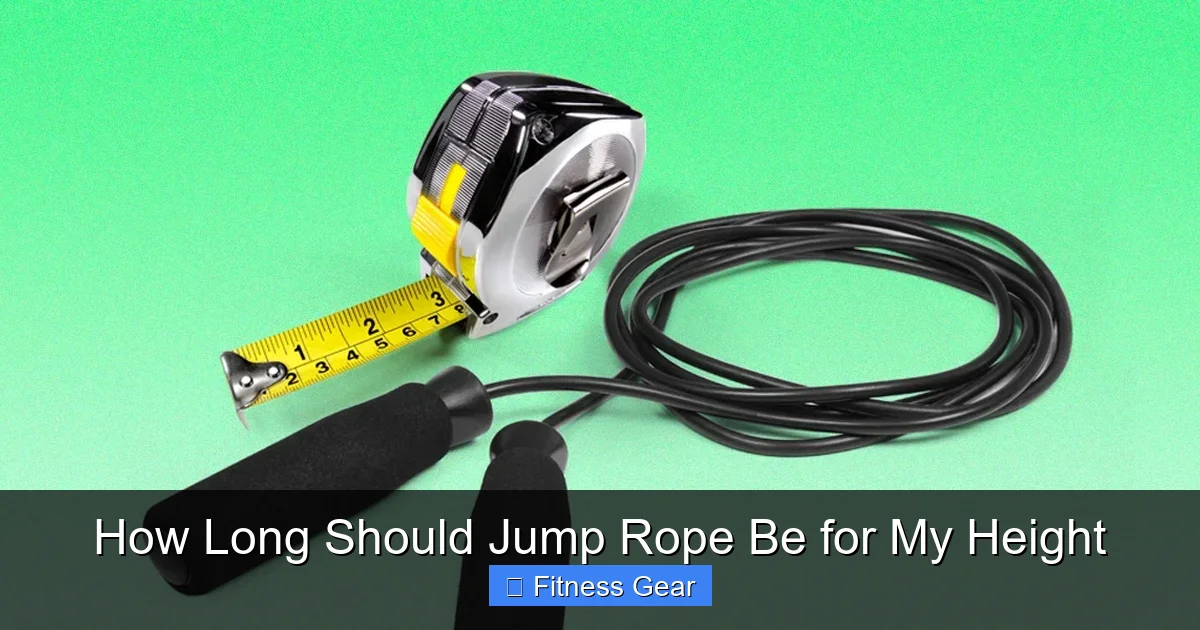
Choosing the right jump rope length is key to smooth, efficient workouts. This guide walks you through quick measurement methods, height‑based charts, and adjustment tips so you can pick a rope that feels natural and improves your cardio results. Whether you’re a beginner or a seasoned athlete, you’ll learn how to customize your rope for any height.
Key Takeaways
- Measure twice, jump once: Use the simple “stand‑on‑rope” method to get an accurate length.
- Height‑based charts are a starting point: They give a good baseline but personal preference matters.
- Adjustable ropes offer flexibility: Most modern ropes can be trimmed or extended easily.
- Rope material influences feel: PVC, leather, and steel‑core ropes behave differently at the same length.
- Proper length improves technique: Correct length reduces tripping, improves speed, and protects joints.
- Kids and tall athletes need special care: Use separate guidelines for under‑12 and over‑6‑ft users.
- Regular re‑check: As you improve or switch shoes, revisit rope length for optimal performance.
📑 Table of Contents
- Introduction: Why Rope Length Matters More Than You Think
- 1. The Science Behind Rope Length and Height
- 2. Simple Methods to Measure Your Perfect Rope Length
- 3. Height‑Based Jump Rope Sizing Charts
- 4. Adjusting and Customizing Your Rope
- 5. How Rope Length Affects Different Jumping Styles
- 6. Maintaining Your Rope for Longevity
- Conclusion: Find Your Perfect Length and Jump Confidently
Introduction: Why Rope Length Matters More Than You Think
When you first pick up a jump rope, the excitement is often about the speed, the rhythm, or the calories you’ll burn. Rarely do beginners think about the actual length of the rope. Yet the right length is the foundation of every good jump. Too long, and you’ll constantly step on the rope, stumbling and losing confidence. Too short, and you’ll feel cramped, unable to rotate the rope smoothly.
In this article we answer the burning question, How Long Should Jump Rope Be For My Height, with easy‑to‑follow steps, real‑world examples, and a few pro secrets. By the end, you’ll know exactly how to size your rope, adjust it for different workouts, and keep it perfect as your fitness evolves.
1. The Science Behind Rope Length and Height
How height influences the ideal rope length
Your height determines the distance from the ground to your hands when you stand upright. A jump rope must be long enough to clear that distance twice—once for the forward swing and once for the return swing—without forcing you to bend your elbows or lift your knees excessively.

Visual guide about How Long Should Jump Rope Be for My Height
Image source: mybodyweightexercises.com
Biomechanics in a nutshell
- Arm angle: The optimal rope length lets your elbows stay close to a 90‑degree angle at the peak of each swing.
- Foot clearance: The rope should skim the floor just above the ground, not slam into it.
- Timing: A correctly sized rope syncs with your natural jump cadence, making speed work feel effortless.
2. Simple Methods to Measure Your Perfect Rope Length
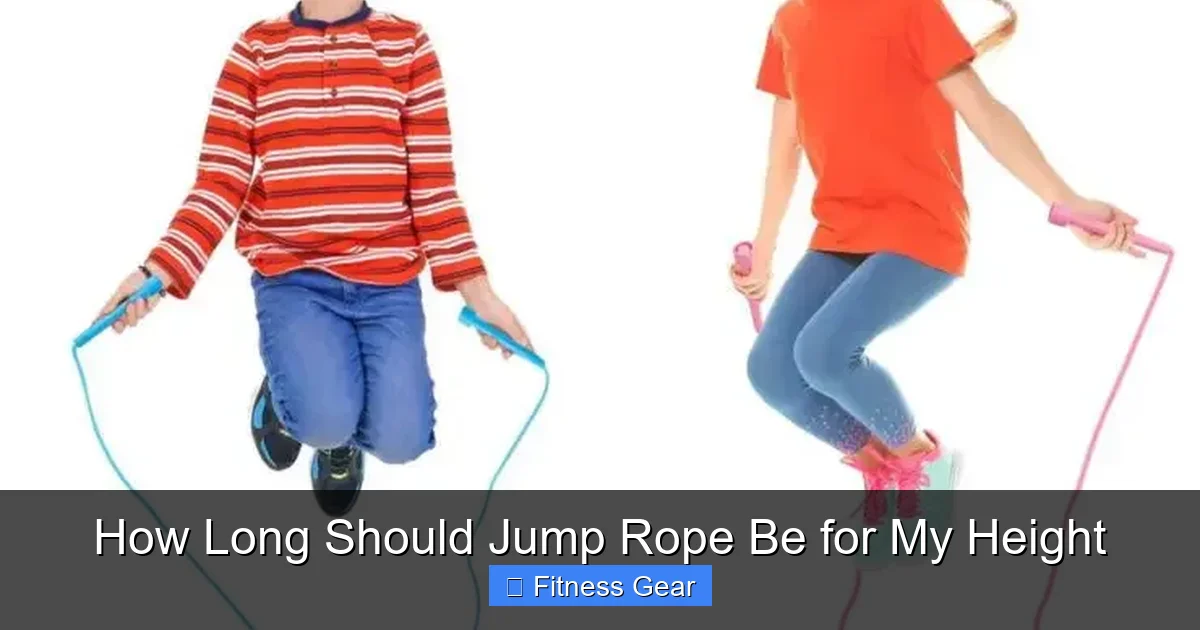
Method 1 – The “Stand‑On‑Rope” Test
This is the fastest way to gauge rope length without any math.
Visual guide about How Long Should Jump Rope Be for My Height
Image source: isisparenting.com
- Lay the rope flat on the floor.
- Stand in the middle of the rope with both feet together.
- Pull the handles straight up toward your armpits.
- If the handles reach just above your armpits, the rope is spot‑on.
For most adults, this method yields a rope length that is 2–3 feet longer than their height.
Method 2 – The “Height + 3 Feet” Rule
Take your height in inches, add 36 inches, and that’s the approximate rope length you need.
Example: A person who is 5′8″ (68 in) adds 36 in → 104 in rope, or about 8 ft 8 in.
This rule works well for PVC and beaded ropes, which don’t stretch much.
Method 3 – The “Hand‑to‑Hand” Measurement
Hold one handle in each hand, stand on the middle of the rope, and raise the handles. The distance between the handles should be roughly the distance from your armpits to the floor.
Adjust the rope until this measurement feels natural. This method is handy when you’re already at the gym with a rope in hand.
3. Height‑Based Jump Rope Sizing Charts
Use the chart below as a quick reference. Remember, these are starting points; personal comfort and rope type can shift the ideal length a few inches up or down.
| Height | Recommended Rope Length |
|---|---|
| Under 4 ft 6 in (137 cm) | 6 ft (72 in) |
| 4 ft 6 in – 5 ft (137–152 cm) | 7 ft (84 in) |
| 5 ft – 5 ft 4 in (152–162 cm) | 8 ft (96 in) |
| 5 ft 4 in – 5 ft 8 in (162–173 cm) | 9 ft (108 in) |
| 5 ft 8 in – 6 ft (173–183 cm) | 10 ft (120 in) |
| Over 6 ft (183 cm) | 11 ft (132 in) or longer |
Special considerations
- Kids and teens: Growth spurts happen fast. Choose an adjustable rope that can grow with them.
- Tall athletes (above 6 ft 4 in): A 12‑ft rope or a custom‑cut steel‑core rope often feels best.
- Shorter users who want speed work: A slightly shorter rope (by 2–4 in) can increase turn speed without sacrificing safety.
4. Adjusting and Customizing Your Rope
Cutting vs. coiling: When to trim
Most PVC and beaded ropes have a “cut‑and‑seal” option. If the rope is consistently too long after you’ve tried the standing test, cut it to the desired length and seal the ends with heat‑shrink tubing.
Using adjustable ropes
Adjustable ropes feature a sliding knot or a twist‑lock mechanism. To shorten:
- Loosen the knot or unlock the twist.
- Pull the rope through until the desired length is reached.
- Retighten or lock the mechanism.
This is ideal for families sharing one rope or for athletes who switch between double‑unders (shorter) and freestyle (longer) workouts.
Adding weight for power training
Weighted ropes (filled with sand or metal beads) often feel shorter because of the added momentum. If you’re using a weighted rope, add 2–4 in to the standard length for your height.
5. How Rope Length Affects Different Jumping Styles
Basic bounce (single jumps)
For beginners, a rope that reaches just above the armpits provides a comfortable rhythm and reduces the chance of tripping.
Speed and double‑unders
Speed athletes prefer a slightly shorter rope—about 2 in less than the “armpit” length—so the rope rotates faster with less wrist travel.
Cross‑overs and tricks
Trick‑focused jumpers often use a rope that ends at the sternum level. This gives enough clearance for arm crosses while keeping the rope tight enough for smooth flips.
6. Maintaining Your Rope for Longevity
Cleaning tips
- Wipe PVC ropes with a damp cloth after sweaty sessions.
- Beaded ropes can be rinsed with mild soap and air‑dried.
- Avoid harsh chemicals that degrade the coating.
Storage solutions
Store the rope coiled loosely in a dry place. For travel, use a zip‑lock bag to protect against dust and moisture.
When to replace
Look for fraying, loss of elasticity, or a rope that no longer returns to its original shape after a swing. Replacing a worn rope prevents injuries and keeps your timing sharp.
Conclusion: Find Your Perfect Length and Jump Confidently
Knowing how long should jump rope be for my height isn’t just a matter of numbers—it’s about feeling in control, moving efficiently, and enjoying every skip. Use the quick measurement tricks, refer to the height‑based chart, and fine‑tune the rope with adjustments that match your style. As you improve, revisit the length; a small tweak can unlock faster speeds or smoother tricks.
Pick a rope that feels natural, keep it well‑maintained, and watch your cardio performance soar. Happy jumping!
Frequently Asked Questions
What is the easiest way to measure my jump rope length at home?
Stand on the middle of the rope and pull the handles up to your armpits. If the handles reach just above the armpits, the rope length is perfect for your height.
Can I use a rope that’s a few inches longer than the chart suggests?
Yes. A slightly longer rope is safer for beginners, but you may need to adjust your arm angle. Trim or shorten the rope if you want faster turns.
Do different rope materials require different lengths?
Yes. Weighted or steel‑core ropes feel shorter because of added mass, so add 2–4 in to the standard length for your height.
How often should I re‑check my rope length?
Re‑measure whenever you change shoes, improve your skill level, or notice the rope hitting the floor too hard. A quick check every few months keeps your jumps smooth.
Are adjustable ropes worth buying for a family?
Absolutely. Adjustable ropes let each family member set a custom length without buying multiple ropes, making them cost‑effective and versatile.
What should I do if my rope keeps tangling even after I set the right length?
Check the rope’s condition—frayed or worn sections can cause tangles. Also, ensure you’re using proper wrist rotation and keep the rope’s swing plane straight.