Yes, working out on the elliptical can absolutely help you lose weight. It’s a highly effective, low-impact cardio machine that burns a significant number of calories while strengthening both your upper and lower body. The key to success is using it strategically—with proper intensity, consistency, and by combining it with a healthy diet—to create the calorie deficit necessary for fat loss.
Key Takeaways
- The elliptical is a legitimate weight-loss tool: It provides efficient calorie-burning cardio that’s gentle on joints, making it sustainable for long-term fitness.
- Full-body engagement is its secret weapon: Unlike a treadmill, it works your legs, glutes, chest, back, and arms simultaneously, increasing overall metabolic demand.
- Intensity matters more than time: High-Intensity Interval Training (HIIT) on the elliptical maximizes fat burn and EPOC (afterburn effect) in shorter sessions.
- Form and resistance are critical: Using proper posture and increasing resistance (not just speed) builds muscle, which boosts your resting metabolism.
- It’s not a magic bullet: Weight loss requires a consistent calorie deficit. The elliptical is a powerful component, but must be paired with mindful nutrition.
- Variety prevents plateaus: Regularly changing your workout style (intervals, hill climbs, steady-state) keeps your body challenged and burning calories.
📑 Table of Contents
- Introduction: Busting the Elliptical Myth
- How the Elliptical Torches Calories and Builds Muscle
- Designing Your Fat-Burning Elliptical Workout
- Common Mistakes That Sabotage Your Weight Loss
- Elliptical vs. Other Cardio Machines for Weight Loss
- The Holistic Approach: Beyond the Elliptical
- Conclusion: Your Sustainable Path to Weight Loss
Introduction: Busting the Elliptical Myth
Step into any gym, and you’ll see them: rows of elliptical machines, often humming quietly in the cardio zone. They’re popular, sure. But when it comes to the big question—does working out on the elliptical help lose weight?—many people are skeptical. Some call it the “easy machine” or the “fake stair climber.” They think if it doesn’t feel like you’re dying, you’re not getting a good workout. Let’s settle this once and for all.
The truth is, the elliptical is one of the most underrated and effective pieces of equipment for weight loss. Its beauty lies in its simplicity and its science. It’s a low-impact, high-engagement cardio powerhouse. By design, it mimics a natural running or walking stride but removes the jarring impact on your knees, hips, and ankles. This means you can work out longer, more consistently, and without the chronic pain that might sideline you from other activities. Weight loss is a marathon, not a sprint, and the elliptical is built for the marathon.
So, how does it actually work? And more importantly, how do you use it to shed fat? This guide will walk you through everything—from the physiology of calorie burn to crafting the perfect elliptical routine. We’ll separate fact from fiction and give you actionable strategies to make this machine your most loyal ally in your weight loss journey.
How the Elliptical Torches Calories and Builds Muscle
The Full-Body Advantage
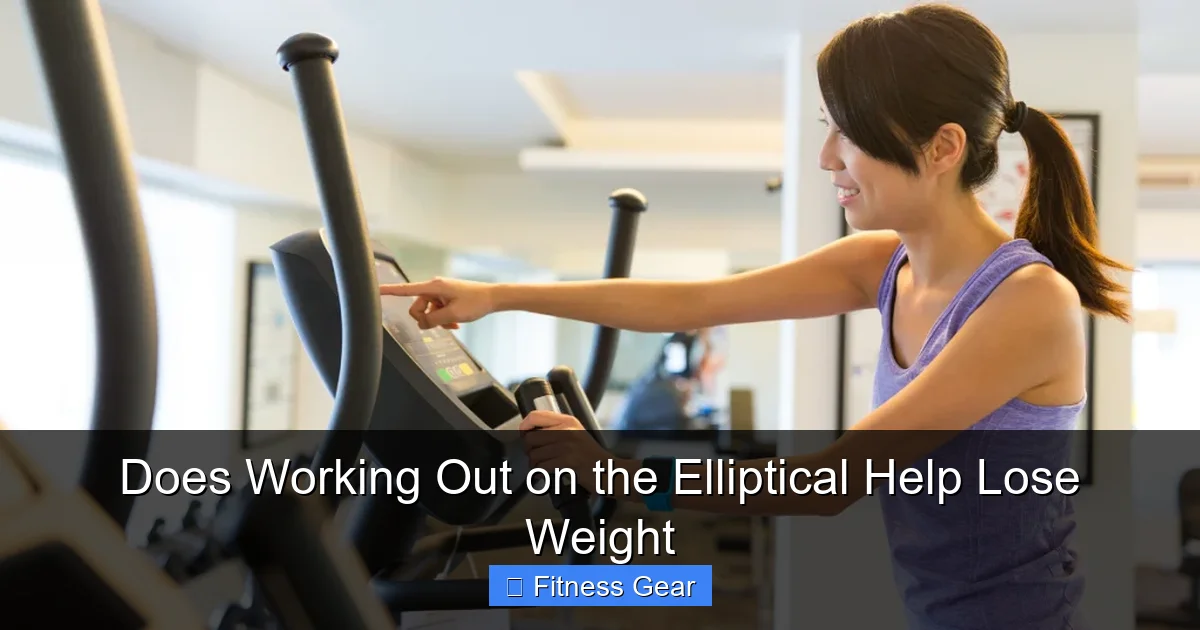
This is the first and most important point. A treadmill primarily works your lower body. A stationary bike? Mostly legs. The elliptical, with its moving arms and push-pull motion, is a total-body cardio machine. When you engage your large muscle groups in your legs (quads, hamstrings, glutes) and your upper body (chest, back, shoulders, triceps) simultaneously, you dramatically increase your energy expenditure.
Visual guide about Does Working Out on the Elliptical Help Lose Weight
Image source: missmillmag.com
Think of it this way: moving more muscle requires more fuel (calories). Every stroke you take with your arms isn’t just for show; it’s adding to the overall work output. This full-body engagement spikes your heart rate more effectively and keeps it elevated, leading to greater calorie burn per minute compared to a lower-body-only exercise at the same perceived effort.
Calorie Burn: The Numbers Game
According to Harvard Health Publishing, a 155-pound person can burn approximately 270-400 calories in 30 minutes on an elliptical, depending on intensity. That’s a solid number, comparable to jogging but with far less stress on the body. But here’s the crucial nuance: these are estimates. Your actual burn depends on three factors you control:
- Resistance/Incline: Cranking up the resistance makes each push and pull harder, building muscle and burning more calories. It’s the equivalent of running uphill versus on a flat road.
- Speed/Strides Per Minute (SPM): Moving faster increases your heart rate and calorie burn, but only to a point. At very high speeds with no resistance, you can end up “flailing” and losing efficiency.
- Body Weight: A heavier person burns more calories performing the same work.
The most effective approach for weight loss is to prioritize resistance and interval variations over simply chasing a high speed with no challenge.
The Afterburn Effect (EPOC)
Here’s where the elliptical truly shines for fat loss. EPOC, or Excess Post-Exercise Oxygen Consumption, is the “afterburn” effect. After a high-intensity workout, your body works overtime to repay its oxygen debt, repair muscle tissue, and return to its resting state. This process burns additional calories for hours after you’ve stepped off the machine.
Workouts that significantly spike your heart rate—like High-Intensity Interval Training (HIIT) on the elliptical—create the largest EPOC effect. A 20-minute HIIT session can sometimes result in a greater total calorie burn (during + after) than a 45-minute steady-state slog. We’ll dive into how to structure these workouts later.
Designing Your Fat-Burning Elliptical Workout
Showing up and moving is step one. But to truly leverage the elliptical for weight loss, you need a plan. Mindless, steady-state cardio has its place for active recovery, but for fat loss, you need to challenge your body. Here are three proven workout structures.
Visual guide about Does Working Out on the Elliptical Help Lose Weight
Image source: photos.demandstudios.com
1. The HIIT Blast: Maximum Results in Minimum Time
This is the gold standard for metabolic conditioning. The formula is simple: short bursts of all-out effort followed by brief recovery periods.
- Sample Protocol (20-25 minutes):
- 5 min warm-up: Light resistance, easy pace.
- Interval Block: 30 seconds MAX effort (high resistance, fast SPM) / 60 seconds slow recovery (very light resistance). Repeat 8-10 times.
- 3 min cool-down: Light pedaling, stretch.
Pro Tip: During your “MAX effort,” your talking should be impossible. During recovery, you should be able to catch your breath. This stress triggers powerful fat-burning adaptations.
2. The Hill Climb Simulator: Build Strength & Burn
This workout mimics the demands of climbing a mountain, building serious leg and glute strength while keeping your heart rate up. Most ellipticals have a “Hill” or “Interval” program that automatically adjusts resistance. You can also do it manually.
- Sample Protocol (30-40 minutes):
- 5 min warm-up.
- Climb Block: Increase resistance every 2-3 minutes. Start at a moderate level (4-5), peak at a very challenging level (7-8), then gradually decrease. Maintain a steady, strong pace throughout each stage. Your SPM will naturally slow as resistance increases.
- 5 min cool-down.
Why it works: High resistance builds lean muscle mass. More muscle means a higher resting metabolic rate—you burn more calories even when you’re not exercising.
3. The Steady-State Endurance: For Foundation & Recovery
Not every day can or should be a HIIT day. Steady-state cardio at a moderate, sustainable pace (where you can talk in short sentences) is crucial for building aerobic base, burning additional calories, and promoting recovery on off-days.
- Sample Protocol (45-60 minutes):
- Find a resistance and speed that keeps your heart rate in Zone 2 (roughly 60-70% of max).
- Maintain this consistently. Focus on deep breathing and full, controlled motions.
- This is perfect for active recovery days or as a longer session on weekends.
Strategic Tip: Alternate between these three workout types throughout your week for the best results. For example: HIIT on Monday, Steady-State on Wednesday, Hill Climb on Friday.
Common Mistakes That Sabotage Your Weight Loss
You can have the perfect workout structure, but if you’re making these critical errors, you’ll stall your progress. Let’s fix them.

Visual guide about Does Working Out on the Elliptical Help Lose Weight
Image source: talkforfitness.com
Mistake 1: Leaning on the Machine
This is the #1 form flaw. You see it everywhere: people resting their entire upper body on the handles, using their arms only to stabilize. This removes the upper-body work, drastically reduces calorie burn, and turns a full-body exercise into a leg-only one. It also puts unnecessary strain on your wrists.
The Fix: Stand up straight! Engage your core. Grip the handles lightly. The push-pull motion should come from your chest and back muscles, not just your arms. Your body should be stable, not supported. If you need to, lightly place your fingertips on the handles for balance, but don’t lean your weight into them.
Mistake 2: Ignoring Resistance for Speed
Chasing a high number on the speed display while the resistance is on 1 or 2 is “flailing.” It looks intense but is inefficient. You’re essentially just moving your legs quickly against almost no load. You burn fewer calories and build zero muscle.
The Fix: Make resistance your primary variable. A challenging resistance (where you have to push/pull with real effort) at a moderate speed is infinitely better for weight loss and body composition than no resistance at high speed. Aim for a resistance where you feel the burn in your legs and upper body after a few minutes.
Mistake 3: Doing the Same Workout Every Single Time
Your body is an adaptation machine. Do the same 30-minute session at the same resistance and pace for a month, and it will become incredibly efficient. It will burn fewer calories for the same work. This is a weight loss plateau waiting to happen.
The Fix: Apply the principle of progressive overload. Each week, try to add a small challenge: increase resistance by 1 level, add an extra interval, extend your steady-state day by 5 minutes, or increase your average SPM. Keep your body guessing.
Mistake 4: Forgetting Nutrition
You cannot out-exercise a poor diet. It’s the universal law of weight loss. You might burn 400 calories on the elliptical in 30 minutes, but that can be erased in seconds with a sugary coffee and a pastry. The elliptical creates the calorie deficit opportunity, but you must fill that deficit with smart nutrition.
The Fix: Track your intake for a week to understand your true eating habits. Focus on protein, fiber, and healthy fats to stay full. Hydrate. Remember, the goal is a sustainable deficit, not starvation.
Elliptical vs. Other Cardio Machines for Weight Loss
How does the elliptical stack up against the competition? Let’s compare.
Elliptical vs. Treadmill
The treadmill is the classic calorie burner. Running burns more calories per minute than an elliptical at a comparable perceived effort because it’s a higher-impact, weight-bearing activity. However, the elliptical’s low-impact nature is its massive advantage. You can often exercise longer and more frequently on an elliptical without joint pain or injury risk. For someone with knee issues or a history of stress fractures, the elliptical allows for consistent training—the single most important factor for weight loss. The elliptical also wins on full-body engagement.
Elliptical vs. Stationary Bike
Both are low-impact. A vigorous spin class on a stationary bike can absolutely torch calories and build powerful legs. However, a standard upright or recumbent bike typically offers no upper-body engagement unless you’re in a dedicated spin class with handles that move. The elliptical provides a more balanced, total-body workout by default. It also generally allows for a more upright, natural posture that many find comfortable for longer durations.
Elliptical vs. Rowing Machine
The rower is arguably the king of full-body, low-impact cardio. It powerfully engages your legs, core, and back in a sequential, powerful motion and can burn an enormous number of calories. Its downside is technical complexity. Poor rowing form can lead to back injury and drastically reduce efficiency. The elliptical’s motion is more intuitive and easier for beginners to pick up safely. For pure, raw power and calorie burn, rowing is top-tier. For accessible, sustainable, full-body cardio, the elliptical is a fantastic and safer choice for most.
The Holistic Approach: Beyond the Elliptical
Relying solely on any single machine is a short-sighted strategy for lasting weight loss. The elliptical is a tool in your toolbox, not the entire toolbox. Here’s how to build a complete plan.
1. Nutrition: The Non-Negotiable Foundation
We’ve said it, but it bears repeating. Weight loss happens in the kitchen. Focus on:
- Protein Priority: Ensure adequate protein (0.7-1g per pound of target body weight) to preserve lean muscle mass as you lose fat. This keeps your metabolism high.
- Fiber & Volume: Load up on vegetables. They fill you up for very few calories.
- Mindful Eating: Track your food for awareness. Use a smaller plate. Slow down. These behavioral changes are more sustainable than restrictive diets.
2. Strength Training: The Metabolic Engine
Cardio burns calories during the workout. Strength training builds muscle, which burns calories 24/7. A pound of muscle at rest burns more calories than a pound of fat. Incorporate 2-3 full-body strength sessions per week. Focus on compound movements: squats, lunges, push-ups, rows, deadlifts. This preserves and builds the muscle you’re working so hard to reveal, preventing the “skinny fat” look and the metabolic slowdown that often accompanies dieting.
3. Daily Movement & Recovery
Your formal elliptical workout is one piece. Your Non-Exercise Activity Thermogenesis (NEAT)—the calories you burn through daily living—is huge. Take the stairs, walk during calls, park farther away. Prioritize sleep (7-9 hours) and manage stress. Poor sleep and high cortisol can increase hunger hormones and promote belly fat storage, directly undermining your elliptical efforts.
Conclusion: Your Sustainable Path to Weight Loss
So, does working out on the elliptical help lose weight? The resounding answer is yes. It is a scientifically sound, joint-friendly, time-efficient method to burn calories, improve cardiovascular health, and build a stronger, more toned physique. Its full-body engagement and versatility for HIIT, hill climbs, and steady-state work make it a standout choice for sustainable fat loss.
But its effectiveness is entirely dependent on how you use it. Ditch the mindless, low-resistance scrolling. Embrace intensity, variety, and proper form. Understand that the elliptical is your metabolic catalyst, but it must be fueled by a smart, protein-rich diet and supported by strength training and recovery. This isn’t about a quick fix; it’s about building a consistent, enjoyable routine you can maintain for years. Step onto the machine with a plan, push with purpose, nourish your body well, and watch the transformation happen—not just on the scale, but in your energy, strength, and overall health. The elliptical isn’t the easy way out; it’s the smart way forward.
Frequently Asked Questions
Can the elliptical specifically reduce belly fat?
No exercise can spot-reduce fat from a specific area like the belly. Weight loss occurs systemically. However, the elliptical’s full-body calorie burn, especially when combined with high-intensity intervals and a calorie-controlled diet, will lead to overall fat loss, which includes reducing visceral belly fat. Building core-engaging muscle through proper form also helps tone the area as fat decreases.
How often should I use the elliptical to see weight loss results?
Aim for 3-5 sessions per week, combined with strength training. Consistency is key. Each session should be 30-45 minutes of purposeful work (e.g., a 20-min HIIT session or a 40-min hill climb). Pair this with a slight daily calorie deficit (300-500 calories) through diet, and you should start seeing noticeable changes in 4-8 weeks.
Is walking on the elliptical effective for weight loss?
“Walking” on the elliptical with no resistance and low effort is essentially passive motion with minimal calorie burn and no muscle-building benefit. For weight loss, you must increase the resistance to a level where you feel challenged. Even at a slow SPM, high resistance turns the motion into a strength-endurance exercise that burns far more fat.
Should I hold onto the handles or not?
You should lightly hold the moving handles to engage your upper body and maintain balance. However, you should not lean your body weight on them. Keep your core tight and your posture upright, using your chest and back muscles to power the push-pull motion. If you let go completely, you lose the upper-body benefit and compromise stability.
How long does it take to see results from elliptical workouts?
With a consistent routine (3-5x/week), proper intensity, and a healthy diet, you can expect to see initial changes in how your clothes fit and energy levels within 2-3 weeks. Visible weight loss on the scale typically becomes apparent after 4-6 weeks. Remember, non-scale victories like improved endurance, better sleep, and increased strength are also significant results.
What heart rate zone should I be in for fat loss on the elliptical?
For optimal fat-burning and cardiovascular improvement, spend most of your workout in Zone 2 (60-70% of max HR) for steady-state work, and spike into Zone 4-5 (80-90%+ of max HR) during HIIT intervals. Zone 2 builds aerobic capacity and burns a higher percentage of fat as fuel. Zone 4-5 intervals create a massive afterburn (EPOC) effect, torching calories for hours afterward. A mix of both is ideal.