How Accurate Are the Calories Burned on an Elliptical

The calorie burn number on your elliptical is a rough estimate, not a precise measurement. It’s calculated using a generic formula based on limited user data like weight and age, but it cannot account for your unique muscle mass, metabolism, or exact effort level. Factors like machine calibration, resistance, and your fitness level create significant variability. For a more accurate picture, consider using a heart rate monitor and focus on consistent effort rather than the readout. Ultimately, the number is a useful tracking tool if understood as a relative benchmark, not an absolute truth.
Key Takeaways
- Elliptical calorie counters provide estimates, not exact measurements. They use standardized formulas that don’t account for individual physiological differences like muscle mass or metabolic rate.
- Your input data (weight, age, gender) greatly influences the calculation. Inaccurate or generic entries will produce inaccurate results. The machine has no way to know your body composition.
- Machine calibration and design vary wildly between brands and models. A “200-calorie” workout on one machine could be 150 or 250 on another, making cross-machine comparisons unreliable.
- Perceived exertion and heart rate are better indicators of effort. Using a chest-strap heart rate monitor provides a much more personalized and accurate metabolic estimate than the elliptical’s sensor.
- The consistency of the number matters more than its absolute accuracy. As long as you use the same machine with the same inputs, the trend (increasing or decreasing) can be useful for tracking relative progress.
- Focus on time, intensity, and frequency over the calorie count. Building sustainable habits around consistent cardio sessions is more valuable for long-term health than obsessing over a fluctuating number.
- Ellipticals often overestimate calorie burn compared to more scientific methods. Studies and user experiences suggest the readouts can be 15-30% higher than actual expenditure, especially at lower intensities.
📑 Table of Contents
- The Promise and the Pitfall of the Elliptical Display
- How Does an Elliptical *Think* It Knows Your Calories?
- Major Factors That Throw Off Your Elliptical’s Calorie Count
- Elliptical vs. Treadmill vs. Bike: Which Calorie Counter is Most Trustworthy?
- How to Get a More Accurate Calorie Burn Estimate (Without a Lab)
- The Bigger Picture: Why Obsessing Over the Elliptical Number is Counterproductive
- Conclusion: A Smart, Skeptical Approach to Your Elliptical Readout
The Promise and the Pitfall of the Elliptical Display
You finish your 30-minute elliptical workout, sweaty and feeling accomplished. Your eyes dart to the console, hungry for validation. There it is: “Calories Burned: 350.” A surge of satisfaction. But wait—should you trust that number? That little digital readout has become a cornerstone of modern fitness motivation, a quantifiable reward for our effort. Yet, beneath its confident digits lies a complex web of assumptions, averages, and educated guesses. The question “How accurate are the calories burned on an elliptical?” isn’t just fitness trivia; it’s crucial for anyone serious about managing their energy balance, whether for weight loss, performance, or simply understanding their body. This article will pull back the curtain on the elliptical’s calorie counter, exploring the science (and sometimes the science fiction) behind it, the factors that skew the numbers, and how you can use this tool wisely without being misled.
How Does an Elliptical *Think* It Knows Your Calories?
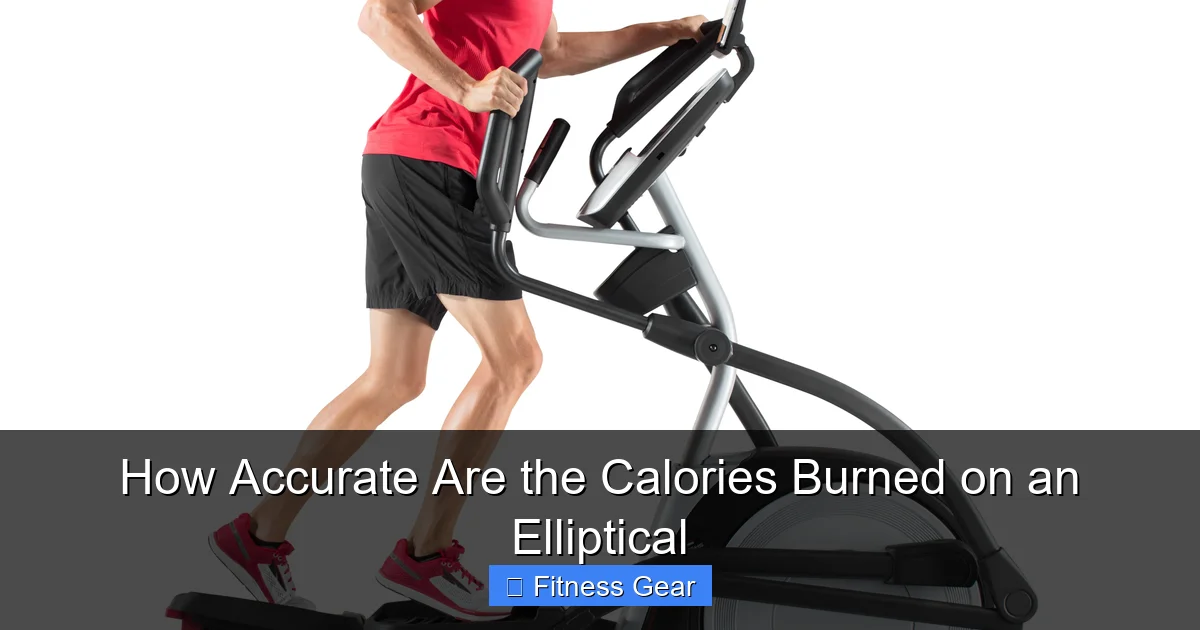
Before we judge its accuracy, we must understand its logic. The elliptical isn’t secretly measuring your metabolism or analyzing your sweat. It’s running a mathematical algorithm. This algorithm is typically based on a foundational formula from the field of exercise physiology, often a variation of the ACSM Metabolic Equations. These equations estimate the metabolic cost (in METs, or Metabolic Equivalents) of various activities.
Visual guide about How Accurate Are the Calories Burned on an Elliptical
Image source: res.cloudinary.com
The Basic Formula: Work = Force x Distance
At its most fundamental level, the machine calculates work output. It knows how fast you’re moving ( RPMs), the resistance level you’ve set, and—if it’s a high-end model—the incline. From this, it can calculate the mechanical work you’re performing. It then converts this work into an energy expenditure (calories) using a standard conversion factor (1 calorie = 4.184 joules).
However, the human body is an inefficient machine. We are not converting fuel to motion like a perfect engine. A significant portion of the energy we burn is lost as heat. So, the machine must apply a gross efficiency factor—usually estimated at around 20-25% for elliptical motion. This means if the machine calculates you performed 100 units of mechanical work, it assumes your body actually burned about 400-500 units of metabolic energy to do it.
The Personal Touch: Your Data
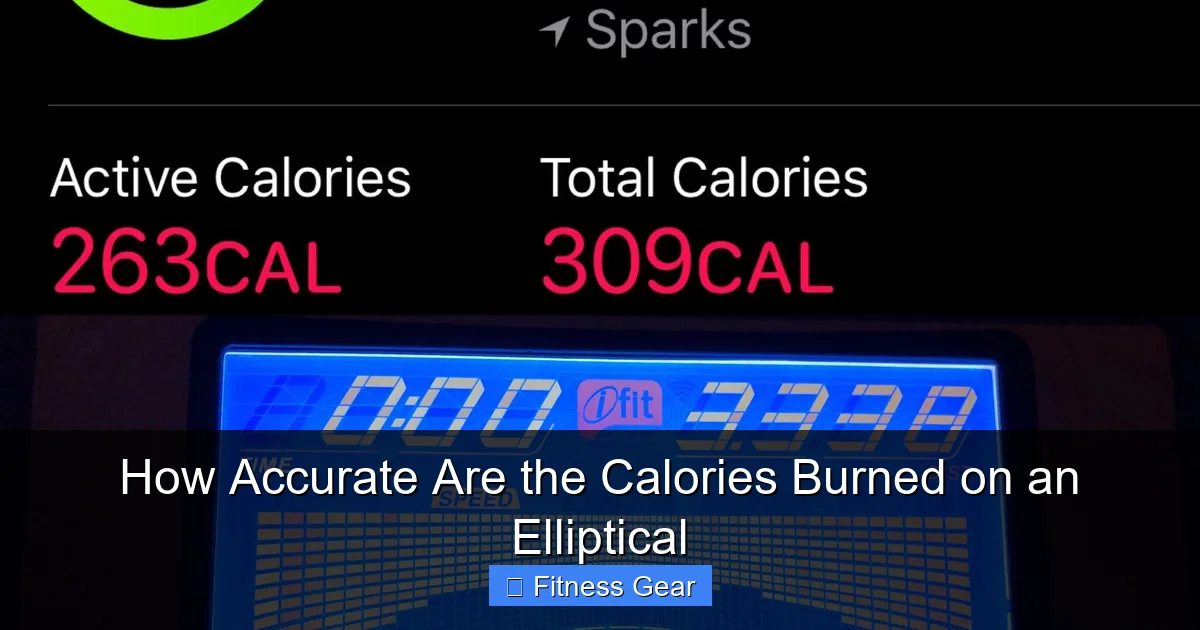
This is where you come in. You (hopefully) enter your weight, and sometimes age and gender. Why? Because a heavier person requires more energy to move the same distance at the same speed. A younger person may have a slightly higher baseline metabolic rate. The machine uses these inputs to scale its base calculation. A 150-pound person and a 200-pound person doing the exact same workout will see different calorie counts, which is a good start. But this is also where the first major flaw is introduced: the formula uses body weight, not body composition. It cannot distinguish between 150 pounds of lean muscle and 150 pounds of body fat. Muscle is metabolically active tissue that burns more calories at rest and during activity. The machine’s algorithm has no way to know this critical difference.
Major Factors That Throw Off Your Elliptical’s Calorie Count
Now we get to the heart of the inaccuracy. The elliptical’s calculation is a one-size-fits-most model applied to a world of incredible individual variation. Here are the biggest culprits that make your readout a guess at best.
Visual guide about How Accurate Are the Calories Burned on an Elliptical
Image source: i.redd.it
1. The “You” Factor: Individual Physiology
This is the largest source of error. Your unique biology dictates your true calorie burn.
- Muscle Mass: As mentioned, more muscle means higher energy expenditure. Two people of the same weight but different body compositions will burn different calories. The person with more muscle will burn significantly more, but the machine will give them the same number.
- Fitness Level: A highly trained athlete is more efficient. Their body has adapted to the motion, requiring less energy (fewer calories) to perform the same external work as a beginner. The elliptical assumes a standard efficiency that doesn’t account for this adaptation, often overestimating burn for fit individuals and underestimating for very unfit ones.
- Metabolic Rate: Your basal metabolic rate (BMR) and daily non-exercise activity thermogenesis (NEAT) are personal. Genetics, hormone levels, and even gut microbiome influence them. The machine’s population-based averages cannot capture this.
- Age: While you may input your age, the formula’s age adjustment is a blunt instrument. It doesn’t account for the individual rate of metabolic decline or the exceptional fitness of an older athlete.
2. The “Machine” Factor: Calibration and Design
Not all ellipticals are created equal. A commercial-grade Precor in a gym is not the same as a budget model in a home gym.
- Calibration Drift: Over time and with use, the sensors that measure resistance, speed, and sometimes even stride length can fall out of calibration. A machine that hasn’t been serviced may think it’s applying 10 levels of resistance when it’s actually providing 8, throwing off the work calculation.
- Motion Path and Design: The elliptical’s movement pattern (ramp vs. flywheel position) affects the muscle groups engaged and the overall work required. A machine with a more natural, glute-and-hamstring-focused motion might burn more calories for the same perceived effort than one that feels like a pure quad push, but the machine’s algorithm doesn’t know which motion it’s facilitating.
- Software and Algorithms: Manufacturers use proprietary formulas. Some may be more conservative, others more generous. There is no universal industry standard. This is why your “30-minute, moderate” workout might read 280 calories on Brand A and 320 on Brand B.
3. The “Usage” Factor: How You Actually Use It
Your behavior on the machine introduces massive variability.
- Hands-On vs. Hands-Off: Leaning heavily on the handles and using your upper body to push/pull reduces the load on your legs. The machine’s calculation is based almost entirely on lower body motion. If you’re supporting your weight with your arms, you’re burning fewer calories than the readout suggests because you’re doing less total work.
- Stride Technique: Are you using a full range of motion, driving through your heels? Or are you taking short, shallow “bounces”? Full, controlled strides generate more work and burn more calories. A short, rapid stride might feel hard but produces less mechanical work, leading to an overestimate.
- Resistance vs. Speed: High resistance at a slow speed often burns more calories per minute than low resistance at a high speed (within reason), as it engages more muscle mass and requires greater force production. However, many people equate “fast” with “harder,” and the machine’s algorithm may weight speed more heavily than true force production.
Elliptical vs. Treadmill vs. Bike: Which Calorie Counter is Most Trustworthy?
The elliptical isn’t alone in its inaccuracies. All cardio machine calorie counters have similar limitations. But are some better than others?
Visual guide about How Accurate Are the Calories Burned on an Elliptical
Image source: calculatorshub.net
The Treadmill Benchmark
The treadmill is often considered the “gold standard” for cardio machine calorie estimation, and for good reason. Its formula is relatively simple and well-studied: calories burned per mile are fairly consistent for a given weight and speed on flat ground. The American College of Sports Medicine (ACSM) has a very robust and widely accepted equation for walking and running on a treadmill. Because the activity (locomotion) is so natural and universal, and the variables (speed, incline) are directly tied to work against gravity, its estimates tend to be more consistent and are often used as a reference point in research. However, it still falls victim to the same individual physiology flaws (muscle mass, efficiency) and can be affected by holding the handrails, which reduces your actual body weight supported.
The Stationary Bike Calculation
The bike’s calculation is also based on work (resistance x cadence x time). It’s generally considered fairly accurate for the lower body work it measures. However, like the elliptical, it cannot account for upper body movement (if you’re wildly pumping your arms) or individual efficiency. Recumbent bikes, with their more supported seat, may have slightly different biomechanics that aren’t perfectly captured by standard formulas.
Where the Elliptical Fits In
The elliptical’s motion is the most complex to model. It’s a hybrid of a stair climber and a cross-country skier, with a fixed, constrained range of motion. This makes its metabolic cost harder to pin down with a simple equation. Research on elliptical calorie expenditure is less extensive than on treadmills or bikes. Consequently, its estimates are often seen as the least reliable of the three major cardio machines. The potential for user error (leaning, short strides) is also arguably higher, as the motion is less intuitive than walking or pedaling. So, if you’re comparing machines, take the elliptical’s number with the largest grain of salt.
How to Get a More Accurate Calorie Burn Estimate (Without a Lab)
So, what’s a fitness enthusiast to do? Abandon the readout entirely? Not necessarily. You can use it as a rough guide by improving the inputs and using better tools.
1. Be Honest and Specific with Your Inputs
Don’t select “male” if you’re female. Don’t pick “160 lbs” if you’re 185. The more accurate your weight, the better the baseline. Some advanced machines allow you to input body fat percentage—if you know it, use it. This gives the algorithm a slightly better sense of your lean mass vs. fat mass. The goal is to make the machine’s generic formula as personalized as its limited inputs will allow.
2. Use a Heart Rate Monitor—Your Best Friend
This is the single most effective upgrade. A chest-strap heart rate monitor (like those from Polar, Garmin, or Wahoo) paired with a watch or the elliptical itself (if compatible) provides a real-time, personalized metabolic signal. Your heart rate is a direct response to your body’s demand for oxygen and energy. Modern algorithms (like those in Firstbeat analytics) use your age, weight, and actual heart rate data to estimate calorie burn with far greater accuracy than the elliptical’s motion-based guess. It accounts for your fitness level, stress, temperature, and individual heart rate response. If your elliptical can pair with a chest strap, use it. If not, wear a fitness tracker that uses heart rate for its own calculations and compare.
3. Master the Perceived Exertion Scale
Learn to listen to your body. The Borg Rating of Perceived Exertion (RPE) scale (6-20) or a simpler 1-10 scale is a powerful tool. If your elliptical says you’re burning 400 calories but you feel like you’re barely working (RPE of 3/10), the number is likely an overestimate. Conversely, if you’re gasping at an RPE of 9/10 but it says only 150 calories, it’s way off. Use RPE to contextualize the number. A “moderate” effort (RPE 12-14 on the Borg scale) should correlate with a reasonable calorie burn estimate.
4. Focus on the Trend, Not the Absolute
The number’s greatest utility is as a relative metric. If you always use the same machine, with the same accurate weight input, and you maintain a similar perceived effort, the trend in the calorie readout over weeks and months is meaningful. If your 30-minute workout goes from reading 280 to 320 calories while feeling the same, it likely means you’ve become more efficient and are now working harder (perhaps by increasing resistance unconsciously). That’s valuable progress data. Don’t stress if you get 290 on Monday and 310 on Friday; look at the weekly average over a month.
The Bigger Picture: Why Obsessing Over the Elliptical Number is Counterproductive
Here’s the liberating truth: for the vast majority of people, the exact calorie burn of a single elliptical session is functionally meaningless for weight management. Why?
Weight loss/gain is governed by long-term energy balance. A 50-calorie error one day is a drop in the bucket compared to your total weekly intake and expenditure. The danger lies in compensatory behavior. If you believe you burned 500 calories (when you really burned 350), you might unconsciously eat an extra 200 calories, negating the deficit and creating frustration. This is a common trap.
Fitness is multidimensional. The number on the elliptical does not measure:
- Cardiovascular improvement (resting heart rate going down, VO2 max increasing)
- Muscular endurance (being able to sustain a higher resistance)
- Joint health and mobility (the low-impact nature of the elliptical is a huge benefit)
- Mental health benefits (stress reduction, mood boost from the activity itself)
- Habit formation (showing up consistently 4 times a week)
These are far more important health outcomes than a speculative calorie count. By fixating on the number, you risk losing sight of these fundamental benefits. You might skip a workout because the readout was “low,” or push yourself to injury to chase a higher number. The elliptical is a tool for movement, not a precise accounting ledger.
Conclusion: A Smart, Skeptical Approach to Your Elliptical Readout
So, how accurate are the calories burned on an elliptical? The evidence and physiology clearly show they are imprecise estimates, often with a tendency to overestimate, especially at lower intensities or for fitter individuals. They are based on generalized formulas applied to a machine that cannot see your body’s composition or true efficiency.
However, this doesn’t render the readout useless. When used with the right mindset, it’s a helpful proxy for effort and a tool for tracking relative progress. To use it wisely: input your real weight, consider a heart rate monitor for better data, learn to gauge your own exertion, and watch the trend over time, not the daily fluctuation. Most importantly, divorce your self-worth and workout success from that single digit. The real victory is the 30 minutes you dedicated to moving your body, strengthening your heart, and clearing your mind. The calorie number is just a noisy, imperfect sidekick to that main event. Focus on the feeling, the consistency, and the long-term journey. Your body and your health will thank you for it.
Frequently Asked Questions
Why does my elliptical show I burned more calories than my friend who did the same workout?
The machine uses your entered weight (and sometimes age/gender) to scale its calculation. A heavier person burns more energy to move the same distance. It also doesn’t account for differences in muscle mass, fitness efficiency, or exact technique, which can cause further variance between individuals.
Do ellipticals generally overestimate or underestimate calorie burn?
Most evidence and user reports suggest ellipticals have a strong tendency to overestimate calorie burn, sometimes by 15-30% or more. This is due to generic formulas, assumptions about efficiency, and the inability to measure true work output if a user is leaning on handles or using short strides.
Is it better to use the “calories” or “distance” metric on the elliptical?
For accuracy, neither is perfect, but distance is a more direct, mechanical measurement that is less prone to algorithmic error. Calorie counts are derived from distance, speed, resistance, and user data, compounding potential inaccuracies. Tracking miles or total strides can be a more reliable metric for comparing sessions on the same machine.
How can I make my elliptical calorie burn more “accurate”?
First, ensure your weight is entered correctly. Second, avoid leaning on the handles; use them for stability only. Third, use a full, controlled stride. Finally, and most effectively, use a chest-strap heart rate monitor. It provides a physiological signal your elliptical cannot, leading to a much more personalized estimate.
Should I eat back the calories my elliptical says I burned?
Generally, no. Since the elliptical likely overestimates, eating back those calories can easily erase or reverse your deficit. If you’re extremely active and in a aggressive deficit, you might need to replenish some energy, but use a conservative estimate (e.g., eat back only 50-75% of the reported number) or rely on hunger cues rather than the machine’s readout.
What’s a better way to measure workout intensity than the calorie count?
Use the talk test (can you speak in full sentences?), the Rate of Perceived Exertion (RPE) scale (1-10), or monitor your heart rate (using a chest strap). These measure your body’s actual response to the exercise in real-time and are far more reliable indicators of effort than a calorie number calculated by a machine that doesn’t know you.