The Best Corned Beef Recipe for Tender Juicy Results
This corned beef recipe delivers tender, juicy meat with minimal effort. You will learn how to select the perfect brisket, build a flavorful brine, and cook it to perfection. Whether you use a pot, slow cooker, or oven, this guide covers every method. Get ready for corned beef and cabbage that your whole family will love.
There is nothing quite like a pot of corned beef recipe simmering on the stove. The smell fills the kitchen, and you know dinner is going to be something special. Whether it is St. Patrick’s Day or just a cozy Sunday dinner, corned beef brings comfort on every plate.
But let us be honest. Not every corned beef recipe turns out well. Some cuts come out dry and tough. Others lack flavor even after hours of cooking. That is why we put this guide together. We want you to get tender corned beef with juicy results every single time. This corned beef recipe is simple, reliable, and full of flavor.
We will walk you through everything. From picking the right cut at the store to slicing it perfectly at the end. You will also find tips, common mistakes to avoid, and serving ideas. By the time you finish reading, you will feel confident enough to make this dish all on your own. Let us get started.
Key Takeaways
- Choose the right cut: A well-marbled corned beef brisket is the key to juicy results.
- Brine matters: A homemade brine adds deep flavor and helps the meat stay tender.
- Low and slow wins: Cooking corned beef on low heat for several hours breaks down tough fibers.
- Rest the meat: Letting the roast rest before slicing keeps all the juices inside.
- Multiple methods work: You can braise, slow cook, or oven-roast corned beef successfully.
- Pair it right: Classic sides like cabbage, potatoes, and mustard elevate the whole meal.
📑 Table of Contents
Why This Corned Beef Recipe Works
Not all corned beef recipes are created equal. Some rely on shortcuts that sacrifice flavor. Others use complicated techniques that do not pay off. This corned beef recipe works because it focuses on the basics done right.
First, we use a simple but powerful brine. The brine adds salt, spice, and moisture deep into the meat. Second, we cook the beef low and slow. This gentle heat breaks down the tough connective tissue without drying things out. Third, we let the meat rest before slicing. That step is small but makes a huge difference.
The result? Tender corned beef that practically melts in your mouth. Each slice is juicy and packed with flavor. You will not need fancy equipment or hard-to-find ingredients. Just good meat, a few spices, and a little patience. That is all it takes to make juicy corned beef at home.
What Makes Corned Beef Different
Corned beef starts as a beef brisket. The meat gets cured in a salt brine for days or weeks. This process is called corning. The large salt crystals used in old-fashioned corning gave the meat its name. The brine also includes spices like peppercorn, mustard seed, and bay leaves.
When you buy corned beef at the store, it has already been cured. That means much of the work is done for you. You just need to cook it properly. A good corned beef recipe respects the curing process and builds on it. That is exactly what this guide does.
Ingredients You Will Need
Keeping the ingredient list simple is part of what makes this corned beef recipe so easy. You do not need a long grocery list. Most of what you need, you probably already have in your pantry.
The Meat
Start with a corned beef brisket that weighs about 3 to 4 pounds. Look for a cut with good marbling. Those white streaks of fat will melt during cooking and keep the meat moist. You can buy a whole brisket or a smaller flat cut. Both work well for this corned beef recipe.
If you want to try something different, you can also make homemade corned beef from scratch. You would cure a raw brisket in your own brine for about one week. But for this guide, we will use a store-bought brisket to keep things simple.
The Brine and Spices
Most store-bought corned beef comes with a seasoning packet. That packet contains the core corned beef spices. But you can also make your own corned beef seasoning blend. Here are the key spices you will want:
- Black peppercorn — adds heat and depth
- Mustard seed — gives that classic tangy flavor
- Bay leaves — bring a warm, herbal aroma
- Coriander seed — adds a citrusy, slightly sweet note
- Red pepper flakes — for a gentle kick
- Thyme — rounds out the flavor profile
Liquid and Aromatics
Water is the base of your cooking liquid. But you can boost the flavor with a few extras. Beer works wonderfully in a corned beef recipe. Dark beer or stout adds richness and color. You can also use beef broth for a deeper savory taste. Add some onion, garlic, and a splash of apple cider vinegar. These aromatics lift the whole dish.
Step-by-Step Cooking Instructions
Now let us get into the fun part. This corned beef recipe is straightforward, but the details matter. Follow these steps closely, and you will be rewarded with amazing tender corned beef.
Step 1: Rinse and Prep the Meat
Take your corned beef brisket out of the package. Rinse it under cold water to remove excess salt from the surface. This step is important. If you skip it, the meat can end up too salty. Pat it dry with paper towels before moving to the next step.
Some people like to soak the brisket in water for a few hours before cooking. This works well if you are sensitive to salt. It is an extra step, but it gives you more control over the final taste.
Step 2: Build Your Cooking Liquid
Fill a large pot or Dutch oven with water. Add the seasoning packet or your homemade corned beef spices. Drop in the onion, garlic, and any other aromatics you like. Bring the liquid to a boil, then reduce the heat to a gentle simmer.
The liquid should barely bubble. A rolling boil can make the meat tough. You want a slow, steady simmer. This is the secret to juicy corned beef. Think of it like a warm bath for the meat. It relaxes the fibers and lets the flavors soak in.
Step 3: Cook Low and Slow
Place the brisket in the pot with the spice liquid. The meat should be fully submerged. Cover the pot with a lid and let it cook. For a stovetop method, keep the heat low. A corned beef recipe on the stove typically takes about 3 to 4 hours.
If you prefer a slow cooker corned beef approach, transfer everything to a slow cooker. Cook on low for 8 to 10 hours. The slow cooker method is almost effortless. You just set it and forget it. The results are equally tender and full of flavor.
For oven cooks, place the brisket in a roasting pan with the liquid. Cover tightly with foil and cook at 300 degrees Fahrenheit for about 4 to 5 hours. The oven method gives you a nice even heat distribution.
Step 4: Check for Doneness
How do you know when your corned beef roast is ready? The internal temperature should reach 200 to 205 degrees Fahrenheit. Use a meat thermometer to check. At this temperature, the collagen in the meat has broken down completely.
The meat should be fork-tender. If you poke it with a fork, the tines should slide in easily. The meat should also pull apart in soft, satisfying layers. If it still feels tough, give it another 30 to 60 minutes. Patience is your best friend here.
Step 5: Rest and Slice
Once the meat is done, take it out of the liquid. Let it rest on a cutting board for about 15 to 20 minutes. This resting period allows the juices to redistribute throughout the meat. If you slice too soon, those juices will run out onto the board instead of staying inside.
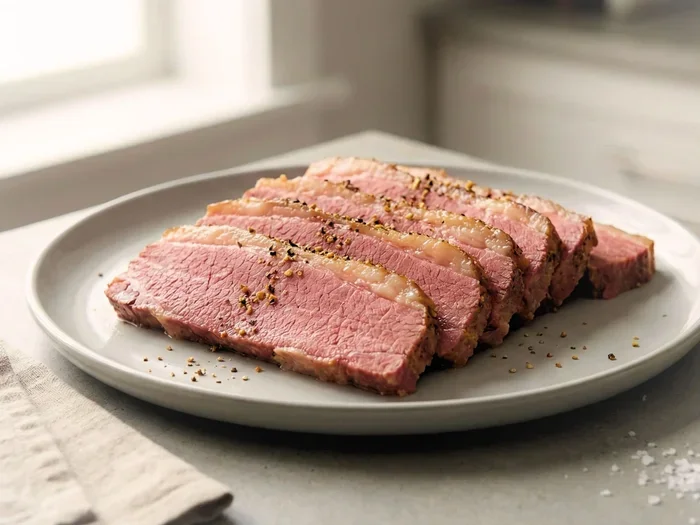
When you are ready to slice, look for the grain direction. The grain is the line of muscle fibers running through the meat. Slice against the grain, about a quarter inch thick. Slicing against the grain is one of the most important corned beef instructions to remember. It makes each piece easier to chew and more enjoyable to eat.
Tips for Tender and Juicy Corned Beef
Even with a great corned beef recipe, small mistakes can affect the outcome. Here are some expert tips to make sure your corned beef comes out perfectly every time.
Use a Meat Thermometer
guessing when the meat is done is a recipe for disappointment. A meat thermometer takes all the guesswork out. Insert it into the thickest part of the brisket. When it hits 200 to 205 degrees, you are good to go. This one tool will transform your cooking results.
Do Not Skip the Resting Step
Resting the meat after cooking is just as important as the cooking itself. During cooking, the juices get pushed toward the center. Resting lets those juices spread back out evenly. The result is each bite that is moist and full of flavor. Skipping this step can lead to dry corned beef slices.
Save the Cooking Liquid
Do not throw away the liquid left in the pot. It is packed with flavor from the spices, meat, and aromatics. Strain it and use it as a base for soup or gravy. You can also use it to simmer vegetables like cabbage or potatoes. This is a great way to get more flavor out of every part of your corned beef dinner.
Add Vegetables in the Last Hour
If you want to cook vegetables with the corned beef, add them during the last hour of cooking. Carrots, potatoes, and cabbage hold up well to long cooking. But if you add them too early, they can turn mushy. Timing your vegetables right keeps them flavorful and textured.
Serving Suggestions and Pairings
Corned beef and cabbage is the classic pairing for a reason. It works. But there are many other great sides to serve alongside your corned beef recipe results.
Classic Sides
- Cabbage — boiled, braised, or roasted with the cooking liquid
- Russet potatoes — boiled or mashed with butter and herbs
- Carrots — glazed or roasted until tender
- Mustard — a sharp yellow mustard is the traditional condiment
- Horseradish cream — adds a spicy kick that cuts through the richness
- Irish soda bread — perfect for soaking up the juices
Creative Leftover Ideas
Corned beef makes amazing leftovers. Slice the extra meat and use it in sandwiches. A corned beef sandwich on rye with Swiss cheese and sauerkraut is hard to beat. You can also chop the meat and add it to hash, omelets, or fried rice. Leftover corned beef gets even better the next day as the flavors meld together.
Common Mistakes to Avoid
Learning from other people’s mistakes can save you a lot of frustration. Here are the most common errors people make when cooking corned beef.
Cooking on Too High Heat
A slow cooker corned beef or stovetop recipe needs gentle heat. High heat tightens the muscle fibers and squeezes out moisture. The meat becomes tough and dry instead of tender corned beef. Keep the temperature low and steady throughout the entire cook.
Not Rinsing the Brine
As mentioned earlier, the curing brine contains a lot of salt. If you do not rinse the meat, your finished dish can be unpleasantly salty. A quick rinse under cold water solves this problem easily. It is a small step with a big impact.
Slicing With the Grain
This is the number one mistake people make. Slicing with the grain makes the meat chewy and hard to eat. Always identify the grain direction first. Then cut across it. This single change makes a noticeable difference in texture and tenderness.
Cutting Into the Meat Too Soon
It is tempting to cut into the roast right away. Resist that urge. The meat needs time to rest. Cutting too early releases all those flavorful juices onto the cutting board. You want them staying in the meat where they belong.
Expert Insights on Cooking Corned Beef
We spoke with experienced home cooks and culinary professionals to gather their best advice. Here is what they had to say about making the perfect corned beef recipe.
Choose fatty cuts for more moisture. Lean brisket can work, but it needs more careful attention. A well-marbled point cut or whole packer brisket gives you a better margin for error. The fat bastes the meat from within as it cooks.
Experiment with different liquids. While water works fine, adding beer, broth, or even cola can introduce new flavor dimensions. Cola adds a subtle sweetness and helps create a beautiful dark glaze. Dark beer brings malt notes that complement the spices beautifully.
Let the meat finish in the liquid. Some cooks remove the corned beef early and let it finish outside the pot. This works, but leaving it in the liquid until the end keeps things more moist. The meat continues to absorb flavor right up until it comes out of the pot.
Reheat leftovers gently. If you have leftover corned beef, reheat it in the cooking liquid or with a splash of broth. Microwaving can dry out the slices quickly. A gentle reheating method preserves that juicy corned beef texture you worked so hard to achieve.
Frequently Asked Questions
How long does it take to cook corned beef?
A corned beef recipe on the stovetop typically takes 3 to 4 hours for a 3 to 4 pound brisket. A slow cooker needs 8 to 10 hours on low. An oven method takes about 4 to 5 hours at 300 degrees Fahrenheit. The exact time depends on the size of the cut and your cooking method. Always use a meat thermometer to check for doneness at 200 to 205 degrees.
Should I rinse corned beef before cooking?
Yes, you should rinse the corned beef under cold water before cooking. This removes excess salt from the curing brine on the surface. If you skip this step, the finished dish can taste overly salty. Some people also soak the meat in water for a few hours to reduce the salt content further. It is a simple step that makes a big difference in flavor.
What is the best cut of corned beef to buy?
A corned beef brisket is the standard and best cut for this recipe. You will usually find two options: the flat cut and the point cut. The flat cut is leaner and easier to slice neatly. The point cut has more fat and marbling, making it juicier and more flavorful. For the best results, choose a cut with good white fat marbling throughout the meat.
Can I make corned beef without a brine?
Store-bought corned beef already comes pre-brined, so you do not need to make your own brine. However, if you want to make homemade corned beef from scratch, you would cure a raw brisket in a salt and spice brine for 5 to 7 days. The homemade route gives you full control over the salt level and spice profile. It takes more planning but yields incredibly flavorful results.
How do I know when corned beef is done?
The best way to tell is by using a meat thermometer. When the internal temperature reaches 200 to 205 degrees Fahrenheit, the corned beef is done. The meat should also be fork-tender, meaning a fork slides in easily with no resistance. If the meat still feels tough, cook it for another 30 to 60 minutes and check again. Patience is key for the most tender corned beef possible.
What can I serve with corned beef?
The classic pairing is corned beef and cabbage with boiled potatoes and carrots. Other great sides include Irish soda bread, mustard, horseradish cream, and buttered green beans. For a lighter meal, serve sliced corned beef on rye bread with sauerkraut and Swiss cheese. Leftover corned beef also makes fantastic sandwiches, hash, and omelets the next day.
Conclusion
Making the perfect corned beef recipe is easier than you think. With the right cut, a good brine, and low slow cooking, you can achieve tender corned beef that rivals any restaurant. This guide gives you everything you need to know to succeed.
Remember to rinse your brisket, cook it gently, and let it rest before slicing. These small steps make a big impact on the final result. Serve your juicy corned beef with classic sides like cabbage, potatoes, and mustard for a meal that feels complete and satisfying.
Whether it is a holiday feast or a weeknight dinner, this corned beef recipe delivers every time. You will build confidence with each attempt, and soon enough, it will become a family favorite. So grab a brisket, gather your spices, and get cooking. Your kitchen is about to smell amazing, and your taste buds are in for a treat.