Ever Wonder At What Temperature Does Water Boil at Sea Level
Water boils at 212 degrees Fahrenheit (100 degrees Celsius) at sea level under standard atmospheric pressure. This boiling point is a fundamental scientific fact that affects everything from cooking your meals to understanding weather patterns. Knowing the boiling point of water at sea level helps you cook better, understand physics, and appreciate how elevation and pressure shape the world around you.
Have you ever stopped to think about the simple act of boiling water? It happens every day in kitchens around the world. Yet the science behind it is fascinating and full of surprises. At what temperature does water boil at sea level is a question that opens the door to a deeper understanding of physics, cooking, and even exercise science.
Most of us learned in school that water boils at 212 degrees Fahrenheit or 100 degrees Celsius. But why exactly does this happen? And does this number change depending on where you live or what you are doing? The answers are more interesting than you might think. Let us dive into the science and practical uses of this everyday phenomenon.
Understanding the boiling point of water at sea level is not just textbook knowledge. It helps you cook pasta perfectly, sterilize water for safety, and even appreciate how your body cools itself during intense workouts. Whether you are a curious learner or a home cook looking for practical tips, this guide covers everything you need to know.
Key Takeaways
- Standard Boiling Point: Water boils at 212 degrees Fahrenheit (100 degrees Celsius) at sea level under normal atmospheric pressure.
- Atmospheric Pressure Matters: The weight of the air pressing down on water determines when it transitions from liquid to gas.
- Altitude Changes Everything: At higher elevations, water boils at lower temperatures due to reduced air pressure.
- Cooking Impact: Understanding boiling points helps you cook food more effectively, especially at high altitudes.
- Science Made Simple: The boiling point is a phase change where water molecules gain enough energy to escape as vapor.
📑 Table of Contents
What Is the Boiling Point of Water at Sea Level?
The boiling point of water at sea level is 212 degrees Fahrenheit, which equals 100 degrees Celsius. This is the temperature at which water transitions from a liquid to a gas. But this number only holds true under specific conditions. The key factor is standard atmospheric pressure, which is the weight of the air pressing down on the surface of the water.
At sea level, the atmospheric pressure is about 14.7 pounds per square inch, or 1 atmosphere. This pressure pushes down on the water surface. For water to boil, its vapor pressure must match the atmospheric pressure pushing down on it. When you heat water, its molecules gain energy and start moving faster. At 212 degrees Fahrenheit, the vapor pressure of water equals the atmospheric pressure at sea level. Bubbles of water vapor form inside the liquid and rise to the surface. That is boiling.
This process is called a phase change. It is different from evaporation, which happens slowly at the surface of water at any temperature. Boiling is a rapid phase change that happens throughout the entire liquid. The temperature stays constant at the boiling point until all the liquid has turned to steam. This is a key concept in thermodynamics and physical science.
Why 212 Degrees Fahrenheit Specifically?
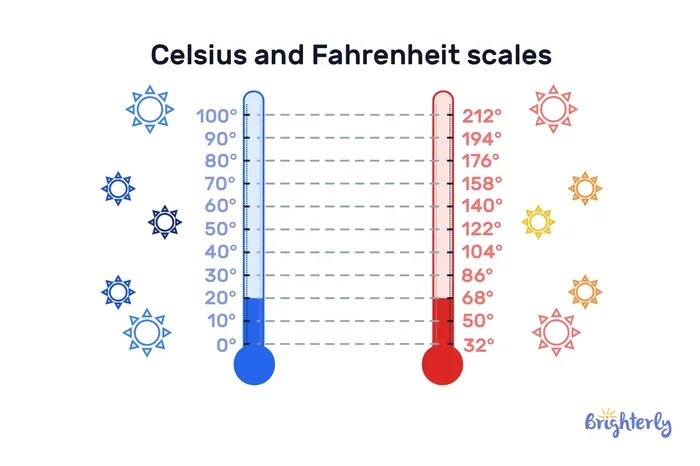
The number 212 degrees Fahrenheit comes from the way temperature scales were historically defined. The Fahrenheit scale sets the freezing point of water at 32 degrees and the boiling point at 212 degrees. The Celsius scale is simpler, setting the freezing point at 0 degrees and the boiling point at 100 degrees. Both scales measure the same physical reality. The difference is just in how we divide the range between freezing and boiling.
Knowing the boiling point of water at sea level in both scales is useful. Most scientific research uses Celsius, while everyday cooking in the United States uses Fahrenheit. If you follow a recipe from another country, you might need to convert temperatures. Understanding both scales helps you navigate the kitchen and the lab with confidence.
The Science Behind Why Water Boils
Boiling is not just about heating water. It is about the balance between vapor pressure and atmospheric pressure. Every liquid has molecules that are constantly moving. Some molecules at the surface gain enough energy to escape into the air as vapor. This is evaporation. But boiling is different. It happens when bubbles of vapor form throughout the liquid, not just at the surface.
For bubbles to form inside the liquid, the vapor pressure inside those bubbles must be strong enough to push back against the atmospheric pressure. At sea level, the atmospheric pressure is at its highest because the full weight of the atmosphere is pressing down. This means water needs more thermal energy to boil. That is why the boiling point is 212 degrees Fahrenheit at sea level.
When you add heat to water, the temperature rises. The molecules move faster and collide with more energy. As the temperature reaches 212 degrees Fahrenheit, the vapor pressure matches the atmospheric pressure. Bubbles form rapidly. The water begins to boil. Even if you keep adding heat, the temperature of the boiling water stays at 212 degrees Fahrenheit. All the extra energy goes into converting liquid water into steam. This is called the latent heat of vaporization.
How Heat Energy Drives the Boiling Process
Heat energy is the engine behind boiling. When you place a pot of water on a stove, the burner transfers thermal energy to the water. The molecules absorb this energy and vibrate faster. As the temperature climbs, more molecules have enough energy to escape the liquid phase. At the boiling point, the energy input goes entirely into changing the state of the water, not raising its temperature.
This is why a pot of boiling water does not get hotter than 212 degrees Fahrenheit at sea level. The extra heat just makes more steam. This principle is essential for cooking. It is also why steam burns can be so severe. Steam carries a huge amount of latent heat energy. When it touches your skin, it releases that energy and causes serious burns.
How Altitude Affects the Boiling Point
Altitude has a dramatic effect on the boiling point of water. The higher you go, the lower the atmospheric pressure becomes. With less pressure pushing down on the water, it takes less energy for water molecules to escape as vapor. This means water boils at a lower temperature at higher altitudes.
For example, at the top of Mount Everest, where the atmospheric pressure is about one-third of sea level pressure, water boils at around 154 degrees Fahrenheit or 68 degrees Celsius. That is a huge drop from 212 degrees Fahrenheit. At a moderate altitude of 5,000 feet, water boils at about 203 degrees Fahrenheit. Even a city like Denver, which sits at 5,280 feet, sees a noticeable difference in boiling temperature.
This has real consequences for cooking. If you live at a high altitude, you may notice that your pasta takes longer to cook. Your eggs might take more time to hard-boil. The lower boiling temperature means the water is not as hot, so food cooks more slowly. High-altitude cooks often need to adjust their recipes and cooking times to account for this.
Why This Matters for Everyday Cooking
Understanding how altitude affects boiling helps you become a better cook. At sea level, you can rely on 212 degrees Fahrenheit as your benchmark. But if you live in the mountains, you need to adjust your expectations. Foods that rely on boiling water, like pasta, rice, and potatoes, will take longer to cook. You may need to use a pressure cooker to raise the boiling point and cook food faster.
A pressure cooker traps steam inside a sealed pot. This increases the pressure above atmospheric pressure. As a result, the boiling point of water rises above 212 degrees Fahrenheit. Food cooks faster because the water is hotter. This is a practical application of the science of boiling points that many home cooks use every day.
Practical Uses of Knowing Water’s Boiling Point
Knowing at what temperature does water boil at sea level is not just academic knowledge. It has many practical applications in daily life. From cooking and food safety to science experiments and fitness routines, the boiling point of water touches more areas of your life than you might expect.
Let us explore some of the most important practical uses. Each one shows why this basic scientific fact matters more than you might think.
Cooking and Food Preparation
Cooking is the most obvious application. When you boil water for pasta, vegetables, or eggs, you are relying on the boiling point to cook your food properly. At 212 degrees Fahrenheit, boiling water transfers heat to food efficiently. Understanding this temperature helps you time your cooking more accurately.
Sterilization is another important use. Boiling water for at least one minute kills most harmful bacteria and pathogens. This is why health experts recommend boiling water when camping or when water safety is a concern. The boiling point gives you a reliable temperature threshold for making water safe to drink.
Even brewing coffee and tea depends on knowing the right temperature. Water that is too hot can scorch coffee grounds or make tea bitter. Many coffee experts recommend water between 195 and 205 degrees Fahrenheit for optimal extraction. This is just below the boiling point, and knowing the boiling point helps you gauge the right temperature.
Exercise, Hydration, and Fitness
You might be wondering what boiling water has to do with fitness. The connection is more direct than you think. When you exercise, your body heats up and sweats to cool down. The sweat evaporates and takes heat away from your skin. This process is similar to how water changes from liquid to gas at its boiling point.
During intense workouts like a jump rope session, your body temperature rises quickly. You sweat heavily to maintain a safe core temperature. The evaporation of sweat is a phase change, just like boiling. Understanding this connection helps you appreciate why hydration is so important during exercise. You lose water through sweat, and you need to replace it to keep your body functioning properly.
Similarly, when you use a rowing machine at the gym, the rowing motion engages your entire body and generates significant heat. Your body relies on water and sweat to regulate temperature. The physics of phase changes apply to both the water in your body and the water you drink to stay hydrated. Knowing how temperature and pressure affect water’s state helps you understand your own body’s cooling systems.
After a tough workout, you might reach for a kettlebell swing session to build strength and endurance. These high-intensity exercises cause your body to heat up rapidly. Proper hydration before and after is essential. The science of water’s boiling point reminds us just how powerful water’s role is in regulating temperature, both in a pot on the stove and in our own bodies.
Common Myths About Water Boiling
There are several myths and misconceptions about the boiling point of water. Let us clear up some of the most common ones. Understanding the truth helps you make better decisions in the kitchen and beyond.
Myth 1: Boiling water is the hottest water can get. This is not true. Water can be heated above its boiling point under certain conditions. This is called superheating. It happens when water is heated in a very clean container without any nucleation sites. The water can temporarily exceed 212 degrees Fahrenheit without boiling. However, it is unstable and can erupt violently when disturbed.
Myth 2: Adding salt raises the boiling point significantly. Adding salt does raise the boiling point, but only slightly. For every tablespoon of salt in a liter of water, the boiling point rises by less than one degree. The effect is too small to matter for most cooking purposes. Salt primarily affects the flavor of your food, not the boiling temperature.
Myth 3: Cold water boils faster than hot water. This is a persistent myth. Cold water does not boil faster than hot water. Hot water reaches the boiling point more quickly because it starts closer to 212 degrees Fahrenheit. The only scenario where cold water might seem to boil faster is if the pot is made of a material that responds differently to temperature, but this is not a general rule.
Myth 4: Boiling kills all bacteria instantly. While boiling water does kill most pathogens, it depends on the duration. Health organizations recommend boiling water for at least one minute at sea level to ensure safety. At higher altitudes, you need to boil for longer because the water is not as hot.
Quick Tips for Working with Boiling Water
- Always use a thermometer if precision matters for your cooking or experiments.
- At high altitudes, adjust your cooking times upward to account for lower boiling temperatures.
- Use a lid on your pot to bring water to a boil faster. The lid traps heat and reduces evaporation.
- Be careful when removing lids from boiling water. Steam can cause severe burns.
- Add salt to water after it reaches a boil for better flavor absorption in pasta and vegetables.
- Never leave a pot of boiling water unattended, especially around children or pets.
Conclusion
The answer to at what temperature does water boil at sea level is simple: 212 degrees Fahrenheit or 100 degrees Celsius. But the science behind this number is rich and fascinating. From the balance of vapor pressure and atmospheric pressure to the practical applications in cooking and fitness, the boiling point of water is a cornerstone of everyday science.
Understanding this concept helps you cook better, stay safe, and appreciate the physics that surrounds you every day. Whether you are boiling pasta, sterilizing water, or simply enjoying a hot cup of tea, you are participating in a fundamental physical process that has been studied and understood for centuries.
The next time you see a pot of water bubbling away on the stove, remember the science behind it. Those bubbles are water molecules escaping as vapor at exactly 212 degrees Fahrenheit at sea level. It is a small miracle of physics that happens in kitchens around the world every single day.
Frequently Asked Questions
Does water always boil at 212 degrees Fahrenheit?
Water boils at 212 degrees Fahrenheit at sea level under standard atmospheric pressure. However, this temperature changes with altitude and pressure. At higher elevations, water boils at lower temperatures because the atmospheric pressure is reduced.
Can water boil at room temperature?
Under normal conditions, water cannot boil at room temperature. Boiling requires the vapor pressure of water to match the atmospheric pressure. At room temperature, the vapor pressure is far too low. However, in a vacuum chamber where pressure is reduced, water can boil at much lower temperatures.
Why does water boil at a lower temperature at high altitudes?
At higher altitudes, the atmospheric pressure is lower because there is less air pressing down. Since boiling occurs when water’s vapor pressure matches the surrounding pressure, less heat energy is needed. This results in a lower boiling temperature at high elevations.
Does adding salt change the boiling point of water?
Yes, adding salt raises the boiling point slightly. This is called boiling point elevation. However, the effect is very small for typical cooking amounts of salt. You would need a large amount of salt to notice a meaningful change in boiling temperature.
Is boiling water enough to make it safe to drink?
Boiling water for at least one minute at sea level kills most harmful bacteria, viruses, and parasites. At higher altitudes, you should boil for at least three minutes because the lower boiling temperature is less effective at killing pathogens.
What is the difference between boiling and evaporation?
Evaporation happens slowly at the surface of water at any temperature. Boiling is a rapid phase change that occurs throughout the entire liquid when the vapor pressure equals the atmospheric pressure. Boiling happens at a specific temperature, while evaporation happens continuously.