How to Boil Eggs for Perfect Deviled Eggs Every Time
Boiling eggs for deviled eggs is easier than you think, but the small details make all the difference. This guide shows you exactly how long to boil eggs, how to peel them without tearing, and how to make the perfect filling. Whether you are a beginner or a seasoned cook, you will find tips here that guarantee perfect deviled eggs every single time.
There is something magical about a plate of deviled eggs at a party. They disappear fast. They look elegant. And they taste incredible. But here is the secret no one tells you: the entire dish lives or dies by how well you boil the eggs.
If you have ever ended up with rubbery whites, green yolks, or eggs that refuse to peel, you are not alone. How to boil eggs for deviled eggs is a skill that anyone can master with a few simple tricks. This guide walks you through every step, from choosing the right eggs to filling them like a pro.
Deviled eggs are one of the oldest and most loved appetizers in the world. They show up at picnics, holidays, and barbecues. They are also a fantastic protein snack for anyone focused on fitness, especially after a workout like how to workout with dumbbells at home for beginners. The best part? You only need a few ingredients and about 20 minutes of hands-on time.
Key Takeaways
- Use older eggs: Eggs that are 7 to 10 days old peel much easier than fresh ones.
- Start with boiling water: Dropping eggs into already boiling water gives you cleaner shells and easier peeling.
- Ice bath is essential: Shock your eggs in ice water immediately after boiling to stop the cooking and make peeling a breeze.
- Steam vs. boil: Steaming eggs can produce even creamier results with fewer cracks.
- Fill generously: The filling is what makes deviled eggs special, so do not rush this step.
- Pair with protein-rich meals: Deviled eggs make a great post-workout snack, especially after a session of how to use a kettlebell for weight loss or a dumbbell routine.
📑 Table of Contents
- Why Boiling Method Matters for Deviled Eggs
- The Best Way to Boil Eggs for Deviled Eggs
- How Long to Boil Eggs for Deviled Eggs
- The Ice Bath: Why It Is Non-Negotiable
- How to Peel Boiled Eggs Perfectly
- Making the Perfect Deviled Egg Filling
- Common Mistakes to Avoid
- Storing and Serving Deviled Eggs
- Final Thoughts
Why Boiling Method Matters for Deviled Eggs
You might think all you need to do is drop eggs in a pot of water and wait. But there is a big difference between good boiled eggs and great ones. The method you choose affects the texture, the peeling, and ultimately the look of your finished deviled eggs.
When eggs are overcooked, the yolk turns greenish-gray and develops a sulfur smell. The white becomes rubbery and tough. Nobody wants that in a bite-sized appetizer. On the other hand, perfectly boiled eggs have a smooth, creamy yolk that mashes into a silky filling with ease.
The goal is a tender white and a rich, golden yolk. That is exactly what this guide will help you achieve. Let us start with the basics.
Choose the Right Eggs
Not all eggs are created equal when it comes to boiling. Here are the rules for picking the best ones:
- Use eggs that are 7 to 10 days old. Fresh eggs have a low pH white that sticks tightly to the shell membrane. Older eggs have a higher pH, which makes them much easier to peel.
- Large eggs work best. They are the standard size for deviled eggs and cook evenly.
- Avoid cracked eggs. Even tiny cracks let water seep in, which changes the texture of the white.
- Room temperature eggs are okay. You do not need to bring cold eggs to room temperature before boiling. In fact, cold eggs are easier to handle when lowering them into water.
If you have been storing your eggs for a while, they are actually better for this recipe than fresh ones. This is one of those kitchen tips that sounds backward but works every time.
The Best Way to Boil Eggs for Deviled Eggs
There are several methods people swear by. Let us break down the most popular ones so you can pick what works for you.
Method 1: The Boiling Water Method
This is the most common approach and the one I recommend for beginners. Here is how to do it:
- Fill a saucepan with enough water to cover the eggs by about one inch.
- Bring the water to a rolling boil over high heat.
- Gently lower the eggs into the water using a slotted spoon. Do not drop them.
- Once the water returns to a boil, reduce the heat to medium-high.
- Boil for exactly 10 to 12 minutes for hard-boiled eggs.
- Immediately transfer the eggs to an ice bath.
The boiling water method gives you consistent results every time. The eggs cook evenly, and the shells come off cleanly when you use the ice bath trick.
Method 2: The Steaming Method
Steaming is a game-changer for many home cooks. Here is why:
- Steam cooks the eggs more gently than direct contact with water.
- You use less water, which means the eggs are less likely to crack from bouncing around in the pot.
- Steamed eggs often peel even more easily than boiled eggs.
To steam eggs, add about one inch of water to a pot, place a steamer basket inside, bring the water to a boil, then add the eggs. Cover and steam for 12 to 13 minutes. Transfer to an ice bath right away.
If you have ever struggled with peeling, the steaming method might be your new best friend. It is a small change that makes a big difference.
Method 3: The Cold Start Method
Some people prefer to start with cold water and bring everything up to a boil together. Here is the process:
- Place eggs in a single layer at the bottom of the pot.
- Add cold water until the eggs are covered by about one inch.
- Bring to a boil over medium-high heat.
- Once boiling, cover the pot, remove it from the heat, and let the eggs sit for 12 minutes.
- Transfer to an ice bath.
This method works well too, but it can be less consistent. The eggs near the bottom of the pot may cook slightly more than those on top. If you use this method, stir the eggs gently halfway through the resting time.
How Long to Boil Eggs for Deviled Eggs
Timing is everything. Here is a quick reference guide:
- 10 minutes: Firm yolk with a slightly creamy center. Great for deviled eggs.
- 11 minutes: Fully set yolk with a smooth, golden texture. This is the sweet spot.
- 12 minutes: Completely set yolk. Still good, but the yolk can become slightly chalky if left too long.
- 13 minutes or more: Yolk turns greenish-gray. The texture becomes dry and chalky. Avoid this.
For the best deviled eggs, aim for 11 minutes of boiling time after the water reaches a full boil. This gives you a creamy, bright yellow yolk that mashes beautifully into a smooth filling.
The Ice Bath: Why It Is Non-Negotiable
This step is so important that it deserves its own section. An ice bath does three critical things:
- Stops the cooking immediately. This prevents the yolk from turning gray and keeps the texture tender.
- Contracts the egg inside the shell. This creates a gap between the egg white and the shell membrane, making peeling a snap.
- Cools the eggs fast enough to handle. You do not want to be peeling warm eggs. It is messy and frustrating.
Prepare your ice bath before you start boiling. Use a large bowl filled with ice and cold water. Once the eggs are done, use a slotted spoon to transfer them directly into the ice bath. Let them sit for at least 10 minutes. The longer they cool, the easier they are to peel.
Some people add a teaspoon of baking soda to the boiling water. This raises the pH of the water and can help the shell separate from the membrane. It is a small trick that works, but the ice bath does the heavy lifting.
How to Peel Boiled Eggs Perfectly
Peeling is where most people lose patience. Here are tips that will change your life:
- Tap the egg gently on a hard surface. Create cracks all over the shell.
- Roll the egg between your hands. This loosens the shell further.
- Start peeling from the wide end. There is usually an air pocket there, which gives you a good starting point.
- Peel under running water. The water slips between the shell and the egg white, preventing tears and sticking.
- Do not rush. Take your time. Rushing leads to chunks of white missing from your eggs.
If you are using the steaming method and an ice bath, the shell should practically slide off. It is honestly satisfying to watch. Once peeled, pat the eggs dry with a paper towel before slicing them in half lengthwise.
Making the Perfect Deviled Egg Filling
The filling is where you can get creative. The base is simple, but the variations are endless. Here is the classic approach:
Classic Deviled Egg Filling
Slice your peeled eggs in half lengthwise. Scoop out the yolks into a bowl. Mash them with a fork until they are mostly smooth. Then add the following:
- 2 tablespoons mayonnaise per 4 eggs
- 1 teaspoon yellow mustard
- 1 teaspoon white vinegar or a squeeze of lemon juice
- Salt and pepper to taste
- A pinch of paprika for color and flavor
Mix everything together until creamy. If the filling is too thick, add a tiny bit more mayonnaise. If it is too loose, add another yolk.
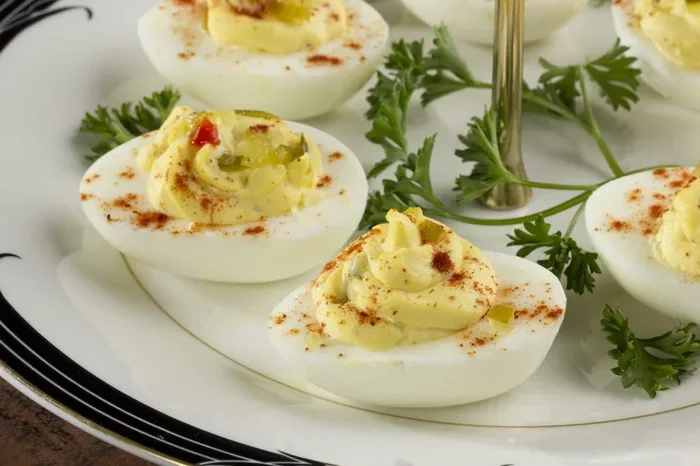
Load the filling into a piping bag or a zip-lock bag with the corner snipped off. Pipe the filling into each egg white half. This gives you a clean, professional look. Sprinkle with paprika, chopped chives, or everything bagel seasoning for extra flavor.
Deviled eggs pair wonderfully with a protein-rich meal. After a session of resistance bands for legs and glutes, your body craves good nutrition. Deviled eggs deliver protein and healthy fats in a small, satisfying package.
Creative Filling Variations
Once you master the classic recipe, try these twists:
- Avocado deviled eggs: Replace half the mayonnaise with mashed avocado. Add lime juice and cilantro.
- Bacon ranch deviled eggs: Mix crumbled cooked bacon and a splash of ranch dressing into the filling.
- Spicy deviled eggs: Add a dash of cayenne pepper or sriracha to the yolk mixture.
- Herb deviled eggs: Fold in fresh dill, parsley, or chives for a bright, fresh flavor.
The possibilities are truly endless. Each variation adds a new dimension to this classic appetizer. You can even prepare the filled eggs the night before and refrigerate them. Just add the paprika and any fresh toppings right before serving.
Common Mistakes to Avoid
Even experienced cooks make these errors. Avoid them and your deviled eggs will be restaurant-quality:
- Using fresh eggs. They are harder to peel and can ruin the presentation.
- Skipping the ice bath. This is the number one cause of green yolks and difficult peeling.
- Overcooking the eggs. Set a timer. Do not guess.
- Mashing yolks too much. You want creamy, not paste-like. A few small lumps add texture.
- Under-seasoning the filling. The yolk mixture needs enough salt, pepper, and mustard to shine.
- Refrigerating filled eggs for too long. They are best within 4 hours of filling for food safety and texture.
Another mistake is using eggs straight from the fridge without letting them rest at room temperature for a few minutes before peeling. Slightly warmer eggs peel more easily than ice-cold ones.
Storing and Serving Deviled Eggs
Deviled eggs are best served fresh, but you can store them properly if needed:
- Unfilled eggs: Store peeled, halved eggs in an airtight container in the fridge for up to 2 days. Keep them in a single layer to prevent cracking.
- Filled eggs: Store in a sealed container for up to 24 hours. The filling may absorb moisture from the white, so add a little extra mustard or vinegar before serving to refresh the flavor.
- Serving temperature: Take the eggs out of the fridge about 15 minutes before serving. Room temperature eggs taste better than cold ones.
For a party, arrange deviled eggs on a platter with fresh herbs, sliced olives, or a drizzle of hot sauce. They look beautiful and taste even better. They also make a great post-workout protein snack after a session focused on how to use a kettlebell for weight loss or any home fitness routine.
Final Thoughts
Boiling eggs for deviled eggs is one of those simple kitchen skills that pays off in a big way. Once you nail the timing, the ice bath, and the peeling technique, you will never go back to store-bought or restaurant versions. The process is fast, the ingredients are affordable, and the results are impressive.
Start with the basics. Use older eggs, boil them for 11 minutes, shock them in ice water, and make a creamy filling with mayonnaise, mustard, and a pinch of paprika. From there, experiment with flavors and presentation. You will quickly find your own signature style.
Whether you are making them for a family gathering, a potluck, or a simple weeknight snack, perfectly boiled deviled eggs never disappoint. They are easy to make, fun to eat, and always a crowd-pleaser. Now go boil some eggs and enjoy the process.
Pro tip: pair your deviled eggs with a post-workout meal after using resistance bands for legs and glutes or any home workout routine. The protein in eggs supports muscle recovery and keeps you feeling full and satisfied.
Frequently Asked Questions
Can I use fresh eggs for deviled eggs?
You can, but they are much harder to peel. Fresh eggs have a lower pH, which causes the white to cling tightly to the shell membrane. For the easiest peeling, use eggs that are at least 7 days old.
How far in advance can I make deviled eggs?
You can boil and peel the eggs up to 2 days in advance. Store them in an airtight container in the fridge. Fill them no more than 4 hours before serving for the best texture and food safety.
Why do my boiled eggs turn green around the yolk?
The green ring is caused by overcooking. It happens when the yolk reacts with sulfur in the white due to too much heat or cooking time. Using the ice bath immediately after boiling prevents this.
Do I need a piping bag for deviled eggs?
No, you do not. A zip-lock bag with the corner snipped off works just as well. You can also use two spoons to scoop the filling into the egg whites. A piping bag just gives a cleaner, more professional look.
Can I freeze deviled eggs?
It is not recommended. The egg whites become rubbery and watery after freezing, and the filling can separate. Deviled eggs are best enjoyed fresh or stored in the fridge for up to 24 hours after filling.
What is the best way to season deviled eggs?
Start with salt, pepper, and mustard in the yolk mixture. Then add mayonnaise for creaminess. A pinch of paprika on top adds color and a subtle smoky flavor. From there, feel free to experiment with herbs, spices, or mix-ins like bacon or avocado.
=== CONCLUSION ===
How to boil eggs for deviled eggs is a simple process once you know the right steps. Choose eggs that are 7 to 10 days old, boil them for 11 minutes, use an ice bath, and peel carefully under running water. The filling is where you can let your creativity shine, from classic creamy to bold and spicy variations.
With these tips, your deviled eggs will turn out perfectly every time. They will look great, taste amazing, and be the hit of any gathering. Practice the method a few times and it will become second nature. Enjoy the process and the delicious results.