How to Clean Leather Couch and Make It Look Brand New
Learning how to clean leather couch surfaces is easier than most people think. With the right supplies and a little patience, you can remove stains, restore shine, and keep your leather furniture looking brand new for years. This guide covers everything from daily care to deep cleaning methods that actually work.
Your leather couch is one of the most expensive and stylish pieces of furniture in your home. Over time, daily use, spills, and general wear can dull its appearance. But here is the good news: learning how to clean leather couch surfaces does not require expensive products or professional help. With a few simple supplies and some basic know-how, you can bring your leather sofa back to life. In this guide, we walk you through every step of the process.
Whether you have a brand new leather couch or one that has seen years of use, this article covers everything you need. We will look at the supplies you need, the step-by-step cleaning process, how to handle stubborn stains, and how to protect your leather furniture for the long haul. By the end, you will feel confident tackling any cleaning job on your leather couch at home.
Key Takeaways
- Use gentle, pH-balanced cleaners: Harsh chemicals can damage leather fibers and strip natural oils.
- Condition after every clean: Conditioning keeps leather soft, supple, and resistant to cracks.
- Test any solution on a hidden spot first: Always patch test before applying anything to visible areas.
- Wipe down regularly: Daily dusting prevents buildup and extends the life of your leather couch.
- Avoid household cleaners like bleach or ammonia: These can dry out and discolor leather over time.
- Act fast on stains: The quicker you address a spill, the easier it is to remove.
📑 Table of Contents
Essential Supplies for Leather Couch Cleaning
Before you start, gather the right supplies. Using the wrong products can do more harm than good. Here is what you need to have on hand for a successful leather couch cleaning session.
Basic Cleaning Supplies
- Mild saddle soap or leather cleaner: This is the safest option for most leather types. Look for a pH-balanced product designed specifically for leather.
- Soft microfiber cloths: These won’t scratch the surface and absorb moisture well.
- Warm distilled water: Tap water can leave mineral deposits on leather over time.
- Baking soda: A natural deodorizer and gentle cleaner. You can use the same approach you would when you clean a yoga mat with baking soda to tackle odors and light stains on leather.
- White vinegar (diluted): Great for cutting through grease and grime.
Supplies for Conditioning and Protection
- Leather conditioner: This replaces natural oils that cleaning removes. Always condition after you clean.
- Leather protectant spray: Creates a barrier against future spills and stains.
- Soft-bristle brush: Useful for gently scrubbing textured leather surfaces.
Having everything ready before you start makes the whole process smoother. You do not want to pause mid-cleaning because you are missing a key supply.
Step-by-Step Guide to Clean a Leather Couch
Now that you have your supplies, let us walk through the actual cleaning process. Follow these steps in order for the best results.
Step 1: Remove Loose Dirt and Dust
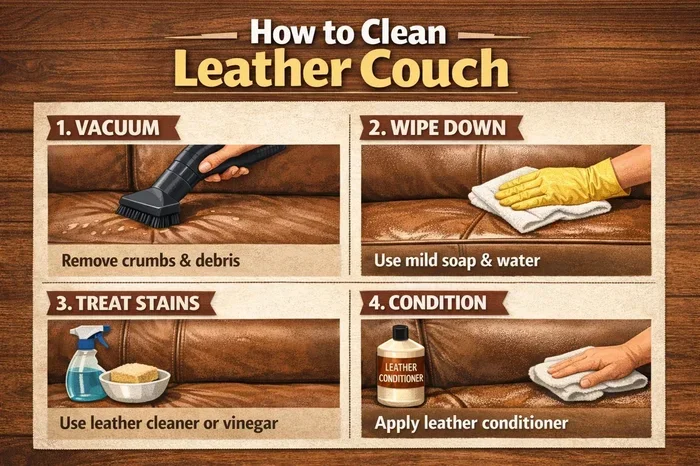
Start by wiping down the entire surface with a dry microfiber cloth. Use gentle, circular motions to pick up dust, crumbs, and loose debris. Do not skip the crevices and seams where dirt tends to build up. This step is important because rubbing dirt into wet leather can cause scratches.
Step 2: Test Your Cleaning Solution
Always test any cleaning product on a hidden area first. Choose a spot that is not visible, like under a cushion or behind the backrest. Apply a small amount and wait 10 minutes. Check for any discoloration or damage before proceeding. This simple step can save you from a costly mistake.
Step 3: Apply the Cleaner
Dampen a microfiber cloth with your leather cleaner or a mixture of warm water and a few drops of mild saddle soap. Wipe the entire leather surface in gentle circular motions. Do not soak the leather. Use as little moisture as possible. If you are dealing with a textured leather, use a soft-bristle brush to work the cleaner into the grooves.
For a deeper leather couch deep clean, you can use a damp cloth with a small amount of white vinegar mixed with water. This works well on greasy spots and general buildup.
Step 4: Rinse and Wipe Down
After cleaning, take a fresh cloth dampened with plain warm water and wipe down the entire surface. This removes any soap residue. Residue left behind can make the leather feel sticky or attract more dirt. Repeat this rinse step if needed until no soap remains.
Step 5: Dry Thoroughly
Pat the leather dry with a clean, dry microfiber cloth. Let the couch air dry completely before using it again or applying conditioner. Never use a hairdryer, heater, or direct sunlight to speed up drying. Heat can crack and warp leather. Give it at least 30 minutes to an hour to dry naturally.
Step 6: Condition the Leather
Once the couch is completely dry, apply a quality leather conditioner. Use a soft cloth and work the conditioner into the leather in circular motions. Let it absorb for 10 to 15 minutes, then buff off any excess with a clean cloth. Conditioning restores moisture and keeps the leather soft and supple.
For ongoing leather couch maintenance, condition your couch every three to four months. If you live in a dry climate, you may need to condition more frequently.
How to Remove Tough Stains from Leather Couch
Stains happen. Whether it is a spilled drink, a pet accident, or a mysterious mark, you need to know how to handle different types of stains properly.
Water Stains and Rings
Water rings are caused by moisture seeping into the leather. To remove them, dampen a cloth with a small amount of distilled water and gently rub the affected area. Then dry it with a separate cloth and apply conditioner. For stubborn rings, a mixture of equal parts water and white vinegar can help.
Grease and Oil Stains
Grease stains need absorption, not water. Sprinkle baking soda directly on the stain and let it sit for at least 30 minutes. The baking soda will draw out the oil. Then brush it off gently and wipe the area with a damp cloth. For the best results, follow up with a leather conditioner.
Ink and Marker Stains
Ink stains are tricky but not impossible to remove. Apply a small amount of rubbing alcohol to a cotton ball and dab the stain gently. Do not rub aggressively. Work from the outside of the stain inward to prevent spreading. Wipe with a damp cloth afterward and condition the area.
Organic Stains (Food, Blood, Pet Accidents)
For organic stains, a gentle approach works best. Use a cloth dampened with mild soapy water and blot the stain carefully. For pet-related accidents, the blotting technique you use to clean dog pee off a yoga mat works well here too. Blot, do not rub. Rinse with a damp cloth and dry thoroughly.
General Stain Removal Tips
- Act quickly: The faster you address a stain, the easier it is to remove.
- Blot, never rub: Rubbing pushes stains deeper into the leather.
- Work from the outside in: This prevents the stain from spreading.
- Be patient: Some stains may need a second treatment. Let the first application work before trying again.
Conditioning and Protecting Your Leather Furniture
Cleaning is only half the battle. Protecting your leather couch after cleaning ensures it stays looking great for years to come.
Why Conditioning Matters
Leather is a natural material that needs moisture to stay healthy. When you clean leather, you strip away some of its natural oils. Conditioning replaces those oils and keeps the leather from drying out, cracking, or fading. Think of it as moisturizing your skin after a shower. Without conditioning, leather becomes brittle and prone to damage over time.
How to Choose the Right Conditioner
Look for a conditioner that is specifically formulated for leather furniture. Avoid products that contain silicone or petroleum-based ingredients. These can create a waxy buildup that blocks the leather from breathing. Water-based conditioners are generally the safest and most effective choice for leather furniture care.
Protecting Against Future Damage
After cleaning and conditioning, consider applying a leather protectant spray. This creates an invisible barrier that repels water and resists stains. Here are a few extra tips to keep your leather couch in top shape:
- Keep it away from direct sunlight: UV rays fade and dry out leather over time.
- Use throw blankets: These protect high-contact areas from oils and wear.
- Wipe up spills immediately: The faster you act, the less chance a stain has to set in.
- Keep pets off the couch: Claws and accidents can cause serious damage to leather.
- Rotate cushions regularly: This prevents uneven wear and fading.
Taking these simple precautions can significantly extend the life of your leather couch and keep it looking fresh.
Common Mistakes People Make When Cleaning Leather
Even with good intentions, many people make mistakes that damage their leather furniture. Here are the most common errors to avoid.
Using Harsh Household Cleaners
Bleach, ammonia, and all-purpose cleaners are too aggressive for leather. They strip away natural oils and can cause discoloration. Stick to products designed for leather or gentle homemade solutions like mild soap and water.
Soaking the Leather
Leather is not waterproof. Excess water can seep through the surface and cause warping, mold, or mildew. Always use a damp cloth, not a wet one. Less moisture is always better when you are cleaning leather upholstery.
Skipping the Patch Test
Every leather type reacts differently to cleaning products. Skipping the patch test can lead to irreversible damage. Always test in a hidden area first.
Neglecting Conditioning
Some people clean their leather couch and forget to condition it afterward. This leaves the leather dry and vulnerable to cracks. Always condition after cleaning.
Using Heat to Dry Leather
Hairdryers, space heaters, and direct sunlight may seem like a quick fix for wet leather. But heat causes leather to shrink, crack, and lose its shape. Always air dry naturally.
Over-Scrubbing
Scrubbing too hard or using abrasive tools can scratch and damage the leather surface. Gentle, circular motions with a soft cloth are always the way to go.
How Often Should You Clean Your Leather Couch?
The frequency of cleaning depends on how much use your couch gets and your living environment. Here is a simple guide to help you stay on track.
| Task | Frequency | Why It Matters |
|---|---|---|
| Dust and wipe down | Weekly | Prevents dirt buildup and keeps the surface fresh |
| Spot clean spills | As needed | Prevents stains from setting in |
| Full clean and condition | Every 3 to 4 months | Maintains moisture and prevents cracking |
| Deep clean | Every 6 months | Removes embedded dirt and restores shine |
| Professional cleaning | Once a year | Addresses deep-set stains and thorough restoration |
If you have kids or pets, you may need to clean more frequently. The key is to stay consistent. Regular leather couch wipe down sessions take only a few minutes and make a huge difference in the long run.
After you finish cleaning, the process is similar to how you would care for leather after a workout session. Just like you would clean a yoga mat after hot yoga to remove sweat and maintain the material, your leather couch needs regular care to stay in top condition. Consistent care prevents buildup and keeps the leather supple and resilient.
Remember, cleaning leather couch furniture is not about being perfect. It is about building a routine that keeps your leather looking its best. Even a quick wipe-down after meals or spills can prevent long-term damage. Small efforts add up to big results over time.
With the right supplies, the right technique, and a little consistency, your leather couch can look brand new for many years. Start with the basics, build a routine, and enjoy the satisfaction of owning well-maintained leather furniture that turns heads every time someone sits down.
Frequently Asked Questions
Can I use household cleaners like Windex or all-purpose spray on my leather couch?
No, you should avoid household cleaners on leather. Products like Windex and all-purpose sprays contain chemicals that can strip natural oils and cause discoloration. Stick to leather-specific cleaners or a simple mixture of mild soap and warm water for safe leather couch cleaning.
How do I know if my leather couch needs conditioning?
If your leather feels dry, stiff, or looks dull, it is time to condition. You can also perform a simple water test. Drop a few drops of water on a hidden spot. If the water absorbs quickly, the leather is thirsty for moisture. Regular conditioning every three to four months keeps leather supple and prevents cracks.
What is the best homemade cleaner for a leather couch?
A mixture of warm water and a few drops of mild dish soap works well for everyday cleaning. For tougher jobs, a combination of water and white vinegar can cut through grease. Always test any homemade solution on a hidden area first to make sure it does not damage or discolor your leather.
Can I use a steam cleaner on my leather couch?
It is best to avoid steam cleaners on leather. The high heat and excess moisture can damage the leather fibers, cause warping, and promote mold growth. Stick to gentle wiping with a damp cloth and let the surface air dry naturally for safe leather upholstery cleaning.
How do I prevent my leather couch from fading?
Keep your leather couch away from direct sunlight and heat sources. UV rays are the biggest cause of fading. Use curtains or blinds to block strong sunlight during peak hours. Also, rotate your cushions regularly to ensure even exposure and wear.
Is it safe to use leather wipes for daily cleaning?
Yes, leather wipes are safe for quick daily cleaning. They are designed to be gentle on leather surfaces. However, do not rely on wipes alone for deep cleaning. Use them for spot cleaning and light dusting, and follow up with a proper conditioner every few months for the best leather couch maintenance results.
=== CONCLUSION ===
Learning how to clean leather couch furniture does not have to be complicated or expensive. With the right supplies, a clear process, and a little regular care, you can keep your leather sofa looking brand new for years. From daily dusting to deep conditioning, every step matters in preserving the beauty and longevity of your leather furniture.
Start by gathering your supplies, follow the step-by-step cleaning process, and always condition after you clean. Avoid common mistakes like using harsh chemicals or soaking the leather. And most importantly, stay consistent. A little effort goes a long way when it comes to leather couch care. Your couch will thank you with years of comfortable, stylish use.