How to Sharpen Kitchen Knives
Learn how to sharpen kitchen knives the right way with our complete guide. You’ll discover simple techniques using whetstones, honing steels, and electric sharpeners. Keep your kitchen knife blade razor sharp and safe for every meal.
Every home cook knows the frustration of a dull kitchen knife. It slips on tomatoes, crushes herbs instead of slicing them, and worse, it can actually hurt you. A sharp blade makes cooking faster, safer, and more enjoyable. The good news is that knife sharpening is a skill anyone can learn. You do not need expensive equipment or years of practice. With the right tools and a little patience, you can restore your cutting edge in minutes.
In this guide, we walk you through everything you need to know about how to sharpen kitchen knives. From choosing the right sharpening method to avoiding common mistakes, we cover it all. Whether you use a whetstone, a honing steel, or an electric knife sharpener, you will find practical steps that work. Think of this as your go-to knife maintenance reference. Let us get started.
Key Takeaways
- Sharpening keeps you safe: A dull knife is more dangerous than a sharp one because it slips easily.
- Choose the right tool: Whetstones, honing steels, and electric sharpeners each have their place in knife care.
- Angle matters: Holding your blade at the correct angle makes all the difference in cutting performance.
- Honing is not sharpening: Honing realigns the edge, while sharpening removes metal to create a new edge.
- Consistency is key: Regular maintenance extends the life of your kitchen tools and saves money over time.
- Avoid common mistakes: Skipping grit progression and using the wrong angle are the top errors home cooks make.
📑 Table of Contents
Why Sharp Kitchen Knives Matter
Many people overlook the importance of a sharp kitchen knife. They assume a dull blade just cuts slower. But the truth goes much deeper. A dull blade actually creates more problems than people realize.
The Safety Factor
It sounds backwards, but a dull knife is more dangerous than a sharp one. When a blade is dull, it requires more force to cut through food. That extra pressure makes the knife slip unpredictably. A sharp blade glides through food with minimal effort, giving you full control. According to safety experts, most kitchen cuts happen with dull knives because users press too hard and lose control.
Better Cooking Results
A sharp kitchen knife blade makes a huge difference in your food preparation. Clean cuts keep vegetables fresh longer because they do not get crushed. Herbs release their full flavor when sliced properly instead of being torn apart. Even something as simple as slicing an onion becomes easier and less messy. When your cutting performance improves, your whole cooking experience gets better.
Think about it this way. You would not use a rusty can opener if you had a sharp one. The same logic applies to your kitchen tools. A well-maintained knife is a joy to use, and proper knife care keeps it in top shape for years.
Tools You Need to Sharpen Kitchen Knives
Before you start sharpening your knives, you need the right tools. The good news is that you do not need a lot of equipment. Three main tools cover most knife sharpening needs at home.
Whetstones
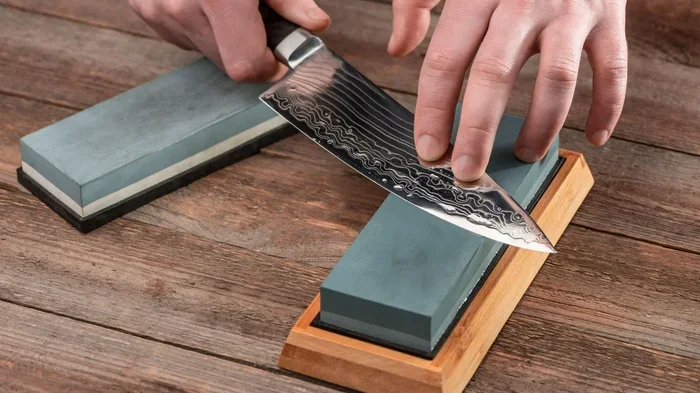
A whetstone (also called a sharpening stone) is the most versatile and effective tool for manual sharpening. Whetstones come in different grits, which measure how coarse or fine the surface is. Lower numbers mean coarser stones, and higher numbers mean finer stones. Most cooks need a two-sided stone, with a coarse side (around 1000 grit) and a fine side (around 3000 to 6000 grit).
Using a whetstone gives you the most control over the process. It lets you shape the knife edge precisely and create a razor-sharp finish. The trade-off is that it takes more practice and time compared to other methods. But once you get the hang of it, nothing beats the results.
Honing Steels
A honing steel does not actually remove metal from your blade. Instead, it realigns the microscopic edge that bends during use. Think of it like straightening a bent paperclip. The honing steel brings the edge back to its original position, which makes the knife feel sharp again without actually grinding it down.
Most professional cooks use a honing steel before every cooking session. It takes only a few seconds and keeps your cutting edge in top shape between proper sharpening sessions. There are different types of honing steels, including steel, ceramic, and diamond-coated options. Each works slightly differently, but they all serve the same purpose.
Electric Knife Sharpeners
If you want the easiest option, an electric knife sharpener is the way to go. These devices guide your blade through pre-set slots with built-in abrasive wheels. You just pull the knife through a few times, and the sharpener does the work. Electric sharpeners are great for beginners who are not comfortable with whetstones yet.
The downside is that electric sharpeners remove more metal than necessary, which can shorten the life of your blade over time. They also offer less control over the blade angle and the final sharpness. Still, for quick maintenance, an electric knife sharpener gets the job done well.
Just like choosing the right how to know what size kettlebell I need depends on your fitness level, picking the right sharpening tool depends on your experience and needs. Start with a basic whetstone if you want the best results, or an electric sharpener if you want convenience.
Step-by-Step Guide to Sharpening with a Whetstone
A whetstone is the gold standard for knife sharpening. Here is a detailed walkthrough to help you get started.
Preparing Your Whetstone
Before you begin, soak your whetstone in water for 10 to 15 minutes. This saturates the stone and allows it to glide smoothly over the blade. Some stones work best when submerged, while others can be used with a light spray of water. Check the instructions for your specific stone.
Place the wet stone on a damp towel or a non-slip mat. This keeps it from sliding around while you work. Set it with the coarse side facing up if you are starting with a dull knife.
Finding the Right Angle
The blade angle is the most important part of knife sharpening. Most kitchen knives work best at a 15 to 20 degree angle. This is the angle between the blade and the surface of the stone.
Here is a simple trick to find your angle. Hold your knife so the spine (the thick back part) is about two finger-widths above the stone. This naturally creates roughly a 20-degree angle. Once you find a comfortable position, try to hold it steady throughout the process. Consistency matters more than perfection here.
Think of it like how to know what weight kettlebell to use — you need the right weight for your strength level. Similarly, the right blade angle depends on your knife type and what feels natural.
The Sharpening Motion
Now for the actual sharpening. Follow these steps carefully:
- Place the heel of the blade near the top of the stone.
- Hold the knife at your chosen blade angle.
- Push the blade forward and down across the stone, as if you are slicing a thin layer off the surface.
- When the blade reaches the bottom of the stone, pull it back toward you while lifting slightly.
- Repeat on the same side for 10 to 15 strokes.
- Flip the knife over and repeat on the other side.
- Alternate sides to keep the edge even.
Apply light to moderate pressure. Let the stone do the work. Pressing too hard can damage the knife edge and wear down the stone faster. Focus on smooth, controlled movements.
Switching to the Fine Grit
After you have sharpened on the coarse side for several minutes, flip the stone over to the fine side. This polishes the cutting edge and removes any burrs created by the coarse side. Repeat the same motion for 5 to 10 strokes on each side. The result should be a noticeably sharper blade that glides through paper or a tomato with ease.
Always remember to keep your whetstone wet during this process. A dry stone creates friction that can damage both the blade and the stone surface.
How to Hone Your Knife Properly
Many people confuse honing with sharpening, but they are two different processes. Sharpening removes metal to create a new knife edge. Honing realigns the existing edge without removing any material. Both are essential parts of knife maintenance.
Honing vs. Sharpening
Use a honing steel regularly — ideally before or after every few uses. Use a whetstone or sharpener only when honing no longer restores the edge. Most home cooks need to sharpen their knives about once every one to three months, depending on how often they use them.
Here is a simple way to remember the difference. Honing is like brushing your teeth every day. Sharpening is like visiting the dentist — it happens less often but does the deeper work.
Step-by-Step Honing Guide
Follow these steps to hone your kitchen knife correctly:
- Hold the honing steel vertically with the tip resting on a stable surface.
- Place the heel of the knife blade against the top of the steel at a 15 to 20 degree angle.
- Slide the blade down the steel while moving it from heel to tip.
- Repeat 5 to 6 times on each side of the blade.
- Always maintain the same blade angle throughout.
The motion should feel smooth and controlled. You are not scraping or digging into the steel. Just gentle, steady strokes. This quick process takes less than a minute and keeps your sharp blade performing at its best.
Protecting your hands during this process is important, just like you protect yourself when doing how to do kettlebell swings without hurting back. Use a firm but gentle grip and keep your fingers well away from the edge.
Common Mistakes When Sharpening Kitchen Knives
Even with the best intentions, many people make avoidable errors when sharpening their knives. Here are the most common mistakes and how to fix them.
Using the Wrong Angle
Inconsistent blade angles are the number one mistake in knife sharpening. If you change the angle halfway through a stroke, you create an uneven edge that will not cut properly. Use the two-finger trick described earlier to find and hold a steady angle. If you struggle, consider using an angle guide accessory that clips onto your knife.
Skipping the Honing Step
Many people sharpen their knives but never hone them. This is like sharpening a pencil but never using a eraser to clean up the tip. Regular honing extends the time between sharpening sessions and keeps your cutting performance consistent. Make honing a habit, not an afterthought.
Using the Wrong Grit Progression
Always start with a coarse grit and move to a finer grit. Skipping grits or starting too fine leaves an uneven knife edge. The coarse side shapes the edge, and the fine side polishes it. This two-step process creates the cleanest, sharpest finish.
Applying Too Much Pressure
Heavy pressure does not make your knife sharper faster. In fact, it can chip the blade edge and wear down your whetstone unevenly. Let the abrasive surface do the work with light, steady pressure. Think of it as a gentle scraping motion rather than a grinding one.
How Often Should You Sharpen Your Kitchen Knives?
The frequency depends on how often you cook and what types of food you cut. Here is a general guideline:
- Daily use: Hone before each session. Sharpen every 4 to 6 weeks.
- Several times a week: Hone weekly. Sharpen every 2 to 3 months.
- Occasional use: Hone before each use. Sharpen every 4 to 6 months.
These are general recommendations. The best way to tell if your knife needs sharpening is the paper test. Hold a piece of printer paper vertically and try to slice through it with a smooth downward motion. A sharp knife will cut cleanly through the paper. A dull knife will tear or slip off the edge. If your knife fails this test, it is time to sharpen it.
Proper knife care also means storing your knives correctly. Use a knife block, a magnetic strip, or blade guards. Never toss kitchen knives into a drawer with other utensils, because that chips the cutting edge and dulls the blade faster.
Taking care of your kitchen tools is an investment in your cooking experience. A well-maintained knife makes every meal prep session faster, safer, and more enjoyable. Just as knowing how to use a kettlebell for weight loss helps you get the most from your workouts, knowing how to properly sharpen and maintain your knives helps you get the most from your cooking.
Conclusion
How to sharpen kitchen knives is a simple but essential skill for any home cook. With the right tools — a whetstone, a honing steel, or an electric sharpener — you can keep your kitchen knife blade in excellent condition. The key is consistency. Hone regularly, sharpen when needed, and always use the correct blade angle.
Remember that a sharp knife is a safe knife. It gives you better control, cleaner cuts, and a more enjoyable cooking experience. Start with the basics, practice the techniques, and soon knife sharpening will feel like second nature. Your cutting edge — and your food — will thank you.
Frequently Asked Questions
What is the best angle to sharpen a kitchen knife?
Most kitchen knives work best at a 15 to 20 degree angle on each side of the blade. This angle creates a sharp, durable knife edge that handles everyday cutting tasks well. If you are unsure, start with 20 degrees, which is more forgiving for beginners.
How often should I sharpen my kitchen knives?
It depends on how often you use them. For daily cooks, sharpening every 4 to 6 weeks works well. For occasional use, every 4 to 6 months is usually enough. Honing your knife before each session helps extend the time between proper sharpening sessions.
Can I use a whetstone for serrated knives?
Yes, but serrated knives need a different approach. Use a narrow whetstone or a serration-specific sharpening tool to reach each individual serration. Standard knife sharpening methods work best on straight-edged blades, so serrated knives require extra attention to each groove.
Is honing the same as sharpening?
No, honing and sharpening are different. Honing realigns the existing knife edge without removing metal, while sharpening grinds away metal to create a new edge. Use a honing steel frequently and sharpen with a whetstone only when the edge has dulled significantly.
Do electric knife sharpeners damage good knives?
Electric sharpeners remove more metal than manual methods, which can shorten the lifespan of high-quality blades over time. They are convenient and work well for budget knives or quick maintenance. For expensive or specialized kitchen knives, a whetstone gives you more control and preserves the blade better.
What is the paper test for knife sharpness?
The paper test is a simple way to check if your knife edge is sharp. Hold a piece of printer paper vertically and slice downward through it with a smooth motion. A properly sharpened kitchen knife will cut through cleanly, while a dull blade will tear or slip off the paper.