Is Bench Press Better with Dumbbells or Bar
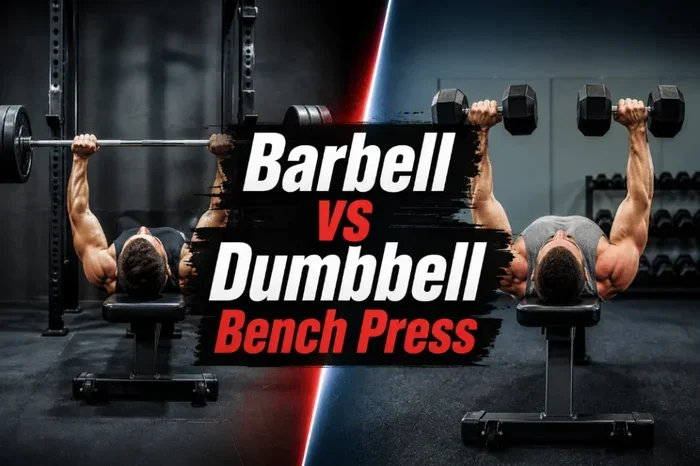
The bench press debate between dumbbells and a barbell comes down to your goals, experience level, and equipment access. Both tools build serious chest strength, but they target muscles differently. Dumbbells offer greater range of motion and stabilizer engagement, while barbells allow heavier loads and balanced loading. This guide breaks down every benefit so you can pick the right move for your chest workout.
This is a comprehensive guide about Is Bench Press Better With Dumbbells Or Bar.
Key Takeaways
- Dumbbells provide a wider range of motion: They let your arms travel further, which can lead to better muscle activation and hypertrophy over time.
- Barbells let you lift heavier: If raw strength is your goal, a barbell bench press allows you to load more weight safely with a stable base.
- Dumbbells fix muscle imbalances: Each arm works independently, helping you catch and correct strength gaps between your left and right sides.
- Both tools build a strong chest: Neither is universally better. The best choice depends on your fitness level, injuries, and training goals.
- Form matters more than the tool: Proper bench press technique with either dumbbells or a barbell will deliver better results than using the wrong tool with poor form.
- Home gym-friendly options exist: Dumbbells are easier to set up for a home workout, while barbells need a sturdy rack and more space.
[FEATURED_IMAGE_PLACEHOLDER]
Is Bench Press Better With Dumbbells or Bar?
The question of whether bench press with dumbbells or bar is better has sparked debates in gyms for decades. The truth is, both tools have unique strengths. A barbell bench press is a staple in strength training programs worldwide. It lets you load heavy weight and build raw power. Dumbbells, on the other hand, offer freedom of movement that a barbell simply cannot match.
So which one should you choose? That depends on what you want to achieve. Are you chasing maximum strength? Do you want to build a bigger chest? Are you working out at home with limited equipment? Let us walk through everything you need to know to make the right call for your upper body workout.
Both options are excellent. But they serve different purposes. Understanding these differences will help you train smarter, avoid injury, and get the best results from your chest pressing movements. Whether you are a beginner or a seasoned lifter, this comparison will give you the clarity you need.
Why This Debate Matters
Choosing between dumbbells and a barbell is not just about preference. It affects which muscles you target, how much weight you can lift, and how your joints handle the movement. Many lifters default to the barbell because it is the most common gym exercise. But dumbbell bench press has some surprising advantages that even experienced lifters overlook.
For example, dumbbells allow each arm to move independently. This means your body cannot cheat by letting your stronger side take over. A barbell locks both arms into the same path, which can hide imbalances. Over time, those imbalances can lead to injury or uneven development.
What Is a Dumbbell Bench Press?
A dumbbell bench press is a pressing movement where you lie on a flat bench and press a dumbbell in each hand from chest level to full arm extension. It is one of the most versatile chest exercises you can do. You can adjust the angle, grip width, and range of motion to target different parts of your chest.
Dumbbells also require your stabilizer muscles to work harder. Your shoulders, rotator cuffs, and core all engage to keep the weights balanced. This makes the dumbbell version a great choice for building functional strength that carries over to real-life movements and sports.
Benefits of Dumbbell Bench Press
- Greater range of motion: Dumbbells let you lower the weights further down, stretching the chest muscles more deeply. This increased stretch can boost muscle growth.
- Unilateral training: Each arm works on its own, which helps identify and correct strength imbalances between your left and right sides.
- Joint-friendly: The natural arc of a dumbbell movement is easier on your shoulders and wrists compared to a fixed barbell path.
- Versatile angles: You can easily adjust to incline, decline, or flat positions without changing equipment setups.
- Home gym friendly: A pair of dumbbells and a bench is all you need. If you want to train at home, check out our guide on how to do bench press with dumbbells at home for practical setup tips.
What Is a Barbell Bench Press?
The barbell bench press is arguably the most famous strength exercise in existence. You lie on a flat bench and press a loaded barbell from your chest to full arm extension. It is the centerpiece of powerlifting competitions and a benchmark for upper body strength across the fitness world.
A barbell keeps both arms locked into the same fixed path. This stability means you can focus on pushing heavy weight without worrying about balancing two separate objects. For lifters who want to measure progress in absolute terms, the barbell is the go-to tool.
Benefits of Barbell Bench Press
- Heavier loads: A barbell allows you to add weight in smaller increments using plates, making it easier to progressively overload your chest muscles.
- Balanced loading: Both sides of your chest push equally because the bar forces a symmetrical movement pattern.
- Stability and safety: When used with a proper rack and spotter, the barbell bench press is a safe and controlled way to build maximum strength.
- Measurable progress: It is easy to track exactly how much weight you are lifting, making it perfect for structured strength training programs.
- Core engagement: The heavy load demands a tight core, which adds a secondary benefit to your overall stability and midsection strength.
Dumbbell vs Barbell Bench Press: Head-to-Head Comparison
Let us put the two options side by side. This comparison table breaks down the key factors that matter most to your training.
| Factor | Dumbbells | Barbell |
|---|---|---|
| Range of Motion | Wider, deeper stretch | Limited by the bar path |
| Weight Capacity | Lower (limited by dumbbell set) | Higher (add plates as needed) |
| Muscle Imbalance Correction | Yes, each arm works independently | No, both arms move together |
| Stabilizer Muscle Activation | Higher | Lower |
| Joint Friendliness | More forgiving on shoulders | Can strain shoulders with poor form |
| Best For | Hypertrophy, balance, functional strength | Max strength, progressive overload |
| Home Gym Suitability | Excellent with minimal space | Requires rack and more space |
When you look at the table, it is clear that neither option wins across every category. The best choice depends on what you prioritize. If you want to build muscle size and fix imbalances, dumbbells are the better choice. If you want to lift the heaviest possible weight and build raw power, the barbell takes the lead. For a deeper dive into this comparison, you can read our detailed breakdown on is it better to do dumbbell bench or barbell.
Which One Builds More Muscle?
Muscle building, or hypertrophy, depends on several factors: tension, volume, range of motion, and progressive overload. Both dumbbells and a barbell can deliver results, but they do so in slightly different ways.
Dumbbells excel at creating a deep stretch on the chest muscles. Research shows that a longer stretch under load can trigger more muscle growth. The independent arm movement also means your chest has to do more work to stabilize each weight. This extra effort translates into more muscle fibers being recruited during every rep.
Barbells, however, allow you to use significantly more weight. Heavier loads create more mechanical tension, which is another key driver of muscle growth. A barbell also makes it easier to perform advanced techniques like drop sets or cluster sets because you can quickly adjust the load.
The best strategy? Use both. Many experienced lifters program both movements in their weekly routine. They might do barbell bench press on heavy strength days and dumbbell bench press on hypertrophy-focused days. This combination gives you the best of both worlds and keeps your chest workouts fresh and challenging.
How to Choose the Right Option for You
Still not sure which one to pick? Here are some simple guidelines to help you decide based on your situation and goals.
Choose Dumbbells If…
- You are a beginner learning proper pressing form.
- You have a history of shoulder or wrist injuries.
- You want to correct strength imbalances between your arms.
- You train at home and have limited equipment.
- Your primary goal is muscle size and definition.
- You enjoy a greater range of motion in your pressing movements.
Choose a Barbell If…
- Your main goal is building maximum raw strength.
- You are following a powerlifting or strength-focused program.
- You want to track precise weight increases over time.
- You have access to a full gym with a proper rack and spotter.
- You prefer the stability of a fixed movement path.
- You want to lift heavier weights safely with proper support.
One practical tip: if you are lifting heavy dumbbells, you may need help getting them into position. Check out our guide on how to get heavy dumbbells up for bench press for safe and efficient techniques. This small detail can make a big difference in your training sessions.
Common Mistakes to Avoid
No matter which tool you choose, certain mistakes can hold back your progress or lead to injury. Here are the most common errors lifters make with both dumbbells and barbells.
Mistake 1: Bouncing the Weight Off Your Chest
Using momentum to rebound the weight saves a little energy but costs you muscle activation. Control the descent, pause briefly at the bottom, and press with intention. This applies to both dumbbells and barbells.
Mistake 2: Flaring Elbows Too Wide
Elbows that flare out at 90 degrees put unnecessary stress on your shoulder joints. Keep your elbows at about a 45 to 75 degree angle from your body. This protects your shoulders and targets the chest more effectively.
Mistake 3: Lifting Too Much Weight Too Soon
Loading up the weights before your form is solid is a fast track to injury. Start with a weight you can control for 8 to 12 reps with perfect technique. Add weight gradually as your strength improves.
Mistake 4: Ignoring Your Feet and Legs
Your legs play a bigger role than you think. Plant your feet flat on the floor, drive through your heels, and engage your glutes. This creates a stable base that supports your pressing power.
Expert Tips for Better Bench Press Performance
Whether you use dumbbells or a barbell, these expert tips will help you get more out of every set.
- Squeeze the bar or dumbbells hard. Creating full-body tension before you unrack or lift improves stability and force output.
- Breathe properly. Inhale as you lower the weight, hold it briefly at the bottom, and exhale forcefully as you press up.
- Use a controlled tempo. Aim for a 2-second descent, a brief pause, and a 1-second press. This keeps the tension on your chest muscles throughout the movement.
- Train your triceps and shoulders. These muscles support your bench press. Stronger supporting muscles mean a stronger press overall.
- Rest adequately between sets. For strength, rest 2 to 3 minutes. For hypertrophy, rest 60 to 90 seconds. Proper recovery lets you maintain quality reps.
Final Thoughts
The debate over bench press with dumbbells or bar does not have a single winner. Both tools are incredibly effective for building a strong, muscular chest. The best choice is the one that aligns with your goals, equipment, and body type.
If you are just starting out, dumbbells are a fantastic place to build confidence and learn proper pressing mechanics. If you are chasing peak strength numbers, the barbell is your best friend. And if you want the full package, why not use both in your training plan?
The most important thing is to show up, use good form, and stay consistent. No matter which tool you pick, the bench press will deliver real results when you commit to it. Start where you are, use what you have, and build from there. Your chest will thank you.
Frequently Asked Questions
Is bench press better with dumbbells or barbell for beginners?
Dumbbells are generally better for beginners because they allow a natural range of motion and are more forgiving on the joints. They also help identify and correct muscle imbalances early on. Start with lighter dumbbells and focus on mastering the movement pattern before adding weight.
Can you build a big chest with dumbbells alone?
Absolutely. Dumbbells provide excellent chest activation through a deep range of motion. Many professional bodybuilders build impressive physiques using dumbbells as their primary pressing tool. The key is to train with sufficient volume and progressively increase your weight over time.
Why can I lift more weight with a barbell than dumbbells?
A barbell locks both arms into the same path, which reduces the demand on your stabilizer muscles. This allows you to lift heavier because your body does not waste energy balancing two separate weights. The fixed path also means you can use a rack to unrack heavier loads safely.
Are dumbbell bench presses safer than barbell bench presses?
Dumbbells tend to be easier on the shoulders and wrists because they allow a natural arc of movement. The independent arm action also reduces the risk of compensation patterns that can lead to injury. However, any exercise can be unsafe if performed with poor form or excessive weight.
Should I do both dumbbell and barbell bench press in my routine?
Yes, combining both is an excellent strategy. Use the barbell for heavy strength work and the dumbbells for hypertrophy and muscle balance. This approach gives you the benefits of both tools and keeps your training varied and effective.
How often should I train bench press per week?
Most lifters benefit from training bench press 2 to 3 times per week. This frequency allows enough stimulus for growth while giving your muscles and joints adequate recovery time. Adjust based on your overall training volume and how your body responds to the workload.
Frequently Asked Questions
What is Is Bench Press Better With Dumbbells Or Bar?
Is Bench Press Better With Dumbbells Or Bar is an important topic with many practical applications.