What Is a Good Starting Weight for Dumbbells
Finding the right good starting weight for dumbbells depends on your fitness level, goals, and the exercises you plan to do. Most beginners should start light and focus on form before adding heavier loads. This guide walks you through everything you need to know about choosing your first set of dumbbells with confidence.
Starting a dumbbell routine can feel confusing. You walk into a gym or browse online stores and see dozens of weight options. So, what is a good starting weight for dumbbells? The answer depends on several factors, including your current fitness level, the exercises you want to do, and your personal goals.
Choosing the right good starting weight for dumbbells is one of the most important decisions you will make as a beginner. Pick too heavy, and you risk injury or poor form. Pick too light, and you may not challenge your muscles enough to see results. This guide removes the guesswork and gives you clear, practical advice to get started.
Key Takeaways
- Start Light: Beginners should begin with lighter weights to master proper form and reduce injury risk.
- Match Weight to Exercise: Different exercises require different starting weights, from bicep curls to goblet squats.
- Progress Gradually: Increase weight slowly over weeks to build strength safely and consistently.
- Consider Your Goals: Weight loss, muscle building, and endurance training all call for different starting weights.
- Listen to Your Body: If an exercise feels too easy or too hard, adjust the weight accordingly.
- Consistency Matters More Than Weight: Sticking with a routine beats lifting heavy too soon.
📑 Table of Contents
Why Choosing the Right Starting Weight Matters
The weight you start with sets the foundation for your entire dumbbell journey. Using the wrong weight can lead to frustration, stalled progress, or even injuries that sideline you for weeks. On the other hand, starting at the right level builds confidence and creates a solid base for growth.
Think of it like learning to ride a bike. You would not start on a steep hill. You would start on flat ground, find your balance, and then gradually tackle harder terrain. Dumbbell training works the same way. Your starting weight should feel manageable yet challenging enough to engage your muscles.
The Role of Proper Form
Before you even think about how much weight to lift, focus on form. Proper technique ensures you target the right muscles and avoid strain. Many beginners make the mistake of chasing heavy weights while sacrificing form. This approach leads to poor results and potential injuries.
Start with a weight that lets you complete all reps with clean, controlled movements. If you find yourself swinging, jerking, or using momentum, the weight is too heavy. A good starting weight for dumbbells should allow you to focus on each rep with full mind-muscle connection.
How Your Fitness Level Shapes Your Starting Weight
Your current fitness level plays a huge role in determining the right starting weight. Someone who has been doing bodyweight exercises for months will have a different starting point than someone who has been completely sedentary. Both are perfectly fine.
The key is honesty with yourself. Do not compare your starting weight to someone else’s. Focus on where you are right now. The goal is to find a weight that challenges you without breaking your form. This balance is what makes a good starting weight for dumbbells truly effective.
How to Determine Your Ideal Starting Dumbbell Weight
Figuring out your starting weight does not need to be complicated. A few simple tests and guidelines can point you in the right direction. Here is a step-by-step approach to finding your sweet spot.
The Rep Test Method
This is the most popular method for beginners. Pick a weight and perform 10 to 12 repetitions of a basic exercise like a bicep curl or shoulder press. Here is what to look for:
- Too Light: You can easily complete all reps without feeling challenged. The last two reps feel almost effortless.
- Just Right: The last two reps feel difficult but you can still maintain good form. This is the goldilocks zone.
- Too Heavy: You cannot complete the set with proper technique. You are swinging, cheating, or struggling badly.
If the weight feels too easy after your first set, add a small increment next time. If it feels too heavy, drop down. The good starting weight for dumbbells is the one that hits that sweet spot on the rep test.
Body Weight as a Guide
Your body weight can give you a rough starting point. Here is a simple guideline for common exercises:
- Bicep Curls: Start with 5 to 10 pounds for women and 10 to 15 pounds for men.
- Shoulder Press: Start with 5 to 8 pounds for women and 10 to 15 pounds for men.
- Goblet Squats: Start with 10 to 15 pounds for women and 15 to 25 pounds for men.
- Chest Press: Start with 5 to 10 pounds for women and 10 to 20 pounds for men.
- Deadlifts: Start with 15 to 25 pounds for women and 25 to 40 pounds for men.
These numbers are general guidelines. Adjust based on how the exercises feel during your first few sessions. The beauty of dumbbell training is that you can always tweak the weight up or down.
When in Doubt, Go Lighter
Many beginners overestimate their strength and start too heavy. This is one of the most common mistakes in weight training. When you start too heavy, you compensate with poor form, which limits muscle engagement and increases injury risk.
It is always better to start lighter and progress quickly. You can add weight every one to two weeks as your strength improves. A good starting weight for dumbbells should leave you feeling challenged but not exhausted after each set. You should be able to finish your workout with energy to spare.
Recommended Starting Weights by Exercise Type
Not all dumbbell exercises are created equal. Some movements recruit more muscles and naturally require heavier weights. Others isolate smaller muscle groups and work better with lighter loads. Understanding this difference helps you choose the right weight for each exercise.
Upper Body Exercises
Upper body exercises often involve smaller muscle groups, so they typically require lighter starting weights. Here are some examples:
- Bicep Curls: 5 to 15 pounds depending on your strength level. Focus on slow, controlled movements.
- Tricep Extensions: 5 to 12 pounds. The triceps are a smaller muscle, so less weight goes a long way.
- Lateral Raises: 3 to 10 pounds. These target the shoulder muscles, which respond well to lighter loads.
- Chest Flyes: 5 to 12 pounds. Keep a slight bend in your elbows and focus on the stretch and squeeze.
For upper body exercises, a good starting weight for dumbbells is almost always on the lighter side. You will be surprised how challenging these can feel even with modest weight.
Lower Body Exercises
Your legs and glutes are the largest muscle groups in your body. They can handle more weight than your upper body. Here is what to start with:
- Goblet Squats: 10 to 25 pounds. This is a great full-body exercise that builds leg and core strength.
- Dumbbell Lunges: 10 to 20 pounds per hand. Start with bodyweight lunges if you are brand new to exercise.
- Romanian Deadlifts: 15 to 25 pounds. Focus on hinging at the hips and keeping your back straight.
- Step-Ups: 10 to 20 pounds per hand. Use a sturdy bench or step platform.
Lower body exercises naturally allow for heavier starting weights. But do not let this tempt you to go too heavy too fast. Your legs will adapt quickly, so be patient and increase weight gradually.
Core Exercises
Dumbbell core exercises are often overlooked but incredibly effective. They help build stability and support your entire body during other exercises:
- Dumbbell Russian Twists: 5 to 10 pounds. Sit on the floor with your knees bent and twist side to side.
- Dumbbell Side Bends: 5 to 12 pounds per hand. Stand tall and bend sideways at the waist.
- Dumbbell Floor Press: 5 to 15 pounds. Lie on the floor and press the dumbbells upward.
Core work with dumbbells does not require heavy weight. A good starting weight for dumbbells for core exercises is typically light to moderate. The focus here is on control and stability, not brute strength.
Common Mistakes When Choosing Dumbbell Weight
Avoiding common pitfalls can save you time, frustration, and injury. Here are the mistakes most beginners make when selecting their starting dumbbell weight.
Copying What Others Do
Walking into a gym and picking up the same weight as the person next to you is a recipe for problems. Everyone has different fitness backgrounds, body compositions, and strength levels. What works for them may be entirely wrong for you.
Focus on your own journey. Use the rep test method described above to find your personal good starting weight for dumbbells. Nobody else needs to know what weight you are using, and that is perfectly fine.
Skipping the Warm-Up
Some beginners jump straight into heavy sets without warming up. Cold muscles are more prone to strains and tears. Always warm up for five to ten minutes before your dumbbell session.
A light warm-up could include arm circles, bodyweight squats, or a few minutes of walking. Once your muscles are warm, you will be better prepared to handle your starting weight safely and effectively.
Ignoring Fatigue Signals
Your body gives you signals when something is wrong. Sharp pain, joint discomfort, or sudden weakness are all signs to stop and reassess. Pushing through pain is never a good idea.
If your starting weight feels painful during an exercise, reduce the load immediately. Pain is not a sign of progress. It is a warning sign that something needs to change.
How to Progress Your Dumbbell Weight Over Time
Once you have found your good starting weight for dumbbells, the next step is progression. Progressive overload is the principle of gradually increasing the stress on your muscles over time. This is how you build strength and see results.
The 2-for-2 Rule
A simple and effective way to progress is the 2-for-2 rule. If you can complete two extra reps beyond your target on your last two sets for two consecutive workouts, it is time to increase the weight. Typically, a 5 to 10 percent increase works well for dumbbells.
For example, if you are curling 10 pounds for 12 reps and you can do 14 reps with good form for two workouts in a row, move up to 12 or 15 pounds. This keeps your workouts challenging without overwhelming your body.
Tracking Your Progress
Keep a simple workout log. Write down the exercise, weight, sets, and reps for each session. Tracking your progress helps you see improvements over time and makes it easier to decide when to increase weight.
Many beginners underestimate how quickly they get stronger. Within a few weeks of consistent training, you may need to increase your starting weight sooner than expected. That is a great sign. It means your body is adapting and growing stronger.
Deload Weeks
Not every week should be about pushing harder. Plan a deload week every four to six weeks where you reduce your weight by 30 to 40 percent. This gives your muscles and joints time to recover and prevents burnout.
Deload weeks are especially important for beginners whose bodies are still adapting to new movements. They help you build a sustainable habit rather than burning out after a few intense weeks. Think of them as a strategic part of your good starting weight for dumbbells journey.
Final Thoughts on Finding Your Starting Dumbbell Weight
Finding the right good starting weight for dumbbells is a personal journey. There is no one-size-fits-all answer. The best weight is the one that challenges you, allows proper form, and keeps you motivated to come back for more.
Start light, focus on technique, and progress gradually. Your body will adapt faster than you think. Within a few weeks of consistent training, you will look back and be amazed at how far you have come. The most important thing is to start. Pick up those dumbbells, find your weight, and begin building the strength you deserve.
Remember, every expert was once a beginner. The fact that you are taking the time to learn about proper weight selection shows you are on the right track. Trust the process, stay consistent, and enjoy the journey of getting stronger with each workout.
Frequently Asked Questions
What is a good starting weight for dumbbells for complete beginners?
For complete beginners, start with 5 to 10 pounds for upper body exercises and 10 to 20 pounds for lower body exercises. Focus on mastering form before increasing weight. You can always add more as you get stronger.
How do I know if my dumbbell weight is too heavy?
If you cannot complete your target reps with proper form, the weight is too heavy. Signs include swinging the dumbbells, using momentum, or feeling pain. Drop the weight and focus on controlled movements instead.
Should men and women use different starting dumbbell weights?
Generally, men can start with slightly heavier weights than women due to differences in muscle mass and strength. However, individual fitness level matters more than gender. Use the rep test method to find your personal starting weight.
Can I use the same starting weight for all dumbbell exercises?
No, different exercises require different weights. Upper body exercises typically need lighter weights than lower body exercises. Adjust based on the muscle group being targeted and how the exercise feels during your first few sets.
How quickly should I increase my dumbbell weight?
Increase weight every one to two weeks if you can complete two extra reps on your last two sets with good form. Small increases of 5 to 10 percent are ideal for steady, safe progress.
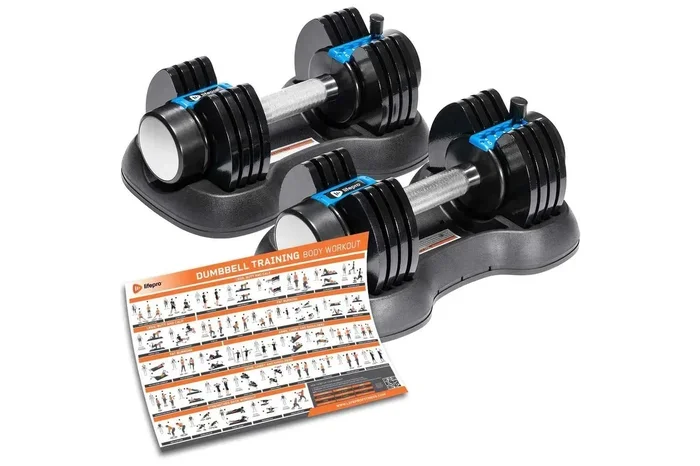
Is it better to start with adjustable or fixed dumbbells?
Adjustable dumbbells are great for home workouts because they save space and let you change weight easily. Fixed dumbbells are simple and durable. Choose based on your budget, space, and workout preferences.