How Does a Rowing Machine Work Mechanically 2
A rowing machine works through a clever combination of resistance systems, a sliding seat, and a coordinated rowing stroke that mimics real water rowing. Understanding the mechanics helps you use the machine more effectively and avoid injuries. This guide breaks down every mechanical component and explains how they work together to deliver a powerful full body workout.
Have you ever wondered what happens inside a rowing machine when you pull that handle? It looks simple enough — you sit, you pull, you glide back. But beneath the smooth exterior lies a fascinating world of mechanical engineering. Every part works together to turn your effort into a powerful, low impact cardio session.
Understanding how a rowing machine works mechanically changes the way you train. When you know what each component does, you can adjust your form, tweak your settings, and get way more out of every stroke. Whether you are a beginner or a seasoned gym-goer, this guide breaks down the mechanics in plain language.
We will walk through every major part of the machine, explore the different types of resistance systems, and break down the rowing stroke step by step. By the end, you will see your indoor rowing sessions in a whole new light.
Key Takeaways
- Flywheel and Resistance System: The flywheel creates resistance through air, water, or magnetic mechanisms, and the damper setting controls the intensity of your workout.
- The Rowing Stroke Has Four Phases: Catch, Drive, Finish, and Recovery — each phase engages different muscle groups and follows a specific mechanical sequence.
- Key Components Work Together: The chain, handle, seat rail, foot pedals, and monitor all play essential roles in translating your effort into measurable results.
- Different Machines Use Different Resistance Types: Air rowers, water rowers, magnetic rowers, and hydraulic rowers each offer unique mechanical advantages and feel.
- Proper Form Matters Mechanically: Using the correct technique ensures the machine’s components work as designed and maximizes your workout efficiency.
📑 Table of Contents
- What Makes a Rowing Machine Work
- Types of Resistance Systems in Rowing Machines
- The Rowing Stroke: A Mechanical Breakdown
- The Role of the Damper Setting
- How the Seat, Rail, and Footrests Work Together
- Common Mechanical Issues and How to Fix Them
- How Rowing Machine Mechanics Support Weight Loss
- Key Takeaways
What Makes a Rowing Machine Work
At its core, a rowing machine converts your physical effort into resistance. You push with your legs, pull with your arms, and engage your core — all while the machine pushes back. This push-and-pull dynamic is what makes rowing machine mechanics so effective.
Here are the main mechanical components that make it all happen:
- Flywheel: The spinning wheel at the front of the machine. It is the heart of the resistance system.
- Chain and Handle: Connects your pull to the flywheel. The handle mimics the grip of an oar.
- Seat Rail: The track your seat slides along. It allows smooth forward and backward movement.
- Foot Pedals and Straps: Secure your feet and let you push off powerfully during each stroke.
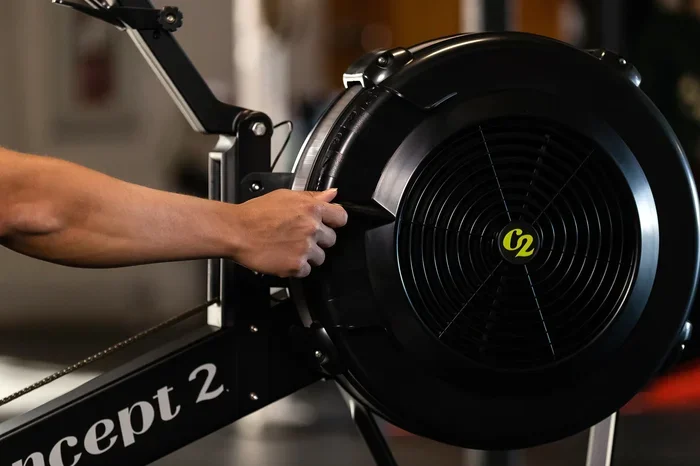
- Damper: A lever that controls how much air flows into the flywheel housing. It adjusts resistance intensity.
- Performance Monitor: The digital screen that tracks your stroke rate, distance, calories, and more.
Each of these parts plays a specific role. When they all work in harmony, you get a smooth, efficient full body workout that feels almost like being on the water.
Types of Resistance Systems in Rowing Machines
Not all rowing machines are created equal. The way they create resistance — the force that pushes back against you — varies by machine type. Let us break down the four main systems.
Air Resistance Rowing
Air rowers use a fan-style flywheel. As you pull faster, more air spins through the flywheel, and resistance increases. This is the same principle used in competitive Concept2 rowing machines. The harder you pull, the harder it gets.
- Pros: Self-regulating resistance, very realistic feel, durable
- Cons: Can be noisy, resistance depends on your pulling speed
Water Resistance Rowing
Water rowers use a paddle submerged in a tank of water. The water creates drag as the paddle spins. This gives a smooth, quiet resistance that closely mimics actual rowing on a lake or river.
- Pros: Very realistic feel, quiet operation, beautiful design
- Cons: Heavier, more expensive, resistance is harder to adjust precisely
Magnetic Resistance Rowing
Magnetic rowers use magnets positioned near a metal flywheel. The magnets create resistance without touching the wheel. This makes for a very smooth and quiet rowing stroke.
- Pros: Whisper quiet, smooth resistance, precise adjustments
- Cons: Less realistic feel, resistance does not increase naturally with speed
Hydraulic Resistance Rowing
Hydraulic rowers use pistons or cylinders filled with fluid to create resistance. They are typically more compact and affordable. However, the resistance feel is different from air or water rowers.
- Pros: Compact, affordable, adjustable resistance
- Cons: Less natural feel, pistons can wear out over time
| Resistance Type | Noise Level | Realism | Price Range | Best For |
|---|---|---|---|---|
| Air | Moderate | High | $$$ | Serious athletes |
| Water | Low | Very High | $$$$ | Home use, aesthetics |
| Magnetic | Very Low | Medium | $$ | Quiet environments |
| Hydraulic | Low | Low-Medium | $ | Budget buyers |
Your choice of resistance type shapes your entire rowing machine experience. If you want a challenging indoor rowing workout that mimics real water, air or water rowers are your best bet.
The Rowing Stroke: A Mechanical Breakdown
The rowing stroke is the heart of every session. It consists of four distinct phases, and each one engages your body differently. Understanding these phases helps you use the machine’s mechanics to your advantage.
Phase 1: The Catch
The catch is the starting position. You are at the front of the machine, knees bent, shins vertical, arms extended, and shoulders relaxed. The handle cable is pulled taut, and the flywheel is at the edge of its rotation.
This is where the energy begins. Your legs are loaded like springs, ready to explode forward. The seat is at its closest point to the front of the seat rail. Think of it as loading a cannon — all the potential energy is stored in your legs.
Phase 2: The Drive
The drive is the power phase. It happens in a specific sequence:
- Legs push — your legs extend, driving the seat backward along the seat rail
- Core engages — your torso opens slightly as your hips hinge
- Arms pull — the handle cable pulls the chain, spinning the flywheel
This sequence is crucial. If you pull with your arms too early, you waste leg power. The rowing machine mechanics are designed so that your largest muscle groups — your legs — do the heavy lifting first.
Phase 3: The Finish
At the finish, your legs are fully extended, your torso is slightly leaned back, and the handle cable is pulled into your lower chest. Your elbows are past your body. The flywheel is spinning at its peak.
This is a moment of control. You are not yanking or jerking. You are holding the position, letting the machine’s resistance mechanism work with you.
Phase 4: The Recovery
The recovery is the return to the catch position. It happens in reverse order:
- Arms extend — you push the handle away
- Torso hinges forward — your upper body leans toward the machine
- Knees bend — the seat slides forward along the seat rail
The recovery should be relaxed and controlled. It is your rest phase. A smooth recovery sets you up for a powerful next drive.
If you want to dive deeper into how rowing machine exercise targets your muscles, check out our guide on what body parts a rowing machine works out.
The Role of the Damper Setting
The damper is a small lever on the side of the flywheel housing. It controls how much air flows into the flywheel. Many people confuse the damper with resistance, but they are not the same thing.
The damper adjusts the feel of the pull. A higher damper setting (closer to 10) lets more air in, making each stroke feel heavier. A lower setting (closer to 1) makes each stroke lighter and faster.
Here is an important tip: the damper does not control how hard you work. It controls how the machine feels. You can get an intense workout on a low damper by rowing fast and hard. You can also go easy on a high damper.
For most people, a damper setting between 3 and 5 works best. This range gives you a good balance of power and speed without burning out your muscles too quickly.
How the Seat, Rail, and Footrests Work Together
The seat rail is more than just a track. It is a precision-engineered sliding system that lets you move smoothly and efficiently. The seat glides on bearings or rollers, minimizing friction so you can focus on your effort.
The foot pedals and straps keep your feet secure during the drive phase. When you push off, your feet transfer power directly into the machine. If the straps are too loose, you lose energy. If they are too tight, you restrict blood flow.
Here are quick tips for optimizing these components:
- Adjust the foot straps so they sit across the balls of your feet
- Check that the seat glides freely without sticking or grinding
- Keep the rail clean and lightly lubricated for smooth movement
- Ensure your heels stay connected to the pedals during the drive
When these parts are properly set up, your ergonomic rowing experience improves dramatically. You will feel less strain and more power with every stroke.
Common Mechanical Issues and How to Fix Them
Like any machine, a rowing machine can develop issues over time. Here are the most common problems and simple fixes.
Squeaking or Grinding Noises
Squeaking usually comes from the seat rail or the flywheel housing. A quick application of silicone lubricant on the rail often solves the problem. For the flywheel, check for dust or debris buildup and clean it gently.
Chain Slipping or Stiffness
If the chain feels loose or skips, you may need to tighten it. Most machines have an adjustment bolt near the chain drive. If the chain is stiff or rusty, apply a light machine lubricant and wipe off the excess.
Uneven Resistance
Feeling more resistance on one side? This can happen with hydraulic rowers if one piston is leaking or air is trapped in the system. For air rowers, check that the damper lever is sitting evenly in its slot.
Monitor Not Displaying Data
A blank or glitchy monitor is usually a battery or connection issue. Try replacing the batteries first. If that does not work, check the wiring connection between the monitor and the main unit.
Regular maintenance keeps your machine running smoothly and extends its lifespan. Wipe it down after each use, lubricate moving parts monthly, and check bolts and screws periodically.
If you are curious about how much a premium machine like the Concept2 costs, you can read our guide on how much a Concept 2 rowing machine costs.
How Rowing Machine Mechanics Support Weight Loss
The mechanical design of a rowing machine makes it one of the most effective tools for burning calories and losing weight. Because it engages over 80% of your muscles, your body works incredibly hard during each session.
The sliding seat, the resistance system, and the coordinated rowing stroke all combine to create a workout that torches calories while being gentle on your joints. This is why so many people turn to indoor rowing for weight loss.
Want to learn more about using a rowing machine specifically for shedding pounds? Our article on how to use a rowing machine to lose weight covers proven strategies and routines.
A typical 30-minute session can burn between 250 and 400 calories depending on your intensity and body weight. The mechanical efficiency of the machine means almost all of your effort translates into work — nothing is wasted.
Key Takeaways
- Flywheel and Resistance System: The flywheel creates resistance through air, water, or magnetic mechanisms, and the damper setting controls the intensity of your workout.
- The Rowing Stroke Has Four Phases: Catch, Drive, Finish, and Recovery — each phase engages different muscle groups and follows a specific mechanical sequence.
- Key Components Work Together: The chain, handle, seat rail, foot pedals, and monitor all play essential roles in translating your effort into measurable results.
- Different Machines Use Different Resistance Types: Air rowers, water rowers, magnetic rowers, and hydraulic rowers each offer unique mechanical advantages and feel.
- Proper Form Matters Mechanically: Using the correct technique ensures the machine’s components work as designed and maximizes your workout efficiency.
Frequently Asked Questions
How does a rowing machine create resistance?
A rowing machine creates resistance through one of four systems: air, water, magnetic, or hydraulic. Air rowers use a spinning flywheel that catches air as you pull. Water rowers use a paddle in a water tank. Magnetic rowers use magnets near a metal flywheel. Hydraulic rowers use pressurized pistons. Each system offers a different feel and resistance profile.
What is the damper setting on a rowing machine?
The damper is a lever that controls how much air flows into the flywheel housing. It adjusts the feel of each stroke, not the actual resistance. A higher setting feels heavier, while a lower setting feels lighter. Most people work best with a damper between 3 and 5 for a balanced workout.
How many calories does a rowing machine burn?
A rowing machine can burn between 250 and 400 calories in a 30-minute session, depending on your intensity, weight, and technique. Because it engages your entire body, it burns more calories per minute than many other cardio machines. To learn more about calorie burn, check out our guide on how many calories a rowing machine burns per hour.
Is a rowing machine a full body workout?
Yes, absolutely. A rowing machine works your legs, core, back, and arms through the coordinated rowing stroke. The drive phase uses your legs and core, while the pull phase engages your arms and upper back. It is one of the most efficient full body workouts you can do on a single piece of equipment.
How do I maintain my rowing machine?
Keep the seat rail clean and lightly lubricated. Check the chain tension and lubricate it regularly. Wipe down the frame after each use. Inspect the foot pedals and straps for wear. For air rowers, clean the flywheel housing periodically. Regular maintenance prevents most common mechanical issues.
Can beginners use a rowing machine effectively?
Yes, rowing machines are excellent for beginners. Start with a low damper setting and focus on mastering the four phases of the rowing stroke. Keep your sessions short — around 10 to 15 minutes — and gradually increase duration and intensity. Proper form matters more than speed or resistance when you are starting out.
=== CONCLUSION ===
The mechanics of a rowing machine are beautifully simple and incredibly effective. From the flywheel and chain to the seat rail and foot pedals, every component works together to give you a smooth, powerful, and efficient workout. Understanding these mechanics helps you train smarter, not just harder.
Whether you prefer the whisper-quiet feel of a magnetic rower or the realistic drag of a water rower, the core mechanics remain the same. You push with your legs, pull with your arms, and let the machine’s resistance system challenge you every step of the way.
Now that you understand how a rowing machine works mechanically, you are ready to get the most out of every session. Focus on your form, adjust your damper wisely, and enjoy the ride. Your body — and your fitness goals — will thank you.