What Should Be the Length of Jump Rope
Choosing the right jump rope length is essential for an effective and safe workout. The correct jump rope length depends on your height, fitness level, and the type of exercise you do. This guide walks you through simple methods to measure and adjust your rope so it fits perfectly every time.
Have you ever picked up a jump rope and felt like it just wasn’t right? Maybe it kept catching your feet, or the handles barely reached your wrists. The problem is almost always the same — the rope length is wrong. Getting the correct jump rope length is one of the most important steps before you start any jump rope workout. It affects your rhythm, your speed, and even how many calories you burn. In this guide, we will break down exactly how to find the perfect rope length for your height so you can jump with confidence.
Whether you are a complete beginner or a seasoned athlete, rope sizing matters more than most people think. A rope that is too long drags on the ground and slows you down. A rope that is too short forces you to jump higher than you need to, which wastes energy and can hurt your joints. The good news is that finding the right jump rope size is quick and easy once you know what to look for. Let us dive into the details.
Key Takeaways
- Your jump rope length should match your height: A properly sized rope makes jumping easier and more efficient.
- The standing method is the simplest way to check: Step on the center of the rope and pull the handles up — they should reach your armpits.
- Different activities need different lengths: Speed jumping, double unders, and weighted rope workouts all require slightly different sizing.
- Adjustable ropes are a great option: They let you fine-tune the length without buying a new rope.
- Common mistakes include using a rope that is too long or too short: Both can cause tripping, poor form, and frustration.
- Regular re-checking is important: Your rope length needs may change as your fitness level improves.
📑 Table of Contents
Why Jump Rope Length Matters
The length of your rope directly impacts your workout quality. When your jump rope sizing is off, your body compensates in ways that reduce efficiency and increase injury risk. A properly fitted rope glides smoothly under your feet with minimal effort. You spend less energy on timing and more energy on actually exercising.
Think about it this way. If you wear shoes that are two sizes too big, you are going to trip sooner or later. The same logic applies to your rope. The proper jump rope fit allows the rope to clear your head by just a few inches with each rotation. This gives you the perfect amount of clearance without wasting any motion.
How Rope Length Affects Your Workout
A rope that is too long forces you to swing it wider to get it under your feet. This wider arc uses more energy and slows your pace down. On the other hand, a rope that is too short means you have to jump higher to give it room. Both situations lead to fatigue faster and make your sessions less productive.
The right rope length for height keeps the arc small and controlled. You can maintain a steady rhythm, hit more reps, and stay in the zone longer. This is especially important for speed rope training and high-intensity interval workouts where every second counts.
How to Measure Jump Rope Length Correctly
Measuring your jump rope length does not require any special tools. You can do it at home with just the rope itself. There are several tried-and-true methods that fitness experts recommend. Let us go through the most reliable ones.
The Standing Method
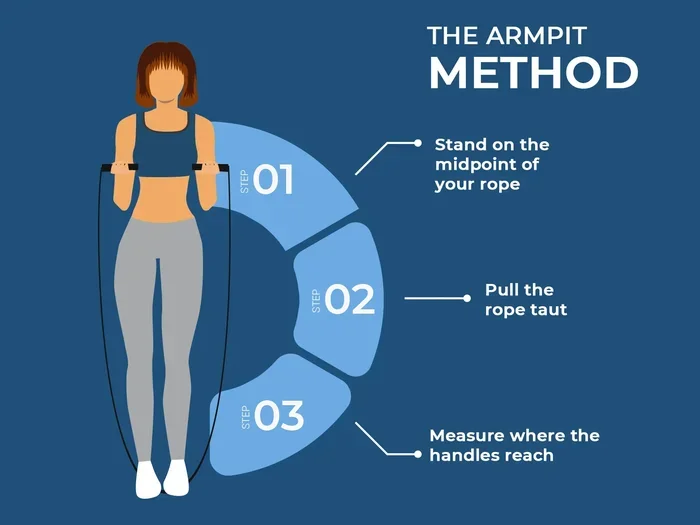
This is the most popular and easiest way to check your rope size. Here is how it works:
- Stand on the middle of the rope with one foot.
- Pull both handles straight up toward your chest.
- The handles should reach somewhere between your armpits and your shoulders.
If the handles go above your shoulders, the rope is too long. If they do not even reach your chest, it is too short. This handle to underarm measurement gives you a solid baseline to work from.
The Arm Stretch Method
Another reliable approach is to fold the rope in half and hold both ends at your chest. The rope should reach the ground when folded in half and held at chest level. This method works well for people who want a quick check without stepping on the rope.
For a more precise approach, you can also hold the rope at your sides with one hand on each handle. The rope should hang down to about your feet. If it goes past your ankles by a lot, you need a shorter rope.
Using a Jump Rope Length Calculator
If you want a more exact number, many online rope length calculator tools let you enter your height and get a recommended rope size. These calculators use standard ratios based on body height. While they are helpful, always double-check with a physical method because personal preference also plays a role.
The Right Length for Different Activities
Not all jump rope workouts are the same. The ideal jump rope length can vary depending on what type of exercise you are doing. Here is a breakdown of how rope length needs change based on activity.
Speed Jumping
Speed jumping is all about fast, tight rotations. For this style, you want a rope that is slightly shorter than your standard length. A speed rope length that is a few inches shorter lets you spin the rope faster with less air resistance. Many competitive boxers jump rope with a rope that sits just below the armpits for maximum speed.
Double Unders
Double unders require the rope to pass under your feet twice per jump. This means you need more rope length to create a bigger arc. If your rope is too short for double unders, you will not be able to get enough rotation. A slightly longer double unders rope length gives you the clearance you need to complete each rep cleanly.
Weighted Jump Rope Training
Weighted ropes add resistance and build upper body strength. Because these ropes are heavier, they naturally swing a bit slower. You may want to use a rope that is slightly longer than your standard length to account for the weight and momentum. Check out our guide on the benefits of a weighted jump rope to learn more about this training style.
Jump Rope Length by Height Chart
One of the fastest ways to estimate your ideal rope length is by using your height as a guide. While everyone is different, this chart gives you a great starting point for finding the right rope length by height chart reference.
| Your Height | Recommended Rope Length |
|---|---|
| 4’10” – 5’2″ | 7 ft 6 in – 8 ft |
| 5’3″ – 5’6″ | 8 ft – 8 ft 6 in |
| 5’7″ – 5’10” | 8 ft 6 in – 9 ft |
| 5’11” – 6’1″ | 9 ft – 9 ft 6 in |
| 6’2″ – 6’5″ | 9 ft 6 in – 10 ft |
| 6’6″ and above | 10 ft or longer |
Use this chart as a starting point, then fine-tune using the standing method described earlier. Your ideal jump rope length may shift slightly based on your arm length and personal jumping style.
How to Adjust Jump Rope Length
Once you know the right length, you need to adjust your rope accordingly. Most modern ropes come with adjustable features that make this process simple. Here is how to do it the right way.
Step-by-Step Adjustment Process
- Identify the adjustment mechanism on your rope. Most ropes have a screw or clip near the handle.
- Loosen the mechanism to free the rope end.
- Pull the rope through to shorten it. Always cut less than you think you need — you can always trim more later.
- Tighten the mechanism securely so the rope does not slip back.
- Test the new length using the standing method.
If you are unsure about cutting your rope, consider using an adjustable jump rope. These ropes allow you to change the length multiple times without cutting or retying. They are perfect for households where more than one person uses the same rope, or if you are still figuring out what works best for you. For a detailed walkthrough, check out our guide on how to adjust the length of a jump rope.
When to Replace Instead of Adjust
Sometimes a rope is simply too short or damaged to fix. If your rope is already at its shortest setting and still does not fit, it is time to buy a new one. Also, frayed ropes or handles with worn-out bearings should be replaced for safety and performance reasons.
Common Mistakes to Avoid
Even experienced jumpers make sizing mistakes. Here are the most common errors and how to avoid them.
- Using someone else’s rope: Every body is different. A rope that works perfectly for your friend may be all wrong for you.
- Guessing the length: Never assume a rope is the right size just by looking at it. Always measure using a physical method.
- Ignoring the type of rope: A cable rope and a beaded rope behave differently. The same length may feel different depending on the material.
- Not rechecking after adjustment: Always test your adjusted rope before starting a full workout session.
- Forgetting to account for rope wear: Over time, ropes can stretch or fray, changing the effective length.
Avoiding these mistakes saves you from frustration and helps you get the most out of every session. For more tips on finding the perfect fit, visit our page on how to find the right length of jump rope.
Expert Tips for Perfect Rope Fit
Fitness professionals have a few extra tricks up their sleeves when it comes to getting the perfect jump rope fit. Here are some expert-backed tips to keep in mind.
- Wear your workout shoes when measuring: Your rope length should match the height you will be jumping at, and shoes add a few inches.
- Check your rope length every few months: Your fitness level and jumping style may change over time, requiring a different length.
- Test in front of a mirror: Watching yourself jump helps you spot issues with rope clearance that you might not feel otherwise.
- Consider your fitness goal: If you are training for endurance, a slightly longer rope is more comfortable. For quick, explosive sessions, go shorter.
- Ask for help: If you are new to jump rope, have a friend watch you jump and tell you if the rope catches or drags.
These small tweaks can make a big difference in how your workouts feel and how effective they are. The right jump rope length turns a frustrating experience into one you actually look forward to.
Final Thoughts on Jump Rope Length
Getting the correct jump rope length is the foundation of a great jump rope session. It takes just a few minutes to measure and adjust, but the payoff lasts every single workout. You jump smoother, you burn more calories, and you reduce your risk of injury. Do not let a poorly sized rope hold you back from reaching your fitness goals.
Start with the standing method, fine-tune based on your activity, and always recheck when you switch up your routine. With the right rope length for your height, you will be amazed at how much better your sessions feel. Grab your rope, measure it, and get jumping — your body will thank you.
Frequently Asked Questions
What is the standard jump rope length for a beginner?
For most beginners, the rope should reach from the ground to about chest or armpit level when you stand on the center. Start with the standing method and adjust from there based on your comfort level and the type of exercise you plan to do.
Can I use the same jump rope for speed training and double unders?
It is possible, but ideal lengths differ. Speed training works best with a slightly shorter rope, while double unders need a bit more length for a bigger arc. If you do both, choose a length in the middle and adjust as needed for each session.
How often should I recheck my jump rope length?
Check your rope length every few months or whenever you notice changes in your jumping performance. Ropes can stretch over time, and your fitness level or jumping style may evolve as you get stronger.
Does rope material affect the ideal length?
Yes, it does. Cable ropes are thinner and lighter, so they may need to be slightly shorter. Beaded ropes are thicker and create more drag, which sometimes calls for a longer length. Always test the rope after adjusting to confirm the fit.
What should I do if my jump rope is too long and cannot be adjusted?
If the rope cannot be shortened, you can tie a knot or two near the handles to reduce the effective length. This is a quick fix that works in a pinch, though an adjustable rope is a better long-term solution.
Is jump rope length different for children?
Yes, children need shorter ropes based on their smaller height. Use the same standing method but expect the rope to reach closer to their shoulders rather than their armpits. Always let the child test the rope before purchasing to ensure a comfortable fit.