Which Is Better Goblet Squat or Barbell Squat
The goblet squat is a beginner-friendly, dumbbell-based move that builds strength and improves form. The barbell squat is a heavy, compound lift that drives serious muscle growth and raw power. Your choice depends on your experience level, goals, and available equipment. Both squats work your quads, glutes, and core, but they deliver different benefits for different lifters.
When you walk into any gym, you will see people squatting. It is one of the most fundamental movements in strength training. But not all squats are the same. The goblet squat and the barbell squat are two of the most popular options. They both target your legs, glutes, and core. But they work very differently. One uses a single dumbbell held at your chest. The other places a heavy barbell across your upper back. Each has unique advantages depending on your experience level and fitness goals.
If you are new to lifting, the goblet squat is a fantastic starting point. It teaches proper squat mechanics with minimal risk. If you are an experienced lifter chasing raw strength, the barbell squat is hard to beat. Both exercises deserve a place in your routine. The real question is which one fits your needs right now. Let us break down everything you need to know to make the right choice.
Key Takeaways
- Goblet squats are ideal for beginners because they are easier to learn and require only a dumbbell.
- Barbell squats allow heavier loads, making them better for building maximum strength and muscle mass.
- Goblet squats improve core stability and front rack positioning with less spinal load.
- Barbell squats engage more muscle groups overall, especially the posterior chain.
- Both squats reduce injury risk when performed with proper form and appropriate weight.
- You can alternate both movements in your training program for balanced development.
- Your fitness goals should guide your choice between these two powerful squat variations.
📑 Table of Contents
What Is a Goblet Squat?
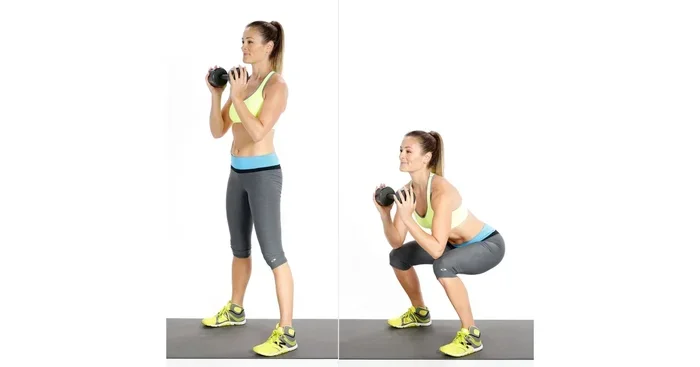
The goblet squat is a squat variation where you hold a single dumbbell or kettlebell at your chest. Both hands grip the weight underneath, and you squat down while keeping your torso upright. This position naturally encourages good form. Your elbows stay tucked, and your chest remains lifted throughout the movement.
The goblet squat became popular because it is simple and effective. You do not need a squat rack or a spotter. A single dumbbell is all you need. This makes it perfect for home workouts or busy gyms where racks are taken. The goblet squat also places less stress on your lower back compared to heavy barbell variations.
How to Perform a Goblet Squat
Start by holding a dumbbell vertically against your chest. Grip it with both hands underneath the top weight. Stand with your feet shoulder-width apart. Keep your chest up and your core tight. Lower your body by pushing your hips back and bending your knees. Go down until your thighs are at least parallel to the floor. Push through your heels to return to standing. That is one rep.
The goblet squat is incredibly forgiving for beginners. If your form breaks down, the weight will tip forward, signaling you to stop. This built-in feedback loop helps you learn proper squat form quickly. It also builds functional strength that carries over to everyday movements like picking things up from the floor.
What Is a Barbell Squat?
The barbell squat is the king of leg exercises for a reason. You place a loaded barbell across your upper back, either in a high-bar or low-bar position. Then you squat down and stand back up. This compound movement recruits muscles throughout your entire body. Your quads, hamstrings, glutes, lower back, and core all work hard to move the load.
The barbell squat allows you to load your body with significantly more weight than a goblet squat. This makes it the top choice for building raw strength and muscle mass. Powerlifters, Olympic lifters, and serious athletes rely on the barbell squat as a cornerstone of their training programs. It is a true test of lower body power and full-body stability.
Barbell Squat Variations
There are two main barbell squat variations. The high-bar squat places the barbell on the upper traps. This version keeps your torso more upright and targets the quads. The low-bar squat places the barbell lower on the rear deltoids. This shifts more work to your glutes and hamstrings. Both are effective, and your choice depends on your body proportions and goals.
Another option is the front squat, where the barbell rests across the front of your shoulders. This is similar to the goblet squat in that it emphasizes the quads and core. Many lifters alternate between front squats and back squats for well-rounded leg development. The barbell squat family offers incredible variety to match any training goal.
Goblet Squat vs Barbell Squat: Head-to-Head Comparison
Let us compare these two movements side by side. Understanding the differences helps you pick the right one for your situation.
| Feature | Goblet Squat | Barbell Squat |
|---|---|---|
| Equipment Needed | One dumbbell or kettlebell | Barbell and squat rack |
| Learning Curve | Easy and beginner-friendly | Moderate to advanced |
| Max Load Potential | Limited by dumbbell weight | Very high with heavy plates |
| Core Engagement | Excellent | Very high |
| Spinal Load | Low | Moderate to high |
| Muscle Groups Targeted | Quads, glutes, core | Full lower body plus back |
| Best For | Beginners, form work, home gym | Strength building, muscle mass |
The goblet squat shines when it comes to simplicity and accessibility. You can do it anywhere with minimal equipment. The barbell squat wins when your goal is maximum strength and hypertrophy. Both are excellent choices, and neither is wrong. It all comes down to what you are trying to achieve.
Which Squat Is Better for Your Goals?
Your fitness goals should drive your choice between these two squat variations. Let us look at different scenarios where one might be the better pick.
Choose the Goblet Squat If You Are a Beginner
If you are just starting your strength training journey, the goblet squat is your best friend. It teaches you the basic squat pattern without overwhelming your nervous system. You can focus on depth, balance, and muscle activation without worrying about a heavy barbell on your back. The goblet squat also helps you build the core strength and mobility needed for more advanced movements later.
Many experienced lifters still include the goblet squat in their routines. It is a great warm-up exercise and a useful accessory movement. You can also use it for high-rep leg endurance work. The versatility of a single dumbbell makes the goblet squat a staple in many training programs.
Choose the Barbell Squat for Maximum Strength
If your goal is to build serious muscle and get stronger, the barbell squat is unmatched. The ability to load hundreds of pounds on your back creates a powerful stimulus for muscle growth. Your body responds to heavy compound movements by building more muscle and releasing growth-promoting hormones. The barbell squat is a cornerstone of any serious strength training program.
Advanced lifters benefit greatly from the barbell squat because it allows for progressive overload over time. You can keep adding weight in small increments, challenging your muscles to grow stronger. This is harder to do with a goblet squat because dumbbells have weight limits. For raw power and muscle building, the barbell squat takes the lead.
Both Squats Work Great Together
Here is a secret many lifters know. You do not have to choose just one. The goblet squat and barbell squat complement each other beautifully. Use the barbell squat as your main heavy lift on leg day. Add goblet squats as warm-ups or accessory work on other days. This combination gives you the best of both worlds. You build raw strength with the barbell while maintaining good form and mobility with the goblet variation.
Some lifters also use the goblet squat for rehabilitation or after an injury. The lighter load and upright posture reduce stress on healing joints. Once you are ready to progress, you can gradually transition back to the barbell squat. This approach keeps your training sustainable and long-lasting.
Muscle Activation and Benefits Compared
Both squats work your lower body, but the way they activate muscles differs. Understanding these differences helps you train smarter.
Quadriceps and Glutes
The goblet squat places a strong emphasis on your quadriceps. The upright torso position shifts more work to the front of your legs. Your glutes are also engaged, but to a lesser degree than in the barbell version. The barbell squat, especially the low-bar variation, activates your glutes and hamstrings more heavily. This makes it a superior choice for developing your posterior chain.
Core and Stabilizer Muscles
The goblet squat demands excellent core stability. Holding the weight at your chest creates a front-loaded challenge. Your abs and obliques work hard to keep your torso upright. The barbell squat also heavily engages your core, but in a different way. The load on your back requires your entire trunk to brace against the weight. Both squats build a strong midsection, which is essential for overall functional strength.
When you add a rowing machine or stationary bike to your routine alongside squats, you create a well-rounded fitness program. The barbell squat builds raw strength, while cardio equipment supports heart health and recovery. For more on finding the right cardio complement, you can explore which is better a rowing machine or exercise bike for your routine.
Knee and Joint Health
The goblet squat is gentler on your knees and lower back. The lighter load and natural upright posture reduce joint stress. This makes it a safer option for people with existing joint issues or those recovering from injury. The barbell squat places more load on your joints, which can be beneficial for strengthening them over time. But it also carries more risk if your form is poor. Always prioritize proper technique over heavy weight, no matter which squat you choose.
How to Choose the Right Squat for You
Making the right choice comes down to a few simple factors. Consider your experience level, available equipment, and personal goals. There is no single best squat for everyone. The best squat is the one that fits your life and helps you progress safely.
Start with the goblet squat if you are new to lifting or working out at home. It builds a strong foundation and teaches you how to squat properly. Move to the barbell squat once you have mastered the basic movement pattern and have access to the right equipment. If you have access to a gym with a squat rack and plates, the barbell squat is likely your best option for building serious strength.
Some lifters prefer to warm up with a treadmill before heavy squat sessions to get the blood flowing to their legs. This is a smart approach that can improve performance and reduce injury risk. For more on treadmill warm-ups, check out which is better running on treadmill or outside for your cardio needs.
Your body type also matters. People with longer torsos may find the goblet squat more comfortable because the upright posture reduces lower back strain. Shorter lifters might find the barbell squat more natural due to shorter limb lengths. Experiment with both and pay attention to how your body responds. Your comfort level is a great indicator of which squat works best for you.
Common Mistakes to Avoid
Whether you choose the goblet squat or barbell squat, avoiding common mistakes is essential. These errors can lead to injury and slow your progress.
- Letting your knees cave inward. Keep your knees tracking over your toes throughout the movement.
- Rounding your lower back. Maintain a neutral spine in both squat variations to protect your back.
- Heels coming off the ground. Keep your feet flat and drive through your heels for stability.
- Going too deep too soon. Build your range of motion gradually. Depth will improve with practice.
- Neglecting warm-ups. Always warm up your legs and hips before loading up heavy squats.
Avoiding these mistakes will help you get the most out of either squat variation. Quality always beats quantity when it comes to resistance training. Focus on controlled movements and proper muscle engagement for the best results.
Conclusion
The goblet squat and barbell squat are both incredible exercises. They each bring something unique to your training. The goblet squat is your go-to for learning proper form, building core strength, and training at home with minimal equipment. The barbell squat is the powerhouse choice for building maximum strength, muscle mass, and athletic performance.
Your best move is to understand your current fitness level and goals. If you are just starting out, the goblet squat will set you up for success. As you grow stronger, you can add the barbell squat to your routine for continued progress. Many lifters eventually use both, and that is a great approach. The key is to squat consistently, use proper form, and progressively challenge yourself over time. Start with the squat that feels right for you today, and you will be on your way to stronger, more powerful legs.
Frequently Asked Questions
Can I build big legs with just goblet squats?
Yes, you can build strong legs with goblet squats, especially as a beginner. However, the goblet squat has a load limit based on dumbbell weight. For maximum leg growth, the barbell squat allows you to use much heavier weights over time. Combining both gives you the best results.
Is the barbell squat dangerous for beginners?
The barbell squat is safe when you learn proper form and start with moderate weight. Beginners should start with the goblet squat to build confidence and technique. Once you feel comfortable, you can gradually add barbell work with a spotter or in a squat rack.
How often should I squat per week?
Most lifters benefit from squatting 2 to 3 times per week. You can alternate between goblet squats and barbell squats on different days. This gives your muscles time to recover while maintaining consistent practice of the movement pattern.
What weight should I start with for goblet squats?
Start with a dumbbell that feels challenging but allows you to complete 10 to 15 reps with good form. The goblet squat is a learning tool first. Focus on depth and technique before chasing heavier weights. You can increase the load gradually as you get stronger.
Can goblet squats replace barbell squats entirely?
For general fitness and moderate strength goals, the goblet squat can replace barbell squats. But if your goal is to build maximum strength or compete in powerlifting, the barbell squat is essential. It allows for much heavier loading and greater muscle recruitment.
Do goblet squats help with barbell squat performance?
Absolutely. The goblet squat builds the core strength, mobility, and squat mechanics that carry over to the barbell squat. Many coaches use goblet squats as a teaching tool and warm-up to improve barbell squat form and performance.