Why Is Dumbbell Bench Press Harder Than Barbell
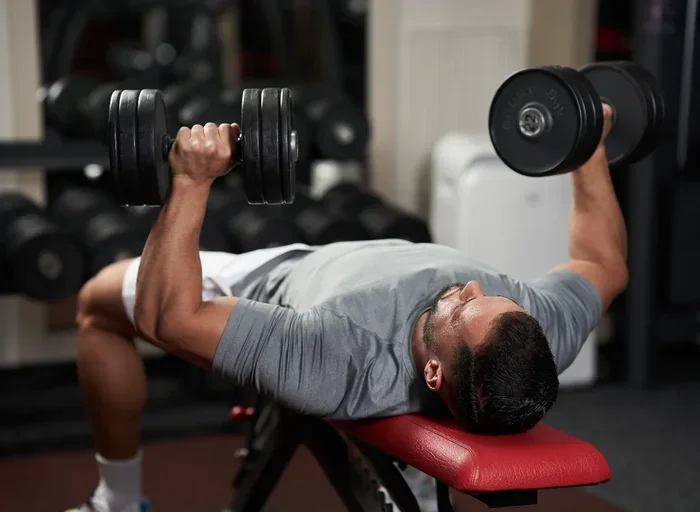
The dumbbell bench press is harder than the barbell because it demands more stabilizer muscle engagement, a greater range of motion, and unilateral strength from each arm. Most lifters notice a significant drop in weight when switching from barbell to dumbbell presses. Understanding these differences helps you train smarter, fix muscle imbalances, and build a stronger chest. This guide breaks down exactly why the dumbbell version hits harder and what you can do about it.
Have you ever wondered why the dumbbell bench press feels so much harder than the barbell version? You load up the barbell and push a solid weight, then grab a pair of dumbbells and struggle to complete even half the reps. It is frustrating, but you are not doing anything wrong.
The dumbbell bench press is harder than barbell for several very real reasons. Your muscles work differently with each tool, and understanding those differences can completely change how you approach your chest workouts. Let us break it all down.
Key Takeaways
- Greater Range of Motion: Dumbbells let your arms travel further, stretching the chest more and making each rep harder.
- Stabilizer Muscles Work Overtime: Without a fixed bar path, your shoulders, rotator cuffs, and core must stabilize every rep.
- Unilateral Strength Demands: Each arm works independently, exposing and fixing strength imbalances between sides.
- Weight Differences Are Normal: It is expected to lift 20-40% less with dumbbells than a barbell for the same movement.
- Both Exercises Have Unique Benefits: Choosing between them depends on your fitness goals, injury history, and training phase.
- Form Adjustments Make a Difference: Proper setup, elbow angle, and tempo can reduce the difficulty and improve results.
📑 Table of Contents
- Why the Dumbbell Bench Press Feels Harder
- How Much Less Can You Lift With Dumbbells?
- Muscle Activation Differences
- Benefits of the Dumbbell Bench Press
- Benefits of the Barbell Bench Press
- How to Make Dumbbell Bench Press Easier
- Which Should You Choose: Dumbbell or Barbell?
- Common Mistakes to Avoid
- Final Thoughts
Why the Dumbbell Bench Press Feels Harder
The short answer is that dumbbells force your body to do more work. A barbell locks your arms into a fixed path, and the weight is already balanced for you. Dumbbells remove both of those advantages. Every single rep requires your muscles to stabilize, balance, and control the movement independently.
When you press a barbell, the bar does not wobble. Your hands are attached to the same rigid object, and the weight is distributed evenly across both sides. This means your chest does the heavy lifting while your shoulders and triceps follow a predictable path.
Dumbbells change everything. Each weight sits on its own handle. Your left arm and right arm must work separately to keep the dumbbells from tipping, drifting, or rotating. That extra demand on your muscles is why the dumbbell bench press feels harder than barbell lifting, even when the weight on paper looks lighter.
Greater Range of Motion
One of the biggest reasons the dumbbell press is harder is the range of motion. With a barbell, the bar stops you. Your chest physically hits the bar at the bottom of the movement, which limits how far down you can go.
Dumbbells do not have that restriction. Your arms can travel lower, stretching your chest muscles more fully at the bottom of each rep. That deeper stretch means your muscles work through a longer distance, which increases time under tension and overall difficulty.
More range of motion also means more muscle fiber recruitment. Your chest has to contract over a longer distance, which builds more strength and more muscle over time. It is a trade-off: harder reps but better results.
Stabilizer Muscle Activation
Your body has small muscles called stabilizers that keep your joints steady during movement. When you press a barbell, those stabilizers do not need to work as hard. The bar provides a fixed path, so your shoulders, elbows, and wrists stay in a predictable position.
With dumbbells, the stabilizers have to work overtime. Your rotator cuffs, anterior deltoids, and even your upper back muscles must fire constantly to keep each dumbbell moving in the right direction. This is one reason why your shoulders might burn out faster during dumbbell presses.
Over time, this extra stabilizer work is a good thing. It builds functional strength that carries over to real-life movements and sports. But in the short term, it makes every set feel much more demanding.
Unilateral Strength and Muscle Imbalances
Barbell pressing trains both arms together as a single unit. Your stronger arm can often compensate for the weaker one, masking imbalances that exist on each side of your body.
Dumbbells remove that compensation. Each arm presses its own weight independently. If your left side is weaker than your right, you will feel it immediately during dumbbell presses. Your left arm might stall while your right arm still has gas in the tank.
This is actually a huge benefit. Training with dumbbells exposes weaknesses and forces you to address them. Over weeks and months, this leads to more balanced muscle development and a lower risk of injury.
How Much Less Can You Lift With Dumbbells?
It is completely normal to lift significantly less with dumbbells than with a barbell. Most lifters see a 20 to 40 percent drop in weight when switching from barbell to dumbbell bench press. If you bench 225 pounds on a barbell, pressing 100-pound dumbbells on each side might feel just as challenging.
The reason comes down to the stabilizer demands we talked about. Your chest muscles are not the only ones working during a press. Your front deltoids, triceps, and stabilizers all share the load. With a barbell, the chest does most of the work. With dumbbells, the stabilizers take a bigger share, leaving less raw pressing power for the primary movers.
If you want to see how much difference exists between the two, check out this detailed breakdown on how much more you can barbell bench than dumbbell for exact numbers and comparisons.
Muscle Activation Differences
Research shows that both the dumbbell and barbell bench press activate the pectoralis major, but the patterns differ. Dumbbells tend to create a greater stretch on the chest at the bottom of the movement, which can lead to more muscle damage and growth over time.
The anterior deltoid also works harder with dumbbells because each arm must stabilize the weight independently. Your triceps get a solid workout with both versions, but the barbell often allows you to load them more heavily.
Here is a quick look at how the muscle activation compares:
- Barbell Bench Press: Primarily targets the pectoralis major and triceps. Stabilizer demand is lower. Allows heavier loading.
- Dumbbell Bench Press: Targets the pectoralis major, anterior deltoid, triceps, and stabilizer muscles. Higher stabilizer demand. Greater range of motion.
- Dumbbell Flyes (for comparison): Isolates the chest stretch but does not provide the same pressing strength stimulus.
Neither option is better across the board. They simply challenge your muscles in different ways, which is why many programs include both.
Benefits of the Dumbbell Bench Press
Even though the dumbbell bench press is harder, it comes with benefits you cannot get from the barbell version. Understanding these benefits helps you see why the extra difficulty is worth it.
Fixes Muscle Imbalances
As mentioned earlier, dumbbells force each arm to work on its own. Over time, this evens out strength differences between your left and right sides. A barbell lets your dominant side take over, which can make imbalances worse.
Better Chest Stretch
The deeper range of motion with dumbbells creates a more intense stretch on the chest fibers. This stretch under load is one of the most effective stimuli for muscle growth. Many bodybuilders include dumbbell presses specifically for this reason.
Improved Shoulder Health
Because dumbbells allow a more natural movement path, they can be gentler on the shoulders than a fixed barbell. Your joints can rotate slightly to find a comfortable position, reducing stress on the rotator cuff over time.
More Functional Strength
In real life, you rarely push something that is locked in place. Dumbbell pressing mimics real-world pushing movements better because each arm has to stabilize and control its own load. This builds functional strength that translates to sports, daily activities, and injury prevention.
Benefits of the Barbell Bench Press
The barbell bench press is not without its own advantages. It is the king of upper-body strength tests for a reason. Here is why it still deserves a spot in your routine.
Heavier Loading
A barbell lets you lift more weight because both arms work together on a fixed path. This heavy loading is one of the best ways to build raw pressing strength and trigger muscle growth through progressive overload.
Easier to Progressive Overload
Adding five pounds to a barbell is simple. Adding five pounds to each dumbbell means doubling the jump. Smaller incremental increases with dumbbells can make progressive overload trickier to manage.
Better for Max Strength Testing
If you want to know how strong you are, a one-rep max on the barbell bench press is the standard test. It gives you a clear number to track and compare over time.
Simpler to Learn
The barbell moves on a fixed track, which makes the movement easier to learn for beginners. You do not have to worry about balancing each weight independently, so you can focus more on pressing form and less on stabilization.
Many lifters wonder whether they should do both. If you are curious, here is a closer look at whether you should do both dumbbell and barbell bench press to help you decide.
How to Make Dumbbell Bench Press Easier
If the dumbbell bench press feels brutal, you are not stuck struggling forever. A few smart adjustments can reduce the difficulty while still getting great results.
Start With a Neutral Grip
Hold the dumbbells with your palms facing each other instead of forward. A neutral grip reduces shoulder strain and can make the press feel more comfortable, especially for lifters with tight shoulders or past injuries.
Control the Tempo
Do not drop the dumbbells quickly at the bottom. Lower them with control over two to three seconds, pause briefly, and then press up. Slowing the eccentric (lowering) phase increases muscle time under tension, which means you can use lighter weights and still get a great workout.
Use a Spotter or Rack
Getting heavy dumbbells into position can be tough on its own. Use an adjustable bench set to a flat position and a rack or a spotter to help you get the weights up without wasting energy before the set even starts.
Train One Side at a Time
If both arms are failing at the same time, try single-arm dumbbell presses. You focus all your effort on one side at a time, which lets you push harder and build more strength before switching sides.
Build Up Gradually
Do not jump to heavy dumbbells right away. Start with a weight you can control for 8 to 12 reps with good form. Add weight slowly over weeks. Your stabilizer muscles need time to adapt, and patience here pays off big time.
Which Should You Choose: Dumbbell or Barbell?
The answer depends on your goals, experience level, and any injury history you have. Both exercises belong in a well-rounded upper body routine, but the priority shifts based on what you are trying to achieve.
If your main goal is building max pressing strength and lifting heavy, the barbell bench press should be your primary exercise. It allows the heaviest loading and gives you the clearest measure of progress.
If your goals include muscle building, fixing imbalances, improving shoulder health, or adding more variety to your chest workouts, the dumbbell bench press is the better choice. The extra difficulty is actually the point, because it drives more muscle activation and functional strength.
Many experienced lifters include both in their routines. They might start with heavy barbell sets for strength and then finish with dumbbell sets for muscle building and imbalance correction. You can also compare dumbbell bench or barbell options more deeply to find what fits your program best.
The dumbbell bench press is harder than barbell pressing, but that difficulty is not a bad thing. It means your muscles are working harder, engaging more fibers, and building a more balanced, resilient upper body.
Common Mistakes to Avoid
Even though the dumbbell bench press is challenging, it is easy to make mistakes that reduce its effectiveness or increase your injury risk. Watch out for these common errors.
- Bouncing the dumbbells at the bottom: This wastes elastic energy and takes the work off your chest. Control the descent every time.
- Letting the dumbbells drift outward: Your wrists and elbows should stay in a straight line with your shoulders. Drifting puts unnecessary stress on the shoulder joints.
- Using too much weight too soon: Sacrificing form for heavier dumbbells is a fast track to injury. Build up gradually.
- Flaring your elbows too wide: A 45 to 75 degree elbow angle works best for most people. Flaring past 90 degrees can hurt your shoulders over time.
- Ignoring your core: Your core stabilizes your entire torso during the press. Brace your abs like you are about to take a punch, and keep your back flat on the bench.
Final Thoughts
The dumbbell bench press is harder than barbell benching, and that is exactly what makes it so valuable. It challenges your muscles from angles a barbell cannot, builds stabilizer strength, and exposes weaknesses you did not even know you had.
Do not get frustrated when the dumbbells feel heavier than the numbers suggest. That gap between barbell and dumbbell weights is normal, and it exists for good reason. Embrace the challenge, focus on form, and trust the process.
Whether you choose dumbbells, a barbell, or both, the most important thing is that you show up and put in consistent work. Your chest muscles do not care which tool you use, but they will respond to the effort you give them every time you step under the bar or pick up a pair of dumbbells.
Keep pushing, keep learning, and keep building. Your stronger chest is waiting on the other side of every tough set.
Frequently Asked Questions
Why can I lift more with a barbell than dumbbells?
A barbell locks both arms into a fixed path, reducing the demand on stabilizer muscles. The weight is balanced for you, and both arms work together as one unit. This allows you to lift significantly more weight than you could with dumbbells, where each arm must stabilize independently.
Is the dumbbell bench press better than the barbell bench press?
Neither is universally better. The dumbbell press offers a greater range of motion, more stabilizer activation, and better muscle imbalance correction. The barbell press allows heavier loading and is better for building max strength. The best choice depends on your specific goals and training phase.
How much less should I dumbbell press compared to barbell pressing?
Most lifters press 20 to 40 percent less with dumbbells than with a barbell. If you bench 200 pounds on a barbell, pressing 80 to 120 pounds per dumbbell is a reasonable comparison. The exact number varies based on your stabilizer strength and training experience.
Can dumbbell bench press build as much muscle as barbell bench press?
Yes, dumbbell presses can build just as much muscle, especially over the long term. The deeper stretch and greater muscle activation from dumbbells can actually lead to more hypertrophy in some lifters. For best results, include both exercises in your routine to get the benefits of each.
Should beginners start with dumbbells or a barbell for bench press?
Most beginners benefit from starting with a barbell because the fixed path is easier to learn. It builds a foundation of pressing strength and confidence. Once the basic movement pattern is solid, adding dumbbell work helps correct imbalances and build more functional strength.
Why do my shoulders hurt during dumbbell bench press?
Shoulder pain during dumbbell pressing often comes from flaring the elbows too wide, using too much weight, or having poor shoulder mobility. Try a neutral grip, keep your elbows at about 45 to 75 degrees from your body, and reduce the weight until your form is clean. If pain persists, consult a healthcare professional.