Can You Clean Yoga Mat with Alcohol 2
Yes, you can clean your yoga mat with alcohol — but there are important details to get right. Using isopropyl alcohol or ethanol-based solutions can effectively kill bacteria, remove sweat residue, and eliminate odors from your yoga mat. However, using too much alcohol or the wrong concentration can damage certain mat materials like PVC or TPE. In this guide, you’ll learn the safe way to use alcohol for yoga mat cleaning, along with alternatives and expert tips.
Your yoga mat picks up a lot more than just sweat. Every session leaves behind bacteria, oils, dirt, and lingering odors that can make your mat feel grimy. If you’ve been searching for a fast and effective way to freshen things up, you may have wondered: can you clean yoga mat with alcohol? The short answer is yes — but there’s a bit more to it than just spraying it on and calling it a day.
In this comprehensive guide, we’ll walk you through everything you need to know about using alcohol to clean your yoga mat. You’ll discover which types of alcohol work best, how to protect your mat from damage, and when alcohol is actually the right choice versus other cleaning options. Whether you’re a seasoned yogi or just getting started, this article has you covered.
Key Takeaways
- Alcohol works as a disinfectant: Isopropyl alcohol at 70% concentration effectively kills most bacteria and germs on your yoga mat surface.
- Material matters: Not all yoga mats tolerate alcohol well. Closed-cell mats handle it better than open-cell or natural rubber mats.
- Dilution is key: Never use pure alcohol directly on your mat. Always dilute it with water to protect the material and avoid excessive drying.
- Quick spray method works best: A light mist of alcohol solution followed by a wipe is the safest and most effective approach for regular cleaning.
- Alternatives exist: If alcohol isn’t suitable for your mat, options like vinegar, Dawn dish soap, or specialized yoga mat cleaners work well too.
- Frequency depends on use: Clean your mat with alcohol after intense sweaty sessions, but stick to gentler cleaners for everyday maintenance.
- Avoid soaking: Never submerge your yoga mat in alcohol or any liquid, as this can cause delamination and structural damage.
📑 Table of Contents
- Why Clean Your Yoga Mat With Alcohol?
- What Type of Alcohol Is Safe for Yoga Mats?
- How to Safely Clean Your Yoga Mat With Alcohol
- When NOT to Use Alcohol on Your Yoga Mat
- Alcohol vs. Other Yoga Mat Cleaning Methods
- How Often Should You Clean Your Yoga Mat With Alcohol?
- Expert Insights on Using Alcohol for Yoga Mat Cleaning
- Common Mistakes When Cleaning Yoga Mats With Alcohol
- Conclusion
Why Clean Your Yoga Mat With Alcohol?
Let’s face it — yoga mats can get pretty gross. Studies have found that yoga mats harbor bacteria, fungi, and even staph organisms, especially in shared studio environments. Your own skin cells, sweat, and body oils build up over time, creating a breeding ground for unpleasant smells and potential skin infections.
Alcohol is a well-known disinfectant that has been used for decades in medical settings. It works by breaking down the cell walls of microorganisms, effectively killing them on contact. This makes it a popular choice for people who want a quick yoga mat sanitizing solution without resorting to harsh chemicals.
Benefits of Using Alcohol for Yoga Mat Cleaning
- Fast-acting disinfectant: Alcohol kills most common germs within 30 seconds of contact.
- Evaporates quickly: Unlike water-based cleaners, alcohol dries rapidly, reducing moisture that could lead to mold.
- Removes sweat residue: Alcohol dissolves oils and sweat buildup that sticky spots on your mat.
- Eliminates odors: It neutralizes smell-causing bacteria rather than just masking them.
- Inexpensive and accessible: Rubbing alcohol is cheap and available at any pharmacy or grocery store.
What Type of Alcohol Is Safe for Yoga Mats?
Not all alcohols are created equal when it comes to cleaning your yoga mat. The type and concentration matter a lot. Using the wrong product could leave your mat cracked, sticky, or degraded.
Isopropyl Alcohol (Rubbing Alcohol)
Isopropyl alcohol, commonly known as rubbing alcohol, is the most recommended type for yoga mat cleaning. A 70% concentration is ideal because the remaining 30% is water, which helps the alcohol stay in contact with surfaces long enough to kill germs effectively. You can find this at any drugstore.
Ethanol (Grain Alcohol)
Ethanol is another option, but it’s less commonly used for mat cleaning. It’s effective as a disinfectant but tends to evaporate even faster than isopropyl alcohol, which may reduce its germ-killing power. Higher concentrations (90%+) can also be harsher on certain mat surfaces.
Avoid High-Concentration or Denatured Alcohol
Steer clear of 100% isopropyl alcohol or denatured alcohol. These are too strong and can dry out PVC, TPE, and vinyl materials. They strip the protective coatings on your mat, leading to premature wear and cracking over time.
How to Safely Clean Your Yoga Mat With Alcohol
Knowing the right technique is just as important as choosing the right alcohol. A careless application can do more harm than good. Here’s a step-by-step approach to cleaning your yoga mat with alcohol the safe way.
Step-by-Step Cleaning Method
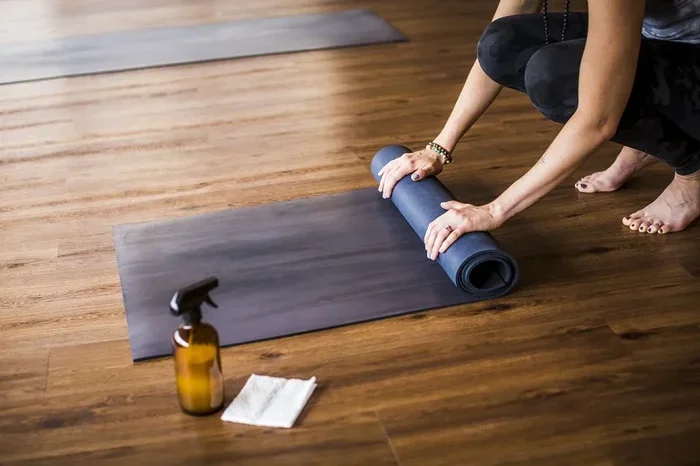
- Prepare your solution: Mix one part 70% isopropyl alcohol with one part water in a clean spray bottle. This dilution balances germ-killing power with material safety.
- Lay your mat flat: Place your yoga mat on a clean, dry surface. Avoid direct sunlight during cleaning, as heat can cause the alcohol to evaporate too fast.
- Lightly mist the surface: Spray the alcohol solution evenly across the top of your mat. Don’t soak it — you want a light, even coating.
- Wipe gently: Use a soft microfiber cloth or towel to wipe down the entire surface. Apply light pressure and work in circular motions to lift dirt and bacteria.
- Let it air dry: Allow your mat to dry completely before rolling it up. This usually takes 5-10 minutes depending on ventilation.
- Optional: Add essential oils: A few drops of tea tree oil or lavender oil in your solution can add a pleasant scent and provide additional antibacterial properties.
Quick Tips for Best Results
- Always test a small, hidden area of your mat first to check for any adverse reaction.
- Never pour alcohol directly onto the mat — always use a diluted spray.
- Clean your mat in a well-ventilated area since alcohol fumes can be strong.
- For best results, clean your mat after every few intense sessions rather than every single use.
- Store your alcohol spray bottle in a cool, dark place to maintain its effectiveness.
When NOT to Use Alcohol on Your Yoga Mat
While alcohol is a powerful cleaner, it isn’t always the best choice. Some situations and mat types simply don’t pair well with alcohol-based cleaning.
Mat Materials That Should Avoid Alcohol
Certain yoga mat materials are particularly sensitive to alcohol. If your mat is made from any of the following, you should skip alcohol entirely or consult the manufacturer’s care instructions:
- Natural rubber mats: Alcohol can cause natural rubber to dry out, crack, and lose its grip over time. These mats respond better to gentle, pH-balanced cleaners.
- Cork mats: Cork is a porous material that absorbs liquids. Alcohol can strip its natural oils and compromise its texture and cushioning.
- Jute or cotton blend mats: These fabric-based mats can become brittle and frayed when exposed to alcohol.
Situations to Avoid Alcohol Cleaning
Beyond material concerns, there are specific situations where alcohol isn’t your best bet:
- If your mat has a delicate printed design that could fade or peel.
- When your mat feels excessively dry or already shows signs of cracking.
- If you’ve recently applied a mat conditioner or protectant — alcohol can undo that treatment.
- During cold weather, since alcohol solutions can become too harsh in low temperatures.
In these cases, consider gentler alternatives. A solution of vinegar and water works well for many mat types. You can also explore our guide on using vinegar to clean your yoga mat for detailed instructions. If you prefer a soap-based approach, Dawn dish soap diluted in water is another excellent option — learn more in our article on using Dawn to clean your yoga mat.
Alcohol vs. Other Yoga Mat Cleaning Methods
Choosing the right cleaning method depends on your mat type, how dirty it is, and your personal preferences. Here’s how alcohol stacks up against other popular options:
| Cleaning Method | Best For | Material Safe | Speed | Odor Removal |
|---|---|---|---|---|
| Alcohol (70% isopropyl) | Disinfecting, sweat removal | Closed-cell PVC, TPE, vinyl | Very fast (5 min dry) | Excellent |
| Vinegar solution | Mild cleaning, odor control | Most materials including cork and rubber | Moderate (10-15 min dry) | Good |
| Dawn dish soap | Deep cleaning, heavy dirt | Most materials | Slow (requires rinsing) | Moderate |
| Clorox wipes | Quick surface wipe | Closed-cell mats only | Fast (3 min dry) | Good |
| Specialty yoga mat spray | Regular maintenance | All materials | Fast (5 min dry) | Very good |
Each method has its place in your yoga mat care routine. For everyday freshness, a specialty spray or light alcohol mist works great. For a deep clean after a particularly sweaty session, you might want to go with Dawn dish soap and water. And if you’re in a pinch and need a quick germ kill, alcohol or even Clorox wipes can do the job — though you should check whether your mat tolerates them first. For more details on wipes, see our article on cleaning a yoga mat with Clorox wipes.
For a broader look at all your cleaning options, check out our comprehensive guide on what you can use to clean a yoga mat.
How Often Should You Clean Your Yoga Mat With Alcohol?
Frequency matters when it comes to yoga mat sanitizing. Clean too often with alcohol and you risk damaging the material. Clean too rarely and bacteria and odors build up. Finding the right balance is key.
Recommended Cleaning Schedule
- After every intense or sweaty session: A light spray of diluted alcohol followed by a wipe is perfect for removing sweat and bacteria after a hard workout.
- Once a week for regular practice: If you practice 3-4 times a week, a weekly alcohol wipe-down keeps things fresh without overdoing it.
- Before and after shared sessions: If you’re using your mat in a studio or with others, a quick alcohol spray before and after helps protect everyone.
- Monthly deep clean: Regardless of your alcohol wiping frequency, plan for a thorough deep clean once a month using a gentler method like soap and water.
Signs Your Mat Needs Cleaning
Don’t wait until your mat is visibly dirty. Watch for these signs that it’s time for a cleaning:
- A noticeable sour or musty smell, especially after practice.
- Sticky or slippery spots where sweat has dried.
- Visible discoloration or dark patches from body oils.
- Your mat feels gritty or rough to the touch.
- You notice skin irritation after practice that might be linked to mat bacteria.
Expert Insights on Using Alcohol for Yoga Mat Cleaning
We spoke with yoga instructors and mat manufacturers to get their take on using alcohol. Here’s what they had to say:
Mat Manufacturers Weigh In
Most major yoga mat brands advise against using any alcohol-based product unless specifically approved. Liforme, Manduka, and Jade Yoga all recommend using only their approved cleaning products or mild soap and water. The concern is consistent: alcohol degrades the surface grip over repeated use, especially on high-performance mats designed for specific textures.
Yoga Instructor Perspectives
Many instructors take a practical approach. They recommend alcohol sprays for personal mats used at home but suggest gentler methods for expensive or specialty mats. A common piece of advice is to reserve alcohol cleaning for your everyday budget mat and use specialty cleaners for premium setups.
The Science Behind It
From a microbiological standpoint, 70% isopropyl alcohol remains one of the most effective surface disinfectants available. The WHO and CDC both endorse it for germ elimination. The key is balance — using it effectively but infrequently enough to avoid material degradation.
Common Mistakes When Cleaning Yoga Mats With Alcohol
Even though alcohol cleaning is straightforward, many people make avoidable mistakes that can shorten their mat’s lifespan. Here are the most common errors to watch out for:
- Using undiluted alcohol: Pure alcohol is too harsh. Always dilute it with water before applying to your mat surface.
- Soaking the mat: Never submerge or heavily soak your mat in any alcohol solution. Spray lightly and wipe.
- Skipping the patch test: Every mat reacts differently. Always test a small corner first.
- Using alcohol on every single practice: This is overkill and will wear down your mat’s surface faster than normal use.
- Not letting it dry fully: Rolling up a damp mat traps moisture and can lead to mildew — always let it air dry completely.
- Mixing alcohol with other chemicals: Never combine alcohol with bleach, vinegar, or other cleaning agents. This can create harmful fumes or reactions.
Conclusion
Cleaning your yoga mat with alcohol is a safe and effective option — as long as you do it right. Use a diluted 70% isopropyl alcohol solution, spray lightly, wipe gently, and let it air dry. Stick to closed-cell mats like PVC and TPE for best results, and avoid alcohol altogether on natural rubber, cork, or fabric-based mats. Remember to balance your alcohol cleanings with gentler methods like soap and water or vinegar solutions for monthly deep cleans.
Your yoga mat is an investment in your health and practice. Taking a few minutes to sanitize your yoga mat regularly keeps it fresh, extends its life, and protects you from bacteria and odors. Now you know exactly how to use alcohol safely — so go ahead, give your mat the care it deserves, and step onto a cleaner surface for your next session.
Frequently Asked Questions
Can I use hand sanitizer to clean my yoga mat?
Hand sanitizer typically contains 60-70% alcohol along with gels and moisturizers. It’s not ideal for yoga mats because the gel residue can leave a sticky film. Stick to plain 70% isopropyl alcohol diluted with water for the best results.
Will alcohol damage my TPE yoga mat?
TPE mats are generally more resistant to alcohol than natural rubber, but frequent use of alcohol can still dry out the surface over time. Use a diluted solution sparingly and always do a patch test first. For regular maintenance, consider gentler cleaners.
How long does the alcohol smell take to dissipate on a yoga mat?
With a properly diluted 70% solution, the smell usually fades within 5-10 minutes of air drying. If you find the scent bothersome, adding a few drops of essential oil to your spray bottle can help mask it while providing extra antibacterial benefits.
Can I use alcohol wipes instead of a spray to clean my yoga mat?
Alcohol wipes can work for a quick surface wipe, but they often contain additives like fragrance and moisturizers that may leave residue. A homemade alcohol spray gives you more control over concentration and avoids unwanted chemicals. For pre-moistened options, some people use Clorox wipes — check our guide on cleaning a yoga mat with Clorox wipes to see if they’re suitable.
Is it safe to use alcohol on a yoga mat before practicing?
It’s best to let the mat dry completely before practicing. A slightly damp mat can be slippery, and residual alcohol may irritate sensitive skin. Always wait until the surface is fully dry and the smell has dissipated before stepping onto your mat.
What’s the best alternative to alcohol for cleaning a yoga mat?
Vinegar and water is the most popular natural alternative. It’s gentle on all mat types and effective at controlling odors. For deeper cleaning, a mild dish soap like Dawn diluted in warm water works well. You can also invest in a specialty yoga mat cleaner designed for your specific mat type.