Why Does My Chest Hurt When I Jump Rope
Jumping rope is a great cardio move, but chest pain can turn excitement into worry. This article explains why your chest might hurt, how to fix it, and when you should get medical help—so you can keep jumping safely and confidently.
Key Takeaways
- Understanding Why Does My Chest Hurt When I Jump Rope: Provides essential knowledge
📑 Table of Contents
- Introduction: Why Chest Pain Pops Up When You Jump Rope
- 1. Muscular Strain: The Most Common Culprit
- 2. Poor Posture and Technique
- 3. Breathing Mistakes That Irritate the Chest
- 4. Gear That Can Cause Chest Discomfort
- 5. When Chest Pain Might Signal Something More Serious
- 6. Recovery Strategies: Getting Back to Skipping Pain‑Free
- Conclusion: Jump Rope With Confidence
Introduction: Why Chest Pain Pops Up When You Jump Rope
Jump rope feels like a kid’s game, a boxer’s warm‑up, and a calorie‑burning powerhouse rolled into one. Yet, many people notice a twinge—or even a sharp ache—in their chest after a few minutes of skipping. That sensation can be alarming, especially when you’re trying to stay fit.
Don’t panic. Most chest discomfort while rope‑skipping is not a heart emergency. It’s usually tied to how you move, the gear you use, or an underlying health issue that needs attention. In this guide we’ll walk through the most common reasons, give you practical fixes, and tell you exactly when to call a professional.
1. Muscular Strain: The Most Common Culprit
What’s happening?
Skipping rope repeatedly engages the pectoralis major and minor muscles, the intercostal muscles between the ribs, and the muscles around the shoulder blades. If those muscles are tight, weak, or unused to the rapid motion, they can become sore or develop tiny tears—what we call a strain.
Visual guide about Why Does My Chest Hurt When I Jump Rope
Image source: blog.bonsecours.com
How to spot a strain
- Pain feels like a dull ache or a pulling sensation.
- It worsens when you lift your arms, take a deep breath, or press on the side of the chest.
- It usually improves with rest, gentle stretching, and heat.
Prevention tips
- Warm‑up: Spend 5‑7 minutes marching, arm circles, and gentle shoulder rolls before you start.
- Progress slowly: Begin with 30‑second intervals and add 15 seconds each session.
- Strengthen: Add push‑ups, chest flyes, and plank variations 2‑3 times a week.
2. Poor Posture and Technique
Why posture matters
When you hunch your shoulders or lock your elbows, you force the chest muscles to work harder than they should. This extra load can quickly turn into pain, especially if you’re skipping for more than a few minutes.

Visual guide about Why Does My Chest Hurt When I Jump Rope
Image source: en78p47fvth.exactdn.com
Key technique checkpoints
- Shoulders down: Keep them relaxed and away from your ears.
- Elbows close: They should stay near the ribcage, not flaring out.
- Soft landings: Aim to land on the balls of your feet, not the heels.
- Upright torso: Imagine a string pulling the crown of your head toward the ceiling.
Quick fix drills
Practice “shadow skipping” without a rope. Stand in front of a mirror and repeat the motion for 1 minute, focusing on the four checkpoints above. When you feel comfortable, add the rope back in.
3. Breathing Mistakes That Irritate the Chest
What goes wrong?
Many beginners hold their breath or take shallow breaths while they concentrate on timing. This creates tension in the intercostal muscles and can mimic a heart‑related ache.
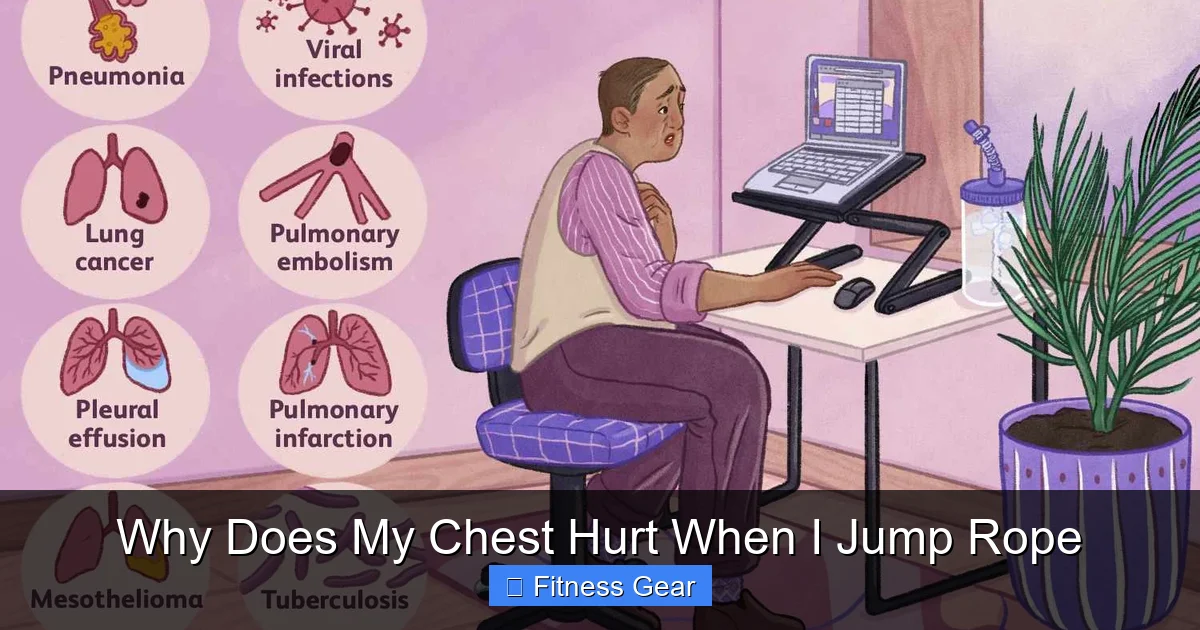
Visual guide about Why Does My Chest Hurt When I Jump Rope
Image source: verywellhealth.com
Proper breathing pattern
- Inhale through the nose for 2‑3 skips.
- Exhale through the mouth for the next 2‑3 skips.
- Keep the breath steady, not forced.
Practice tip
Set a metronome at 120 beats per minute. Count “inhale‑inhale‑exhale‑exhale” while you skip. The rhythm trains both your cardio and your chest muscles to work together.
4. Gear That Can Cause Chest Discomfort
Rope length and grip
A rope that’s too long forces you to swing wider, pulling the shoulders forward and stretching the chest muscles. A rope that’s too short makes you over‑rotate, again stressing the upper body.
Choosing the right rope
- Stand on the rope’s center. The handles should reach your armpits.
- Use a rope with comfortable, non‑slippery grips to avoid excessive wrist tension.
- Consider a weighted rope if you’re strong; it can reduce the number of rotations needed.
Footwear and clothing
Flat, unsupportive shoes let your foot strike hard, sending shock up the leg and into the chest. Tight tops restrict rib movement, making breathing feel shallow.
Gear checklist
- Low‑impact cross‑training shoes with good arch support.
- Moisture‑wicking, breathable shirt that allows full ribcage expansion.
- Optional: a lightweight chest strap or compression shirt for extra stability.
5. When Chest Pain Might Signal Something More Serious
Red‑flag symptoms
While most rope‑related chest pain is muscular, some signs point to cardiac or respiratory issues that need immediate attention.
- Sharp, stabbing pain that radiates to the left arm, jaw, or back.
- Sudden shortness of breath, dizziness, or fainting.
- Pain that persists more than 10 minutes after you stop skipping.
- History of heart disease, high blood pressure, or high cholesterol.
What to do
If any red‑flag appears, stop exercising, sit or lie down, and call emergency services. Even if you’re unsure, it’s safer to get checked out.
Medical evaluation
A doctor may order an ECG, stress test, or chest X‑ray to rule out cardiac or lung problems. They’ll also assess musculoskeletal causes and may refer you to physical therapy.
6. Recovery Strategies: Getting Back to Skipping Pain‑Free
Immediate post‑workout care
- Ice: Apply a cold pack to the sore area for 10‑15 minutes, 2‑3 times a day for the first 48 hours.
- Gentle stretch: Perform a doorway chest stretch—place forearms on a doorframe and lean forward gently.
- Hydration: Drink water with electrolytes to help muscle recovery.
Mid‑term rehab
After the acute pain eases, introduce low‑impact cardio (like brisk walking or cycling) for 15‑20 minutes, 3‑4 times a week. This maintains fitness while your chest heals.
Long‑term maintenance
- Incorporate core‑strength moves (bird‑dog, dead‑bugs) 2‑3 times weekly.
- Schedule a “technique day” once a month to review posture and breathing.
- Gradually increase rope‑skipping duration by 10% each week.
Conclusion: Jump Rope With Confidence
Chest pain while jumping rope is usually a sign that something in your routine needs tweaking—whether it’s warm‑up, posture, breathing, or gear. By paying attention to the body’s signals, adjusting your technique, and using the right equipment, you can enjoy the cardio benefits of rope‑skipping without the discomfort.
Remember, sharp or persistent pain that spreads beyond the chest is not something to ignore. When in doubt, seek medical advice. With the right approach, you’ll be back to rhythmically swinging that rope, feeling stronger and healthier than ever.
Frequently Asked Questions
Why does my chest hurt only after I finish skipping?
When you stop, the muscles that were working hard suddenly relax, and any built‑up tension can flare into soreness. A proper cool‑down and stretch helps reduce this delayed pain.
Can a tight shirt cause chest pain while jumping rope?
Yes. A restrictive top can limit ribcage expansion, forcing you to breathe shallowly and over‑use chest muscles, leading to discomfort.
Is it safe to continue skipping if I have mild chest soreness?
For mild, muscle‑related soreness, reduce intensity, focus on perfect form, and add extra warm‑up time. If pain worsens or lasts more than a day, take a break and assess.
How long should I wait before skipping again after a strain?
Generally 48‑72 hours of rest, followed by gentle stretching and low‑impact cardio. Resume skipping gradually, starting with short intervals.
Do I need a heart check‑up if I’m young and healthy but feel chest pain?
While most cases are musculoskeletal, any sharp, radiating, or prolonged pain warrants a medical evaluation, regardless of age.
Can using a weighted rope reduce chest pain?
Weighted ropes can lower the number of rotations needed, which may reduce repetitive strain on the chest. However, start with a light weight and ensure your form stays solid.