What Is the Best Elliptical Machine on the Market

There is no single “best elliptical machine” for everyone. The ideal choice depends entirely on your specific fitness goals, body mechanics, available space, and budget. This guide breaks down the critical factors—like stride length, drive system, resistance type, and console features—and compares top brands (NordicTrack, Sole, Bowflex, Schwinn, Precor) across different price points. Instead of chasing a generic “best” title, you’ll learn a clear framework to identify the machine that will genuinely work for your body and routine, ensuring you actually use it for years to come.
Key Takeaways
- Personalization is Key: The “best” elliptical is the one that fits your unique body (stride length), goals (weight loss vs. athletic training), and space constraints, not a one-size-fits-all award winner.
- Budget Dictates Features: Under $1,000 offers basic functionality; $1,000-$2,000 provides robust builds and better consoles; over $2,000 delivers commercial-grade durability and advanced tech.
- Space & Drive System Matter: Measure your area carefully. Rear-drive ellipticals are often longer; front-drive and center-drive models are more compact. Ensure you have adequate ceiling height and floor space.
- Focus on Core Mechanics: Prioritize a smooth, natural motion with adequate stride length (20″+ for most adults) and a sufficiently heavy flywheel (15+ lbs) for a consistent, quiet feel.
- Extras vs. Essentials: A large, responsive touchscreen with iFit or JRNY subscriptions is a premium feature. For pure cardio, a simple, durable console with reliable resistance levels is often the smarter, more cost-effective choice.
- Read the Warranty: A comprehensive warranty (especially on parts and labor for 2+ years) is a direct indicator of the manufacturer’s confidence in the machine’s long-term durability.
- Test If Possible: If you can, visit a store to test the stride motion, pedal spacing, and console usability. What feels right for one person can feel awkward for another.
[FEATURED_IMAGE_PLACEHOLDER]
📑 Table of Contents
- Debunking the Myth: Is There Really a Single “Best” Elliptical Machine?
- The Budget Spectrum: From Value to Luxury
- Space, Drive Systems, and Setup: The Physical Reality
- Key Features Decoded: What Actually Improves Your Workout?
- Top Brands & Models Compared: A Practical 2024 Snapshot
- Your Decision Framework: How to Choose with Confidence
- Conclusion: Your Perfect Match Awaits
Debunking the Myth: Is There Really a Single “Best” Elliptical Machine?
You’ve seen the headlines: “The #1 Best Elliptical of 2024!” or “Top 5 Ellipticals You Must Buy.” They’re compelling, but here’s the truth they’re often selling: a generic list that doesn’t address your specific needs. The quest for the best elliptical machine on the market is less about finding a universal champion and more about conducting a personal audit of your lifestyle, physique, and aspirations. What’s perfect for a tall, budget-conscious beginner in a small apartment is a terrible fit for a serious athlete training for a marathon in a dedicated home gym.
This article isn’t about handing you a trophy. It’s about giving you a decoder ring. We’ll dismantle the marketing jargon, explain the engineering that actually impacts your workout (and your wallet), and provide a clear, structured framework. By the end, you won’t just know which brands are reputable; you’ll know exactly which specific features to look for based on your height, your available square footage, and whether you prioritize immersive entertainment or raw, reliable motion. The best elliptical for you is the one you will use consistently, comfortably, and without buyer’s remorse.
Your Personal Audit: Goals, Body, and Environment
Before diving into specs, grab a notebook. Answer these three fundamental questions:
- Fitness Goal: Is your primary target general health, weight loss, low-impact rehabilitation, or serious endurance/athletic training? This dictates the required intensity, durability, and feature set.
- User Profile: Who is the primary user? What is their height and inseam? Are there multiple users of vastly different sizes? This is the single most critical factor for determining necessary stride length.
- Space & Layout: Measure the exact length, width, and ceiling height of your intended location. Don’t forget to account for clearance around the machine for safe mounting/dismounting and ventilation. Consider doorways and hallways for delivery.
The Budget Spectrum: From Value to Luxury
Price is the most immediate filter, and understanding what you get (and don’t get) at each tier is crucial. We can broadly categorize the market into three segments.
Visual guide about What Is the Best Elliptical Machine on the Market
Image source: m.media-amazon.com
Entry-Level ($500 – $1,000): Solid Basics for Casual Use
This range is for the occasional user, the apartment dweller with tight budgets, or someone testing the waters. Don’t expect commercial-grade steel or whisper-quiet operation, but you can find functional, safe machines.
What to Expect: Smaller flywheels (10-15 lbs), shorter stride lengths (often 16″-18″), basic magnetic or motorized resistance, and simple LCD displays showing time, distance, and calories. Console features are minimal—usually no app connectivity or large screens. Build quality is often a mix of steel and heavier plastics.
Top Contenders & Considerations: Brands like Schwinn, Sunny Health & Fitness, and certain models from NordicTrack’s lower-end lines populate here. The key is to scrutinize the weight capacity (aim for at least 250 lbs) and user reviews specifically mentioning stability and noise. A wobbly machine is a deal-breaker. Look for models with adjustable stride if possible, though rare in this range. The Sunny Health & Fitness SF-E3912 is a frequent standout for its surprising stability and 20″ stride at this price point.
Practical Tip: In this bracket, prioritize stability and a comfortable stride over tech. A boring but smooth machine you’ll use is far better than a flashy, jerky one you’ll abandon.
Mid-Range ($1,000 – $2,000): The Sweet Spot for Home Fitness
This is where the vast majority of serious home exercisers should focus. You get significantly better engineering, durability, and features that enhance long-term engagement.
What to Expect: Heavier flywheels (15-25 lbs) for a momentum-filled, quiet ride. Stride lengths consistently hit 20″-22″, accommodating most adults. Resistance systems become more precise (often eddy current brakes). Consoles upgrade to backlit LCDs or smaller touchscreens with basic workout apps, Bluetooth connectivity for headphones, and more detailed metrics (RPM, watts, heart rate). Build quality shifts to heavier-gauge steel and better upholstery.
Top Contenders & Considerations: This is the domain of Sole Fitness (a perennial favorite for durability and value), Bowflex (with their innovative Power Rod or magnetic resistance and JRNY app integration), and higher-end models from NordicTrack and ProForm. The Sole E25 and E35 are benchmarks for smooth, quiet motion and solid warranties. Bowflex’s All-Trainer series offers unique versatility. The key differentiator here is often the console ecosystem. Do you want a subscription-based immersive experience (iFit on NordicTrack/ProForm, JRNY on Bowflex), or a self-contained, reliable machine?
Practical Example: A 6’2″ user will find the 20″ stride on a Sole E35 comfortable but might crave the 22″ stride on a NordicTrack Commercial 14.9 for a truly full range of motion. Testing stride length in-person, if possible, is invaluable.
High-End / Commercial-Grade ($2,000+): Built for Decades
This segment mimics what you’d find in a professional gym. The focus is on absolute durability, minimal maintenance, and flawless biomechanics.
What to Expect: Massive flywheels (25+ lbs), extremely robust steel frames, commercial-grade bearings and belts, and whisper-quiet operation even at max effort. Stride lengths are often 20″-24″. Consoles range from ultra-simple, gym-style displays to large, high-resolution touchscreens with extensive entertainment and training platforms. Warrantees are extensive, often including in-home labor for 1-2 years.
Top Contenders & Considerations: Precor (now part of Peloton, but standalone units are still elite), Life Fitness, and the very top NordicTrack Commercial series (like the 31.9) lead here. These are investments. They are overkill for a casual user but are the undisputed champions for a family with multiple heavy users, an athlete in training, or anyone who wants a “buy once, cry once” solution. The Precor EFX 222 is famous for its natural, gliding motion that’s incredibly easy on the joints.
Practical Tip: At this price, the “best” is often about brand reputation for longevity and service network. Research the company’s customer support and parts availability. A $5,000 machine with poor support is a worse long-term bet than a $3,000 one from a company that stands behind its product.
Space, Drive Systems, and Setup: The Physical Reality
You’ve narrowed your budget. Now, let’s talk about fitting the thing into your home. This is where many people get an unpleasant surprise.

Visual guide about What Is the Best Elliptical Machine on the Market
Image source: optimum-fitness.net
Measuring Correctly: More Than Just Floor Space
An elliptical’s “footprint” is only part of the equation. You must consider the total operating envelope. When the pedals move, they travel in an oval path forward and backward. A machine with a 20″ stride might need an additional 2-3 feet of clearance behind the rear pedal path to avoid hitting a wall. Always check the manufacturer’s specified space requirements. Ceiling height is also critical—tall users on machines with a high front post need adequate headroom. A good rule: have at least 6-8 inches of clearance above your head at the highest point of your stride.
Drive System Showdown: Front, Rear, and Center
This refers to the location of the flywheel and the resulting pedal path. It dramatically affects the machine’s shape, feel, and space needs.
- Rear-Drive: The classic, gym-style design. The flywheel is at the back, creating a longer, flatter elliptical path. They often feel very natural and stable. Con: They are typically the longest machines, requiring significant rear clearance.
- Front-Drive: The flywheel is at the front, under the console. This creates a steeper, more “climbing” motion. They are generally more compact in length but can feel less stable for very heavy users if not well-engineered. Popular in the mid-range market.
- Center-Drive: A newer design where the flywheel is housed in a central column between the pedals. This creates a very compact footprint (almost like a treadmill in width) and a shorter, more upright motion. They are excellent space-savers but the motion can feel different—less like a natural gait and more like a stepper-elliptical hybrid. The Bowflex All-Trainer is a prime example.
Your Action: Sketch your space. A rear-drive might need 6-8 feet of length. A center-drive might only need 4-5 feet. Match the drive system to your available layout.
Key Features Decoded: What Actually Improves Your Workout?
Now we get to the nuts and bolts. Let’s separate the true performance-enhancing features from the marketing fluff.
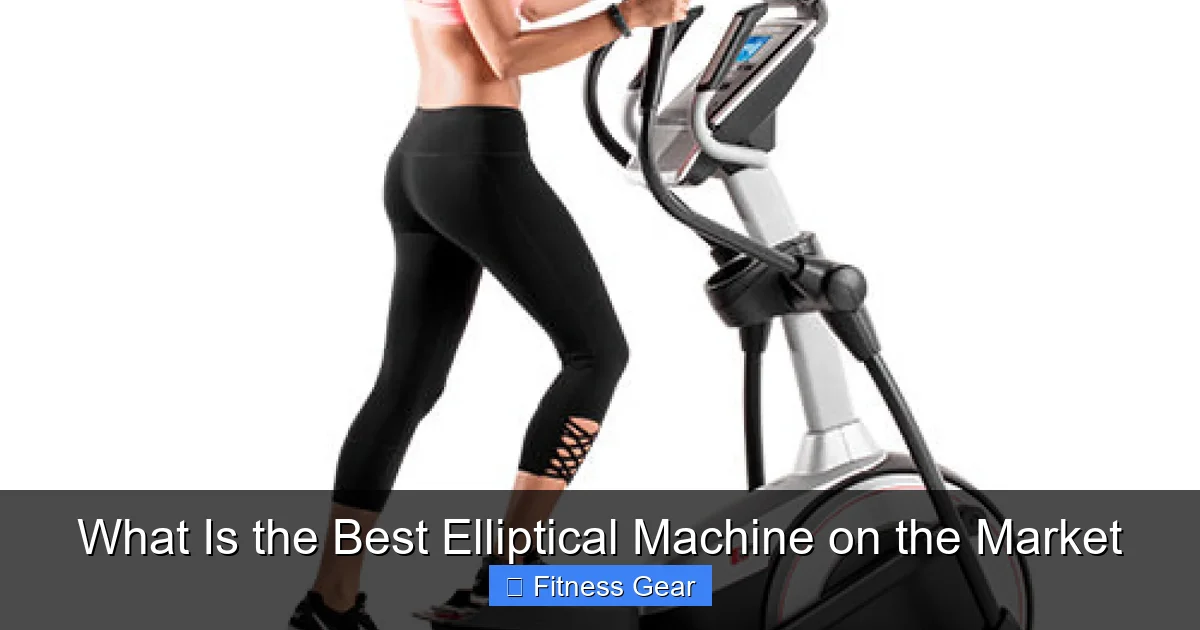
Visual guide about What Is the Best Elliptical Machine on the Market
Image source: cdn-live.powerhouse-fitness.co.uk
Stride Length: The Non-Negotiable Starting Point
This is the distance between the pedals at their widest point. It’s the #1 determinant of comfort and natural motion.
- Under 18″: For shorter users (under 5’5″) or children. Adults will feel a choppy, constrained motion.
- 18″-20″: The standard for most average-height adults (5’5″ to 5’10”). A safe, comfortable baseline.
- 20″-22″: The sweet spot for taller users (5’10” and above) and anyone wanting a full, powerful leg extension. Highly recommended if your budget and space allow.
- 22″+: Found on high-end commercial models. Provides an exceptionally long, smooth glide for serious athletes.
Rule of Thumb: Your stride length should be roughly equal to your natural walking stride. If you can’t fully extend your legs without feeling cramped, it’s too short.
Resistance Type: How Hard is “Hard”?
This controls workout intensity. Two main types exist:
- Magnetic (Eddy Current): The gold standard for home use. Uses magnets to create drag on the flywheel. It’s silent, incredibly smooth, and requires zero maintenance. Levels are digitally controlled. This is what you want.
- Motorized/Brake Pad: An older system where a physical pad presses against the flywheel. Can be noisy, requires periodic pad replacement, and the resistance curve isn’t as smooth. Avoid unless on a very tight budget.
- Fan-Based: Found only on the cheapest, smallest models. Resistance comes from air pushing against fan blades. It’s loud and provides a very limited, non-linear resistance curve. Not recommended for serious use.
Focus on: The number of resistance levels is less important than the quality of the transition between them. A machine with 20 perfectly calibrated, noticeable levels is better than one with 100 indistinguishable ones.
The Console & Connected Experience: Necessary or Novelty?
This is where brands battle for your subscription dollars. A good console motivates; a bad one frustrates.
- Basic LCD: Shows metrics (time, distance, calories, heart rate via grips or chest strap). Simple, reliable, no monthly fee. Perfect if you use your own entertainment (TV, music, podcasts).
- Enhanced Touchscreen (Subscription-Based): A 10″+ screen with on-demand workouts, scenic routes, trainer-led classes, and entertainment apps (Netflix, YouTube). NordicTrack (iFit), Bowflex (JRNY), and Peloton (for their Bike+) lead here. This is a significant ongoing cost ($39-$59/month). The value depends entirely on your motivation style. Do you need guided instruction, or are you self-driven?
- Key Console Features: Regardless of type, ensure it has: Bluetooth (for headphones and heart rate monitors), device holder, USB charging, and pre-set workout programs (interval, hill, heart rate control) that don’t require a subscription.
Honest Assessment: Be ruthless. If you know you’ll never use a $50/month subscription, don’t pay a premium for a machine that locks its best features behind one. Buy the hardware you need, not the content you won’t use.
Top Brands & Models Compared: A Practical 2024 Snapshot
Let’s get specific. Here’s a comparative look at leading contenders across categories, focusing on their signature strengths and ideal user.
The Durability King: Sole Fitness
Philosophy: “Built like a tank, priced fairly.” Sole focuses on rock-solid construction, smooth magnetic resistance, and incredibly long warranties (often 10 years on frame, 3-5 on parts). Their consoles are functional but not flashy.
Best For: The pragmatic user who wants a no-nonsense, reliable workhorse that will last 15 years with minimal fuss. Ideal for heavier users and multi-person households.
Model Spotlight: Sole E35. A mid-range marvel. 20″ adjustable stride, 25-lb flywheel, heavy-duty steel frame, and a surprisingly comfortable, adjustable foot pedal. The console is basic but effective. It’s the benchmark against which many others are measured for smoothness and build.
The Connected Innovator: NordicTrack / ProForm
Philosophy: “Immerse yourself.” They dominate with their iFit platform, offering thousands of trainer-led, interactive workouts where the trainer controls your resistance and incline in real-time. Their machines are feature-packed, often with large pivoting touchscreens.
Best For: The user who thrives on guided instruction, scenic global rides, and needs that external motivation to stay consistent. The subscription is central to the experience.
Model Spotlight: NordicTrack Commercial 14.9. A top-tier home model. 22″ power-adjustable stride, 32-lb flywheel, 10″ smart HD touchscreen, and seamless iFit integration. The power stride adjustment is a standout feature for sharing between users of different heights. Downside: the iFit subscription is essential to unlock the machine’s full potential.
The Versatile Space-Saver: Bowflex
Philosophy: “Do more in less space.” Bowflex’s signature All-Trainer series combines an elliptical motion with a stepper/climber motion, all in a remarkably compact center-drive footprint. They use their proprietary Power Rod resistance (magnetic) and pair with the JRNY app.
Best For: Apartments or small rooms where floor space is at a premium. Users who want a dual-mode cardio workout (elliptical + stair-climbing) without buying two machines.
Model Spotlight: Bowflex All-Trainer. Its compact size is its superpower. The dual-motion versatility is genuinely useful. The JRNY app offers adaptive workouts. However, the motion is distinctly different from a traditional elliptical—less of a long glide, more of a powerful push. It’s a category of its own.
The Commercial-Grade Benchmark: Precor
Philosophy: “Biomechanical perfection.” Precor’s EFX series is famous for its patented “ramp” technology that creates an incredibly smooth, natural, low-impact gliding motion that’s easy on the knees and hips. The feel is distinct and often described as “floating.”
Best For: Users with joint sensitivities, physical therapy needs, or anyone who prioritizes the absolute highest quality of motion above all else—including price. It’s a medical-grade experience.
Model Spotlight: Precor EFX 222. While newer Peloton-connected models exist, the EFX 222 represents the classic Precor excellence. The motion is its selling point. It’s expensive, heavy, and built like a bank vault. For the right person with joint issues, it’s worth every penny.
Your Decision Framework: How to Choose with Confidence
You have the knowledge. Now, apply it with this step-by-step filter.
Step 1: Lock Down Your Non-Negotiables
Start with your personal audit from earlier. Write down:
- Minimum Stride Length: Based on your height. (e.g., “Must be 20″ or more”).
- Maximum Footprint Dimensions: Length x Width x Height. (e.g., “Max 6′ long, 3′ wide, 7′ ceiling”).
- Budget Ceiling: The absolute max you will spend, excluding any subscription fees you intend to ignore.
- Core Need: “Durable simple cardio” vs. “Guided, engaging workouts.”
Any machine that fails these first four criteria is out. No exceptions.
Step 2: Compare the Shortlist on Refined Criteria
Now, with 3-5 viable models in your price/size range, compare them on:
- Flywheel Weight & Motion Smoothness: Heavier is generally smoother and quieter. Read/watch reviews specifically for “smoothness” and “noise.”
- Warranty Breakdown: Look for: Frame (lifetime is best), Parts (3+ years), Labor (1+ year, in-home is premium). A weak warranty is a red flag.
- Pedal Spacing & Design: Pedals should be close together (like a natural gait) and have a non-slip surface. Some high-end models offer adjustable pedal angles.
- User Reviews on Long-Term Durability: Search for “6-month update,” “1-year later,” “problems after.” This reveals real-world longevity issues.
Step 3: The Final Reality Check
Before you buy, ask:
- Assembly: Is it DIY-friendly (2-3 hours) or does it require professional installation (adds $150-$300)?
- Service Network: Is there a local service center for the brand? For a $2,000+ machine, this matters.
- Return Policy & Restocking Fee: What if it arrives damaged or just doesn’t feel right? Many online retailers charge 15-25% restocking fees for large items.
- Your Honest Motivation: Will you actually use a subscription service? If not, don’t pay for it. Buy the hardware-only version if available.
Conclusion: Your Perfect Match Awaits
The search for the best elliptical machine ends not with a single product name, but with a clear, personalized specification sheet. You are now equipped to look past the “best of” lists and ask the right questions: Does this stride length fit my body? Does this footprint fit my room? Does this console match my motivation style? Does this warranty give me peace of mind?
A Sole E35 might be the best elliptical in the world for a no-frills, durability-focused user. A NordicTrack Commercial 14.9 is the best for a family that lives for interactive, guided fitness. A Precor EFX 222 is the best for someone for whom joint health is the paramount concern. Your “best” is defined by your unique intersection of body, space, budget, and drive.
Take your time. Test motion in a store if you can. Read those long-term user reviews. When you find the machine that feels like it was made for your stride and your space, you’ll have found the best elliptical machine on the market—for you. And that’s the only one that truly matters.
Frequently Asked Questions
What is the most important feature to look for in an elliptical?
The single most critical feature is stride length. It must be appropriate for your height to ensure a natural, comfortable, and full-range motion. An incorrect stride length will lead to discomfort, inefficient movement, and ultimately, non-use. For most adults, 20 inches is the minimum recommended; taller users should seek 22 inches or more.
Are front-drive or rear-drive ellipticals better?
Neither is universally “better.” Rear-drive machines offer a longer, flatter elliptical path that many find more natural and stable, but they require more floor space lengthwise. Front-drive models are often more compact but can have a steeper, more “climbing” motion. The best choice depends entirely on your available space and personal feel preference. Testing both is ideal.
Is a subscription (like iFit or JRNY) worth the cost?
It depends 100% on your motivation style. If you thrive on guided instruction, live classes, and scenic rides where the machine automatically adjusts, then yes, the engagement can be worth the monthly fee. If you are self-motivated and prefer your own playlists, TV shows, or simple programmed workouts, the subscription is an unnecessary added expense. Buy the machine for its hardware, not its content.
How much space do I really need for an elliptical?
You need space for the machine’s footprint plus clearance for the moving pedals. A typical elliptical with a 20″ stride may need a 6′ x 3′ area, but always check the manufacturer’s “space requirements.” This includes the rearward swing of the pedals. Also, measure your doorway and hallway to ensure it can be delivered to the room.
What is a good flywheel weight for a home elliptical?
For a smooth, quiet, and momentum-filled ride, look for a flywheel of at least 15-20 pounds. Lighter flywheels (under 12 lbs) can feel jerky, noisy, and less consistent, especially at lower resistance levels. Heavier flywheels (25+ lbs) are found on premium models and provide an exceptionally fluid motion.
How long should an elliptical last and what warranty is good?
A well-maintained elliptical from a reputable brand in the mid-to-high range should last 10-15 years with regular use. A good warranty is a strong indicator of expected durability. Look for: Lifetime on frame, 5+ years on parts, and at least 1 year on labor (in-home service is a premium plus). Avoid machines with pro-rated warranties or very short coverage periods (e.g., 90 days on parts).