What Is a Good Workout on an Elliptical Machine
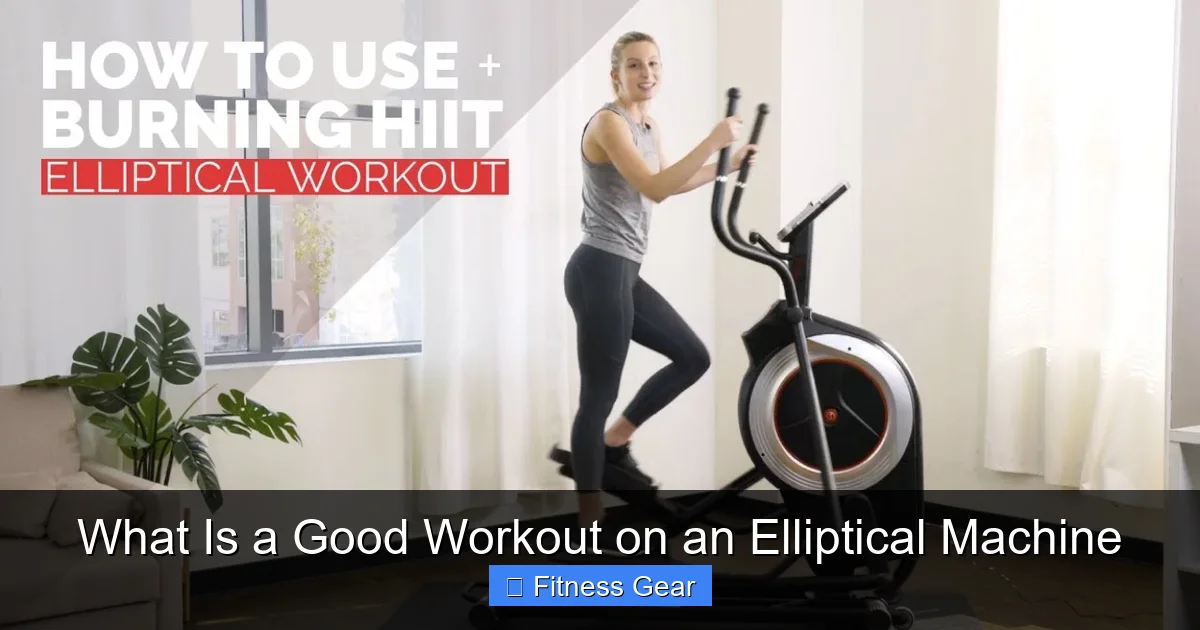
A good workout on an elliptical machine effectively combines cardiovascular exercise with full-body resistance training in a low-impact format. It’s not just about moving your legs; engaging your core and upper body while manipulating speed and resistance is key. The best routines are structured, progressive, and tailored to your specific fitness goals, whether that’s weight loss, endurance, or general health.
Key Takeaways
- Low-Impact Powerhouse: A good elliptical workout provides a serious cardio session that’s gentle on joints, making it ideal for all fitness levels and those with injury concerns.
- Full-Body Engagement: Unlike a treadmill, a proper elliptical workout actively involves your arms, chest, back, and core, not just your legs, for a more efficient calorie burn.
- Resistance is Key: Increasing the machine’s resistance is more effective for building strength and boosting metabolism than simply going faster. It turns cardio into a strength session.
- Variety Prevents Plateaus: The best elliptical routines incorporate interval training, hill simulations, and steady-state endurance to constantly challenge your body.
- Form is Non-Negotiable: Maintaining upright posture, full range of motion, and pushing through your heels ensures you target the right muscles and avoid strain.
- Mind-Muscle Connection: Consciously focusing on driving with your legs and pulling with your arms maximizes muscle engagement and workout effectiveness.
- Consistency Trumps Intensity: A moderate, consistent routine you enjoy and stick to is far more beneficial than an occasional, grueling session you dread.
📑 Table of Contents
- Introduction: Beyond the “Easy” Machine
- Section 1: The Foundation – Understanding Your Elliptical
- Section 2: Crafting Your Workout – The Essential Components
- Section 3: Sample Workout Protocols for Every Goal
- Section 4: Advanced Techniques to Break Plateaus
- Section 5: Common Mistakes That Sabotage Your Results
- Section 6: Programming for Long-Term Success
- Conclusion: Your Elliptical, Your Engine
Introduction: Beyond the “Easy” Machine
Walk into any gym, and you’ll see them: rows of elliptical machines, often humming with rhythmic motion. They have a reputation, sometimes unfair, as the “easy” machine—the one people choose when they don’t want to work too hard. But what if we told you that a truly good workout on an elliptical machine can be one of the most efficient, comprehensive, and joint-friendly sessions you can do? The key lies in understanding the machine’s potential and, more importantly, how to unlock it.
The elliptical’s unique, oval-shaped path eliminates the impact of running while allowing for a full range of motion. It’s a true hybrid, seamlessly blending the steady-state cardio of a stepper with the upper-body engagement of an upper-body ergometer. When used correctly, it doesn’t just raise your heart rate; it builds muscular endurance, improves coordination, and torches calories. This guide will dismantle the myths and provide you with the blueprint for crafting a genuinely effective, goal-oriented elliptical routine. Forget mindless scrolling on your phone; it’s time to make every stride count.
Section 1: The Foundation – Understanding Your Elliptical
Decoding the Console: Your Control Panel
Before you even step on, you need to befriend the console. A good workout on an elliptical machine starts with understanding your tools. Key metrics to watch are:

Visual guide about What Is a Good Workout on an Elliptical Machine
Image source: wellnessed.com
- Resistance/Incline: This is your primary tool for intensity. Resistance adds a braking force to the wheels, making it harder to push and pull. Incline, on some models, changes the angle of the elliptical path, mimicking hill climbing and engaging glutes and hamstrings differently. For strength and power, prioritize resistance.
- RPMs (Revolutions Per Minute) or Speed: This is your cadence. A higher RPM means more strides per minute. While it raises heart rate, excessively high RPMs with low resistance can be inefficient and bounce you out of proper form.
- Heart Rate: Use the handgrip sensors or, better yet, a chest strap, to train in specific heart rate zones (fat burn, cardio, peak). This is the most objective measure of effort.
- Watts: A measure of power output. This is the gold standard for tracking true effort over time. Increasing watts means you’re producing more power, a clear sign of progress.
Pro Tip: Ignore the “calories burned” readout during your session. It’s a rough estimate based on generic formulas. Focus on maintaining target heart rate zones and progressive increases in resistance or watts for real, measurable fitness gains.
Mastering Form: The Non-Negotiable Basics
Poor form on an elliptical can turn a great exercise into a frustrating, potentially injurious experience. Here is the checklist for perfect elliptical posture:
- Stand Tall: Imagine a string pulling your head toward the ceiling. Keep your shoulders down and back, core engaged. Do not lean forward on the handles. Your torso should be stable and upright.
- Full Stride: Allow your legs to extend fully but without locking your knees. Your heels should stay down on the pedals. A short, choppy stride is inefficient and reduces engagement.
- Drive Through Your Heels: Focus on pressing through the back half of your foot. This shifts emphasis to your glutes and hamstrings, protecting your knees and creating more power.
- Active Upper Body: Grip the handles lightly. Your arms should move in a natural, opposite-to-legs motion (right arm forward as left leg pushes back). Pull and push with purpose, engaging your back, chest, and shoulders. Do not just let your arms hang on for balance.
- No Heel Lift: Keep your entire foot planted. If you find yourself rising onto your toes, you’re likely using too much resistance or have the stride length set too short.
Spend your first 2-3 minutes on the machine simply focusing on this form. It’s the single most important factor in having a good workout on an elliptical machine.
Section 2: Crafting Your Workout – The Essential Components
A random, 30-minute stroll is not a workout. A structured plan is. Every effective elliptical session should strategically manipulate three variables: Resistance, Speed (RPM), and Duration. Think of them as your ingredients.

Visual guide about What Is a Good Workout on an Elliptical Machine
Image source: thumbs.dreamstime.com
The Role of Resistance vs. Speed
This is the most critical distinction. High Resistance + Low Speed is a strength and power builder. It feels heavy, like climbing a steep hill. It forces your major muscle groups (quads, glutes, hamstrings, chest, back) to work hard against force, building endurance and lean muscle. More muscle means a higher resting metabolism.
Low Resistance + High Speed is a pure cardiovascular, aerobic workout. It improves heart and lung capacity and burns calories primarily during the activity. It’s easier to maintain but offers less of a post-workout metabolic boost.
For the best results: Your primary focus should be on progressively increasing resistance. Use speed as a tool for intervals or to maintain a target heart rate once resistance is set.
Structuring the Session: Warm-Up, Main Set, Cool-Down
Never skip the bookends. A complete good workout on an elliptical machine follows this template:
- Warm-Up (5-10 minutes): Start with very low resistance (level 1-2). Gradually increase your RPM to find a comfortable, steady pace. This increases blood flow to muscles, raises core temperature, and lubricates joints. Add 1-2 light resistance increases during this time.
- Main Set (20-40 minutes): This is where your structured plan lives. Choose a programming style (see next section). This is your hard work.
- Cool-Down (5-10 minutes): Drop resistance back to the lowest setting. Continue moving at a slow, steady pace. This allows your heart rate to come down gradually and helps flush metabolic waste from your muscles. Follow with 5 minutes of static stretching, focusing on calves, quads, hamstrings, chest, and shoulders.
Section 3: Sample Workout Protocols for Every Goal
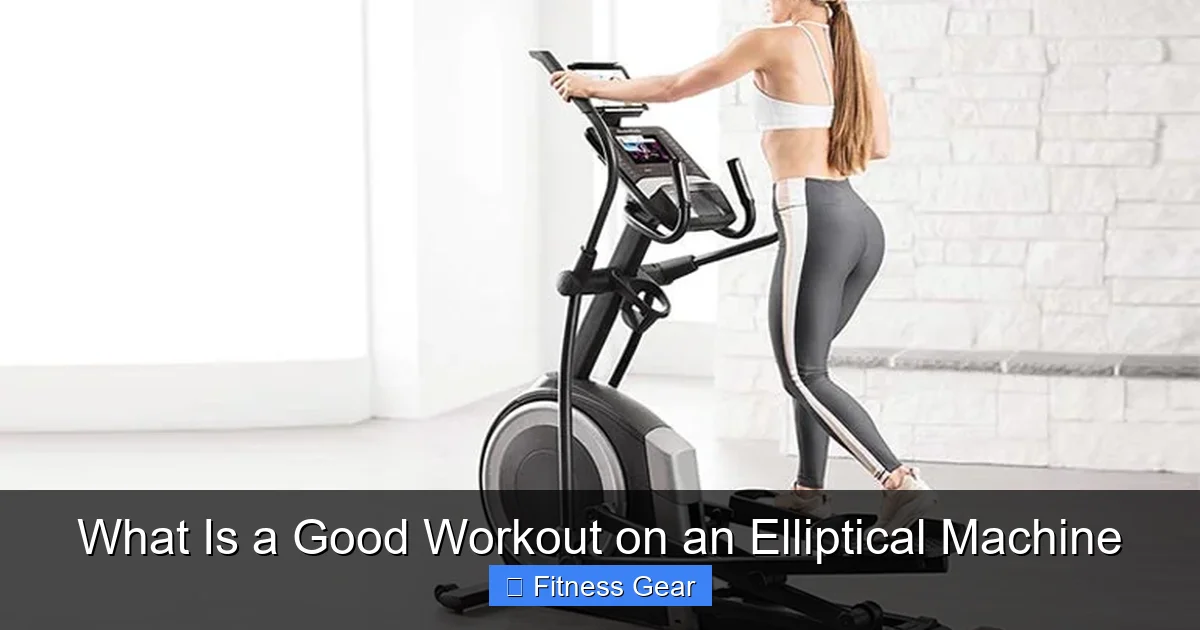
Now, let’s get practical. Here are specific, ready-to-use elliptical workouts. Adjust times and resistance levels based on your machine and fitness level. The perceived exertion should be challenging but sustainable for the interval duration.
Visual guide about What Is a Good Workout on an Elliptical Machine
Image source: static.sportzbusiness.com
Workout 1: The Metabolic Blast (For Weight Loss & Calorie Burn)
This interval-style workout maximizes calorie burn during and after the session (the afterburn effect or EPOC).
- Total Time: 30 Minutes
- Warm-Up: 5 min, Res 3, steady RPM 70-80.
- Interval Set (Repeat 6x):
- 1 min: High Resistance Sprints – Crank resistance to 8-10 (or a level that feels like an 8/10 effort). Push RPM to 90-100. You should be breathless.
- 1.5 min: Active Recovery – Drop resistance to 3-4. Return RPM to 70-75. Catch your breath.
- Cool-Down: 5 min, Res 2, very slow RPM. Stretch.
Workout 2: The Strength & Endurance Builder
This focuses on muscular endurance with higher resistance. It builds lean muscle and improves stamina for sports or daily life.
- Total Time: 35 Minutes
- Warm-Up: 5 min, Res 4.
- Pyramid Set:
- 3 min: Res 6, RPM 65-70 (Moderate-Heavy)
- 4 min: Res 7, RPM 60-65 (Heavy)
- 5 min: Res 8, RPM 55-60 (Very Heavy) – Focus on powerful, controlled strokes.
- 4 min: Res 7, RPM 60-65
- 3 min: Res 6, RPM 65-70
- Cool-Down: 5 min, Res 2. Stretch.
Workout 3: The Steady-State Endurance (For Beginners & Active Recovery)
Perfect for building aerobic base, recovering on off-days, or for those new to exercise. It teaches pacing and proper form without overwhelming fatigue.
- Total Time: 30-40 Minutes
- Warm-Up: 5 min, Res 2.
- Main Set: 25-30 minutes at a constant, challenging-but-manageable resistance (level 5-6). Maintain a consistent RPM of 70-75. You should be able to speak in short sentences but not sing. This is your “conversational pace.”
- Cool-Down: 5 min, Res 2. Stretch.
Section 4: Advanced Techniques to Break Plateaus
Once you’ve mastered the basics, it’s time to add complexity. These techniques shock your system, preventing adaptation and driving new results.
Reverse Pedaling
Most ellipticals allow you to pedal backward. This is a game-changer. Reversing the motion shifts emphasis to different muscle groups:
- Forward Pedaling: Emphasizes quads and chest (pushing motion).
- Reverse Pedaling: Emphasizes glutes, hamstrings, and upper back (pulling motion).
How to use it: Incorporate 2-3 minute blocks of reverse pedaling into your steady-state or pyramid workouts. Start with lower resistance as it feels unfamiliar. This is excellent for glute activation and correcting muscle imbalances.
Interval Incline (If Your Machine Has It)
If your elliptical has an automatic incline function, program it to oscillate. A sample set: 2 minutes at incline 3, 1 minute at incline 8, repeat. The changing angle constantly recruits new muscle fibers and dramatically increases the demand on your cardiovascular system.
The “Arms-Only” or “Legs-Only” Drill
Isolate one part of your body to build specific endurance.
- Arms-Only: Place your feet firmly on the stationary footplates (if available) or lightly rest them. Use only your arms to drive the motion for 1-2 minutes. Your arms and shoulders will burn! Great for upper-body endurance.
- Legs-Only: Lightly rest your hands on the stationary handles or in the “no hands” position. Pedal using only your legs for 2-3 minutes. This forces your lower body to stabilize and generate all the power, building serious leg strength.
Incorporate these drills into your warm-up or as a finisher at the end of your main set.
Section 5: Common Mistakes That Sabotage Your Results
Even with the best plan, errors can undermine your effort. Avoid these pitfalls:
Mistake 1: The “White-Knuckle” Grip
Holding the handles too tightly tenses your shoulders and arms, wasting energy and causing upper body fatigue. It also prevents a full range of motion. Fix: Hold the handles with a relaxed, firm grip. Let your arms move freely. If you need to stabilize your upper body, lightly rest your fingertips on the handles instead of gripping.
Mistake 2: Leaning Forward
This shifts the work from your glutes and hamstrings to your lower back and knees. It’s often caused by setting the resistance too high, too soon. Fix: If you feel yourself leaning, reduce the resistance immediately. Re-engage your core, pull your shoulders back, and focus on pushing through your heels.
Mistake 3: Short, Bouncy Strides
Using momentum to bounce instead of driving through the full pedal stroke is inefficient and prevents muscle engagement. Fix: Increase the machine’s stride length setting if available. Consciously think about extending your leg fully on the push phase. If you’re bouncing, your resistance is likely too low.
Mistake 4: Ignoring the Incline/Resistance
Staying on level 1 or 2 for your entire session is a light warm-up, not a workout. Your body adapts quickly and stops improving. Fix: Have a plan that requires you to increase resistance at least once or twice during your session. The last 5 minutes of your workout should feel significantly harder than the first 5.
Section 6: Programming for Long-Term Success
A good workout on an elliptical machine isn’t a one-time event; it’s part of a sustainable lifestyle. Here’s how to build a weekly plan.
Frequency and Recovery
For general fitness and weight loss, aim for 3-5 elliptical sessions per week. You can do them on consecutive days if you vary the intensity (e.g., a hard interval day followed by a steady-state day). Your body needs at least 1-2 full rest days or active recovery days (light walking, stretching) per week to repair and get stronger.
The 4-Week Progressive Overload Model
To avoid plateaus, you must progressively challenge your body. Here’s a simple monthly framework:
- Week 1: Foundation. Master your form. Complete your chosen workout (e.g., the Metabolic Blast) at a resistance level that is challenging but allows you to finish all intervals.
- Week 2: Increase Volume. Add 2-5 minutes to your main set duration, or add one more interval to your pyramid.
- Week 3: Increase Intensity. Keep the duration the same as Week 1, but increase the resistance on your hardest intervals by 1-2 levels. Or, aim for a higher average RPM during steady-state.
- Week 4: Active Recovery/Test. Drop back to a moderate, steady-state session (the “Steady-State Endurance” workout). This allows your body to recover while maintaining movement. At the end of the week, try a test: repeat your Week 1 workout and note if it feels easier or if you can maintain a higher resistance/RPM. That’s progress!
Repeat the cycle, always pushing the boundaries of what “hard” means for you.
Conclusion: Your Elliptical, Your Engine
A good workout on an elliptical machine is a powerful fusion of cardio and strength, accessible to nearly everyone. It’s a tool for building a resilient heart, strong lungs, and durable muscles, all while sparing your joints. The magic isn’t in the machine itself, but in the intention you bring to it. It’s the decision to stand tall, to push with purpose, to vary your routine, and to show up consistently.
Stop thinking of the elliptical as a secondary option. With the strategies in this guide—from mastering form and understanding resistance to implementing structured interval and strength protocols—you can transform your time on it into a primary, powerhouse workout. Whether your goal is to shed pounds, build endurance for a 5K, or simply move better and feel stronger, the elliptical, used wisely, is more than capable of getting you there. So next time you approach that machine, know exactly what you’re going to do. Step on, engage your whole body, and own the stride. Your future, fitter self is waiting at the end of that elliptical path.
Frequently Asked Questions
Can you lose belly fat just using an elliptical?
While you can’t spot-reduce fat, the elliptical is excellent for creating the calorie deficit needed for overall fat loss, including around the midsection. Combining regular elliptical workouts with a healthy diet and strength training is the most effective strategy for reducing belly fat.
Is 30 minutes on the elliptical enough to see results?
Yes, 30 minutes of focused, moderate-to-high intensity elliptical exercise 3-5 times per week is absolutely sufficient to improve cardiovascular health, aid in weight management, and build muscular endurance, especially when paired with proper nutrition.
Should I hold onto the handles or let go?
For a full-body, effective workout, you should hold the handles lightly to maintain balance and engage your upper body. Letting go entirely shifts you to a lower-body-only movement and can compromise stability. Use the handles as an active part of the exercise, not a crutch.
What heart rate zone should I target on the elliptical for weight loss?
Aim for the “Fat Burn” zone (typically 60-70% of your max heart rate) for longer, steady-state sessions, or the “Cardio” zone (70-80%) for interval training. The “Cardio” zone burns more total calories per minute. Consistency in whichever zone you can sustain is most important.
How often should I use the elliptical per week?
For general fitness, 3-5 sessions per week is ideal. You can use it daily if you vary the intensity (e.g., hard intervals one day, easy steady-state the next). Ensure you have at least 1-2 days of complete rest or very light activity for recovery.
Is the elliptical better than a treadmill for knees?
Yes, for most people. The elliptical’s continuous, oval motion keeps your feet in constant contact with the pedals, eliminating the high-impact heel strike of running. This makes it a superior low-impact cardio option for those with knee pain, arthritis, or previous joint injuries.