What Does the Elliptical Do for Your Arms
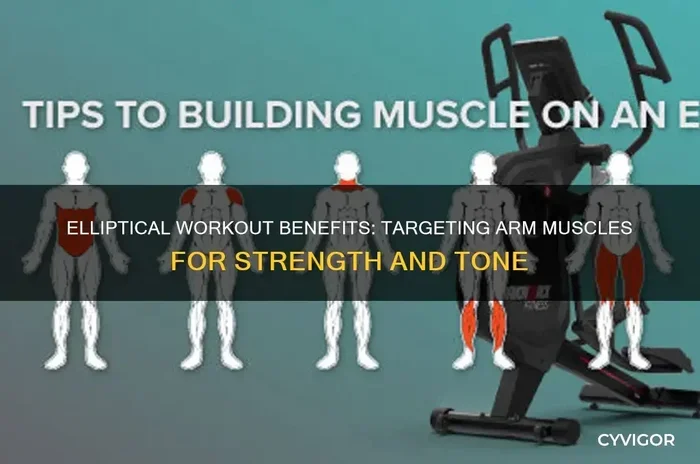
The elliptical machine does more than just work your legs — it actively engages your arms, shoulders, and back. Using the moving handlebars on an elliptical targets your biceps, triceps, shoulders, and chest, giving you a full upper-body workout while staying low-impact. Adding arm-specific techniques can turn a simple cardio session into a powerful arm-toning routine.
You hop on the elliptical, grip the handles, and start moving your legs. But have you ever stopped to think about what your arms are actually doing? Most people treat the elliptical like a leg-only machine. The truth is, what does the elliptical do for your arms is a question worth exploring — because your upper body gets a serious workout every time you push and pull those handlebars.
Whether you are a beginner or a seasoned gym-goer, understanding how the elliptical targets your arms can completely change your workout game. You will burn more calories, tone stubborn arm fat, and build functional strength — all without leaving your cardio machine. Let us break it all down.
Key Takeaways
- Full Upper-Body Engagement: The elliptical works your arms, shoulders, back, and chest through the pushing and pulling motion of the handlebars.
- Low-Impact Arm Toning: Unlike heavy weights, the elliptical tones arm muscles without stressing your joints, making it ideal for all fitness levels.
- Key Muscles Targeted: Your biceps, triceps, deltoids, pectorals, and upper back all fire during a proper elliptical arm workout.
- Technique Matters: Proper posture, grip, and arm motion dramatically increase arm engagement and results.
- Cardio + Strength Combo: You get heart-healthy cardio and muscle-toning benefits in one session, saving time and boosting efficiency.
- Home Use Friendly: Compact elliptical machines make it easy to fit effective arm workouts into your home routine.
📑 Table of Contents
- How the Elliptical Engages Your Arms
- Key Arm Muscles the Elliptical Targets
- Benefits of Elliptical Arm Workouts
- How to Maximize Arm Engagement on the Elliptical
- Common Mistakes That Reduce Arm Benefits
- Elliptical Arm Workouts vs. Other Arm Exercises
- Expert Tips for Getting the Most from Your Elliptical Arm Workout
- Conclusion
How the Elliptical Engages Your Arms
When you step onto an elliptical machine, the moving handlebars are not just there for balance. They are designed to create a full-body motion that works your upper and lower body at the same time. Every time you push forward and pull back, your arm muscles contract and relax in a rhythmic pattern.
This is called a cross-country motion. It mimics the natural movement of walking, running, and swimming — but without the jarring impact on your joints. Your arms push and pull against the resistance of the machine, which means your muscles are constantly working.
Here is what makes this so effective:
- Dual-motion design: The handlebars move in sync with your legs, creating a coordinated full-body rhythm.
- Adjustable resistance: You can increase the tension to make your arms work harder and build more muscle.
- Continuous tension: Unlike free weights where gravity does some of the work, the elliptical keeps constant tension on your arm muscles throughout every rep.
If you have ever wondered whether the elliptical actually works your upper body, the answer is a clear yes. The key is understanding how to use the machine properly and how to push yourself to get the most out of every session.
For a broader look at what the elliptical does overall, check out what does the elliptical machine do for your body — it covers the full picture of upper and lower-body benefits.
Key Arm Muscles the Elliptical Targets
Your arms are made up of several muscle groups, and the elliptical hits more than you might think. Let us go through the main muscles that fire up during a typical elliptical session.
Biceps
Your biceps are the muscles on the front of your upper arms. When you pull the handlebars toward your body, your biceps contract to create that pulling motion. Over time, this repetitive action helps tone and define the front of your arms.
Triceps
On the opposite side, your triceps work every time you push the handlebars forward. These are the muscles on the back of your upper arms. Many people struggle with arm fat in this area, and the elliptical can help tighten and shape the triceps without any impact.
Shoulders (Deltoids)
The circular motion of the elliptical handlebars also works your shoulder muscles. Your front deltoids engage during the pushing phase, while your rear deltoids fire during the pulling phase. This balanced activation helps build rounded, defined shoulders.
Chest Muscles (Pectorals)
When you push the handlebars outward and forward, your chest muscles join in. The pectorals help control the range of motion and add stability to your upper body during the workout.
Upper Back (Trapezius and Rhomboids)
Do not forget about your back! The pulling motion engages your upper back muscles, which helps improve posture and strengthens the muscles between your shoulder blades. This is especially helpful for people who sit at a desk all day.
For a deeper dive into which body parts the elliptical actually targets, read what parts of your body does the elliptical work — it breaks down every muscle group in detail.
Benefits of Elliptical Arm Workouts
Now that you know which muscles are working, let us talk about the real-world benefits. Why should you care about arm engagement on the elliptical?
- Burns More Calories: When you involve your arms, your body has to work harder. This means a higher calorie burn compared to a leg-only workout. Studies show that full-body elliptical workouts can increase calorie burn by up to 20 percent compared to using the machine without the handlebars.
- Tones Arms Without Bulk: The elliptical creates long, lean muscle tone rather than bulky gains. This makes it perfect for people who want defined arms without adding excessive muscle mass.
- Low-Impact and Joint-Friendly: Unlike dumbbells or weight machines, the elliptical puts very little stress on your elbows, wrists, and shoulders. This makes it ideal for people recovering from injuries or those with joint sensitivity.
- Improves Cardiovascular Health: You are getting a cardio workout while simultaneously building muscle. This dual benefit means your heart gets stronger while your arms get more defined — all in one session.
- Boosts Functional Strength: The pushing and pulling motions on the elliptical translate to real-world strength. Carrying groceries, pushing doors, and lifting objects all rely on similar muscle patterns.
To understand more about the overall benefits of elliptical exercise, check out what does an elliptical workout do for your body for a complete guide on full-body elliptical benefits.
How to Maximize Arm Engagement on the Elliptical
Simply holding onto the handlebars is not enough. If you want real results, you need to actively engage your arms throughout the workout. Here is how to get the most out of every session.
1. Stand Up Straight
Slouching kills your arm engagement. Keep your back straight, shoulders back, and chest lifted. Good posture ensures your arm muscles are working at their full capacity and also protects your spine.
2. Use a Full Range of Motion
Do not cheat the movement. Push the handlebars all the way forward and pull them all the way back to your torso. A complete range of motion means every muscle fiber in your arms gets activated.
3. Increase the Resistance
Most ellipticals let you adjust the resistance level. Higher resistance forces your arm muscles to work harder. Start with a moderate level and gradually increase as your strength improves. You should feel challenged but not strained.
4. Try Interval Training
Alternate between high-resistance bursts and moderate-paced recovery periods. This type of interval training keeps your muscles guessing and dramatically increases arm toning. Try 30 seconds of high resistance followed by 60 seconds of normal pace, and repeat for 15 to 20 minutes.
5. Focus on the Pulling Motion
Many people focus only on pushing. But the pulling phase is where your biceps and upper back do the most work. Consciously squeeze your shoulder blades together as you pull the handlebars toward you for a more effective arm workout.
6. Add Arm-Specific Techniques
Some advanced users like to let go of the handlebars periodically and perform arm circles or punch forward while keeping their feet on the pedals. This adds variety and challenges your arm muscles from different angles.
For those considering a home setup, what is a good elliptical machine for home use offers great guidance on choosing a machine with adjustable resistance and smooth arm motion.
Common Mistakes That Reduce Arm Benefits
Even with the best intentions, it is easy to fall into habits that take the work away from your arms. Here are the most common mistakes and how to fix them.
Leaning on the Handlebars
If you rest your full body weight on the handlebars, your arms barely do any work. You are essentially letting the machine carry you. Keep your hands lightly touching the grips and let your arm muscles do the pushing and pulling.
Using a Slouched Posture
Rounding your shoulders forward collapses your chest and takes the work away from your pectorals and deltoids. Stand tall and imagine a string pulling the crown of your head toward the ceiling.
Going Too Fast Without Resistance
Speed without resistance is mostly a leg workout. If you are moving your arms quickly but with no tension, you are missing the muscle-building benefits. Slow down and add resistance instead.
Ignoring the Upper Body Entirely
Some people lock their arms straight and only use their legs. This defeats the purpose of the elliptical’s dual-motion design. Make a conscious effort to move your arms with intention and purpose.
Elliptical Arm Workouts vs. Other Arm Exercises
How does the elliptical stack up against other popular arm exercises? Let us compare.
| Exercise | Arm Muscles Worked | Impact Level | Calorie Burn | Accessibility |
|---|---|---|---|---|
| Elliptical (with handlebars) | Biceps, triceps, shoulders, chest, back | Very low | High (full body) | Gym or home |
| Dumbbell Bicep Curls | Biceps | Low | Moderate | Gym or home |
| Tricep Dips | Triceps, shoulders | Medium | Moderate | Gym or home |
| Push-Ups | Chest, triceps, shoulders | Body weight | Moderate | Anywhere |
| Resistance Band Rows | Back, biceps, shoulders | Very low | Moderate | Gym or home |
| Jump Rope | Forearms, shoulders, upper back | High | Very high | Anywhere |
The elliptical stands out because it combines arm toning with cardiovascular conditioning in one smooth, low-impact motion. You do not need to switch between machines or exercises to work your arms and get your heart rate up. That makes it one of the most efficient tools for a full-body workout.
If you want to compare how different machines target your arms, the rowing machine is another excellent option. To see how rowing stacks up, check out what does a rowing machine do for your body — it is another fantastic full-body cardio machine that heavily involves the arms.
Expert Tips for Getting the Most from Your Elliptical Arm Workout
Fitness professionals agree that the elliptical is one of the most underrated tools for arm training. Here are some expert-backed tips to level up your sessions.
Warm up your arms first. Before jumping into a high-intensity session, do 2 to 3 minutes of slow, gentle arm circles on the elliptical. This wakes up your muscles and reduces the risk of strain.
Mix up your grip. Try an overhand grip, underhand grip, and neutral grip throughout your workout. Different grips target slightly different muscle fibers and prevent your arms from adapting to a single motion.
Track your progress. Most modern ellipticals display resistance levels, calories burned, and heart rate. Use this data to push yourself a little harder each week and watch your arm strength grow.
Combine with strength training. The elliptical is a great complement to weight training. Use it as a warm-up or cool-down to keep your arms active and promote blood flow between sets.
Stay consistent. Like any exercise, results come with regularity. Aim for 3 to 5 elliptical sessions per week, and you will notice visible arm toning within 4 to 6 weeks.
Conclusion
So, what does the elliptical do for your arms? It tones your biceps, triceps, shoulders, chest, and back — all while giving you a heart-healthy, low-impact cardio workout. The elliptical is one of the most efficient machines for combining arm toning with calorie burning, and it works for people of every fitness level.
The key is to use proper form, engage your arms intentionally, and challenge yourself with resistance and interval training. Do not just go through the motions — make every push and pull count. With consistency and smart technique, you will see stronger, more defined arms and a healthier, more confident you.
Start paying attention to your upper body the next time you step on the elliptical. Your arms will thank you.
Frequently Asked Questions
Does the elliptical actually work your arm muscles?
Yes, absolutely. When you use the moving handlebars on an elliptical, your biceps, triceps, shoulders, chest, and upper back all engage with every push and pull motion. The key is to actively use the handlebars rather than just resting your hands on them.
Can you get toned arms from just using the elliptical?
You can definitely see improvement in arm tone by using the elliptical regularly, especially when you increase resistance and focus on proper form. However, for the best results, combine elliptical workouts with strength training exercises for balanced muscle development.
Is the elliptical arm workout good for beginners?
It is one of the most beginner-friendly arm workouts available. The low-impact motion is gentle on your joints, and you can easily adjust the resistance to match your fitness level. Start slow and gradually increase the intensity as your strength builds.
How long should you use the elliptical to see arm results?
Most people start noticing improved arm tone within 4 to 6 weeks of consistent use, doing 3 to 5 sessions per week. Results vary based on your diet, overall fitness level, and how intentionally you engage your arms during each workout.
Can the elliptical help reduce arm fat?
The elliptical helps burn overall body fat, including in the arms, when combined with a healthy diet and consistent exercise. While spot reduction is not possible, the elliptical tones the underlying arm muscles, which creates a firmer appearance as fat decreases.
Should you use the elliptical handlebars or go hands-free?
Using the handlebars is the best way to engage your arm muscles and burn more calories. Going hands-free can be useful for balance training, but it removes the upper-body benefits entirely. Try alternating between the two for variety and balanced results.