What Can You Use as Dumbbells at Home
Looking to work out at home but don’t have dumbbells? You can use everyday household items like water bottles, backpacks, and soup cans as effective dumbbell alternatives. This guide covers the best improvised weights and DIY dumbbell substitutes so you can start strength training at home right away without spending a dime.
You want to get stronger, build muscle, and stay fit. But here’s the problem — you don’t have dumbbells. Maybe you’re on a tight budget. Maybe you just moved and your gear is still in boxes. Or maybe you simply prefer working out at home without a bunch of equipment taking up space.
Whatever the reason, the good news is that what can you use as dumbbells at home has a ton of answers. You probably already have everything you need sitting around your house. From water bottles to backpacks to bags of rice, dumbbell alternatives are everywhere. You just need to know how to use them.
In this guide, we’ll walk you through the best household items that double as weights, show you how to make your own DIY dumbbells, and give you practical tips to train safely and effectively. Whether you’re a complete beginner or a seasoned lifter looking for a home workout equipment hack, this article has you covered.
Key Takeaways
- Water bottles and gallon jugs make excellent dumbbell replacements for bicep curls, shoulder presses, and more.
- Backpacks filled with books are a versatile and portable way to add resistance to squats, lunges, and push-ups.
- Soup cans and food containers work great for lighter exercises and are perfect for beginners.
- DIY sand or rice bags can be customized to any weight you need for a full-body workout.
- Safety matters — always check your improvised weights for stability before each rep.
- You don’t need expensive equipment to build muscle and stay fit at home.
📑 Table of Contents
- Why You Need Dumbbell Alternatives at Home
- Best Household Items That Work As Dumbbells
- DIY Dumbbell Substitutes You Can Make
- How to Choose the Right Alternative for Your Workout
- Safety Tips for Using Improvised Weights
- Building a Full Home Workout With Alternative Weights
- Common Mistakes to Avoid When Using Household Weights
- Expert Insights on Homemade Weight Training
- Final Thoughts
Why You Need Dumbbell Alternatives at Home
Not everyone has a home gym. And that’s totally fine. The truth is, you can get an amazing workout with resistance training at home using things you already own. Dumbbells are great, but they’re not the only path to building strength.
Here’s why homemade weights and everyday objects work so well:
- They’re free. You’ve already paid for them. Why spend more on fancy equipment?
- They’re accessible. Your kitchen, garage, and closet are full of potential weights right now.
- They’re versatile. You can adjust weight by adding or removing contents.
- They’re portable. Many household items are easy to grab and use anywhere in your home.
- They remove excuses. When your weights are always within reach, you’re more likely to actually work out.
The key is knowing what to reach for. And that’s exactly what we’ll cover next.
Best Household Items That Work As Dumbbells
Not all household items are created equal when it comes to exercise with everyday objects. Some are perfect for heavy lifting. Others work best for lighter toning exercises. Here’s a breakdown of the most effective items you can use right now.
Water Bottles and Gallon Jugs
Water bottles are probably the most accessible dumbbell substitute you own. A standard 1-liter water bottle weighs about 2.2 pounds when full. A 500ml bottle comes in at roughly 1.1 pounds. These are perfect for bicep curls, lateral raises, and tricep extensions.
Gallon jugs are even better for heavier exercises. A full gallon of water weighs about 8.3 pounds. You can fill them with sand or gravel to increase the weight even more. They work great for shoulder presses, goblet squats, and chest exercises.
Backpacks Filled with Books
This is one of the simplest and most effective tricks for strength training at home. Load up a backpack with books, water bottles, or any heavy items you have. Zip it up tight and wear it on your back during squats, lunges, push-ups, or even walks around the neighborhood.
The beauty of a weighted backpack is that it distributes weight evenly across your body. This makes it safer than holding a single object in one hand. It’s also incredibly convenient — you can adjust the weight in seconds by adding or removing books.
Soup Cans and Food Containers
Don’t underestimate the power of a can of soup. Most standard soup cans weigh between 10 and 14 ounces. They’re ideal for lighter resistance training at home, especially if you’re just starting out or doing high-rep exercises.
Use soup cans for lateral raises, front raises, or even chest press movements when lying on the floor. Larger food containers like oatmeal canisters or coffee bags can serve as heavier options for more advanced movements.
Bags of Rice, Beans, or Pet Food
Those bags sitting in your pantry are actually excellent weights. A 5-pound bag of rice or flour works perfectly for goblet squats, deadlifts, and weighted push-ups. You can also use smaller bags for single-arm exercises like rows and curls.
Pet food bags are another great option. A bag of dry dog food or cat litter can weigh anywhere from 10 to 40 pounds depending on the size. These make surprisingly effective substitutes for barbell and dumbbell exercises.
DIY Dumbbell Substitutes You Can Make
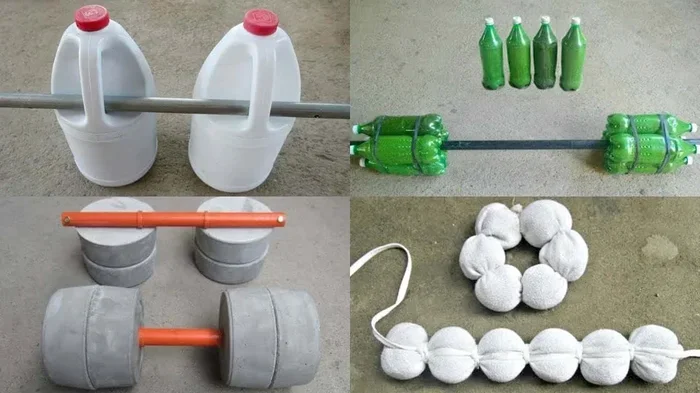
If you want something a bit more structured than a water bottle or soup can, you can easily make your own DIY dumbbells at home. These projects are simple, cheap, and let you customize the weight exactly to your needs.
DIY Sand Bags
Grab an old pillowcase or a sturdy cloth bag. Fill it with sand, rice, or dried beans. Tie it shut securely. You now have a adjustable homemade weight that you can shape to fit your grip. These are fantastic for swings, carries, and ground-based exercises.
One of the best things about sand bags is that you can change the weight anytime. Want it heavier? Add more sand. Want it lighter? Take some out. It’s the most flexible option for creative workout gear at home.
Water Jug Dumbbells
Take two large milk jugs or juice jugs. Fill them with water or sand. Tape the caps shut tightly. Now you have a pair of improvised weights that feel remarkably similar to actual dumbbells.
These work great for exercises where you need a firm grip, like farmer’s walks, bicep curls, and tricep kickbacks. The handles on jugs make them easy to grip, which is a big advantage over bags or loose containers.
Sock Weights
Fill a long sock with rice or sand. Tie it off with a knot. You now have a lightweight exercise weight that’s perfect for swings, gentle arm exercises, and warm-up routines. This is especially useful for people recovering from injuries or those doing bodyweight training who want a little extra resistance.
How to Choose the Right Alternative for Your Workout
Not every dumbbell alternative works for every exercise. Choosing the right one depends on what muscle group you’re targeting and how much weight you need. Here’s a simple guide to help you pick.
| Exercise Type | Best Household Item | Why It Works |
|---|---|---|
| Bicep Curls | Water bottles or soup cans | Easy to grip and perfect for moderate weight |
| Squats and Lunges | Weighted backpack or gallon jug | Distributes weight evenly across your torso |
| Chest Press | Sand bag or filled backpack | Stable weight for floor-based pressing |
| Shoulder Raises | Soup cans or small water bottles | Light weight ideal for high-rep work |
| Deadlifts | Bag of rice or pet food | Heavy enough to challenge your posterior chain |
| Rows | Water jug or filled backpack | Firm handle makes pulling comfortable |
When you’re just starting out, it’s worth noting that how to workout with dumbbells at home for beginners applies just as well to household items. Start light, focus on form, and gradually increase the weight as you get stronger. Don’t rush into heavy improvised weights before your body is ready.
Also, think about what you’re trying to achieve. If you’re focused on building arm muscles at home, you’ll want items you can hold in each hand for curls and presses. If you’re working on lower body strength, a weighted backpack or sand bag will serve you better for squats and lunges.
Safety Tips for Using Improvised Weights
Using household items as weights is safe — as long as you take a few precautions. Improvised weights aren’t engineered like proper dumbbells, so they can be unpredictable. Here’s how to stay safe while training.
Check Your Items Before Each Use
Before you start any exercise, inspect your weight. Is the cap on the water bottle tight? Is the backpack zipper fully closed? Are there any tears in the bag? A leaking water bottle or a broken strap can cause injury mid-rep.
Start Light and Progress Gradually
Don’t try to lift the heaviest item in your house on day one. Start with something light and work your way up. This is especially important for beginners who are still learning proper form. You can always add more weight later.
Focus on Controlled Movements
Household items don’t always have balanced weight distribution like proper dumbbells. This means you need to be extra careful with your form. Move slowly and deliberately. If something feels unstable, stop and adjust.
Use a Mat or Soft Surface
If you’re doing floor exercises, place a towel or yoga mat underneath you. This protects your back and provides a stable base. It also prevents your improvised weights from rolling away during exercises like chest presses or flyes.
Building a Full Home Workout With Alternative Weights
Now that you know what to use, let’s talk about how to put it all together. You can build an entire home workout routine using just household items. Here’s a simple full-body workout to get you started.
- Warm-Up (5 minutes): Jumping jacks, arm circles, and light stretching to get your blood flowing.
- Goblet Squats (3 sets of 12): Use a filled gallon jug or sand bag held at your chest.
- Bicep Curls (3 sets of 15): Grab two water bottles or soup cans for each hand.
- Weighted Push-Ups (3 sets of 10): Place a filled backpack on your back for extra resistance.
- Lunges (3 sets of 12 per leg): Hold a water jug in each hand or wear a weighted backpack.
- Shoulder Press (3 sets of 12): Use two soup cans or water bottles pressed overhead.
- Farmer’s Walk (3 sets of 30 seconds): Hold two heavy water jugs and walk around your space.
- Cool-Down (5 minutes): Stretch your major muscle groups and breathe deeply.
This routine covers your entire body and uses items you likely already have at home. If you want more ideas for exercises, check out what exercises you can do with dumbbells at home — most of those movements translate perfectly to household items.
For those just getting started with home fitness, this beginner’s guide offers excellent advice on building a consistent routine and progressing safely over time.
The beauty of training at home is that you can do it anytime, anywhere. No gym membership. No commute. No waiting for equipment. All you need is a little creativity and the willingness to get moving.
Common Mistakes to Avoid When Using Household Weights
Even with the best intentions, people make mistakes when using improvised weights. Here are the most common ones to watch out for.
- Using unstable containers. Something that can open or break mid-exercise is dangerous. Always secure caps and ties tightly.
- Lifting too much weight too soon. Just because you can grab a heavy bag doesn’t mean you should. Your form will suffer, and injury risk goes up.
- Ignoring grip issues. Some household items are slippery or awkward to hold. Wrap a towel around them if needed for a better grip.
- Skipping warm-ups. This is true whether you use real dumbbells or household items. Always warm up before lifting.
- Doing the same exercises every day. Variety keeps your workouts effective and prevents boredom. Rotate through different items and exercises regularly.
Avoiding these mistakes will keep you safe and help you get the most out of every session. Remember, the goal is to build strength and stay consistent — not to impress anyone with how much weight you can lift.
Expert Insights on Homemade Weight Training
Many fitness experts agree that bodyweight training combined with household items can be just as effective as traditional gym workouts. The key is consistency and progressive overload — gradually increasing the weight or reps over time.
One of the biggest advantages of training with budget fitness equipment is that you’re more likely to stick with it. When your equipment is free and always available, there’s less friction between you and your workout. You skip the gym. You save time. And you still get results.
If you’re serious about building muscle at home without traditional weights, you might also want to explore how to build arm muscles at home for targeted advice that applies whether you use real dumbbells or alternatives.
Similarly, if you’re curious about weight lifting at home without dumbbells, there are plenty of creative approaches that go beyond household items — including resistance bands and bodyweight progressions.
Final Thoughts
So, what can you use as dumbbells at home? The answer is almost anything you can find. Water bottles, backpacks, soup cans, sand bags, gallon jugs — they all work. The best dumbbell alternative is the one you’ll actually use consistently.
Don’t let the lack of proper equipment stop you from getting stronger. Your home is already full of tools you can use for resistance training at home. All you need is a little creativity and the motivation to start.
Pick one or two items from this list. Try a simple workout today. You might be surprised at how effective homemade weights can be. And once you see the results, you’ll never look at your household items the same way again.
Stay consistent, stay safe, and most importantly — enjoy the process. Your fitness journey doesn’t need expensive gear. It just needs you.
Frequently Asked Questions
Can I use water bottles as dumbbells for a full workout?
Yes, absolutely. Water bottles work great for lighter exercises like bicep curls, lateral raises, and shoulder presses. For heavier exercises like squats or deadlifts, you’ll want to use gallon jugs or fill bottles with sand to increase the weight. They’re perfect for beginners and great for warm-up sets.
How heavy should my household weights be for strength training?
It depends on your fitness level and the exercise. For upper body exercises like curls and presses, aim for 2 to 5 pounds per hand. For lower body exercises like squats and lunges, you can go heavier — 10 to 20 pounds or more using a weighted backpack or sand bag. Always start lighter and increase gradually.
Are DIY dumbbells as effective as real dumbbells?
For most home workouts, yes. DIY weights can be just as effective for building strength and muscle, especially for beginners and intermediate lifters. The main difference is in grip and weight precision, but with a little creativity, you can overcome both limitations. Focus on consistent training and progressive overload.
What’s the safest household item to use as a dumbbell?
Water bottles and gallon jugs with secure caps are among the safest options because they have built-in handles and a stable shape. Backpacks filled with books are also very safe since the weight is distributed across your back. Avoid using items that can break, spill, or open during exercise.
Can I build muscle at home without any equipment at all?
Yes, you can build muscle using just your body weight through exercises like push-ups, squats, lunges, and planks. Adding household items as weights accelerates your results, but even without any equipment, consistent bodyweight training can lead to significant muscle growth and strength gains over time.
How do I make a weighted backpack for exercises?
Simply fill a sturdy backpack with books, water bottles, or bags of rice. Close all zippers and straps tightly to secure the contents. Start with a lighter load and increase the weight as you get stronger. A weighted backpack works great for squats, lunges, push-ups, and even walking exercises for a full-body workout.