Is Using a Rowing Machine a Full Body Workout

Rowing machines provide a genuine full‑body workout, targeting legs, core, back, and arms while boosting cardio fitness. With proper technique and varied intensity, you can sculpt muscle, burn calories, and improve endurance—all from a single piece of equipment.
Key Takeaways
- Understanding Is Using A Rowing Machine A Full Body Workout: Provides essential knowledge
📑 Table of Contents
- Introduction: Why Rowing Is the Talk of the Fitness World
- How Rowing Engages the Body: The Muscle Map
- Cardiovascular Benefits: Rowing as an Efficient Cardio Machine
- Designing a Full‑Body Rowing Routine
- Common Mistakes and How to Fix Them
- Choosing the Right Rowing Machine for Full‑Body Gains
- Putting It All Together: A Sample 4‑Week Full‑Body Rowing Plan
- Conclusion: Rowing Delivers the Full‑Body Promise
Introduction: Why Rowing Is the Talk of the Fitness World
Imagine sitting on a sleek seat, gripping a handle, and pulling a chain that feels like a river’s current. That’s the magic of a rowing machine. Over the past decade, rowing has moved from the niche “cross‑fit” corner to mainstream gyms and living rooms alike. The question most beginners ask is simple: Is using a rowing machine a full‑body workout? The short answer is a resounding yes, but the story behind that answer is worth exploring.
Rowing combines strength, endurance, and coordination in a single motion. Unlike machines that isolate one muscle group—think leg press or biceps curl—rowing forces multiple joints to move together. This synergy mimics real‑life activities like paddling a boat or pushing a stroller uphill. In this article, we’ll break down exactly which muscles get fired, how the cardio component works, and what you can do to get the most out of every row.
How Rowing Engages the Body: The Muscle Map
To understand why rowing is a full‑body workout, picture the rowing stroke as two phases: the drive and the recovery. Each phase targets different muscles, creating a balanced, cyclical effort.
Visual guide about Is Using a Rowing Machine a Full Body Workout
Image source: anytimefitness.com
The Drive: Power From the Legs to the Arms
- Legs: The drive begins with a push off the footplates. Your quadriceps, hamstrings, glutes, and calves generate the majority of force—up to 60 % of the total power.
- Core: As the legs extend, your abdominals and lower back engage to transfer energy upward. A strong, stable core prevents lower‑back rounding.
- Back & Shoulders: The latissimus dorsi, rhomboids, and trapezius pull the handle toward the chest, while the posterior deltoids assist.
- Arms: Finally, the biceps and forearms finish the pull, adding a finishing “finish” to each stroke.
The Recovery: Controlled Reset
Recovery is just as important. You slide forward, extending the arms first, then the torso, and finally bending the knees. This reverse sequence stretches the muscles you just contracted, promoting flexibility and preventing tightness.
Why This Matters
Because the stroke uses a chain reaction—from legs to core to back to arms—rowers develop functional strength that translates to everyday tasks. You’re not just building isolated biceps; you’re training coordination, balance, and power.
Cardiovascular Benefits: Rowing as an Efficient Cardio Machine
Beyond muscle work, rowing is a powerhouse for heart health. The continuous, rhythmic motion raises heart rate while keeping impact low.

Visual guide about Is Using a Rowing Machine a Full Body Workout
Image source: i.ytimg.com
Calorie Burn Compared to Other Cardio
- Running (6 mph): ~600 calories/hour
- Cycling (moderate): ~500 calories/hour
- Rowing (moderate‑intensity): 600‑800 calories/hour
- Rowing (high‑intensity intervals): up to 1,000 calories/hour
These numbers vary with weight, age, and effort, but rowing consistently ranks high for calorie expenditure per minute.
Improving VO₂ Max
VO₂ max—your body’s ability to use oxygen—improves quickly with rowing because you’re using large muscle groups simultaneously. Studies show a 10‑15 % increase in VO₂ max after just 8 weeks of regular rowing sessions.
Low‑Impact, High‑Reward
Because the seat glides and the footplates are stationary, the joints experience far less shock than running. This makes rowing ideal for people with knee or hip concerns who still want a vigorous cardio workout.
Designing a Full‑Body Rowing Routine
Knowing that rowing works the whole body is only half the battle. To truly reap the benefits, you need a structured routine that balances intensity, duration, and technique.

Visual guide about Is Using a Rowing Machine a Full Body Workout
Image source: c8.alamy.com
1. Warm‑Up (5‑10 minutes)
- Light rowing at 18‑22 strokes per minute (spm) to increase blood flow.
- Dynamic stretches: leg swings, torso twists, and arm circles.
2. Main Set Options
Choose one based on your goal:
- Endurance Row: 20‑30 minutes steady at 22‑24 spm, keeping heart rate in the 70‑80 % max zone.
- Interval Power: 1 minute hard (30‑34 spm) / 1 minute easy, repeat 8‑10 times. This boosts anaerobic capacity.
- Strength Focus: Increase resistance (if your machine has a damper) and row at 18‑20 spm for 3‑4 minute blocks, focusing on a powerful leg drive.
3. Cool‑Down (5 minutes)
- Gradually reduce stroke rate to 16‑18 spm.
- Finish with static stretches for hamstrings, hip flexors, lats, and forearms.
4. Technique Drills
- Pause Drill: Pause at the “catch” (full compression) for 2 seconds before driving. Improves core engagement.
- Leg‑Only Drive: Push with legs while keeping arms straight and torso upright. Reinforces leg power.
- Reverse Row: Start with a strong arm pull, then add torso swing, then legs. Helps you feel each segment.
Common Mistakes and How to Fix Them
Even seasoned rowers slip up. Here are the top errors and quick fixes.
1. Over‑reaching at the Catch
Leaning too far forward can strain the lower back. Keep your shins vertical, hips hinged, and shoulders relaxed.
2. Pulling with the Arms First
Starting the drive with the arms removes power from the legs. Practice the “leg‑then‑body‑then‑arm” sequence until it feels natural.
3. Slouching During the Drive
A rounded back reduces lat activation and risks injury. Engage the core and keep a slight forward lean from the hips, not the waist.
4. Inconsistent Stroke Rate
Flickering between 15 spm and 35 spm wastes energy. Use the monitor’s “stroke‑rate” display to stay within your target range.
5. Ignoring Resistance Settings
Many users stay on the default damper (often 5). Adjust the resistance to match your fitness level—higher for strength, lower for speed work.
Choosing the Right Rowing Machine for Full‑Body Gains
Not all rowers are created equal. Your choice can affect comfort, performance, and long‑term motivation.
Air Rowers (e.g., Concept2)
- Resistance increases with stroke power—great for interval training.
- Smooth feel, low maintenance.
- Noise can be louder, but many models have “silent” fans.
Magnetic Rowers
- Quiet operation, precise resistance levels.
- Often more compact—ideal for apartments.
- Less “feel” of water; some users miss the natural drag.
Water Rowers
- Authentic water resistance that mimics rowing on a lake.
- Soothing sound of water splashing.
- Heavier and require occasional water changes.
Key Features to Look For
- Performance Monitor: Shows stroke rate, split time, and calories.
- Adjustable Footplates: Accommodates different shoe sizes.
- Seat Comfort: Padded, glides smoothly.
- Weight Capacity: Choose a model that supports your body weight plus a safety margin.
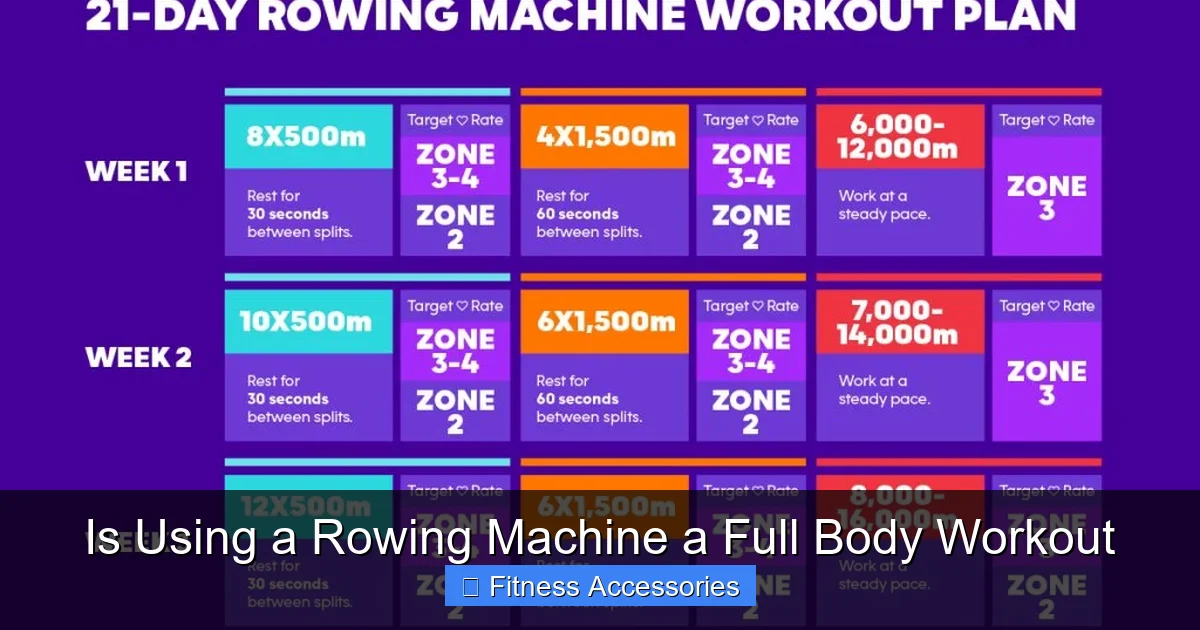
Putting It All Together: A Sample 4‑Week Full‑Body Rowing Plan
Ready to test the theory? Follow this beginner‑friendly schedule. Adjust rest days as needed.
| Week | Day 1 | Day 2 | Day 3 |
|---|---|---|---|
| 1 | Endurance Row – 20 min @ 22 spm | Interval Power – 8 × 1 min hard/1 min easy | Strength Row – 4 × 3 min @ high resistance |
| 2 | Endurance Row – 25 min @ 23 spm | Interval Power – 10 × 45 sec hard/45 sec easy | Strength Row – 5 × 3 min @ high resistance |
| 3 | Mixed Row – 15 min steady + 10 min intervals | Recovery Row – 30 min easy, focus on form | Strength Row – 4 × 4 min @ higher resistance |
| 4 | Challenge Row – 5 × 5 min @ race pace | Active Rest – light rowing 15 min + mobility work | Full Test – 2000 m time trial |
Track your split times, stroke rate, and how you feel after each session. By week 4 you should notice stronger legs, a tighter core, and better endurance.
Conclusion: Rowing Delivers the Full‑Body Promise
If you’ve been skeptical about whether a single machine can replace a gym floor, the evidence is clear: rowing engages the legs, core, back, and arms while delivering a vigorous cardio stimulus. The key to unlocking its full potential lies in mastering technique, varying intensity, and choosing a machine that fits your space and budget.
Whether you’re training for a marathon, looking to tone your physique, or simply want a low‑impact way to stay fit, a rowing machine can be the centerpiece of a balanced workout routine. Grab a rower, set a realistic schedule, and watch your whole body transform—stroke by stroke.
Frequently Asked Questions
Does rowing really work the arms?
Yes, the biceps, forearms, and upper back get a solid workout during the pull phase, but the arms contribute about 15‑20 % of the total power.
How many calories can I burn on a rowing machine?
At a moderate pace you can burn 600‑800 calories per hour; high‑intensity intervals can push that number to 1,000 calories or more.
Is rowing suitable for beginners?
Absolutely. Start with short sessions, focus on form, and gradually increase duration and resistance as you become comfortable.
What’s the best resistance setting for a full‑body workout?
Use a damper that lets you maintain a steady stroke rate while feeling a slight pull on the handle. For strength, choose a higher setting; for speed work, a lower setting works best.
Can rowing replace weight‑training?
Rowing builds functional strength and endurance but doesn’t isolate muscles as heavily as traditional weightlifting. For balanced fitness, combine rowing with occasional resistance‑training sessions.
How often should I row each week?
Three to five times per week is ideal for most people, allowing at least one rest or active‑recovery day to prevent overuse injuries.