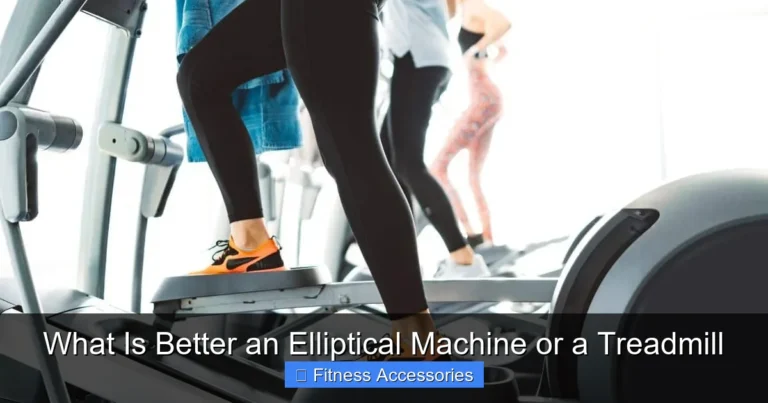
Is Running on an Elliptical the Same as Running

No, running on an elliptical is not the same as running. While both are excellent cardiovascular exercises, they involve fundamentally different movement patterns, joint impacts, and muscle engagement. Elliptical training is a low-impact, guided motion that actively involves the upper body, whereas running is a high-impact, weight-bearing activity with a natural stride and greater skeletal stress. Your choice should depend on your specific fitness goals, injury history, and personal preference.
Key Takeaways
- Impact is the Biggest Difference: Running is a high-impact, weight-bearing exercise; elliptical training is low-impact and non-weight-bearing, drastically reducing joint stress.
- Muscle Engagement Varies Significantly: Running primarily targets the lower body (quads, hamstrings, glutes, calves). The elliptical engages the upper body (chest, back, shoulders, arms) more equally alongside the legs.
- Motion is Guided vs. Natural: The elliptical’s fixed, oval path constrains your stride, while running allows for a natural, dynamic stride with a flight phase.
- Calorie Burn is Comparable but Context-Dependent: At similar perceived effort, calories burned are often similar, but running typically allows for higher maximal intensities and thus greater potential burn.
- Neuromuscular and Bone Health Differ: Running provides superior osteogenic (bone-building) stimulus and develops more sport-specific running power and neuromuscular coordination.
- Elliptical is Superior for Injury Recovery & Cross-Training: Its low-impact nature makes it ideal for maintaining cardio fitness during injury rehab or as active recovery.
- Neither is “Better”—They Serve Different Purposes: The best choice depends on your goals: training for a road race? Run. Managing arthritis or recovering from stress fracture? Elliptical. Seeking a full-body, joint-friendly workout? Elliptical excels.
📑 Table of Contents
- Is Running on an Elliptical the Same as Running? The Short Answer
- The Science of Motion: Biomechanics Breakdown
- Impact on Your Body: Joints, Bones, and Injury Risk
- Muscle Activation: A Full-Body vs. Lower-Body Focus
- Calorie Burn and Cardiovascular Efficiency
- The Mental and Sensory Experience
- Who Should Choose Which? A Practical Guide
- Conclusion: Understanding the Distinction for Smarter Training
Is Running on an Elliptical the Same as Running? The Short Answer
It’s a question that pops up in gyms and living rooms alike: when you’re gliding smoothly on an elliptical, are you essentially “running” without the hard pavement? The simple, and important, answer is no. While both activities get your heart rate up, strengthen your legs, and torch calories, the physiological and mechanical experiences are worlds apart. Thinking of them as interchangeable is a common misconception that can lead to ineffective training, frustration, or even injury. This article will dive deep into the biomechanics, impacts, and practical applications of each, giving you a crystal-clear understanding of how elliptical training differs from true running, and more importantly, when and why you should choose one over the other.
The Science of Motion: Biomechanics Breakdown
To understand the difference, we must first look at the fundamental movement patterns. Running is a natural, ballistic activity. It involves a cyclical pattern of stance (foot on ground) and swing (foot in air), with a moment of “flight” where neither foot is on the ground. This creates a high-impact force—often 2-3 times your body weight—that travels up through your ankles, knees, hips, and spine with every footstrike. The motion is dynamic; your stride length, foot strike pattern (heel, mid, forefoot), and arm swing adjust constantly to terrain, speed, and fatigue.

Visual guide about Is Running on an Elliptical the Same as Running
Image source: thumbs.dreamstime.com
The Elliptical’s Guided, Oval Path
The elliptical, by design, removes the flight phase and the impact. Your feet remain in constant contact with pedals that move in a fixed, oval-shaped path. This path is engineered to mimic the sagittal (forward-back) plane of running motion but without the vertical oscillation. There is no heel strike, no push-off from the ball of the foot, and no moment of suspension. The machine’s mechanics dictate your stride length and range of motion. You cannot naturally lengthen your stride to sprint or shorten it for steep hills; you are confined to the ellipse. This guided motion is its greatest benefit for joint health but its biggest limitation for developing true running-specific power and economy.
Force Production and Ground Reaction
In running, you must actively generate force to propel your body forward against gravity and overcome inertia. The “push-off” phase is critical for speed and power. On the elliptical, the resistance is applied by a magnetic or fan system. While you must push and pull against this resistance, the energy return is different. You’re not propelling your entire body mass upward and forward from a static point; you’re moving limbs against a consistent, machine-generated load. This results in less eccentric loading (the lengthening of muscles under tension, like during the landing phase of a run) and a different neuromuscular recruitment pattern.
Impact on Your Body: Joints, Bones, and Injury Risk
This is the most pronounced and clinically significant difference. The presence or absence of impact defines everything from joint stress to bone density.

Visual guide about Is Running on an Elliptical the Same as Running
Image source: thumbs.dreamstime.com
Running: High-Impact, High-Stimulus
Every running step sends a shockwave through your musculoskeletal system. This impact is a double-edged sword. Positively, it is a potent osteogenic stimulus. The loading forces signal bones to become denser and stronger, which is crucial for long-term skeletal health and preventing osteoporosis. It also strengthens connective tissues (tendons, ligaments) and builds resilient joint capsules. Negatively, this repetitive impact is the primary cause of overuse injuries: shin splints, stress fractures, plantar fasciitis, knee pain (patellofemoral pain syndrome), and iliotibial (IT) band syndrome. Individuals with existing joint issues, arthritis, or those carrying excess weight often find running’s impact prohibitive or need to approach it with extreme caution and gradual progression.
Elliptical: Low-Impact, Joint-Sparing
The elliptical’s defining feature is its ability to eliminate the jarring impact. Because your feet never leave the pedals and the motion is smooth and continuous, the force transmitted to your ankles, knees, and hips is minimal. Studies using force plates show elliptical training generates ground reaction forces that are a fraction of those during running. This makes it an exceptional tool for:
- Injury Rehabilitation: Maintaining cardiovascular fitness while recovering from a stress fracture, knee surgery, or acute ankle sprain.
- Active Recovery: Promoting blood flow and mobility on rest days without adding damaging stress.
- Managing Chronic Conditions: Providing a safe cardio option for those with osteoarthritis, severe obesity, or other weight-bearing limitations.
- Cross-Training: Allowing runners to supplement their weekly mileage with cardio that doesn’t accumulate impact fatigue.
However, the lack of impact means the elliptical does not stimulate bone density improvement in the same way running does. For individuals at high risk for osteoporosis, relying solely on the elliptical for cardio may be a strategic oversight.
Muscle Activation: A Full-Body vs. Lower-Body Focus
Look at the design of an elliptical. Those moving handlebars aren’t for decoration. They are integral to the motion, creating a true push-pull, full-body workout.

Visual guide about Is Running on an Elliptical the Same as Running
Image source: thumbs.dreamstime.com
Running: The Lower Body Powerhouse
Running is predominantly a lower-body exercise. The primary movers are the quadriceps (front of thigh), hamstrings (back of thigh), gluteus maximus (buttocks), and gastrocnemius/soleus (calves). The core (abdominals and lower back) acts as a stabilizer to maintain posture and control pelvic motion, and the arms and shoulders swing in a coordinated, counterbalancing rhythm. However, the upper body’s role is largely passive and dynamic, not force-producing. You are not actively “pushing” with your arms against resistance; their movement is a result of the lower body’s drive.
Elliptical: The Synchronized Push-Pull
On an elliptical, to generate power and maintain rhythm, you must actively push the pedals down and back with your legs and pull the handles toward your chest and push them away with your arms. This engages the pectoral muscles (chest), latissimus dorsi and rhomboids (back), deltoids (shoulders), and biceps and triceps in a coordinated, resistance-based movement. The leg muscles are still heavily involved, but the workload is distributed. For someone looking to increase upper body muscular endurance and calorie expenditure during cardio, this is a major advantage. However, for an athlete whose sport is running, the elliptical’s upper body emphasis does not translate directly to improved running performance, where the arms are primarily for balance and efficiency, not power generation.
Calorie Burn and Cardiovascular Efficiency
A common question is, “Which one burns more calories?” The answer is nuanced: it depends almost entirely on intensity.
Comparing MET Values and Perceived Effort
Metabolic Equivalent of Task (MET) values provide a standardized estimate of energy expenditure. According to the Compendium of Physical Activities:
- Running at 5 mph (12 min/mile): ~8.0 METs
- Running at 7.5 mph (8 min/mile): ~11.5 METs
- General elliptical training (moderate effort): ~5.0 METs
- Vigorous elliptical effort: ~7.0 METs
At first glance, running appears superior. However, these are averages. A person can likely achieve a higher maximal heart rate and oxygen consumption (VO2 max) on a treadmill than on an elliptical due to the greater muscle mass involvement and impact. But at a matched perceived rate of exertion (RPE)—say, a 7 out of 10 for breathlessness and fatigue—most people will burn a similar number of calories on either machine over the same time period. The elliptical’s full-body engagement can sometimes offset the lower impact-related calorie burn.
The “Afterburn” Effect (EPOC)
Excess Post-exercise Oxygen Consumption (EPOC), or the “afterburn,” refers to the calories your body continues to burn after exercise as it recovers. Higher-intensity activities that cause greater physiological disruption (like high-intensity interval running) typically produce a larger EPOC. While you can perform high-intensity intervals on an elliptical, the lack of eccentric loading and the constrained motion may result in a slightly smaller EPOC compared to all-out sprint intervals on a track or treadmill. For pure calorie-burning efficiency, running generally has a higher ceiling.
The Mental and Sensory Experience
This often-overlooked aspect significantly influences adherence and enjoyment.
Running: Immersive and Variable
Outdoor running is a sensory-rich experience. You feel the wind, see changing landscapes, navigate terrain, and adapt to conditions. Even on a treadmill, you control your pace, incline, and stride freely. This variability is mentally engaging for many and can induce a “runner’s high” more readily for some, likely tied to the rhythmic impact and greater force production. However, it can also be monotonous, especially on long indoor treadmill sessions.
Elliptical: Predictable and Controllable
The elliptical offers a smooth, quiet, and predictable motion. There’s no pounding, no need to watch for curbs or traffic. This can be meditative and less intimidating for beginners. The ability to easily adjust resistance and incline while keeping a steady cadence is straightforward. However, the very predictability can lead to boredom. The machine dictates your path, removing the problem-solving element of outdoor running. Many find their mind wanders more on an elliptical, which can be a pro or con depending on your focus.
Who Should Choose Which? A Practical Guide
So, they’re not the same. Which one is right for you? Here’s a practical breakdown.
Opt for Running (or Treadmill) If:
- Your primary goal is to race: You’re training for a 5K, marathon, or triathlon. Sport-specificity is king. You must practice the exact movement pattern.
- You have healthy joints and no major injury history: You can tolerate and adapt to impact.
- You want maximum bone density benefits: You are focused on long-term skeletal health.
- You seek to develop raw power and speed: The explosive push-off phase is irreplaceable.
- You enjoy the challenge and variability of outdoor movement.
Opt for the Elliptical If:
- You are managing or recovering from a joint injury: Stress fracture, severe knee/hip arthritis, post-surgical rehab (as approved by a PT).
- You are significantly overweight or obese: The low-impact nature allows for safe, sustainable calorie burn while you build foundational strength.
- You want a efficient, full-body cardio session: You want to engage arms, chest, and back without switching machines.
- You need active recovery: To flush lactic acid and promote mobility on a rest day without adding fatigue.
- You find running monotonous or intimidating: The elliptical can be a more approachable gateway to consistent cardio.
- You have access to a high-quality, smooth elliptical: A cheap, jerky machine can create its own uncomfortable stresses.
The Hybrid Approach: Best of Both Worlds
For most fitness enthusiasts, the most intelligent strategy is not to choose one forever, but to strategically incorporate both. A runner might use the elliptical for 1-2 cross-training sessions per week to maintain aerobic fitness while saving their legs from cumulative impact. Someone on an elliptical for weight loss might occasionally add short, controlled walk/run intervals on a soft surface (grass, track) to introduce beneficial bone stress and running mechanics. This hybrid model builds a more resilient, well-rounded cardiovascular system and reduces the risk of overuse imbalances from any single activity.
Conclusion: Understanding the Distinction for Smarter Training
Is running on an elliptical the same as running? We’ve established emphatically that it is not. They are distinct athletic tasks with unique mechanical demands, physiological stressors, and neuromuscular requirements. The elliptical is a fantastic, low-impact, full-body cardio machine that excels in rehabilitation, cross-training, and providing a joint-friendly workout for a broad population. Running is a high-impact, primarily lower-body, sport-specific activity that delivers unparalleled benefits for bone health, athletic power, and cardiovascular capacity—for those whose bodies can handle it.
The key takeaway is to stop looking for a perfect substitute and start using each tool for its intended purpose. If you love running, protect your joints with occasional elliptical cross-training. If you can’t run, embrace the elliptical for what it is—an excellent cardio and full-body endurance builder—but consider adding other weight-bearing activities (like walking, stair climbing, or resistance training) to support bone health. Listen to your body, align your choice with your specific goals and physical condition, and remember: the best exercise is the one you will do consistently and safely. Understanding this fundamental difference isn’t about picking a winner; it’s about becoming a more informed, effective, and resilient athlete or fitness enthusiast.
Frequently Asked Questions
Can I lose weight on an elliptical as effectively as running?
Yes, you can lose weight effectively on an elliptical. At a comparable perceived effort and session duration, calorie expenditure is often similar. The key is intensity and consistency. To maximize burn on an elliptical, focus on increasing resistance and maintaining a brisk pace, or incorporate high-intensity interval training (HIIT) with bursts of very high resistance.
Will training on an elliptical make me a slower runner?
Relying solely on the elliptical for cardio will likely make you a slower, less efficient runner. It does not develop the specific muscle power, neuromuscular coordination, or impact tolerance needed for running. However, using it strategically as a cross-training tool—while maintaining some running-specific workouts—can improve overall aerobic capacity without adding impact fatigue, potentially making you a stronger, more resilient runner in the long term.
Does the elliptical build muscle like running does?
They build muscle differently. Running primarily builds endurance and power in the lower body muscles. The elliptical builds muscular endurance in both the upper and lower body due to the resistance involved, but it typically does not lead to significant hypertrophy (muscle size increase) in the same way that heavy strength training or hill sprints can. For runners, the elliptical may help build lean, endurance-oriented muscle in the arms and back, which is not directly transferable to running performance.
If I use an elliptical, am I still “running”?
No, you are performing elliptical training or “elliptical running” in a colloquial sense. From a biomechanical perspective, you are performing a cyclic, non-impact, double-pedal action with upper body involvement. True running involves a flight phase, impact, and a more isolated lower-body push. The terms are not interchangeable in sports science or physical therapy.
Which is better for beginners: running or elliptical?
For absolute beginners, especially those who are overweight, sedentary, or have any joint concerns, the elliptical is generally the safer and more sustainable starting point. Its low-impact nature reduces the immediate risk of injury. It allows someone to build a base of cardiovascular fitness and leg strength before introducing the stresses of running. A beginner running program should start with walk/run intervals on soft surfaces.
Can I do both in the same week without overtraining?
Absolutely. In fact, combining them is a smart strategy for most people. A typical hybrid week might include 2-3 runs (including a long run and a speed/hill workout) and 1-2 elliptical sessions for cross-training or active recovery. The total cardio volume should be appropriate for your fitness level, and you should ensure at least one full rest day. Pay attention to signs of fatigue or persistent soreness, which indicate you may need to adjust the balance.