No, an elliptical and a cross trainer are not the same. While often used interchangeably, they represent different categories of cardio machines. An elliptical typically refers to a machine with a fixed, elliptical path that primarily targets the lower body. A cross trainer, often called an “upper-body elliptical,” incorporates moving handlebars to engage the arms, chest, and back for a true full-body workout. The choice depends on whether you prioritize lower-body endurance or a comprehensive strength and cardio session.
Key Takeaways
- Motion Pattern: An elliptical has a fixed, smooth, elliptical footpath. A cross trainer adds a coordinated, pushing/pulling motion with its arms, creating a more dynamic, climbing-like movement.
- Muscle Engagement: Ellipticals focus on legs (quads, hamstrings, glutes, calves). Cross trainers add significant upper body work (chest, back, shoulders, arms) and core stabilization.
- Caloric Burn: Cross trainers generally burn more calories per minute due to the involvement of larger upper body muscle groups and the increased intensity of the combined motion.
- Joint Impact: Both are low-impact, but the elliptical’s purely lower-body motion can be slightly gentler for those with specific upper body injuries or severe balance issues.
- Machine Design: Look for “dual-action” arms or “full-body” in the product name for a cross trainer. Machines described simply as “ellipticals” usually have stationary or lightly moving handles.
- Goal Alignment: Choose an elliptical for leg toning, rehabilitation, or steady-state cardio. Choose a cross trainer for maximum calorie burn, full-body conditioning, and functional strength.
- Price Point: Cross trainers with robust upper body systems are typically more expensive than standard ellipticals due to added mechanical complexity.
📑 Table of Contents
- Terminology: Clearing the Confusion
- The Science of Motion: How They Move Differently
- Muscle Engagement: Which Muscles Do They Target?
- Machine Design and Features: What to Look For
- Health Benefits and Limitations: What Each Excels At
- How to Choose: Matching the Machine to Your Goals
- Conclusion: It’s All About Your “Why”
Terminology: Clearing the Confusion
Walk into any gym or browse fitness equipment online, and you’ll hear the terms “elliptical” and “cross trainer” tossed around like they’re synonyms. Salespeople might point to a machine with moving arms and call it an elliptical. You might own a “cross trainer” that feels suspiciously like the ellipticals at your club. The truth is, the fitness industry has muddied these waters for decades, leading to a common misconception. In precise terms, all cross trainers are a type of elliptical trainer, but not all ellipticals are cross trainers. Think of it like squares and rectangles: all squares are rectangles, but not all rectangles are squares. The umbrella term is “elliptical trainer,” describing any machine that creates an elliptical, oval-shaped path for the feet. A “cross trainer” is a specific subset of that category, defined by one critical feature: its ability to train the entire body across multiple planes of motion, hence “cross-training.”
This confusion stems from marketing. Early manufacturers like Precor popularized the “Elliptical Fitness Crosstrainer” (EFX) brand, which featured moving arms. Over time, the “cross trainer” part of the name got shortened in consumer speech, and the moving-arm feature became the defining characteristic in the public’s mind. Meanwhile, manufacturers of machines with stationary handles continued to simply call them “ellipticals.” So, when shopping, the product name is your first clue. If it boasts “upper body,” “dual action,” or “total body,” you’re looking at a cross trainer. If the handles are static or only pivot slightly for balance, it’s a standard elliptical. Understanding this distinction is the first step toward buying the right machine for your home or selecting the best equipment at the gym for your specific workout goals.
The Science of Motion: How They Move Differently
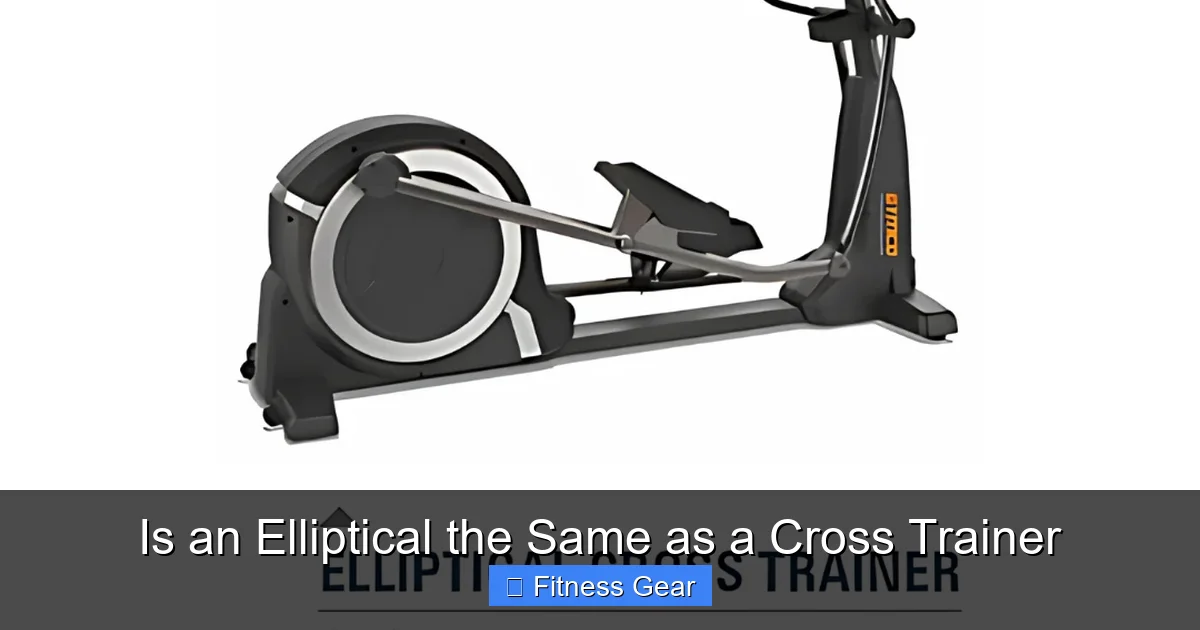
The core difference between these machines lies in the kinematics—the science of movement. It’s not just about whether your arms move; it’s about the quality and coordination of that movement.
Visual guide about Is an Elliptical the Same as a Cross Trainer
Image source: gymco.org
The Elliptical’s Fixed, Fluid Path
A standard elliptical is engineered around a perfectly smooth, pre-defined elliptical path. Your feet ride on pedals attached to a crank arm and rail system (or a flywheel with a linkage system) that dictates exactly how they move. There is no choice in the stride; it’s a consistent, gliding motion that mimics running or walking without the jarring impact. The handles, if they move at all, simply follow the path of the pedals for stability. This creates a singular, rhythmic, lower-body-centric movement pattern. It’s exceptionally smooth and predictable, which is why it’s a favorite for rehabilitation, steady-state cardio, and for individuals who want a simple, mindless workout while watching TV.
The Cross Trainer’s Dynamic, Coordinated Climb
A cross trainer introduces a second, independent plane of motion. The handlebars are connected to the same drive system as the pedals but through a different linkage. When you push the right handle forward, the left pedal rises, and vice versa. This creates a reciprocal, climbing motion—think of the action of using an elliptical with your arms while simultaneously doing a high-knee march or stair climb with your legs. The path isn’t just elliptical; it’s a complex, multi-joint, cross-patterned movement. You must actively coordinate your arms and legs, which engages your core muscles transversely (like a natural corset) to stabilize your torso against the opposing forces. This motion is less predictable and requires more neuromuscular engagement. It feels more like a functional, athletic movement pattern, similar to cross-country skiing or a bear crawl, but in a standing, low-impact format.
Muscle Engagement: Which Muscles Do They Target?
This mechanical difference translates directly into which muscles fire, when, and how intensely. It’s the primary factor in determining which machine aligns with your strength and conditioning goals.
Visual guide about Is an Elliptical the Same as a Cross Trainer
Image source: outdoor-gym.com
Lower Body Focus: The Elliptical’s Domain
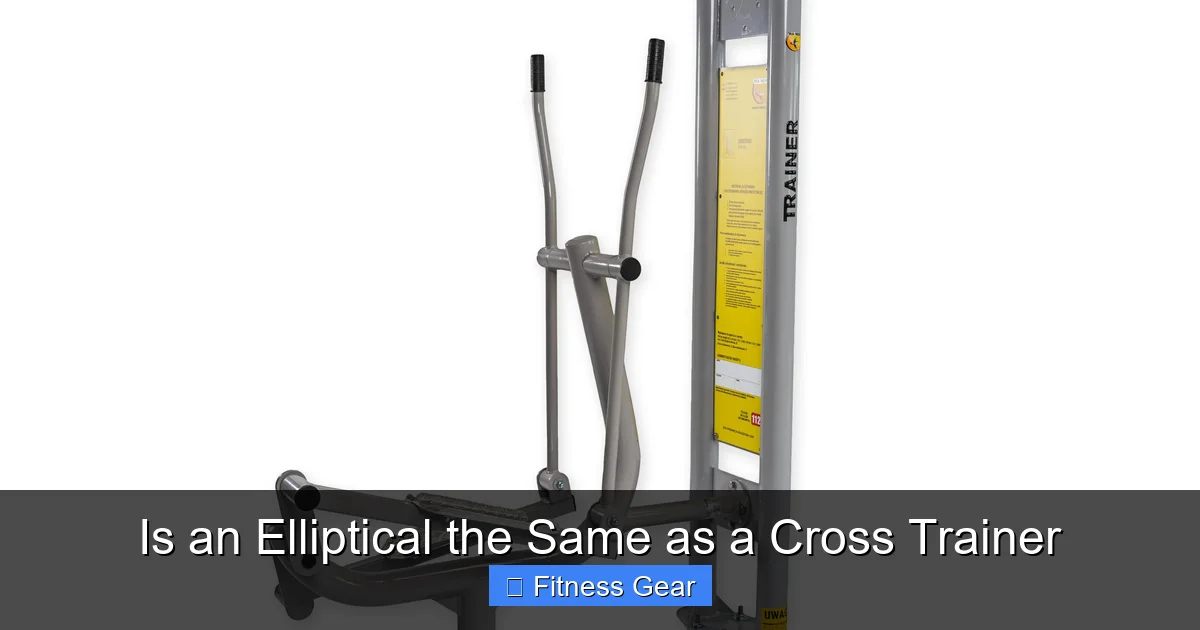
On a standard elliptical, the workload is concentrated squarely on the lower body. The gluteus maximus (your primary butt muscle) and the quadriceps (front of the thigh) are the primary drivers, especially when you increase resistance or incline (if your machine has an adjustable ramp). The hamstrings (back of the thigh) and calves act as synergists, helping to control the motion. Because the arms are static, there is minimal recruitment in the chest, back, or shoulders. You can *lean* on the handles to involve your upper body slightly, but this is inefficient and can compromise posture. The core works isometrically to maintain an upright position, but it’s not a primary mover. The result is a fantastic, high-repetition leg workout that builds muscular endurance and burns calories, but it doesn’t significantly build upper body strength.
Full-Body Activation: The Cross Trainer’s Advantage
The cross trainer fundamentally changes the equation. The pushing motion of the handles engages the pectoral muscles (chest) and the anterior deltoids (front shoulders). The pulling motion recruits the latissimus dorsi (back), posterior deltoids (rear shoulders), and biceps. Every single push and pull requires your core—rectus abdominis, obliques, erector spinae—to brace and rotate slightly to transfer force efficiently between your upper and lower body. This creates a true, integrated full-body cardiovascular and muscular endurance workout. You’re not just moving your legs; you’re performing a coordinated, total-body press and pull pattern. This full engagement means you’re taxing more muscle mass per minute, which is a key driver for higher metabolic demand and calorie expenditure. It also builds functional, real-world strength that translates to better performance in sports and daily activities involving pushing, pulling, and coordinated limb movement.
Practical Example: The “Arm Burn” Test
Here’s a simple test you can do on any machine. Set the resistance to a moderate, challenging level (a 5 or 6 on a scale of 1-10). On an elliptical, after 2-3 minutes of steady pacing, place your hands lightly on the moving handles. You’ll feel them move, but your arms will not be fatigued. Now, actively push and pull with your arms as if you’re trying to make the handles move faster. You’ll quickly find there’s no meaningful resistance for your upper body to work against; the motion is driven entirely by your legs. On a cross trainer, perform the same test. Actively push and pull for just 60 seconds. Your chest, back, and arms will feel a distinct burn and fatigue. That’s the difference between a passive motion and an active, resistive one.
Machine Design and Features: What to Look For
If you’re shopping for a machine, knowing what physical features to examine will help you instantly identify its category and quality.
Visual guide about Is an Elliptical the Same as a Cross Trainer
Image source: kidsoutdoorfitness.com
Frame Construction and Stability
Cross trainers, due to the added force from the upper body pushing and pulling, require a more robust frame. Look for a heavier, wider base and thicker steel construction. A wobbly cross trainer is not only unsafe but will also waste energy as the frame flexes. Standard ellipticals can be slightly lighter since the forces are concentrated lower, but stability is still paramount for safety and a smooth ride. Always check the user weight capacity and read reviews mentioning frame sturdiness.
The Drive System and Arm Linkage
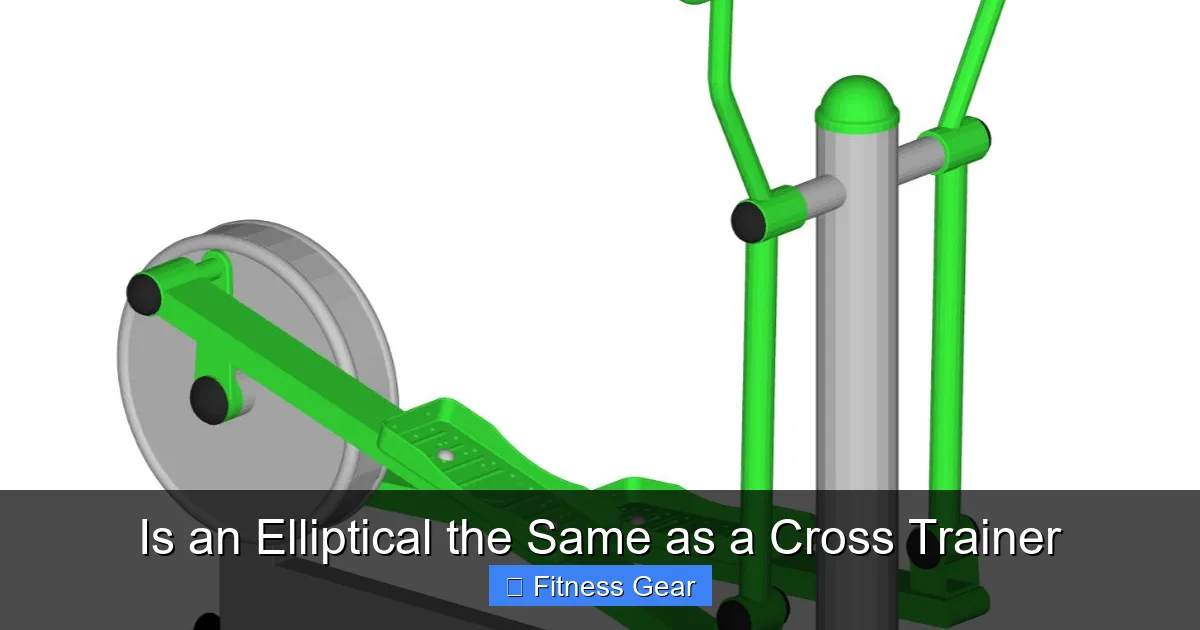
This is the heart of the distinction. On a cross trainer, you should see a clear mechanical linkage connecting the handlebars to the crank/pedal system. Often, there will be a central gear or chain system where the arm and leg linkages intersect. The handlebars should move through a substantial, resistive range of motion—not just a few inches of wobble. On a standard elliptical, the handles, if they move, are typically attached directly to the pedal carriage and move in a very short, passive arc simply to follow the footpath. They offer no independent resistance.
Adjustability: Stride and Resistance
Both types benefit from adjustable stride length. A longer stride (20-22 inches) feels more natural for taller users and engages the hamstrings and glutes more deeply. A shorter stride is better for shorter users or those focusing on a quick, high-cadence step. Resistance is key for intensity. Magnetic resistance is quieter and smoother than older fan-based systems. For cross trainers, ensure the resistance feels evenly distributed between the arm and leg motions; a poorly designed machine might make the arm workout feel weak compared to the legs.
Console and Programs
Don’t get dazzled by screens. Focus on the workout programs. Look for “interval,” “hill,” and “heart rate controlled” programs on both. Cross trainers will often have specific “total body” or “arm/leg focus” programs that vary the resistance on the arms and legs independently or in opposition, creating an even more dynamic workout. Heart rate grips or a wireless chest strap compatibility is essential for training in specific zones.
Health Benefits and Limitations: What Each Excels At
Both machines are champions of low-impact cardio, but their specific benefits branch out from there.
The Elliptical: The Rehabilitative and Endurance Powerhouse
The elliptical’s greatest strength is its pure, predictable, zero-impact motion. For individuals recovering from knee, hip, or ankle injuries, or those with arthritis or chronic joint pain, the elliptical is often the gold standard. The feet never leave the pedals, eliminating the heel-strike impact of running. The fixed motion is easy to learn and allows for very precise, controlled rehabilitation exercises under a therapist’s guidance. It’s also unparalleled for building cardiovascular endurance and leg muscular endurance. You can comfortably stay on it for 45-60 minutes at a steady, moderate pace, efficiently burning fat and improving stamina without the systemic fatigue of a high-impact workout. Its limitation is the lack of upper body development; it’s a one-trick pony for the upper body.
The Cross Trainer: The Metabolic and Functional Conditioning Champion
The cross trainer takes the low-impact foundation and supercharges it with full-body engagement. By recruiting the large muscle groups of the back, chest, and arms, it dramatically increases oxygen consumption and caloric burn. Studies often show cross trainers can burn 20-30% more calories than standard ellipticals at the same perceived effort level. This makes it a titan for weight loss and metabolic conditioning. Furthermore, the coordinated, cross-patterned movement improves neuromuscular coordination, proprioception (body awareness), and functional strength. It trains your body to work as a single unit, which is crucial for athletic performance and preventing everyday injuries. Its primary limitation is the slightly steeper learning curve and the potential for upper body fatigue to limit lower body duration for untrained individuals.
Joint Health: A Nuanced Comparison
While both are low-impact, the cross trainer’s dynamic arm movement introduces a slight rotational component through the torso and shoulders. For someone with severe rotator cuff issues, acute shoulder inflammation, or significant upper back problems, this motion could be provocative. The pure sagittal-plane (forward-and-back) motion of a standard elliptical is often more comfortable for pure lower-body joint issues. Conversely, for someone with mild lower back pain, the cross trainer’s requirement for core bracing can be therapeutic, strengthening the stabilizing muscles. The key is listening to your body. If a machine causes pain (not to be confused with muscle fatigue), stop and choose the alternative.
How to Choose: Matching the Machine to Your Goals
Now that the differences are clear, let’s match the machine to the person. Ask yourself these questions.
I want to lose weight and burn maximum calories.
Your winner is the cross trainer. The full-body engagement means you’re working more muscle mass, which spikes your heart rate and metabolism. You can achieve a higher intensity in a shorter time. Look for a cross trainer with smooth, responsive arm motion and plenty of resistance levels to keep challenging you as you get fitter.
I have knee/hip pain or am in physical therapy.
Your winner is a standard elliptical. Its purely guided, lower-body motion is the most controlled and predictable. You can isolate the lower body without any compensatory movements from the upper body. Ensure the stride is comfortable and the motion is silky smooth. A cross trainer might be introduced later for overall conditioning once the joint is pain-free.
I want a simple, mindless cardio session while I watch a show.
Both can work, but the standard elliptical has a slight edge. The motion is so automatic you can truly zone out. On a cross trainer, the coordination of arms and legs requires a bit more mental presence, especially if you’re trying to push and pull with vigor. You might find yourself less engaged with the TV.
I want to build some muscle and improve my physique, not just cardio.
Your winner is the cross trainer. It provides a significant resistance workout for the upper body, helping to build muscular endurance and tone the chest, back, and arms. It bridges the gap between pure cardio and strength training. For pure muscle hypertrophy (growth), you’ll still need weights, but the cross trainer is an excellent complementary tool.
I’m tall/short and need a comfortable fit.
Both can work, but you must prioritize adjustable stride length. Taller users (over 6’0”) should look for a stride of 20-22 inches to avoid a choppy, unnatural gait. Shorter users (under 5’5”) may prefer a 16-18 inch stride for a more compact motion. Test the machine if possible. The cross trainer’s arm reach should also be adjustable or appropriately sized for your torso.
I’m on a tight budget.
Standard ellipticals are generally more affordable at the entry and mid-level. You can find a solid, durable basic elliptical for less than a similarly robust cross trainer. If your budget is limited but you want the full-body benefit, scour the market for sales on older models of reputable cross trainer brands, or consider a high-quality used unit.
Conclusion: It’s All About Your “Why”
So, is an elliptical the same as a cross trainer? The technical answer is no. The practical answer is: it depends on who you ask and what they’re selling. For the informed fitness enthusiast, the distinction is powerful. A standard elliptical is a superb, focused tool for lower-body cardiovascular health, endurance, and joint-friendly movement. A cross trainer is a dynamic, high-output machine that delivers a comprehensive full-body workout, maximizing calorie burn and functional strength. There is no objective “better” machine—only the machine that is better for you. Your choice should be a direct reflection of your primary fitness objective, your physical condition, and how you prefer to move. Before you buy or hop on, take 30 seconds to observe the motion. Are the arms moving independently with purpose? It’s a cross trainer. Are they just along for the ride? It’s an elliptical. That simple observation is the key to unlocking the right workout for your body.
Frequently Asked Questions
Can I use a cross trainer as a substitute for an elliptical?
Yes, absolutely. A cross trainer can perform all the functions of a standard elliptical. You can simply hold the stationary handles (if available) or use a light grip on the moving ones to focus purely on the lower body. This makes the cross trainer a more versatile, all-in-one machine.
Which machine is better for bad knees?
A standard elliptical is often the preferred recommendation for severe knee issues. Its completely guided, non-rotational footpath is the most predictable and controlled motion available, minimizing any shear or rotational stress on the knee joint. A cross trainer’s motion is still low-impact but involves a more complex, slightly rotational movement that some may find aggravating.
Do cross trainers really burn more calories?
Yes, in most comparative studies and real-world use, cross trainers burn significantly more calories per minute. This is due to the engagement of large upper body muscle groups (back, chest) which increases overall oxygen consumption and energy expenditure. However, the actual number depends entirely on the user’s effort level on either machine.
Why are cross trainers usually more expensive?
Cross trainers have more complex mechanical linkages to connect the arm and leg movements smoothly and resistively. They require a heavier-duty frame to withstand the multidirectional forces from both pushing and pulling. This increased engineering, material, and manufacturing complexity drives the price up compared to a simpler, lower-body-only elliptical.
Are the moving arms on some ellipticals just for balance?
Often, yes. Many machines marketed as “ellipticals” have handles that are simply attached to the pedal carriage and move in a short, passive arc solely for balance and a slight upper body engagement. They do not provide meaningful, independent resistance for a true upper body workout. True cross trainer arms have a long, resistive range of motion powered by the machine’s drive system.
Which machine is better for building muscle?
Neither is a replacement for weight training, but the cross trainer is superior for building muscular endurance and toning the upper body. The resistive pushing and pulling against the handles provides a strength endurance stimulus for the chest, back, and arms that a standard elliptical cannot match. For significant muscle growth (hypertrophy), dedicated strength training is required.