Is a Spin Bike Better Than an Exercise Bike
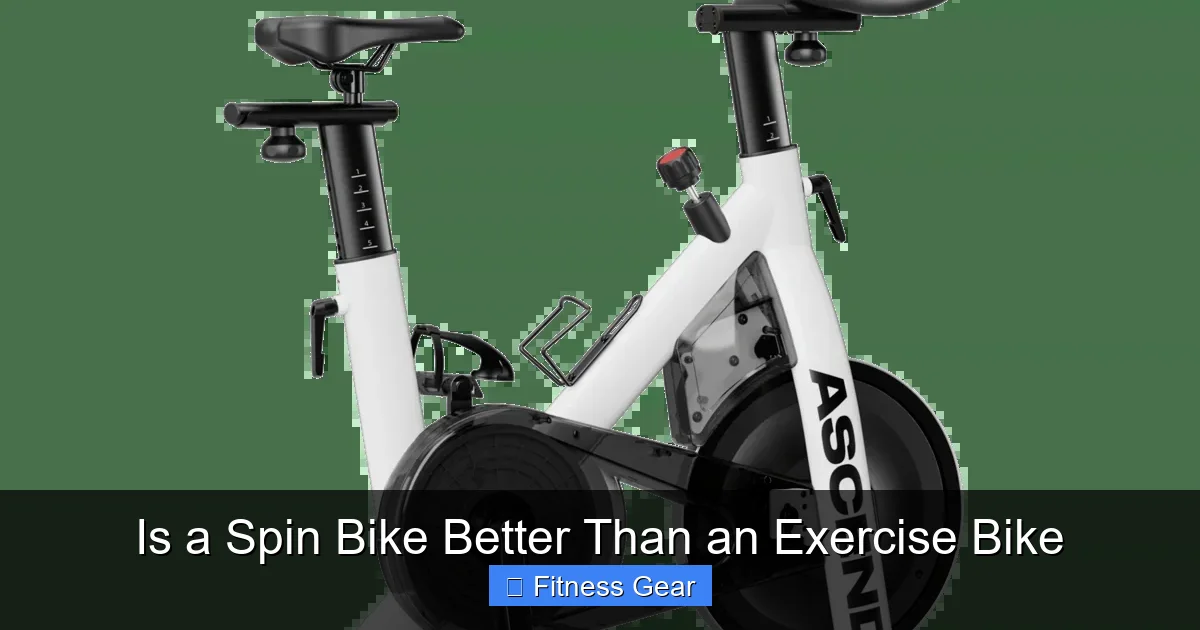
No, a spin bike is not universally “better” than an exercise bike—they are fundamentally different tools designed for distinct purposes. Spin bikes mimic the aggressive, road-cycling position for high-intensity, calorie-torching workouts, while upright/recumbent exercise bikes prioritize comfort, joint-friendly motion, and general cardio for a wider audience. The “better” choice depends entirely on your fitness goals, physical condition, and preferred workout style.
You’re standing in the fitness equipment aisle, or scrolling online, and you see two machines that look… similar? A “spin bike” and an “exercise bike.” They both have pedals, a seat, and a handlebar. You want to get fit, burn calories, and maybe even get a decent leg workout. So, which one do you choose? Is a spin bike simply a fancy, more expensive exercise bike? The short answer is a firm no. They are engineered for very different experiences, outcomes, and types of bodies. The confusion is understandable, but once you understand the core design philosophies, the choice becomes remarkably clear. This isn’t about which is “better” in an absolute sense; it’s about which is better for you.
Think of it this way: a spin bike is a specialized race car built for the track—aggressive, demanding, and built for performance. An upright exercise bike is a reliable daily driver—comfortable, easy to handle, and gets you where you need to go without the fuss. A recumbent exercise bike is like a plush, supportive sedan—the ultimate in comfort and accessibility for long, gentle cruises. Your fitness destination determines your vehicle. Let’s pop the hood and see what truly makes these machines tick, so you can make an investment that you’ll actually use and enjoy for years to come.
Key Takeaways
- Understanding Is A Spin Bike Better Than An Exercise Bike: Provides essential knowledge
📑 Table of Contents
The Fundamental Divide: Philosophy and Design
Before we talk about workouts and calories, we must talk about physics and ergonomics. The difference starts at the very foundation of the machine.
The “Fixed Gear” and Flywheel of a Spin Bike
The defining characteristic of a true spin bike is its heavy flywheel (often 40+ pounds) and its direct drive, fixed-gear system. This means the pedals are directly connected to the flywheel. When the flywheel is spinning, your pedals are spinning. There is no “coasting” or freewheeling. If you stop pedaling, the bike stops. This design has profound implications. First, it creates momentum. That heavy flywheel wants to keep spinning, so to start or stop, you must engage your core, glutes, and hamstrings powerfully. It feels more like riding a real bicycle, where momentum carries you. Second, it forces continuous engagement. You can’t just cruise; your legs are always under tension. This is the source of the notorious “spin bike burn.”
The resistance on a spin bike is typically applied via a friction pad (leather or felt) that presses against the flywheel, or increasingly, via magnetic resistance. The friction pad system is iconic—you turn a knob to tighten the pad, creating that gritty, tactile feeling and sound. It’s direct and powerful but requires maintenance (pad replacement). Magnetic resistance is smoother, quieter, and maintenance-free, but can feel less “connected” to some purists.
The “Peddle-Assist” and Light Flywheel of an Exercise Bike
Standard upright and recumbent exercise bikes operate on a completely different principle. They use a much lighter flywheel (often under 20 pounds) and a belt or chain drive system with a freewheel. This means you can pedal to start the wheel, but then you can stop pedaling and the wheel will keep spinning on its own—you can “coast.” The resistance is almost always applied via an electromagnetic or magnetic system controlled by a console. You select a level (1-20, etc.), and magnets engage the flywheel. This provides an incredibly smooth, consistent, and often quiet ride with no physical wear and tear on a friction pad.
The key here is accessibility. The lighter flywheel and freewheel system mean there’s far less momentum to overcome. Starting, stopping, and changing pace is effortless. There’s no forced, continuous muscle engagement. You can pedal lightly while reading a book or watching a show. The motion is designed to be low-impact and joint-friendly, minimizing the risk of strain.
Workout Style & Intensity: HIIT vs. Steady-State
This design divergence leads directly to two very different workout cultures and physiological demands.
The Spin Bike: Born for High-Intensity Interval Training (HIIT)
The spin bike’s DNA is interval training. Classes like Spinning (the official trademarked program) or other indoor cycling formats are built around peaks and valleys. You’ll sprint in a standing position (which engages your core and upper body for stabilization), climb heavy resistance in a seated grind, and recover at a light pace. The fixed gear and heavy flywheel make these transitions physically demanding. You must keep pace with the instructor’s calls to stand, sit, sprint, or climb. The result is a metabolic furnace. A 45-minute spin class can torch 400-700+ calories, not just during the workout but for hours after due to the significant EPOC (Excess Post-exercise Oxygen Consumption) effect. It’s a full-body cardiovascular and muscular endurance challenge.
Practical Example: A classic spin interval: “We’re climbing for 2 minutes! Add two turns of resistance, stay seated, and maintain your cadence (RPM).” You’re fighting a heavy gear, legs burning, core braced. This is the essence of spin.
The Exercise Bike: The Champion of Steady-State Cardio
Upright and recumbent exercise bikes are the undisputed kings and queens of steady-state cardiovascular exercise. You set a comfortable resistance level and a target RPM, and you maintain it for 20, 30, or 60 minutes. The motion is rhythmic, repetitive, and low-impact. It’s perfect for building aerobic base, improving heart health, and burning fat at a moderate, sustainable rate. Because it’s so joint-friendly, it’s the go-to for active recovery days, physical therapy, and beginners who need to build consistency without the intimidation factor. You control the entire pace and intensity without the “must-follow” pressure of a group class.
Practical Example: Your goal is 30 minutes of moderate cardio. You hop on your upright bike, set resistance to level 8, aim for 70 RPM, and read a chapter of a book. Your heart rate is elevated, you’re sweating, but your knees and back feel fine. This is sustainable, daily exercise.
Health Benefits & Physical Impact: A Tale of Two Impacts
Both machines improve cardiovascular health and strengthen the quadriceps, hamstrings, and glutes. The differences lie in the secondary effects and risks.
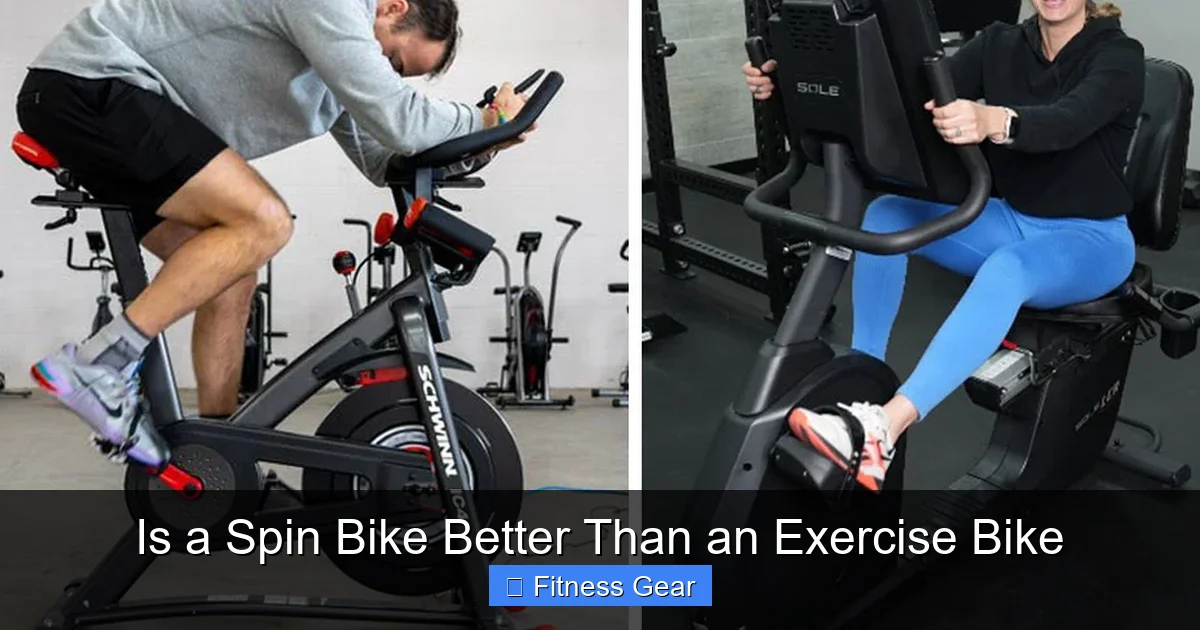
Visual guide about Is a Spin Bike Better Than an Exercise Bike
Image source: garagegymreviews.com
Spin Bike: High Reward, Higher Demand
The aggressive riding position—hips flexed, back angled forward, weight on hands—engages your core (abs and lower back) and upper body (shoulders, arms, chest) isometrically to stabilize. You’re not just pedaling; you’re holding a plank-like position while dynamically moving your legs. This builds functional strength and muscular endurance. However, this position places significant compressive force on the knees, hips, and lower back. If you have pre-existing joint issues, poor core strength, or improper bike setup (seat too low/high, handlebars too far), you risk injury. The high intensity also means a greater release of endorphins and a potent stress-relief effect for those who can handle it.
Exercise Bike: Low-Impact, Accessible, and Joint-Safe
The upright position is more neutral, with weight distributed over the saddle and back support. The recumbent position is even more supportive, with a large, reclined seat that takes all weight off the wrists and lower back. The motion is a pure, smooth circle that is exceptionally gentle on the knees, ankles, and hips. This makes exercise bikes the gold standard for rehabilitation from injury, managing arthritis, senior fitness, and post-surgery recovery. The primary muscular focus remains the lower body, with minimal core or upper body activation. The cardiovascular benefit is still excellent, just achieved through a different, more sustainable physiological pathway.
The Buyer’s Guide: What to Actually Look For
Now that you know the “why,” let’s talk about the “what” when shopping. Your decision should be guided by your personal checklist.

Visual guide about Is a Spin Bike Better Than an Exercise Bike
Image source: biketips.com
If Your Heart Leans Toward a Spin Bike…
- Heavy Flywheel (40+ lbs): Non-negotiable for the authentic feel and momentum. Lighter flywheels defeat the purpose.
- Adjustable Seat & Handlebars (4-way): Must be able to move fore/aft and up/down for a perfect, injury-preventing fit.
- Durable Construction: Look for a sturdy steel frame. It will be heavy (100+ lbs is common). This is a permanent fixture.
- Resistance Type: Friction pad (authentic feel, maintenance) vs. Magnetic (smooth, quiet, premium).
- No Built-In Programs Needed: The magic is in your own effort and potentially a tablet for virtual classes (Peloton, iFit, etc.). The bike itself is a dumb machine.
If Your Heart Leans Toward an Exercise Bike…
- Seat Comfort & Adjustability: This is priority #1. A wide, padded seat on a recumbent is a must for longer rides. Ensure easy height and position adjustment.
- Step-Through Design: Especially important for recumbent bikes and older users. You should be able to walk through the frame to sit down without lifting your leg high.
- Quiet Magnetic Resistance: Ensure the resistance levels are smooth and the machine is quiet enough for your home environment (TV, calls, etc.).
- Console & Feedback: Do you want basic metrics (time, speed, distance, calories) or advanced features like heart rate monitoring, pre-set programs, and app connectivity?
- Weight Capacity & Stability: Check the user weight limit. A wider base and heavier build increase stability, which is crucial for vigorous upright pedaling.
The Price Spectrum: From Budget to Boutique
You can spend $200 or $2,500 on either category. The price drivers are different.
Budget Spin Bikes ($200-$600): Often have lighter flywheels (30-35 lbs), less robust construction, and friction resistance that can feel gritty or inconsistent. They get the basic job done but lack the smooth, heavy feel. Great for a first-time user testing the waters.
Mid-Range Spin Bikes ($600-$1,500): The sweet spot for home use. Heavy flywheels (40-50 lbs), solid steel frames, reliable friction or entry-level magnetic resistance, and excellent adjustability. Brands like Sunny Health & Fitness, Echelon, and Schwinn dominate here.
High-End / Connected Spin Bikes ($1,500+): This is where the Peloton, NordicTrack, and SoulCycle at-home bikes live. You’re paying for a premium, near-silent magnetic resistance system, exceptional build quality, a top-tier integrated touchscreen with live/on-demand classes, and the entire ecosystem. The bike hardware is superb, but the monthly subscription fee is a major cost factor.
Budget Exercise Bikes ($150-$400): Basic upright or recumbent models. Often have smaller seats, basic magnetic resistance, and simpler consoles. Perfect for light, occasional use.
Mid-Range Exercise Bikes ($400-$1,000): Offer better comfort (larger seats, more back support on recumbents), smoother resistance, more programs, and higher weight capacities. Brands like Exerpeutic, Marcy, and Schwinn excel here.
High-End Exercise Bikes ($1,000+): Commercial-grade durability, advanced ergonomic design (like adjustable fore/aft seats on recumbents), advanced entertainment systems, and whisper-quiet operation. Often found in hotels and gyms.
Conclusion: There is No “Best,” Only “Best For You”
So, is a spin bike better than an exercise bike? It’s the wrong question. The right question is: What are you trying to achieve, and what can your body tolerate?
If you are an athlete, a former cyclist, or someone who thrives on high energy, competitive motivation, and maximum calorie burn in a short time—and you have healthy knees and a strong core—a spin bike is your powerhouse. It will challenge you in ways a standard exercise bike simply cannot. You will sweat, grunt, and feel accomplished in a way that mimics the intensity of a real sport.
If you are new to fitness, recovering from an injury, managing chronic pain, have mobility limitations, or simply prefer a peaceful, consistent, and joint-friendly way to get your cardio in—an exercise bike (especially recumbent) is your perfect partner. It’s the machine you can use every single day without dread or pain. It’s the sustainable habit-builder.
Visit a store if you can. Sit on both. Try a simulated class on a spin bike and a relaxed pedal on an exercise bike. Feel the difference in your hips, your back, your hands. Your body will tell you which one speaks its language. Invest in the machine that aligns with your lifestyle, not the one that looks the most intimidating. The best fitness equipment is the equipment you will actually use, consistently, for years. Choose accordingly.
Frequently Asked Questions
Can I use a spin bike if I have bad knees?
Generally, no. The aggressive riding position and high-intensity nature of spin biking place significant stress on the knee joint, especially if your form or bike setup is off. A recumbent exercise bike, with its supported, low-impact motion, is a far safer and recommended choice for those with knee issues.
Do I need special shoes for a spin bike?
Yes, you need compatible cycling shoes that clip into the pedals (usually SPD or Look Delta cleats). This is for safety and efficiency—your foot becomes one with the pedal, allowing you to pull up as well as push down. Some spin bikes have hybrid pedals with a toe cage on one side and a clip-in on the other, but proper cycling shoes are highly recommended for the full experience and to prevent foot slippage during intense sprints.
Is a magnetic resistance bike always better than a friction pad spin bike?
“Better” depends on your priority. Magnetic resistance is quieter, smoother, and maintenance-free. Friction pads provide a more direct, gritty, “road-like” feel and are often found on more affordable spin bikes. If noise and low maintenance are critical, choose magnetic. If you want the classic, raw spin class feel and don’t mind occasional pad adjustments, friction is fine.
Can I lose weight on an upright exercise bike?
Absolutely. Weight loss is primarily about creating a calorie deficit. While a spin bike may burn more calories *per minute* due to its high intensity, you can absolutely lose weight on an upright bike by sustaining longer sessions (45-60 minutes) at a moderate, consistent pace. Consistency is key, and an upright bike is often more sustainable for daily use.
Which bike is better for seniors?
A recumbent exercise bike is unequivocally the best choice for most seniors. Its step-through frame, large supportive seat, and reclined position minimize strain on the hips, back, and shoulders while providing a safe, stable, and effective cardio workout. The low-impact nature is crucial for maintaining joint health.
Do I need a screen/tablet mount on my bike?
It’s not necessary, but it’s a huge quality-of-life upgrade. A screen allows you to stream guided classes (from apps like Peloton, Apple Fitness+, iFit, or free YouTube channels), watch shows, or read books. This combats boredom, which is the #1 reason people stop using home equipment. For a spin bike, a screen is almost essential to mimic the class experience. For an exercise bike, it’s a fantastic motivator for longer steady-state rides.