Is a Rowing Machine Good for Your Back
A rowing machine can be excellent for your back when used with proper form. It strengthens your core, improves posture, and supports spinal health. However, incorrect technique may cause or worsen back pain. This guide covers everything you need to know about using a rower safely and effectively for back health.
Have you been wondering whether is a rowing machine good for your back? You are not alone. Many people turn to rowing machines hoping to build a stronger back without the joint stress of heavy lifting. The answer is yes, but with an important caveat: your form matters enormously.
Rowing machines offer a unique combination of cardiovascular exercise and strength training. They target multiple muscle groups simultaneously, making them one of the most efficient tools for a full-body workout. But when it comes to your back specifically, the benefits and risks depend heavily on how you use the machine.
In this article, we will explore exactly how a rowing machine affects your back. You will learn about the muscles it targets, the common mistakes that cause pain, and the best practices for rowing safely. Whether you have a healthy back or are dealing with existing discomfort, this guide will help you get the most out of your rowing machine workout without putting your spine at risk.
Key Takeaways
- Strengthens Back Muscles: Rowing engages your entire back, including the lats, rhomboids, and erector spinae.
- Improves Posture: Regular rowing helps correct poor posture by strengthening the muscles that support your spine.
- Proper Form Is Critical: Using the wrong technique can lead to lower back strain or injury.
- Low Impact Alternative: Rowing is gentle on your joints compared to high-impact exercises like running.
- Good for Existing Back Issues: Many people with mild back pain find rowing helpful when done correctly.
- Start Slow: Beginners should focus on technique before increasing intensity or duration.
📑 Table of Contents
How a Rowing Machine Works Your Back
Understanding which muscles a rowing machine engages helps you appreciate why it can be so beneficial for your back. The rowing motion is a compound movement that pulls multiple muscle groups into action at once.
The Muscles Involved in Rowing
When you pull the handle toward your chest, several back muscles fire up. Your latissimus dorsi (the wide muscles across your mid-back) do the heavy lifting. Your rhomboids between your shoulder blades contract to pull your shoulders back. Your erector spinae muscles along your spine work to keep your torso stable and upright.
But rowing does not stop at your back. Your core muscles, including your abdominals and obliques, act as stabilizers throughout every stroke. Your legs drive the initial push, and your arms complete the pull. This is why many people ask is a rowing machine a good full body workout and the answer is a resounding yes.
Why This Matters for Back Health
Strengthening the muscles around your spine is one of the best ways to protect your back. Strong back muscles support your vertebrae and reduce the load on your spinal discs. Over time, this can help prevent chronic back pain and improve your overall spinal alignment.
Unlike exercises that isolate single muscles, rowing builds balanced strength across your entire posterior chain. This balanced development helps prevent the muscle imbalances that often lead to back problems.
Benefits of Rowing for Your Back
The benefits of using a rowing machine for back health go beyond simple muscle strengthening. Let us look at the specific advantages you can expect.
1. Builds a Stronger Core
Your core is the foundation of every rowing stroke. Without a strong core, your back has to do all the work, which leads to strain. Rowing naturally builds deep core stability, which in turn protects your lower back during everyday movements.
2. Improves Posture Over Time
Many people sit for hours each day, which weakens the back muscles and tightens the chest. Rowing reverses this pattern by strengthening the muscles that pull your shoulders back and keep your chest open. Over weeks of consistent use, you will likely notice your standing posture improving significantly.
3. Increases Blood Flow to Back Muscles
Rowing gets your heart pumping, which increases blood circulation throughout your body. Better blood flow means more oxygen and nutrients reach your back muscles. This can speed up recovery and reduce stiffness, especially if you deal with chronic tightness in your upper or lower back.
4. Supports Weight Management
Carrying extra weight puts additional stress on your spine and back muscles. Rowing burns a significant number of calories, which can help you maintain a healthy weight. If you are also looking to shed some pounds, you might want to check out is a rowing machine good exercise for weight loss for more insights.
5. Low Impact on Joints
Running and jumping place heavy impact forces on your spine and joints. Rowing, on the other hand, is a smooth gliding motion that is easy on your body. This makes it an excellent option for people who want to strengthen their back without the jarring impact of other cardio exercises.
Common Mistakes That Cause Back Pain
Here is the flip side of the coin. A rowing machine can hurt your back if you use poor technique. Understanding these common mistakes is just as important as knowing the benefits.
1. Rounding Your Lower Back
The most common mistake is rounding your lower back during the rowing stroke. This puts excessive pressure on your spinal discs and can lead to pain or injury over time. Your back should remain in a neutral, slightly arched position throughout the entire movement.
2. Pulling Too Hard with Your Arms
Many beginners think rowing is an arm exercise. It is not. Your arms should act as connectors, not the primary power source. If you yank the handle with your arms, your back muscles compensate in unhealthy ways. The power should come from your legs and core, with your arms finishing the motion gently.
3. Slouching at the Finish
At the end of each stroke, some people lean back too far and slump their shoulders. This rounds the upper back and places stress on the thoracic spine. Instead, keep your chest lifted and pull your shoulder blades together gently.
4. Using Too Much Resistance Too Soon
Starting with a high resistance setting before your back muscles are ready is a recipe for strain. Begin with a comfortable resistance level and focus on mastering the stroke pattern. You can always increase the rowing machine resistance as your strength improves.
5. Ignoring Warm-Up and Cool-Down
Jumping straight into intense rowing without warming up your back muscles is risky. Spend five to ten minutes doing light rows and gentle stretching before your main session. Cooling down afterward helps your back muscles recover and prevents stiffness.
Proper Rowing Form for Back Safety
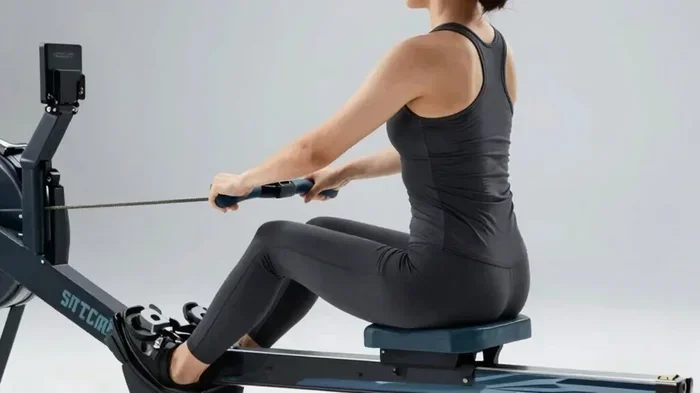
Getting your form right is the single most important thing you can do for your back. Here is a step-by-step breakdown of the correct rowing technique.
The Catch Position
Start with your knees bent and your shins vertical. Lean forward slightly from your hips, keeping your back straight. Your arms should be extended and relaxed. This is the starting position for every stroke.
The Drive
Push with your legs first. As your legs extend, your torso should remain in the same forward-leaning position. Once your legs are nearly straight, pull the handle toward your lower chest using your back and arms. The sequence is legs, then torso, then arms.
The Recovery
Reverse the sequence to return to the starting position. Extend your arms first, then lean your torso forward from the hips, and finally bend your knees to slide back in. This controlled recovery phase is just as important as the drive for protecting your back.
If you want a deeper dive into technique, check out what is the proper form for a rowing machine for detailed guidance on mastering each phase of the stroke.
Quick Tips for Maintaining Good Form
- Keep your core engaged throughout every stroke
- Imagine a straight line from your tailbone to the top of your head
- Do not hunch your shoulders up toward your ears
- Use a mirror or video record yourself to check your form
- Start with shorter sessions and focus on quality over quantity
Who Should Be Cautious About Rowing?
While rowing is generally safe and beneficial for most people, certain individuals need to take extra precautions.
People with Existing Back Conditions
If you have a diagnosed back condition such as a herniated disc, spinal stenosis, or chronic lower back pain, consult your doctor before starting a rowing routine. For some people, rowing can actually help manage back pain, but it depends on the specific condition and your individual circumstances.
Many people with mild to moderate back issues find that rowing strengthens the muscles that support their spine. However, the wrong technique or too much intensity can make things worse. Start conservatively and listen to your body.
Seniors and Older Adults
Rowing can be a fantastic exercise for older adults because it builds strength and improves cardiovascular health without heavy impact. If you are a senior considering rowing, you may want to read more about is a rowing machine a good workout for seniors to understand the specific benefits and precautions for your age group.
Beginners
If you are new to rowing, resist the urge to go hard from day one. Your back muscles, core, and joints need time to adapt to the new movement pattern. Start with 10 to 15 minute sessions at a comfortable pace and gradually increase duration and intensity over several weeks.
Rowing Machine vs Other Back Exercises
How does rowing stack up against other popular back exercises? Let us compare a few options.
| Exercise | Back Muscle Engagement | Impact on Spine | Ease of Learning | Cardio Benefit |
|---|---|---|---|---|
| Rowing Machine | High (full back) | Low | Moderate | High |
| Deadlift | Very High | Moderate to High | Difficult | Low |
| Lat Pulldown | Moderate (upper back) | Low | Easy | Low |
| Swimming | High (full back) | Very Low | Easy | High |
| Treadmill Running | Low (back stabilizers only) | High | Very Easy | High |
As you can see, rowing offers a unique combination of high back muscle engagement and low spinal impact. It is one of the few exercises that delivers both strength and cardiovascular benefits simultaneously.
How to Get Started Safely
Ready to start rowing for a healthier back? Here is a simple plan to ease into it.
- Week 1-2: Row for 10 to 15 minutes, 3 times per week. Focus entirely on learning the correct stroke sequence.
- Week 3-4: Increase to 20 minutes per session. Pay attention to how your back feels after each workout.
- Week 5+: Gradually increase duration to 30 minutes and add light resistance. Start incorporating interval training if your back feels comfortable.
Consistency is more important than intensity. A moderate rowing routine performed regularly will do far more for your back than occasional intense sessions that leave you sore and stiff.
Remember that rowing is just one piece of the puzzle. Pairing your rowing routine with regular stretching, good nutrition, and adequate rest will maximize the benefits for your back. If you want to explore other ways to support your back health, you might find is a rowing machine good for lower back pain helpful for understanding how rowing specifically addresses lower back concerns.
Ultimately, a rowing machine can be one of the best investments you make for your back health. The key is to approach it with patience, prioritize proper form, and build your routine gradually. Your back will thank you for years to come.
Frequently Asked Questions
Can rowing make my back pain worse?
Yes, if you use poor form. Rounding your lower back, pulling too hard with your arms, or slouching at the finish can all cause or worsen back pain. Focus on maintaining a neutral spine and using the correct stroke sequence to avoid injury.
How long should I row each session for back benefits?
For back health benefits, aim for 15 to 30 minutes per session, 3 to 5 times per week. Start with shorter sessions if you are a beginner and gradually increase the duration as your strength and endurance improve.
Is rowing better for your back than running?
For most people, yes. Rowing is a low-impact exercise that strengthens your back muscles without the jarring impact that running places on your spine. However, both exercises offer different benefits, and a balanced routine that includes both can be ideal.
What should I do if I feel back pain while rowing?
Stop immediately and assess your form. Check that your back is not rounding and that you are using your legs and core for power, not just your arms. If pain persists, rest and consult a healthcare professional before returning to rowing.
Can people with existing back injuries use a rowing machine?
It depends on the type and severity of the injury. Some people with mild back issues find rowing very helpful for strengthening supporting muscles. However, those with serious or acute back injuries should consult their doctor before starting any new exercise routine.
Does the type of rowing machine matter for back health?
Yes, to some extent. Air rowers and magnetic rowers are generally smoother and easier on the back than water rowers for beginners. Choose a machine that allows you to adjust resistance and feel comfortable with the seat and rail system.
=== CONCLUSION ===
So, is a rowing machine good for your back? The answer is a clear yes, provided you use proper technique and build your routine gradually. Rowing strengthens the muscles that support your spine, improves your posture, and offers a low-impact workout that is gentle on your joints.
The benefits extend beyond just the back muscles. Rowing engages your entire body, making it one of the most efficient exercises you can do. Whether your goal is to build a stronger back, manage your weight, or improve your overall fitness, a rowing machine can help you get there.
Start slow, focus on form, and listen to your body. With consistency and patience, you will likely notice real improvements in your back strength, posture, and overall comfort. Your spine supports everything you do, and investing in its health through rowing is one of the smartest decisions you can make for your long-term well-being.