No, a cross trainer and an elliptical are not the same, though the terms are often used interchangeably. The core difference is that a standard elliptical has a fixed, stationary upper body, while a cross trainer (or elliptical cross trainer) features moving handlebars that engage the arms and upper body in a coordinated, full-body motion. This makes cross trainers a subtype of ellipticals designed for a more comprehensive workout. Choosing between them depends on your primary goals: lower-body focus versus total-body conditioning, joint impact tolerance, and available space.
Key Takeaways
- Terminology Confusion: “Elliptical” is the broad category. “Cross trainer” specifically refers to an elliptical with moving arms, making it a full-body machine.
- Movement Pattern: Both provide a low-impact, oval-shaped foot path. Ellipticals isolate the legs; cross trainers add a simultaneous pushing/pulling arm motion that mimics running or climbing.
- Muscle Engagement: A standard elliptical primarily works the lower body (quads, hamstrings, glutes, calves). A cross trainer significantly increases upper body involvement (chest, back, shoulders, arms) and core activation.
- Caloric Burn: Due to engaging more muscle mass, cross trainers generally have a higher potential for calorie expenditure per minute compared to standard ellipticals at the same perceived effort.
- Joint Impact: Both are excellent low-impact alternatives to running. The fluid, elliptical motion reduces stress on knees, hips, and ankles compared to treadmills or hard surfaces.
- Space & Cost: Cross trainers are often larger and more expensive due to the additional arm mechanism. Standard ellipticals are typically more compact and budget-friendly.
- Your Goal Dictates Choice: For pure leg toning and rehab, a standard elliptical may suffice. For a time-efficient, full-body cardio and strength workout, a cross trainer is superior.
📑 Table of Contents
- Introduction: Unpacking the Gym Floor Vocabulary
- Defining the Machines: Anatomy and Mechanics
- The Critical Difference: Movement Pattern and Muscle Engagement
- Head-to-Head: Benefits and Ideal Use Cases
- How to Choose: Matching the Machine to Your Needs
- Common Misconceptions and Industry Jargon Debunked
- Conclusion: Finding Your Perfect Motion
Introduction: Unpacking the Gym Floor Vocabulary
Walk into any gym, scan the cardio section, and you’ll see rows of machines with oval-shaped pedals. You’ve probably heard people call them all sorts of names: “elliptical,” “cross trainer,” maybe even “EFX” (a brand name that became generic). It’s easy to assume they’re all the same thing with different labels, like “soda” versus “pop.” But in the world of fitness equipment, there’s a meaningful distinction that can significantly impact your workout results. Understanding the difference isn’t just semantics; it’s about matching the machine to your body’s needs and your fitness objectives.
So, let’s clear the air right away: all cross trainers are ellipticals, but not all ellipticals are cross trainers. Think of it like the relationship between a sedan and a car. A sedan is a specific type of car. Similarly, a cross trainer is a specific type of elliptical machine—one that incorporates moving arms for total-body exercise. This article will dive deep into the mechanics, benefits, and ideal uses for each, helping you decide which machine deserves a spot in your home or which one you should seek out at the gym. We’ll break down the engineering, the muscle science, and the practical considerations so you can make an informed, confident choice.
Defining the Machines: Anatomy and Mechanics
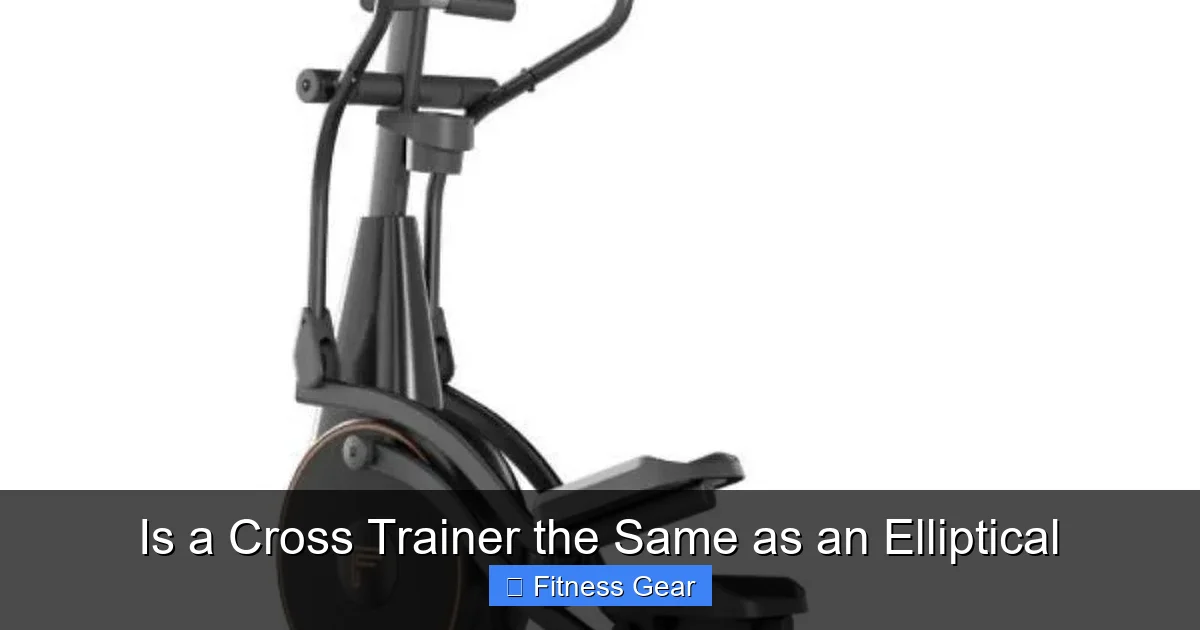
To understand the difference, we need to look under the hood, so to speak. Both machines operate on the same fundamental principle: a smooth, continuous, oval-shaped (elliptical) path for the feet that eliminates the heavy impact of a heel strike. This is achieved through a system of linkages, rails, and flywheels. The divergence happens at the upper body.
Visual guide about Is a Cross Trainer the Same as an Elliptical
Image source: 5.imimg.com
The Standard Elliptical: A Lower-Body Specialist
A standard elliptical trainer is designed with a stationary console and fixed handlebars. These handlebars are typically positioned for you to hold onto for balance and support, but they do not move independently. Your arms remain static while your legs power the entire motion. The resistance is applied to the flywheel connected to the pedal system. Your focus is entirely on driving through your heels, engaging your quadriceps on the push and your hamstrings and glutes on the pull. It’s essentially a standing, dynamic leg press or a simulated stairclimber with a gliding motion.
Practical Example: Imagine doing a wall sit while moving your legs in an oval. That’s the lower-body emphasis of a standard elliptical. It’s fantastic for isolating leg strength and endurance without requiring you to coordinate arm movements.
The Cross Trainer (Elliptical Cross Trainer): The Full-Body Integrator
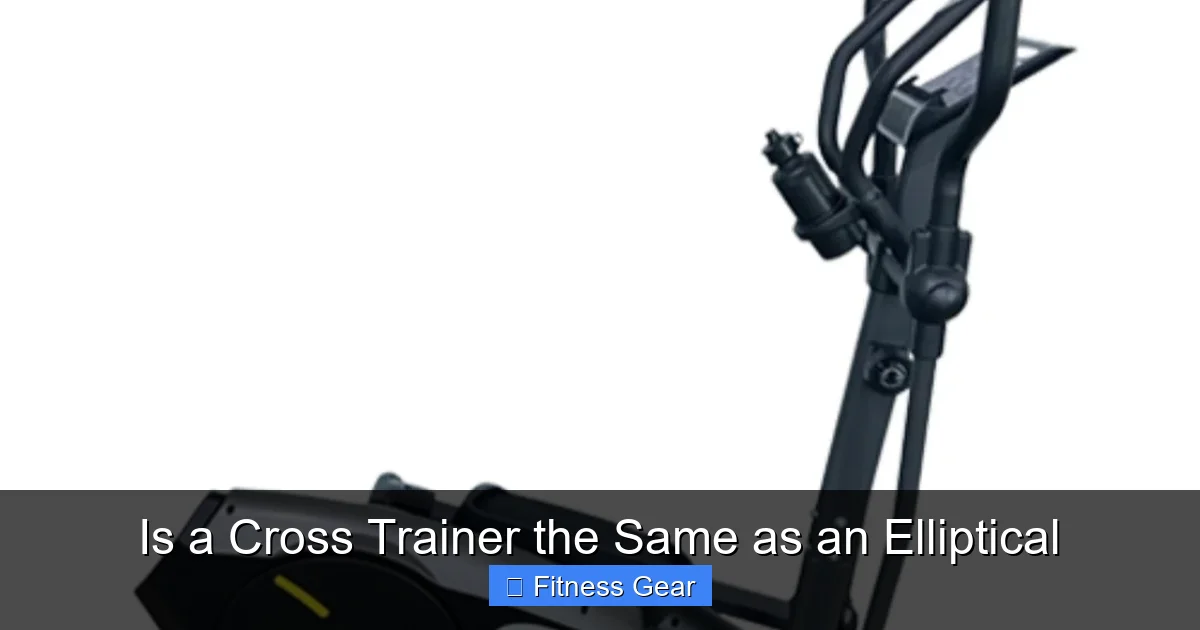
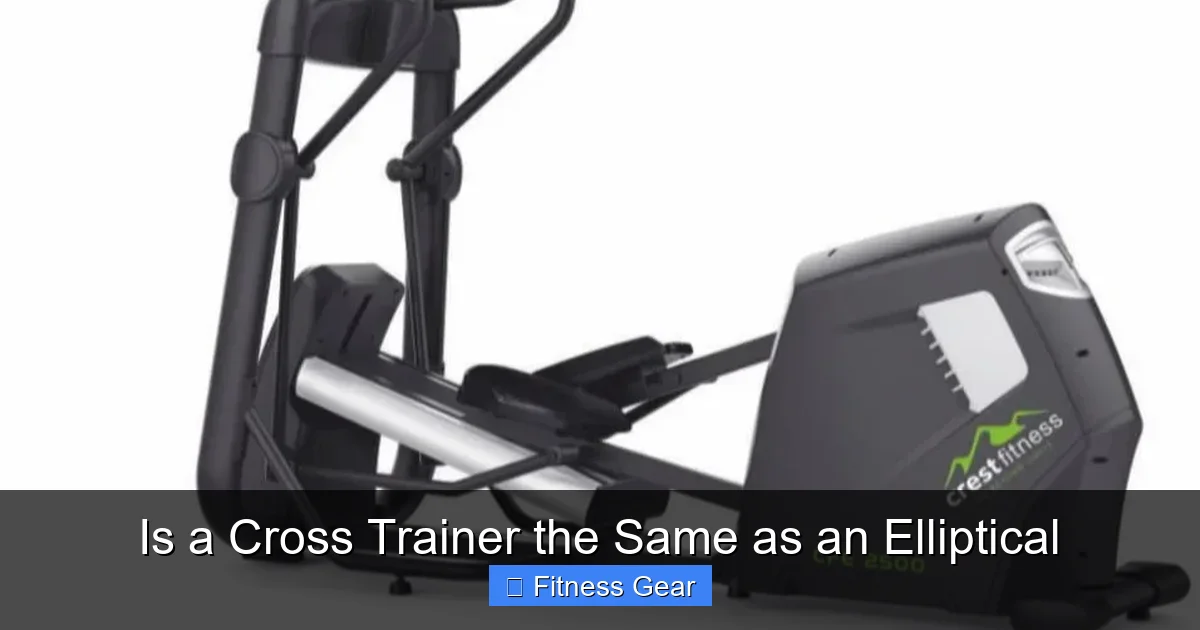
A cross trainer, often marketed as an “elliptical cross trainer” or just “cross trainer,” incorporates a dual-action mechanism. In addition to the pedal linkage, there is a separate linkage system connected to the moving handlebars. When you push one pedal forward, the corresponding handle moves away from you (a pushing motion). As you pull that pedal back, the handle pulls toward you. This creates a natural, reciprocal motion where your upper and lower body move in opposition—right arm forward as left leg pushes, and so on—mirroring the gait cycle of running or the motion of a stairclimber with poles.
This synchronized movement is the hallmark of a cross trainer. The resistance is applied to both the pedal system and the arm system, meaning you’re working against tension with both your legs and your arms simultaneously. It’s a true total-body cardiovascular machine.
Practical Example: Picture yourself using a pair of resistance bands while walking, where the band pulls on your arms in rhythm with your stride. That coordinated effort is what a cross trainer automates and smooths out with its mechanical linkages.
The Critical Difference: Movement Pattern and Muscle Engagement
This mechanical difference translates directly into a physiological one. The way your body moves determines which muscles fire, how many calories you burn, and even how your brain coordinates the effort.
Visual guide about Is a Cross Trainer the Same as an Elliptical
Image source: subhanfitness.com
Lower Body vs. Total Body: A Muscle Map
On a standard elliptical, the primary movers are in your lower body:
- Quadriceps: Heavily engaged during the forward/downward pedal stroke.
- Hamstrings and Glutes: Activated during the backward/upward pull phase.
- Calf Muscles (Gastrocnemius/Soleus): Work throughout for ankle stability and propulsion.
- Hip Flexors: Assist in bringing the leg forward.
Your core (abs and lower back) works isometrically to maintain an upright posture, but it’s not a primary driver. Your upper body is largely passive, acting as a stabilizer.
On a cross trainer, you add a significant upper-body component to that same lower-body motion:
- Chest (Pectorals): Engaged during the pushing motion of the handles.
- Back (Latissimus Dorsi, Rhomboids): Work during the pulling motion.
- Shoulders (Deltoids): Anterior delts push, posterior delts pull.
- Arms (Biceps/Triceps): Biceps contract on the pull, triceps on the push.
- Core (Obliques, Transverse Abdominis): Must work harder to stabilize the torso against the rotational forces created by the opposing arm/leg movements.
This simultaneous push-pull pattern means you’re engaging a much larger percentage of your total muscle mass in a single session.
The Neuromuscular Connection: Coordination and Mind-Muscle Link
The cross trainer’s movement requires a higher degree of neuromuscular coordination. Your brain must send signals to opposite limbs in a precise, alternating rhythm. This not only improves proprioception (your body’s awareness in space) but also builds a stronger mind-muscle connection for the involved muscle groups. It’s a more complex motor skill than the simpler, repetitive leg motion of a standard elliptical. For some, this coordination is intuitive and energizing. For others, especially those with certain neurological conditions or extreme beginners, it can feel awkward at first, making the standard elliptical a more approachable starting point.
Head-to-Head: Benefits and Ideal Use Cases
Now that we understand the “how,” let’s examine the “why.” Which machine delivers on specific goals?
Visual guide about Is a Cross Trainer the Same as an Elliptical
Image source: 5.imimg.com
Caloric Expenditure and Cardiovascular Conditioning
Because a cross trainer recruits more major muscle groups, it has a higher potential for calorie burn. More muscle mass working means a higher oxygen demand and greater energy (calorie) consumption. Studies often show that at the same perceived exertion level (how hard you *feel* you’re working), users on cross trainers can maintain a higher heart rate and burn more calories than on a standard elliptical. However, this is highly individual. A motivated user on a standard elliptical, using high resistance and speed, can absolutely achieve an intense, high-calorie-burning workout. The cross trainer simply provides a mechanical advantage for full-body effort, making it easier to achieve a high-intensity session without the joint stress of running.
Tip: To maximize burn on either machine, incorporate interval training: alternate 1-2 minutes of high resistance/speed with 1-2 minutes of active recovery at lower resistance.
Joint Health, Rehabilitation, and Low-Impact Nature
This is the crown jewel of both machines. The elliptical motion, by design, keeps both feet on the pedals throughout the entire range of motion. There is no “impact” where your foot slams into a surface. This makes both machines superb for:
- Individuals with knee, hip, or ankle arthritis.
- Those recovering from injuries (always consult a physical therapist).
- Anyone seeking a cardiovascular workout that is gentle on joints.
- Older adults or those with osteoporosis who need safe, weight-bearing (but not jarring) activity.
The difference here is subtle. Because a cross trainer distributes the workload to the arms, it can sometimes allow for a slightly lower relative load on the legs at the same cardiovascular effort, which might be beneficial for those with severe lower-body limitations. However, for pure, isolated lower-body rehabilitation with minimal upper-body fatigue, a standard elliptical might be preferred to avoid overworking healing upper-body muscles.
Strength and Muscle Tone Considerations
Neither machine is a replacement for dedicated strength training with heavy weights. However, they both offer a resistance component.
- Standard Elliptical: Builds muscular endurance and some strength in the legs. The resistance is often linear and limited compared to gym equipment.
- Cross Trainer: Provides a concurrent strength and cardio workout. The moving arms provide a functional, dynamic resistance for the upper body, improving muscular endurance and tone in the chest, back, and arms. It’s essentially a low-weight, high-rep “pump” workout for the entire body.
If your goal is to build significant muscle mass (hypertrophy), neither machine is optimal. If your goal is to improve overall muscle tone, endurance, and burn calories while lightly strengthening, the cross trainer has a clear edge.
How to Choose: Matching the Machine to Your Needs
So, which one should you buy or use? Here’s a practical decision-making framework.
Ask Yourself These Key Questions
1. What is my primary fitness goal?
– Weight loss & full-body conditioning: Strongly lean toward a cross trainer. The full-body engagement maximizes calorie burn and workout efficiency.
– Leg toning, rehabilitation, or focusing on lower-body endurance: A standard elliptical is perfectly adequate and may be simpler to master.
– General health, low-impact cardio, with minimal complexity: Either works, but the standard elliptical has a gentler learning curve.
2. Do I have any joint or mobility issues?
Both are excellent. If you have severe arthritis in your hands/wrists, the constant pushing/pulling on a cross trainer’s handles might be uncomfortable—a standard elliptical’s fixed handles could be better. If you have significant leg weakness, the cross trainer’s ability to share the workload with your arms might allow for a longer, more sustainable session.
3. What is my available space and budget?
Cross trainers are generally larger (longer footprint due to the arm linkage) and more expensive. Measure your space meticulously. A standard elliptical will almost always be more compact and less costly. If space is at a premium (like in an apartment), a standard elliptical or even a compact under-desk elliptical might be the only viable option.
4. Do I enjoy coordination challenges?
If you find dance, step aerobics, or complex movement patterns fun and engaging, you’ll likely love the rhythmic coordination of a cross trainer. If you prefer a more meditative, single-focus activity where you can zone out, the standard elliptical’s simpler motion might be more your speed.
Feature Checklist for Your Purchase Decision
Regardless of type, look for:
- Stride Length: 20” is standard for most adults. Taller users (over 6’) should look for 21” or more for a comfortable, natural gait.
- Resistance System: Magnetic resistance is quieter, smoother, and requires less maintenance than older friction-based systems.
- Incline/Ramp Adjustment: Some machines offer a powered ramp that changes the elliptical path’s angle, simulating hills and targeting different leg muscles. This is a great feature on both types.
- Console and Programs: Ensure it has the metrics you want (heart rate, distance, calories) and workout programs that suit your style (interval, hill, heart-rate controlled).
- Build Quality & Weight Capacity: Check the user weight limit and read reviews for sturdiness. A wobbling machine is unsafe and unpleasant.
- Warranty: Look for at least a 1-year labor warranty and 3-5 years on parts. Flywheel and electronics are key components.
For a cross trainer, also ensure the arm movement is smooth and not disconnected from the leg motion. Test it if possible!
Common Misconceptions and Industry Jargon Debunked
The fitness industry loves its buzzwords, which only adds to the confusion. Let’s set the record straight.
“EFX” and “X-Trainer” Are Just Brand Names
You’ll see “EFX” (Elliptical Fitness eXperience, a Precor trademark) or “X-Trainer” used frequently. These are proprietary names for machines that function as cross trainers. Over time, they’ve become generic terms, much like “Kleenex” for tissues. If a machine has moving arms, it’s functionally a cross trainer, regardless of the badge on it.
The “Glider” vs. “Elliptical” Myth
Some older machines or specific brands (like some older Schwinn models) called machines with moving arms “gliders.” The motion is slightly different—often a longer, flatter stride—but the principle of fixed vs. moving arms remains the same. In modern parlance, a “glider” is essentially a type of cross trainer.
Are Cross Trainers Just “Better” Ellipticals?
Not necessarily. “Better” is subjective. A cross trainer is more complex, offers more muscle engagement, and is generally more expensive. For someone who specifically wants to isolate their legs, or has upper body limitations, a standard elliptical is the “better” choice. It’s about the right tool for the job, not a hierarchy of quality. A well-built standard elliptical is a fantastic machine. A poorly designed cross trainer with jerky arm motion is a nightmare.
What About “Recumbent” Ellipticals?
This is another category entirely. Recumbent ellipticals have a chair-like seat instead of upright pedals. They are extremely low-impact and back-friendly, great for those with significant balance or mobility issues. They can come in both standard (no moving arms) and cross trainer (with moving arms) configurations. The seated position changes the muscle emphasis, placing more focus on the glutes and hamstrings with less core stabilization demand.
Conclusion: Finding Your Perfect Motion
The journey to clarity between cross trainers and ellipticals ends with a simple truth: they serve different, but overlapping, purposes. The standard elliptical is the streamlined, focused specialist—a superb, no-fuss machine for safe, effective lower-body cardio and toning. The cross trainer is the versatile, total-body integrator—a dynamic tool that maximizes calorie burn and engages your entire frame in a smooth, coordinated rhythm.
There is no universal “winner.” The right choice is the one that aligns with your personal health goals, physical condition, available space, and even your enjoyment. If you can, try both at a gym or retailer. Notice how your body feels. Does the full-body motion energize you, or does it feel like distracting clutter? Can you sustain a conversation? Does your heart rate climb more easily?
Remember, the best piece of exercise equipment is the one you will use consistently and safely. Both machines offer a fantastic, joint-friendly alternative to running. By understanding this key difference—moving arms versus stationary—you are now empowered to make a choice that won’t just fill a corner of your room, but will actively and effectively support your unique fitness journey for years to come.
Frequently Asked Questions
Is a cross trainer better for weight loss than a standard elliptical?
Generally, a cross trainer has a higher potential for calorie burn because it engages more muscle groups simultaneously, leading to greater energy expenditure. However, weight loss ultimately depends on the intensity and duration of your workout and your overall diet on either machine.
Can using a cross trainer help build muscle?
It can improve muscular endurance and provide a mild “pump” in the upper and lower body due to the resistance involved. However, it will not build significant muscle mass (hypertrophy) like dedicated weight training with heavy resistance. Think of it as toning and conditioning, not bulk-building.
I have bad knees. Which machine is safer?
Both machines are excellent low-impact choices and are far safer for knees than running. The smooth, elliptical motion keeps the knee joint in a stable, flexed position. The choice comes down to comfort. Some with severe knee pain prefer the standard elliptical to avoid any potential strain from coordinating arm movements, while others find the cross trainer’s distributed effort easier on the legs.
Are cross trainers harder to use or learn?
They have a steeper initial learning curve due to the coordination required between arms and legs. It can feel awkward for the first 5-10 minutes. However, most people adapt quickly, and the motion becomes second nature. A standard elliptical is immediately intuitive for anyone who can walk.
Do I need to hold the handles on a standard elliptical?
No, you don’t *need* to, but it’s highly recommended, especially at first. The handles provide crucial stability and help you maintain proper upright posture. Letting go can lead to leaning, poor form, and potential strain. On a cross trainer, the handles are an integral part of the workout and must be used.
Will a cross trainer take up more space in my home?
Yes, typically. The mechanism for the moving arms requires a longer overall footprint. Always check the exact dimensions (length, width, and height) of the specific model you’re considering against your available space, including room for entry/exit and ventilation. Standard ellipticals are generally more compact.