Is 40 Minutes on the Elliptical a Good Workout
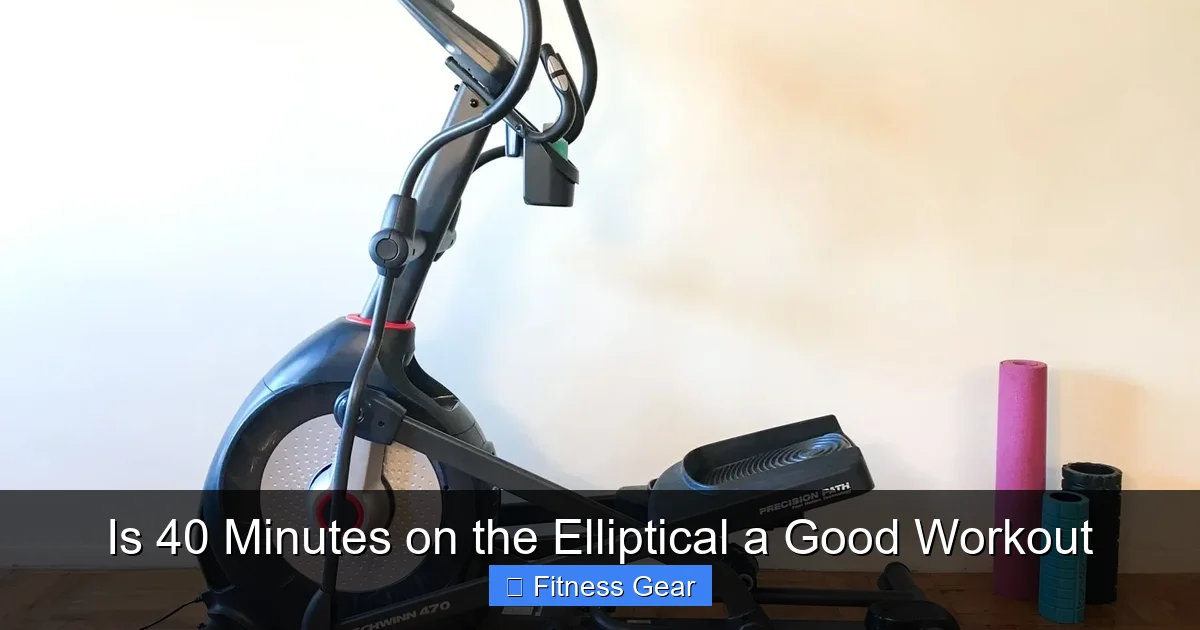
Yes, 40 minutes on the elliptical is an excellent, time-efficient workout for most people. This duration allows you to consistently hit the moderate-to-vigorous intensity zone needed to significantly improve cardiovascular health, burn a substantial number of calories, and engage all major muscle groups. It’s a sustainable, low-impact sweet spot that supports weight management, builds endurance, and is joint-friendly, making it a cornerstone of a balanced fitness routine.
Key Takeaways
- The 40-minute mark is a physiological sweet spot: It’s long enough to deplete glycogen stores and shift your body into a fat-burning zone, yet short enough to maintain high intensity and adherence for most schedules.
- It delivers a potent cardio-metabolic stimulus: A sustained 40-minute session efficiently strengthens the heart, lowers blood pressure, and improves cholesterol profiles, reducing long-term disease risk.
- Calorie expenditure is significant and compoundable: You can burn 300-500+ calories in one session, and the “afterburn effect” (EPOC) means your metabolism stays elevated for hours afterward.
- It’s a true full-body, low-impact workout: Unlike treadmills or bikes, ellipticals simultaneously work legs, glutes, core, chest, back, and arms, maximizing toning while protecting joints.
- Consistency trumps extreme duration: A challenging 40 minutes done 4-5 times per week yields better long-term results than sporadic 90-minute sessions, preventing burnout and injury.
- Progression is key to avoiding plateaus: To keep seeing results, you must manipulate resistance, incline, speed, and incorporate intervals, not just increase time endlessly.
- Form and mind-muscle connection are non-negotiable: Leaning on handles, slouching, or using momentum negates benefits. Focus on driving through the heel and engaging your entire posterior chain.
📑 Table of Contents
- Why 40 Minutes on the Elliptical is the Magic Number
- The Calorie Burn and Cardiovascular Powerhouse
- Weight Loss and Body Composition: More Than Just a Number on the Scale
- Full-Body Engagement: The Elliptical’s Unique Advantage
- Elliptical vs. The Competition: Treadmill, Bike, and Stair Climber
- How to Maximize Your 40-Minute Elliptical Session
- Common Mistakes That Sabotage Your 40-Minute Workout
- Conclusion: Your 40-Minute Prescription for Success
Why 40 Minutes on the Elliptical is the Magic Number
Let’s settle this once and for all. When you carve out 40 minutes for a cardio session, you’re not just filling time—you’re investing in a potent physiological stimulus. This duration sits at a crucial intersection of science and practicality. From a metabolic perspective, it typically takes about 20-30 minutes of steady-state exercise for your body to significantly shift from burning primarily glycogen (stored carbs) to oxidizing more fat for fuel. The additional 10-20 minutes then allows you to maximize that fat-burning window while still maintaining an intensity that challenges your cardiovascular system.
Furthermore, 40 minutes is a psychologically sustainable commitment for the vast majority of people. It fits neatly before work, during a lunch break, or after a long day. It’s long enough to feel like a substantive accomplishment, triggering a powerful endorphin release and mental clarity boost, but not so long that it becomes an intimidating, skipped chore. This duration respects the reality of busy lives, which is the single biggest factor in long-term fitness success: adherence. If you consistently complete 40-minute elliptical workouts, you will see results. Period.
The Calorie Burn and Cardiovascular Powerhouse
Understanding Your Energy Expenditure
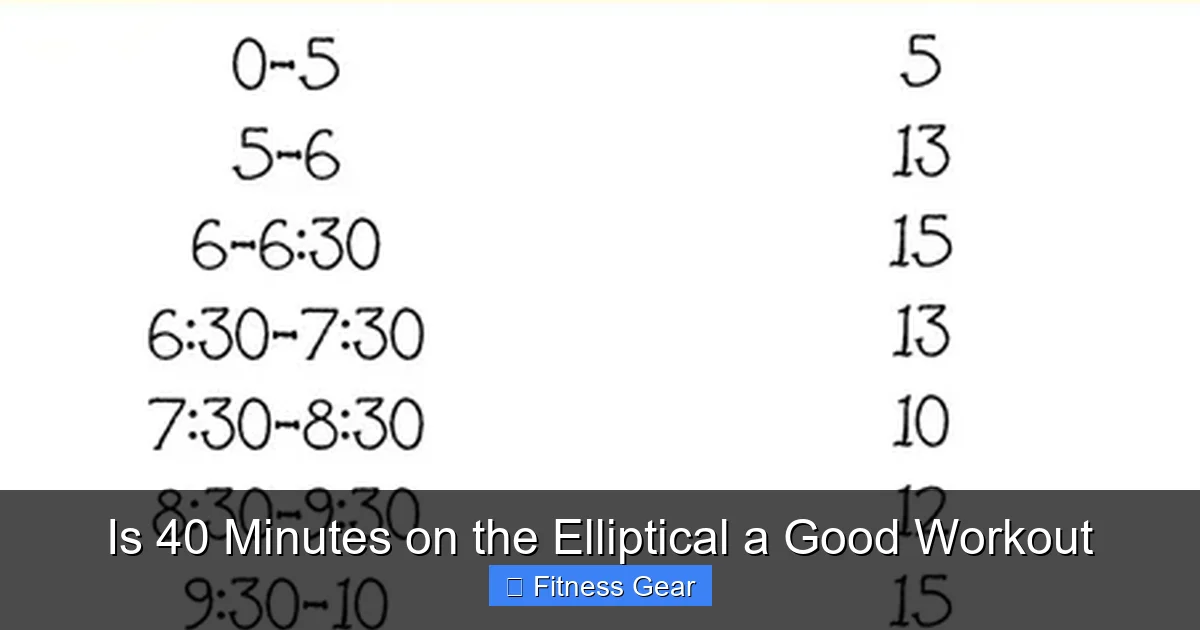
How many calories you burn in 40 minutes on the elliptical depends on three primary factors: your body weight, the machine’s resistance level, and your effort (RPM or speed). A general estimate for a 155-pound person is 300-400 calories at a moderate pace (around 5 METs). Increase the resistance to a vigorous level (7-8 METs), and that number can jump to 450-600+ calories. The magic isn’t just in the immediate burn, however. This sustained effort creates a significant Excess Post-exercise Oxygen Consumption (EPOC) effect. Your body’s metabolism remains elevated for up to 24-48 hours afterward as it works to restore oxygen levels, repair muscle tissue, and normalize hormone levels. This means you continue to burn extra calories long after you’ve cooled down, effectively turning your 40-minute session into a 24-hour metabolic event.
Visual guide about Is 40 Minutes on the Elliptical a Good Workout
Image source: elitefitness.co.nz
Building a Heart-Healthy Habit
The American Heart Association recommends at least 150 minutes of moderate-intensity or 75 minutes of vigorous-intensity aerobic activity per week for substantial cardiovascular benefits. A single 40-minute session at a moderate-to-vigorous pace contributes a major chunk of that weekly goal. Consistently engaging in this duration strengthens the heart muscle, improves its efficiency in pumping blood, lowers resting heart rate, and enhances arterial flexibility. Over weeks and months, this translates to a lowered risk of hypertension, stroke, and heart disease. The elliptical’s smooth, continuous motion is particularly ideal for building this endurance without the jarring impact of running, making it a lifelong-friendly cardio choice.
Weight Loss and Body Composition: More Than Just a Number on the Scale
The Fat Loss Equation
For sustainable weight loss, you need a consistent calorie deficit. A 40-minute elliptical workout, performed 4-5 times a week, can create a weekly deficit of 1,200-2,000+ calories from exercise alone. When paired with a modest, nutritious dietary adjustment, this deficit becomes the engine for fat loss. However, the scale can be deceptive. The elliptical’s full-body resistance element means you’re also building lean muscle mass, especially in the legs, glutes, and upper body. Muscle is metabolically active tissue that burns more calories at rest. Therefore, while the scale might move slowly, your body composition—the ratio of fat to muscle—will improve dramatically. You’ll likely notice clothes fitting better, a more toned silhouette, and a higher resting metabolism before you see a huge drop in pounds.
Visual guide about Is 40 Minutes on the Elliptical a Good Workout
Image source: hips.hearstapps.com
Preserving Muscle While in a Deficit
Many traditional steady-state cardio workouts can, if not paired with resistance training, lead to some muscle loss alongside fat loss during a calorie deficit. The elliptical inherently combats this. By pushing against resistance with both your lower and upper body, you provide a stimulus that signals your body to preserve precious muscle tissue. This makes the elliptical a superior tool for those looking to “recomp” their body—losing fat while maintaining or even gaining muscle—compared to a purely non-resistive activity like using an arm bike or walking on a flat treadmill. To maximize this, consciously increase the machine’s resistance to a level where your muscles feel challenged, not just your lungs.
Full-Body Engagement: The Elliptical’s Unique Advantage
Muscles Worked: It’s Not Just a Leg Day
This is the elliptical’s secret weapon. Unlike a stationary bike (primarily legs) or a rower (primarily back/core), a proper elliptical pattern recruits nearly every major muscle group in a coordinated, functional movement. Lower Body: Quadriceps, hamstrings, glutes (maximus and medius), and calves are the primary drivers. The glute activation is especially pronounced when you focus on pushing through your heels and engaging your posterior chain. Core: Your entire abdominal wall and lower back work isometrically to stabilize your pelvis and torso, preventing excessive side-to-side sway. A tight core is essential for power transfer. Upper Body: The moving handles actively involve the pectorals (chest), latissimus dorsi (back), deltoids (shoulders), and triceps. You are literally performing a standing, dynamic push/pull motion with every stride. This total-body engagement means a higher overall energy demand and a more comprehensive toning effect in half the time it might take on a leg-only machine.

Visual guide about Is 40 Minutes on the Elliptical a Good Workout
Image source: themoxiemama.com
The Low-Impact, High-Reward Proposition
The elliptical’s defining characteristic is its smooth, oval path of motion. There is no impact phase where your foot strikes a hard surface. This eliminates the repetitive stress on ankles, knees, hips, and the spine that is inherent in running or even brisk walking on a treadmill. For individuals with arthritis, previous joint injuries, or those who are significantly overweight, this is transformative. It allows for high-intensity cardiovascular work without the cumulative trauma that can lead to pain, inflammation, and long-term damage. You can push your cardiovascular limits on an elliptical while your joints thank you, making it a sustainable activity for decades.
Elliptical vs. The Competition: Treadmill, Bike, and Stair Climber
Elliptical vs. Treadmill
The treadmill is the gold standard for simulating running and walking. A 40-minute run on a treadmill will typically burn more calories *per minute* at the same perceived effort due to the gravitational pull and impact. However, that impact is a double-edged sword. For joint health and longevity, the elliptical wins. Furthermore, the elliptical’s upper body engagement means its *total body* calorie burn can close the gap significantly, especially at higher resistances. The treadmill is better for training for running events; the elliptical is better for overall conditioning with joint preservation.
Elliptical vs. Stationary Bike
Both are excellent low-impact options. A 40-minute session on a high-resistance spin bike can be an incredible leg and glute burner, often allowing for higher power output (watts) than an elliptical. However, the bike is almost exclusively a lower body and core exercise. The upper body is largely inactive. If your goal is a true full-body workout in one machine, the elliptical has a clear advantage. The bike may allow for slightly higher peak heart rates during sprints due to the more constrained, powerful leg motion, but the elliptical offers more balanced muscular development.
Elliptical vs. Stair Climber
The stair climber is a brutal, effective tool for building unilateral leg strength and glute power. A 40-minute session is an absolute leg destroyer. Like the bike, it’s predominantly a lower body workout. It also carries a higher risk of overuse injuries in the knees and hips if form breaks down due to fatigue. The elliptical provides a similar climbing motion with the option to add upper body work and with less sheer force on the knee joint due to the continuous, circular motion. The stair climber is fantastic for targeted leg development; the elliptical is the better all-rounder for general fitness and calorie burn.
How to Maximize Your 40-Minute Elliptical Session
Structure is Everything: Warm-Up, Main Set, Cool-Down
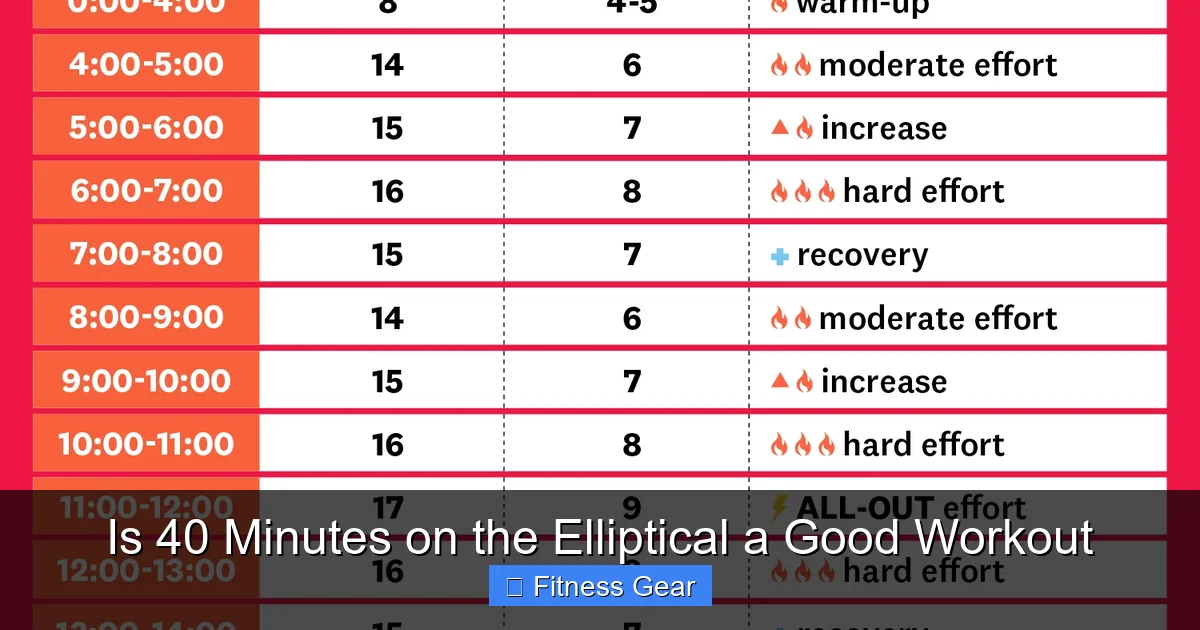
Don’t just hop on and go. A proper 40-minute session should be segmented. Minutes 1-5: Light resistance (level 3-4) and a comfortable pace to increase blood flow, lubricate joints, and mentally prepare. Minutes 6-35: This is your main workout. This is where you apply the strategies below—intervals, varied resistance, focused upper body work. Minutes 36-40: Gradually reduce resistance and speed to a very easy, almost effortless pace to bring your heart rate down gradually and begin the recovery process. This structure optimizes performance, prevents dizziness, and aids recovery.
Progression Strategies to Avoid the Plateau
Your body adapts quickly. If you do the same 40 minutes at the same resistance every day, you’ll stop seeing results. You must progress. 1. The Interval Method (HIIT): Alternate 1-3 minutes of high-intensity effort (high resistance, fast pace) with 1-2 minutes of active recovery (low resistance). This is immensely effective for boosting EPOC and breaking through plateaus. Example: 2 min hard / 1 min easy x 10 rounds. 2. The Pyramids: Gradually increase resistance every 2-3 minutes until you hit a peak, then gradually decrease it. 3. Focus on Upper Body: Dedicate blocks of time to only using your arms (lightly holding the handles for balance, not pushing), or to only using your legs (releasing the handles). This isolates and fatigues different muscle systems. 4. Increase Resistance, Not Just Speed: To build strength and power, prioritize adding levels over pedaling faster. A slower, more powerful stride against high resistance is more transformative than a frantic, low-resistance shuffle.
Common Mistakes That Sabotage Your 40-Minute Workout
Leaning and “Cheating” with Your Arms
The most common error is leaning forward and putting all your weight on the moving handles. This turns a powerful full-body push into a weak arm-pull, drastically reducing calorie burn and glute/hamstring engagement. Your posture should be tall and proud, with a slight forward lean originating from the ankles, not the waist. Your hands should *guide* the handles, not bear your weight. Your legs should be the engine. A great cue is to “push the floor away” with your heels.
Neglecting Resistance for Speed
Spinning your legs at a high RPM with little to no resistance is essentially a non-workout. It burns minimal calories, builds no strength, and can be hard on your knees due to the repetitive, low-force motion. Always strive for a resistance that makes your legs feel like they are doing meaningful work. You should be able to speak in short phrases, but not sing a song, at the peak of your effort.
Static Handles and No Core Engagement
If your machine has stationary handles, don’t use them as a crutch! Grip them lightly to maintain balance, but actively engage your core to keep your torso stable. Imagine a string pulling your head toward the ceiling. A disengaged core leads to slouching, reduced power transfer, and potential lower back discomfort. Additionally, on machines with moving handles, don’t just let your arms flop. Consciously push and pull with purpose, squeezing your back and chest muscles.
Conclusion: Your 40-Minute Prescription for Success
So, is 40 minutes on the elliptical a good workout? Undeniably, yes. It is a remarkably efficient, accessible, and effective duration that delivers profound benefits for cardiovascular health, calorie expenditure, full-body toning, and joint preservation. It respects the reality of a busy life while delivering a serious fitness stimulus. The key to unlocking its potential lies not in the mere passage of time, but in the quality of effort within that time. By understanding the science, avoiding common pitfalls, and strategically programming your sessions with intervals and progression, you transform a simple 40-minute commitment into a powerful engine for lasting health, vitality, and physique goals. It’s not about doing more; it’s about doing it right, consistently. Now, go make those 40 minutes count.
Frequently Asked Questions
Is 40 minutes on the elliptical enough to see weight loss results?
Yes, 40 minutes is absolutely sufficient to contribute significantly to weight loss when combined with a healthy diet. This duration allows you to burn 300-600+ calories per session and triggers the afterburn effect (EPOC). Consistency is key—performing this workout 4-5 times per week creates the necessary calorie deficit for fat loss while also preserving muscle mass due to the elliptical’s resistance element.
Can I build muscle on the elliptical with just 40-minute workouts?
You can build and tone muscle, particularly in the legs, glutes, core, and upper body, but it will be modest hypertrophy (muscle growth). The elliptical provides muscular endurance and mild strength stimulus through resistance. For significant muscle building, you’d need to incorporate heavy, dedicated strength training. However, the elliptical is excellent for improving muscle definition, increasing muscular endurance, and preventing muscle loss during a fat-loss phase.
Is it safe to do the elliptical for 40 minutes every day?
For most healthy individuals, a moderate-intensity 40-minute elliptical session is low-impact enough for daily use. However, your body needs recovery to repair and adapt. The best approach is to vary intensity: alternate days between moderate steady-state, high-intensity interval training (HIIT), and perhaps a rest or active recovery day. Listening to your body is crucial—if you feel persistent joint pain or extreme fatigue, take a day off.
What’s the ideal resistance and speed for a 40-minute fat-burning workout?
There’s no universal “ideal,” as it depends on your fitness level. A great benchmark is the “talk test.” During the majority of your 40-minute session, you should be at an intensity where you can speak in short, broken sentences but not sing. Aim for a resistance level that feels challenging (a 6-8 out of 10 perceived exertion) where your legs are doing the work. Speed (RPM) should be a byproduct of that resistance—typically between 70-100 RPM for most people. Focus on power, not just speed.
How does the elliptical compare to running for a 40-minute cardio session?
Running generally burns more calories per minute at the same perceived effort due to impact and gravitational forces. However, the elliptical’s major advantage is its full-body engagement and zero impact. A vigorous 40-minute elliptical session with proper upper body use can rival a run in total calorie burn while being far gentler on knees, hips, and the spine. The elliptical is also more sustainable long-term for those with joint concerns or who want to avoid overuse injuries common in running.
How long will it take to see results from 40 minutes on the elliptical 5 days a week?
You can feel results—improved mood, better sleep, more energy—within 1-2 weeks. Visible changes in body composition (like looking more toned) typically appear after 4-8 weeks of consistent effort, combined with proper nutrition. Cardiovascular improvements, such as a lower resting heart rate and easier breathing during daily activities, are often noticeable within 3-6 weeks. The key is consistency, progressive overload (increasing resistance/interval difficulty), and pairing the exercise with a supportive diet.