Starting to run on a treadmill can feel intimidating, but with the right approach, it’s one of the best ways to build fitness safely and consistently. This guide breaks down the entire process for absolute beginners, from choosing your first machine and mastering walk-run intervals to perfecting your form and creating a sustainable plan. You’ll learn how to avoid common mistakes, stay injury-free, and actually enjoy your time on the belt, turning that initial hesitation into a lasting, healthy habit.
Key Takeaways
- Start with walking, not running: Build a foundation with brisk walking for 2-4 weeks before introducing any running intervals to condition your joints and build stamina safely.
- Master the walk-run method: The most effective beginner technique is alternating short running bursts (e.g., 60 seconds) with longer walking recovery periods to build endurance without burnout.
- Focus on posture, not speed: Maintain a slight forward lean, relaxed shoulders, and a quick, light cadence. Ignore the speed number; focus on how your body feels.
- Safety is non-negotiable: Always use the safety clip, know how to stop the machine quickly, and never skip the warm-up or cool-down to prevent injury.
- Create a structured, progressive plan: Follow a simple 4-8 week schedule that gradually increases running time and decreases walking time, ensuring consistent, measurable progress.
- Combat boredom proactively: Use music playlists, podcasts, or virtual running apps to make treadmill time enjoyable and distract from the monotony.
- Listen to your body above all: Muscle fatigue is normal; sharp joint pain is a stop sign. Rest and recovery are when you get stronger, not during the workout.
📑 Table of Contents
- Your Treadmill Journey Starts Here: A New Runner’s Mindset
- Getting Started: Your Pre-Run Checklist (Before You Even Step On)
- Mastering the Machine: Form, Pace, and the Walk-Run Method
- Building Your First Treadmill Plan: Structure and Progression
- Overcoming the Mental Hurdles: Boredom, Discomfort, and Motivation
- Safety First: Avoiding Injury and Knowing Your Limits
- Leveling Up: What Comes After the Beginner Phase
- Conclusion: Your Journey is Unique, and It Starts Now
Your Treadmill Journey Starts Here: A New Runner’s Mindset
So, you’ve decided to start running on the treadmill. Maybe the weather outside is brutal, maybe the idea of pounding pavement feels daunting, or maybe you just want a controlled, safe environment to build your fitness. Whatever the reason, welcome! This is an excellent first step. But before we talk about speed or incline, we need to talk about the most important piece of equipment you have: your mind.
The biggest hurdle for most beginners isn’t physical; it’s mental. There’s a common myth that “running” means you have to be moving at a certain speed, with a certain stride, for a certain amount of time. Let’s erase that. For you, “running” right now simply means lifting your feet off the ground, one after the other, for any amount of time. It might be 10 seconds. That’s a victory. It might be 30 seconds. That’s a huge victory. Your only goal for the first few sessions is to show up, move your body, and leave feeling like you accomplished something, not that you were punished.
Embrace the beginner’s mindset. You are learning a new skill. Your body is learning to recruit muscles in a new way, your heart and lungs are learning to work harder, and your mind is learning to push through discomfort. Be kind to yourself. Compare yourself only to the person you were yesterday. This journey is a marathon, not a sprint—literally and figuratively. Let’s set you up for success from the very first step.
Getting Started: Your Pre-Run Checklist (Before You Even Step On)
Preparation is 80% of the battle for a beginner. Rushing into a run without a plan is the fastest way to feel discouraged, uncomfortable, or injured. Let’s get your setup perfect.
Visual guide about How to Start Running on the Treadmill for Beginners
Image source: i0.wp.com
Choosing the Right Treadmill & Understanding the Console
If you’re at a gym, ask a staff member for a quick tutorial on that specific model. If you’re at home, familiarize yourself with your machine. Key buttons you must know:
- Start/Stop: Obviously. But practice stopping it quickly while it’s moving slowly.
- Speed (+/-): Adjust in small increments (0.1 or 0.5 mph). Your goal is to find a “conversational pace” when running.
- Incline (+/-): Start on a flat surface (0% incline). We’ll introduce gentle hills later.
- Emergency Stop Clip: THIS IS YOUR BEST FRIEND. It’s a magnetic clip that attaches to your clothing and will instantly stop the belt if you fall. Always use it.
The Non-Negotiables: Shoes, Attire, and Hydration
Shoes: Do not run in old sneakers, fashion shoes, or shoes not designed for running. You need proper running shoes. This is the single most important piece of gear. Visit a specialty running store if possible. They’ll analyze your gait and recommend the right shoe. Good shoes cushion your joints and prevent injury. This is a non-negotiable investment in your health.
Attire: Wear moisture-wicking fabrics (polyester, nylon, not cotton). Cotton holds sweat, becomes heavy, and causes chafing. Wear layers you can easily remove as you warm up. A good sports bra is essential for comfort.
Hydration: Drink a glass of water 30-60 minutes before you start. Have a water bottle nearby for longer sessions. Dehydration makes you feel terrible and slows you down.
The Sacred Ritual: Warm-Up & Cool-Down
Never skip these. They are not optional extras; they are integral parts of your workout that prevent injury and improve performance.
Warm-Up (5-10 minutes): Start with 3-5 minutes of very slow walking to get blood flowing. Then do dynamic stretches off the treadmill: leg swings (forward/back, side-to-side), hip circles, walking lunges with a twist, high knees, and butt kicks. This prepares your muscles and joints for the movement to come.
Cool-Down (5-10 minutes): Never stop the treadmill abruptly at the end of your run. Gradually reduce your speed to a slow walk for 3-5 minutes to let your heart rate come down slowly. Then, off the treadmill, perform static stretches: hold each for 20-30 seconds. Focus on calves, quads, hamstrings, hip flexors, and glutes. This improves flexibility and reduces soreness.
Mastering the Machine: Form, Pace, and the Walk-Run Method
This is the core of your technique. Forget everything you think running should look like. On a treadmill, efficiency and safety are key.
Visual guide about How to Start Running on the Treadmill for Beginners
Image source: treadmill.run
Posture: Your Anchor to Good Form
Your posture is the foundation. Stand tall on the moving belt. Imagine a string pulling the crown of your head toward the ceiling. Your body should have a very slight, natural forward lean from the ankles, not from the waist. Keep your shoulders relaxed and down, away from your ears. Look ahead, not down at your feet or the console. Gaze at the horizon or the TV in front of you. Your arms should be bent at roughly 90 degrees, swinging naturally back and forth from the shoulder, not crossing your body. Keep your hands relaxed, not clenched into tight fists.
The Secret to Comfort: Cadence and Stride
Most beginners over-stride—they reach their foot out too far in front of their body. This is a braking motion that jars your joints and wastes energy. Your goal is a quick, light cadence (steps per minute). A good beginner target is 160-170 steps per minute. How to achieve this? Focus on picking your feet up quickly and placing them down almost underneath you. Think “quick, light steps.” A good trick is to run to the beat of a song with a tempo in that range. Shorter, faster strides are easier on the body than long, slow ones.
Pace: The “Conversational Test” is King
What speed should you run? The only correct answer for a beginner is the speed at which you can speak in full sentences. If you can only gasp out one or two words, you are going too fast. If you can sing a song, you can probably go a little faster. The “conversational pace” is your aerobic base-building speed. It feels “easy” or “moderately challenging” but sustainable. For most complete beginners, this running pace might be between 4.0 and 5.5 mph. Do not compare your speed to anyone else’s. Your 4.5 mph is your victory.
The Walk-Run Method: Your Best Friend
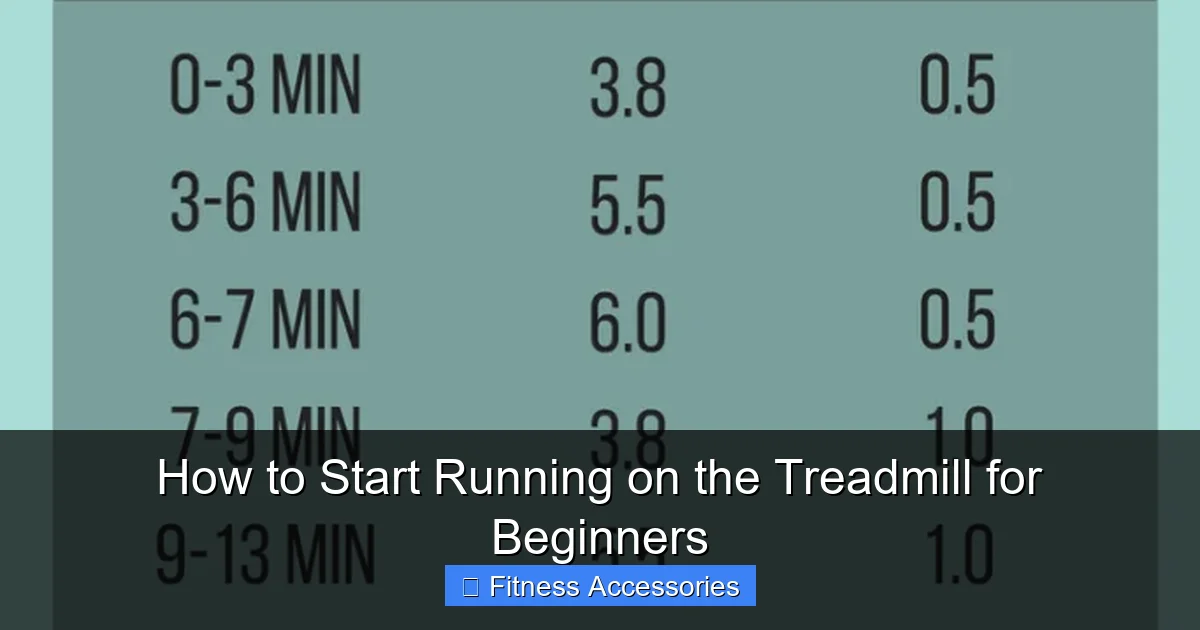
This is the golden technique for starting out. It builds endurance, reduces impact, and prevents that “I can’t breathe” feeling. The principle is simple: alternate short periods of running with longer periods of walking. A classic beginner protocol looks like this:
- Week 1-2: Walk 3 minutes, run 30 seconds. Repeat 6-8 times. Total “run” time: 3-4 minutes.
- Week 3-4: Walk 2 minutes, run 60 seconds. Repeat 6-8 times. Total “run” time: 6-8 minutes.
- Week 5-6: Walk 1 minute, run 90 seconds. Repeat 5-6 times. Total “run” time: 7.5-9 minutes.
- Week 7-8: Walk 1 minute, run 3 minutes. Repeat 4-5 times. Total “run” time: 12-15 minutes.
You adjust the times based on how you feel. If 60 seconds of running feels impossible, do 45. If it feels too easy, do 75. The key is consistency and gradual progression. You are teaching your body to run.
Building Your First Treadmill Plan: Structure and Progression
Winging it leads to burnout. A simple, structured plan gives you direction and a sense of achievement. Let’s build a 4-week sample plan. Aim for 3 non-consecutive days per week (e.g., Monday, Wednesday, Friday). This allows for crucial recovery.

Visual guide about How to Start Running on the Treadmill for Beginners
Image source: treadmill.run
Sample 4-Week Beginner Plan
Week 1 Goal: Habit formation. Total session time: 30 minutes.
- 5 min warm-up walk (very slow)
- Repeat 6x: 2.5 min walk (brisk pace), 30 sec run (conversational pace)
- 5 min cool-down walk
Week 2 Goal: Slightly longer running intervals. Total session time: 32 minutes.
- 5 min warm-up walk
- Repeat 6x: 2 min walk, 45 sec run
- 5 min cool-down walk
Week 3 Goal: Increase running time. Total session time: 35 minutes.
- 5 min warm-up walk
- Repeat 5x: 1.5 min walk, 75 sec run
- 5 min cool-down walk
Week 4 Goal: Consolidate gains. Total session time: 38 minutes.
- 5 min warm-up walk
- Repeat 4x: 1 min walk, 3 min run
- 5 min cool-down walk
How to Progress Safely: The 10% Rule
A golden rule in running is to never increase your total weekly running time (or distance) by more than 10% from one week to the next. This gives your muscles, tendons, and bones time to adapt and get stronger, preventing overuse injuries like shin splints or stress fractures. Our sample plan respects this. If you finish a week feeling strong and the next session feels easy, you can increase your running intervals by a small amount (e.g., from 60 to 70 seconds) or add one extra repetition. But if you’re sore or exhausted, repeat the same week. There is no penalty for staying on a step.
When (and How) to Add Incline
Once you can comfortably run for 20-25 minutes total (in intervals) on a flat surface, you can start playing with incline. Adding a 1-2% incline simulates outdoor wind resistance and builds leg strength without pounding your joints more. Start by adding incline to just your last running interval of the session. For example, during your final 3-minute run, increase the incline to 1% for the first minute, then back to 0%. Gradually, you can add it to more intervals. Never run on a steep incline as a beginner. Keep it gentle.
Overcoming the Mental Hurdles: Boredom, Discomfort, and Motivation
Let’s be honest: staring at a wall or a screen while the belt moves beneath you can be mentally taxing. Your mind will want to quit long before your body needs to. Here’s how to win the mental game.
Tackling Treadmill Boredom Head-On
The treadmill is a “necessary evil” for many. Don’t fight it; hack it.
- Music is Your Primary Tool: Create a dedicated “Treadmill Playlist” with songs of varying tempos. Structure it: warm-up songs (slower), build-up songs (moderate), peak songs (high energy for your running intervals), cool-down (slow). The beat can help regulate your cadence.
- Podcasts & Audiobooks: For longer, steady-state sessions, a compelling story or engaging talk show is a fantastic distraction. You’re running to “find out what happens next.”
- Virtual Running Apps: Apps like Zwift, Nike Run Club, or Peloton App offer guided runs with coaches, scenic routes that move on the screen, and community challenges. The visual and auditory engagement is a game-changer.
- “The 10-Minute Rule”: Promise yourself you only have to run for 10 minutes. Often, once you start, you’ll want to continue. If not, 10 minutes is still a win.
Learning to Embrace the Discomfort
Running will make you uncomfortable. Your lungs will burn, your legs will ache. This is normal. The key is distinguishing between “good pain” (muscle fatigue, heavy breathing) and “bad pain” (sharp, stabbing, joint-specific). Good pain means you’re working. Bad pain means stop immediately. When the good discomfort hits, use mental tricks:
- Break it down: Don’t think “I have to run for 3 more minutes.” Think “I just have to get through this next song.” Or “I just have to take 20 more breaths.”
- Focus on form: When it gets hard, check in: shoulders down? arms swinging? posture tall? Fixing your form gives your mind a task and can improve efficiency.
- Breathe: Take deep, controlled breaths. In through the nose, out through the mouth. Oxygen is your fuel.
Setting Micro-Goals and Celebrating Wins
Your goal isn’t to run a marathon next month. Your goal is to complete today’s workout. Then this week’s three workouts. Then to run 30 seconds longer than last week. Write these tiny goals down. Check them off. Celebrate completing a week of your plan. Tell a friend. Your confidence will build on these small, tangible victories. The habit is the ultimate goal. Everything else is a bonus.
Safety First: Avoiding Injury and Knowing Your Limits
Your enthusiasm is great, but recklessness leads to sideline injuries. Protect your body with these essential practices.
Listen to Your Body: The #1 Rule
Your body sends signals. Learn to interpret them.
- Muscle Fatigue/Burning: Normal. It means your muscles are working. Push through this within reason.
- Dull Ache/Soreness: Often okay, especially if it’s symmetrical and in the muscle belly. Monitor it.
- Sharp Pain, Stabbing, or Joint Pain: STOP IMMEDIATELY. This is your body saying something is wrong. “Running through pain” is how minor irritations become major, months-long injuries. If pain persists for more than a day or two after rest, see a doctor or physiotherapist.
- Excessive Shortness of Breath/Dizziness/Nausea: Stop. Slow to a walk. Hydrate. These can be signs of overexertion, dehydration, or other issues. Always prioritize feeling well over finishing a workout.
Common Beginner Injuries & How to Prevent Them
- Shin Splints: Pain along the shin bone. Caused by overuse, poor shoes, or increasing intensity too fast. Prevention: Proper shoes, gradual progression (the 10% rule), and strengthening exercises for lower legs (heel raises, toe taps).
- Runner’s Knee (IT Band Syndrome): Pain on the outside of the knee. Often from weak hips/glutes or overpronation. Prevention: Strength training for glutes and hips (clam shells, bridges), and ensuring your shoes aren’t worn out.
- Plantar Fasciitis: Sharp pain in the heel or arch, worst with first steps in the morning. Prevention: Calf stretches, rolling your foot on a frozen water bottle or tennis ball, and supportive shoes.
When to Rest and When to Push
Rest days are when your body repairs and gets stronger. If you are extremely sore, fatigued, or have a nigling pain, take an extra rest day or do a gentle walk instead. One missed workout won’t ruin your fitness. One workout done while injured can set you back weeks. If you feel a cold coming on, the rule of thumb is: if the symptoms are above the neck (sore throat, runny nose), you can usually do a very light session. If symptoms are below the neck (chest congestion, body aches), rest. When in doubt, rest. Consistency over months and years beats heroic effort for one week followed by injury.
Leveling Up: What Comes After the Beginner Phase
Congratulations! You’ve consistently followed a plan for 6-8 weeks. You can run for 20-30 minutes continuously (even if it’s a run-walk combo). You feel stronger. Now what?
Transitioning to Continuous Running
This happens naturally if you stick to the walk-run method. One week, you’ll realize your running intervals feel easier. You might try extending one of them by 30 seconds. Slowly, the walking breaks will get shorter until they disappear. Don’t force it. Let your body tell you when it’s ready. The goal is to eventually run for 20-30 minutes straight at your conversational pace. This is a massive milestone.
Introducing Variety: Hills, Tempo, and Long Runs
Once you have a solid aerobic base (continuous running for 30 minutes), you can start to vary your runs to improve different systems:
- Hills: Find a moderate incline (3-5%). Run up it for 1-2 minutes, then walk/jog down to recover. Repeat 4-6 times. Builds leg strength and power.
- Tempo Runs: A “comfortably hard” pace where you can only speak a few words. Run for 5-10 minutes at this pace after a warm-up, then cool down. Builds speed and lactate threshold.
- Long Runs: One run per week where you increase your total time/distance by 10% compared to your other runs. Keeps this run at an easy, conversational pace. Builds endurance and mental toughness.
Setting a New Goal: The 5K Race
For many beginners, the ultimate motivator is a goal race. A 5K (3.1 miles) is the perfect target. It’s a achievable distance that is incredibly rewarding to cross. Find a local “fun run” or virtual 5K. Having a date on the calendar gives your training purpose. Your goal can simply be to finish. Then, maybe to finish without walking. Then, to beat your previous time. The race environment, with other runners and crowd support, is an experience unlike any treadmill session and will fuel your passion for running.
Conclusion: Your Journey is Unique, and It Starts Now
Starting to run on the treadmill is one of the most empowering things you can do for your physical and mental health. You have now learned the blueprint: the right mindset, the essential gear, the foundational walk-run technique, the importance of a structured plan, and the keys to mental and physical safety.
Remember, every single runner you see was once a beginner. They all had that first, awkward, short session where they felt uncoordinated and out of breath. The difference between them and someone who never starts is that they simply kept going. They showed up, followed a plan, listened to their body, and celebrated small wins. That person can be you.
Your running journey will not be linear. Some days will feel great. Some will feel terrible. That’s okay. The treadmill will be there, a reliable and controlled space for you to build your strength, one step at a time. Lace up those proper shoes, clip on that safety key, set your walk interval, and take that first step. The most important run is the one you do today. Now, go get started.
Frequently Asked Questions
Is it bad to run on the treadmill every day as a beginner?
No, daily running is not recommended for beginners. Your body needs time to recover and adapt. Start with 3 non-consecutive days per week. This allows your muscles, bones, and connective tissues to repair and grow stronger between sessions, which is crucial for preventing injury and building sustainable fitness.
How long should my first treadmill run be?
For your very first session, aim for a total time of 20-30 minutes, but almost all of it should be walking. Use the walk-run method: try 2-3 minutes of brisk walking followed by 30 seconds of very gentle running. Repeat this cycle 4-6 times. The total running time might only be 2-4 minutes, and that is perfectly successful. Focus on completing the time, not the running distance.
What speed on the treadmill is considered running for a beginner?
There is no universal speed. “Running” begins the moment both feet are off the ground simultaneously. For most beginners, a running pace that feels sustainable (the “conversational test”) will be between 4.0 and 5.5 mph. Your personal speed depends on your height, fitness level, and stride. Ignore the number on the screen and focus on the feeling in your body—you should be able to speak in short sentences.
How do I make treadmill running less boring?
Proactively combat boredom by creating a dedicated, high-energy music playlist, listening to an engaging podcast or audiobook, or using a guided running app that offers virtual routes and coaching. You can also vary your runs by adding short incline intervals, playing “spotting” games (e.g., count all red shirts on the TV), or simply focusing on your form and breathing. Treat the treadmill session as “me time” for your mind.
Should I hold onto the handrails while running on the treadmill?
Avoid holding the handrails for support while running or walking at speed. Handrails are for safety during mount/dismount and in case of a fall. Holding them changes your natural gait, reduces the effectiveness of your workout (you’re supporting your body weight), and can lead to poor posture. Let your arms swing naturally at your sides. If you need to hold on to balance, your speed is too high—slow down until you can let go.
Can I lose weight by running on a treadmill as a beginner?
Yes, consistent treadmill running, combined with a balanced diet, is an effective way to create a calorie deficit and lose weight. However, as a beginner, your primary focus should be on building the habit and improving cardiovascular fitness, not the number on the scale. The health benefits—increased heart strength, better mood, improved sleep—are immediate and profound, regardless of weight change. Weight loss will follow with consistent effort and proper nutrition.