How to Run on a Treadmill and Lose Weight
Running on a treadmill is a highly effective, low-impact way to create the calorie deficit needed for weight loss. By combining structured workouts—like interval training and steady-state runs—with a consistent schedule and proper nutrition, you can see real results. Focus on progression, form, and fueling your body correctly to turn your treadmill sessions into a sustainable weight loss engine.
So, you’ve decided to take control of your health and lose weight. Fantastic! And you’ve chosen the treadmill as your primary tool. Excellent choice. The treadmill is often misunderstood—seen as boring or “less real” than outdoor running. But when it comes to the singular goal of weight loss, it’s a precision instrument. It provides a controlled, measurable, and joint-friendly environment where you can systematically burn calories and build fitness. This guide will walk you through exactly how to run on a treadmill and lose weight, transforming that machine in the corner from a clotheshorse into your most powerful fitness ally.
First, let’s clear the air: running on a treadmill for weight loss works because of one fundamental principle—energy expenditure. Your body needs a certain number of calories daily to exist (your Basal Metabolic Rate). When you run, you add to that expenditure. If the total calories you burn in a day (BMR + activity) exceeds the calories you eat and drink, you create a calorie deficit, and your body taps into stored fat for energy, leading to weight loss. The treadmill is perfect for controlling and quantifying that activity component. Let’s get started.
Key Takeaways
- Calorie Deficit is King: Treadmill running burns calories, but weight loss only happens when you consume fewer calories than you burn. Track your intake.
- Mix Up Your Workouts: Combine High-Intensity Interval Training (HIIT) for metabolic boost with longer, steady-state runs for endurance and fat burning.
- Incline is Your Secret Weapon: Adding incline dramatically increases calorie burn and builds leg strength without requiring faster speeds.
- Form and Safety First: Maintain an upright posture, avoid holding the rails, and use the safety clip to prevent injuries and maximize efficiency.
- Consistency Trumps Intensity: A regular schedule (3-5 times per week) is far more effective for long-term weight loss than occasional brutal workouts.
- Nutrition is Non-Negotiable: You cannot outrun a poor diet. Prioritize protein, fiber, and whole foods to support recovery and satiety.
- Track and Progress: Use the treadmill’s data and a journal to monitor distance, pace, and calories. Gradually increase time, speed, or incline to keep challenging your body.
📑 Table of Contents
- Why the Treadmill is a Weight Loss Powerhouse
- Getting Started: The Foundation for Safe, Effective Running
- Designing Your Treadmill Workouts for Maximum Fat Burn
- The Nutrition Equation: You Cannot Outrun a Fork
- Common Mistakes That Sabotage Your Treadmill Weight Loss
- Staying Motivated for the Long Haul
- Conclusion: Your Treadmill, Your Transformation
Why the Treadmill is a Weight Loss Powerhouse
Before we dive into the “how,” let’s solidify the “why.” The treadmill isn’t just a backup for bad weather; it’s an active weight loss strategy.
Unmatched Control and Consistency
Outdoor running is great, but it’s at the mercy of terrain, wind, traffic lights, and your schedule. The treadmill eliminates these variables. You set the exact speed and incline you want and maintain it for your entire session. This allows for perfectly executed interval workouts and precise, repeatable steady-state runs. This consistency is critical for progressive overload—the gradual increase of stress on your body that drives adaptation (like burning more calories and getting fitter). You can reliably compare your Monday 3-mile run to your Friday 3-mile run because the conditions are identical.
Lower Impact, Higher Tolerance
The belt of a treadmill absorbs more shock than concrete or asphalt. This reduces the impact on your ankles, knees, and hips. For beginners or those with minor joint niggles, this means you can run more frequently and for longer durations without the soreness that might sideline you. More running sessions per week directly translate to more calories burned over time. It’s a sustainable choice that protects your body, allowing you to stick with your weight loss journey longer.
Built-In Data for Motivation and Tracking
Modern treadmills are data machines. They display your time, distance, pace, calories burned (estimate), and heart rate (if paired with a monitor). This immediate feedback is incredibly motivating. Seeing that you’ve burned 300 calories in 25 minutes provides a tangible reward. More importantly, it allows you to track your progress quantitatively. Did you run 0.2 miles farther this week at the same pace? Did your average heart rate drop? These are signs of improving fitness, which means your body is becoming a more efficient calorie-burning machine, even at rest.
Getting Started: The Foundation for Safe, Effective Running
Jumping on a treadmill and sprinting until you’re dizzy is a recipe for burnout or injury. A smart start is essential for long-term treadmill weight loss success.
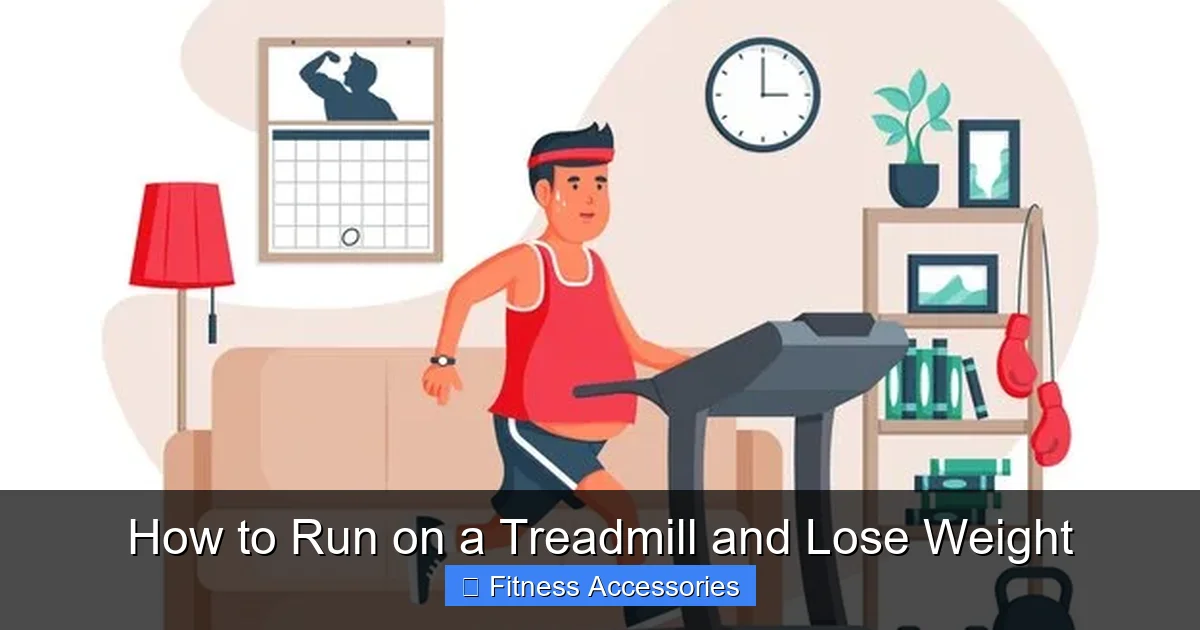
Visual guide about How to Run on a Treadmill and Lose Weight
Image source: img.freepik.com
The Warm-Up is Non-Negotiable
Never, ever start your run cold. A proper 5-10 minute warm-up increases blood flow to your muscles, raises your core temperature, and prepares your joints for the repetitive motion. On the treadmill, start with a very slow walk (2.5-3.0 mph) for 2-3 minutes. Then, transition to a light jog or brisk walk for another 3-5 minutes. This gradually primes your cardiovascular system and reduces the risk of strains. You can also do dynamic stretches like leg swings or walking lunges before you even step on the belt.
Mastering Your Form: Run Tall, Not Hard
Good running form is efficient form, which means you waste less energy and can run longer. On a treadmill, it’s easy to develop bad habits. Focus on these key points:
- Posture: Stand tall with a slight, natural lean from your ankles. Don’t slump forward at the waist. Imagine a string pulling your head toward the ceiling.
- Gaze: Look straight ahead, not down at your feet or the console. This helps maintain that upright posture.
- Stride: Aim for a quick, light cadence (steps per minute). Your feet should land underneath your hips, not out in front. Overstriding acts as a brake and jars your joints.
- Arms: Keep your elbows bent at about 90 degrees. Swing them forward and back in a relaxed, controlled motion from your shoulders, not across your chest.
Practice this form during your warm-up and cool-down. Avoid holding onto the handrails unless you’re absolutely necessary for balance. Leaning on the rails reduces the work your legs do, dramatically lowering your calorie burn and altering your natural gait.
The Safety Clip: Your Best Friend
Every treadmill has a magnetic safety clip. You must use it. Clip it to your clothing. If you fall or drift too far back, it will yank the key from the console and instantly stop the belt. This is a critical piece of equipment that prevents serious injury. Make it a habit the moment you step on.
Designing Your Treadmill Workouts for Maximum Fat Burn
This is the heart of the matter. To lose weight by running on a treadmill, you need strategic workouts. Two primary styles will serve you best: HIIT for metabolic fire and steady-state for endurance and pure calorie burn.
Visual guide about How to Run on a Treadmill and Lose Weight
Image source: rundreamachieve.com
1. High-Intensity Interval Training (HIIT): The Afterburn Effect
HIIT involves short bursts of near-maximum effort followed by periods of low-intensity recovery. Its magic lies in Excess Post-Exercise Oxygen Consumption (EPOC), often called the “afterburn effect.” Your body continues to burn extra calories at an elevated rate for hours after your workout as it works to restore oxygen levels, repair tissues, and return to normal. For weight loss, this is a huge win.
Sample Treadmill HIIT Workout (Total Time: 25-30 mins):
- Warm-up: 5 min brisk walk/jog.
- Interval Block (Repeat 6-8 times):
- Run at a challenging pace (you can only speak 1-2 words) for 45 seconds.
- Walk or very slowly jog for 75 seconds for recovery.
- Cool-down: 5 min slow walk.
Pro Tip: Use the treadmill’s quick-speed buttons or pre-program an “interval” workout to seamlessly switch between your work and recovery paces. Focus on the effort during the work interval, not the exact speed.
2. Steady-State Endurance Runs: The Calorie-Burning Workhorse
These are your longer, moderate-pace runs where you can hold a conversation (the “talk test”). They build aerobic capacity, improve fat-burning efficiency, and burn a significant number of calories during the session itself. They are also less mentally taxing than HIIT, making them easier to stick to consistently.
Sample Steady-State Workout:
- Warm-up: 5 min.
- Run at a comfortable, sustainable pace (where you can speak in full sentences) for 30-45 minutes.
- Cool-down: 5 min.
For weight loss, the key is duration here. As your fitness improves, gradually extend the time of your steady-state run by 5 minutes every week or two.
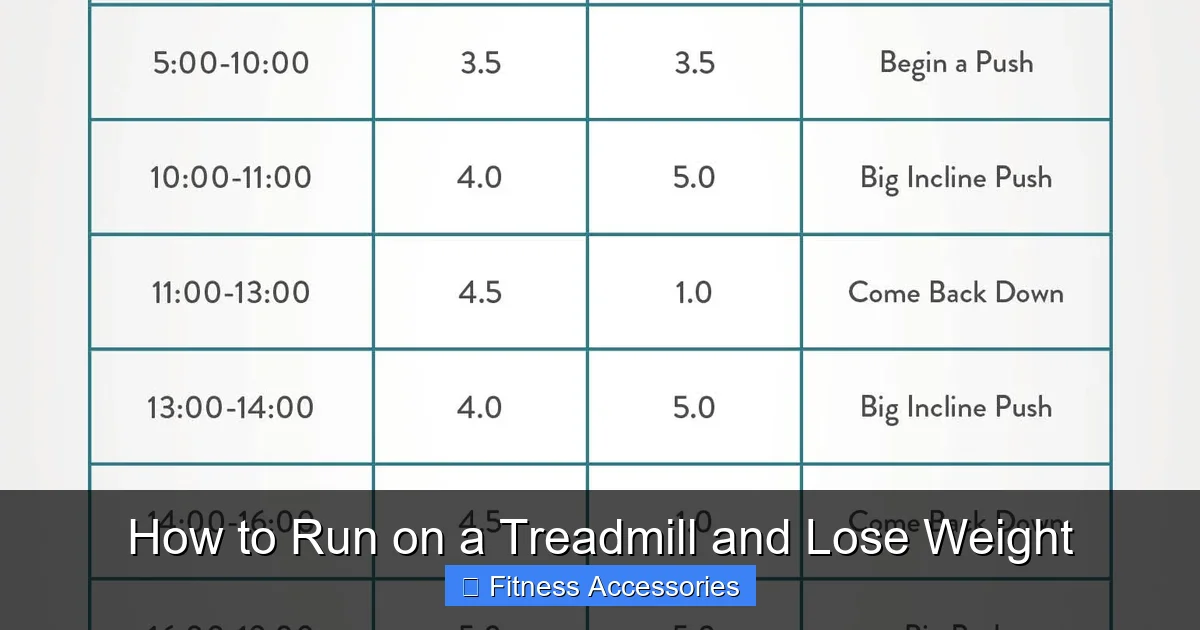
3. Incline Walking: The Underrated Fat-Melter
Do not underestimate power walking on an incline. It’s a fantastic, low-impact alternative (or addition) to running. Walking at a 5-10% incline can burn as many or more calories than running on a flat surface at a moderate pace, and it builds significant glute, hamstring, and calf strength.
Sample Incline Walk:
- Warm-up: 5 min flat walk.
- Set incline to 4-6%. Walk at a brisk pace (3.5-4.0 mph) for 20-30 minutes.
- Cool-down: 5 min flat walk.
Incorporate one incline walk session per week instead of a run to give your joints a break while still pushing your cardiovascular system.
The Nutrition Equation: You Cannot Outrun a Fork
Let’s be brutally honest: running on a treadmill to lose weight fails without dietary support. Exercise creates the opportunity for a deficit, but nutrition controls the size of that deficit.
Visual guide about How to Run on a Treadmill and Lose Weight
Image source: gethealthyu.com
Understanding the Deficit
A pound of fat is roughly equivalent to 3,500 calories. To lose one pound per week, you need a daily deficit of 500 calories. A 30-minute run might burn 300-400 calories. If you then consume a 400-calorie “reward” smoothie, you’ve netted zero. You must track your food intake (using an app like MyFitnessPal or Cronometer) to be aware of what you’re consuming. The goal is not starvation, but informed eating.
Prioritize Protein and Fiber
When in a calorie deficit, preserving lean muscle mass is crucial. Muscle burns more calories at rest than fat. Ensure you’re eating enough protein (about 0.7-1g per pound of target body weight) to repair the micro-tears in your muscles from running. Good sources: chicken, fish, eggs, Greek yogurt, lentils, tofu. Fiber (from vegetables, fruits, whole grains) keeps you full and aids digestion, making it easier to stay within your calorie targets.
Hydration and Timing
Dehydration can masquerade as hunger and drastically reduce performance. Drink water throughout the day. Regarding timing, there’s no perfect “before” or “after” window for most people. Eat a balanced meal 1-3 hours before your run for fuel. Have a protein-rich snack or meal within 1-2 hours after to aid recovery. For weight loss, the total daily calorie and macro intake matters more than precise timing.
Common Mistakes That Sabotage Your Treadmill Weight Loss
Avoid these pitfalls to stay on track.
Holding the Handrails
As mentioned, this is the #1 calorie burner killer. It supports your weight, reducing the load on your legs. It also promotes a slouched, inefficient posture. Only use them briefly to adjust speed or if you feel genuinely dizzy. Let your legs support your full body weight.
Ignoring Incline
Running on a 0% incline is like cycling on a flat road with no resistance. It’s easy. Adding even 1-2% incline mimics the gentle resistance of outdoor terrain and significantly increases the demand on your glutes and hamstrings, burning more calories and building more strength. Make incline your friend.
Doing the Same Workout Every Time
Your body adapts. After 2-3 weeks of the same run at the same pace, it becomes more efficient and burns fewer calories. You must progressively overload. Each week, try to add one of the following: 5 more minutes to your steady-state run, a slightly faster pace for your HIIT intervals, or an extra 0.5% to your incline walk. Keep challenging your body.
Using Calories Burned as a “Food Budget”
Treadmill calorie counters are notoriously inaccurate, often overestimating by 10-30%. Never use the displayed number as a license to eat that amount of food. Treat it as a rough estimate of your *additional* exertion beyond your BMR. Your primary tool for weight loss should be your food log, not the treadmill’s readout.
Staying Motivated for the Long Haul
Weight loss is a marathon, not a sprint. Motivation will wane. Here’s how to build systems that keep you going.
Schedule It Like an Appointment
You don’t “find” time to run; you make time. Block it out in your calendar. Treat it as a non-negotiable meeting with yourself. Morning runs are often best—they get done before the day’s excuses accumulate.
Entertain Yourself Strategically
Yes, the treadmill can be dull. But don’t just turn on the TV. Use the time productively. Listen to an audiobook or podcast you only allow yourself to enjoy during runs. Create powerful, upbeat playlists. Some people even watch shows or movies, but commit to only watching while running—if you stop, the show pauses. This turns entertainment into a running reward.
Set Process Goals, Not Just Outcome Goals
An outcome goal is “lose 20 pounds.” That’s vague and far away. Process goals are the actions you control: “Run 3 times per week for 30 minutes,” “Complete 8 intervals per session,” “Log my food every day.” Hitting these small, daily process goals builds momentum and confidence, and the weight loss inevitably follows.
Find a Community
You are not alone. Online forums, local running clubs (many have treadmill sessions in winter), or even a friend who checks in on your runs can provide accountability and encouragement. Sharing a struggle or a victory makes the journey feel less solitary.
Conclusion: Your Treadmill, Your Transformation
Learning how to run on a treadmill to lose weight is about merging science with strategy. The treadmill provides the controlled, measurable platform. You provide the consistency, the smart programming (HIIT, steady-state, incline), and the unwavering commitment to nutrition. Start where you are. Even a 20-minute walk on an incline is a victory. Track your progress, listen to your body, and remember that every single session adds up. The scale might not move every day—it won’t—but if you trust the process, your body will transform. Step on, clip in, and start running toward the healthier, lighter you. The machine is ready. Are you?
Frequently Asked Questions
Is running on a treadmill as effective for weight loss as running outdoors?
Yes, for weight loss, the treadmill can be even more effective because it eliminates external variables like wind and terrain, allowing for perfectly controlled and repeatable workouts. The calorie burn is primarily based on your speed, incline, and body weight, which the treadmill lets you precisely manage.
How often should I run on a treadmill to see weight loss results?
Aim for at least 3-5 sessions per week, combining both running and incline walking. Consistency is far more important than occasional long, intense sessions. Pair this with a calorie-conscious diet, and you should start seeing measurable results on the scale and in your clothing fit within 2-4 weeks.
How many calories do I actually burn running on a treadmill?
Treadmill calorie counters are estimates. A general rule is that a 155-pound person burns about 100 calories per mile run. A 30-minute run at a 6 mph pace (5 miles) would burn roughly 500 calories for that person. For a more accurate number, use a heart rate monitor, as it factors in your individual effort and fitness level.
Should I always run fast to lose weight?
No. While speed matters, incline is a more powerful tool for increasing calorie burn without the high impact of speed. A brisk walk at a high incline can burn more calories than a flat run. The best strategy is a mix: some HIIT (high speed/intensity) and some steady-state or incline work (moderate pace/high incline).
Is it safe to run on a treadmill every day?
For most people, running every day is not recommended due to the repetitive impact, even on a treadmill. Aim for 3-4 running days per week, and fill the other days with low-impact cross-training like cycling, swimming, or strength training. This reduces injury risk and allows your muscles to recover and adapt.
What’s the single most important factor for treadmill weight loss?
Nutrition. You can run 5 miles a day but still gain weight if you consistently eat more calories than you burn. Running creates the opportunity for a deficit, but you must control your food intake to make that deficit a reality. Track your meals, prioritize protein and vegetables, and be mindful of liquid calories.
Always consult with a physician before starting any new exercise program. Use gym equipment according to manufacturer guidelines and posted safety instructions. By using the facilities, you agree to our Terms and Conditions regarding equipment use and liability.
For more on creating a holistic fitness plan, understand the importance of rest days as outlined in our membership guidelines.
Remember, sustainable weight loss is a journey. Review our community policies to foster a positive environment for all members working toward their goals.