How to Properly Do a Deadlift with Dumbbells
The dumbbell deadlift is one of the most effective exercises for building full-body strength, targeting your glutes, hamstrings, and lower back with just a pair of dumbbells. This guide walks you through proper dumbbell deadlift form step by step, from setup to finish, so you can train safely and get maximum results. Whether you are a beginner or looking to refine your technique, you will find actionable tips, common mistakes to avoid, and expert advice to level up your dumbbell deadlift game.
The deadlift with dumbbells is a game-changer for anyone who wants serious strength gains without needing a barbell or a full gym setup. This compound movement works almost every major muscle group in your body, from your glutes and hamstrings to your core and upper back. If you have been avoiding deadlifts because you think they are too technical or too risky, this guide will change your mind.
Dumbbell deadlifts offer a more natural range of motion compared to barbell versions. They are easier on the joints, simpler to learn, and incredibly versatile. Whether you are training at home or in a small gym, a pair of dumbbells is all you need to build serious power and muscle.
In this article, we will break down every detail of how to properly do a deadlift with dumbbells. You will learn the correct setup, the muscles you are working, common mistakes to avoid, and how to progress over time. By the end, you will feel confident enough to add this exercise to your routine and start seeing real results.
Key Takeaways
- Proper Form Is Everything: A correct dumbbell deadlift setup protects your spine and maximizes muscle engagement.
- Multiple Variations Exist: You can choose from sumo, Romanian, and single-leg styles to target different muscle groups.
- Beginner-Friendly: Dumbbell deadlifts are easier to learn than barbell deadlifts, making them perfect for home workouts.
- Common Mistakes Are Fixable: Rounding the back, using too much weight, and poor hip hinge mechanics are all correctable with practice.
- Pair With Complementary Exercises: Combine dumbbell deadlifts with bent-over rows and hip thrusts for a balanced lower-body and back routine.
- Progressive Overload Matters: Gradually increase weight or reps to keep building strength over time.
📑 Table of Contents
- Why the Dumbbell Deadlift Deserves a Spot in Your Routine
- Muscles Worked During a Dumbbell Deadlift
- Step-by-Step Guide to Proper Dumbbell Deadlift Form
- Common Dumbbell Deadlift Mistakes to Avoid
- Dumbbell Deadlift Variations to Try
- How to Program Dumbbell Deadlifts Into Your Workout
- Quick Tips for a Better Dumbbell Deadlift
- Expert Insights on Dumbbell Deadlift Training
- Conclusion
Why the Dumbbell Deadlift Deserves a Spot in Your Routine
The dumbbell deadlift is often overlooked in favor of its barbell cousin. But make no mistake, this exercise packs a serious punch. It is one of the best compound movements you can do for overall strength and muscle development.
Unlike barbell deadlifts, dumbbell versions allow for a more natural stance and a freer range of motion. Your body can move the way it was designed to. This reduces stress on your knees and lower back, especially when you are just starting out.
Here are some key reasons to add this movement to your training:
- Full-body engagement: The dumbbell deadlift works your glutes, hamstrings, quadriceps, lower back, core, and even your forearms and grip.
- Minimal equipment needed: All you need is a pair of dumbbells and a flat surface.
- Scalable for all levels: You can start light and increase the weight as you get stronger.
- Improved functional strength: This movement mimics real-life lifting patterns, making everyday tasks easier.
- Better posture and core stability: Holding the dumbbells while maintaining a flat back builds deep core strength.
Compared to isolation exercises, the dumbbell deadlift gives you far more bang for your buck. It hits multiple muscle groups at once, saving you time in the gym. If you want an efficient, effective exercise that delivers results, the dumbbell deadlift is a top choice.
Muscles Worked During a Dumbbell Deadlift
Understanding which muscles you are activating helps you appreciate the exercise more and train with better intention. The dumbbell deadlift is a posterior chain powerhouse, but it does not stop there.
Primary Muscles
- Glutes: The gluteus maximus is the main driver during the upward phase of the lift.
- Hamstrings: These muscles work hard to extend your hips and stabilize your knees.
- Lower back (erector spinae): This muscle group keeps your spine neutral throughout the movement.
Secondary Muscles
- Quadriceps: They assist in the initial drive off the floor.
- Core muscles: Your abs and obliques stabilize your torso under load.
- Forearms and grip: Holding the dumbbells engages your hand and forearm muscles.
- Upper back and traps: These muscles help maintain an upright chest position.
When you perform the dumbbell hip hinge correctly, you create a balanced stimulus across all these muscles. This is why the deadlift is considered one of the most effective strength exercises available. For a deeper dive into training the posterior chain, you can also check out our guide on how to do a deadlift with a kettlebell, which covers similar movement patterns with a different piece of equipment.
Step-by-Step Guide to Proper Dumbbell Deadlift Form
Now let us get into the meat of the article. Proper deadlift form with dumbbells is the difference between a great workout and an injury. Follow these steps carefully and practice them until they become second nature.
Step 1: Set Up Your Starting Position
Stand with your feet hip-width apart. Place a pair of dumbbells on the floor in front of you. Your toes should point slightly outward. Keep a slight bend in your knees. This is your base of support, and it matters a lot.
The dumbbells should be directly over your midfoot. Imagine a line dropping from your shoelaces straight down to the weights. This alignment ensures proper force transfer throughout the lift.
Step 2: Hinge at the Hips
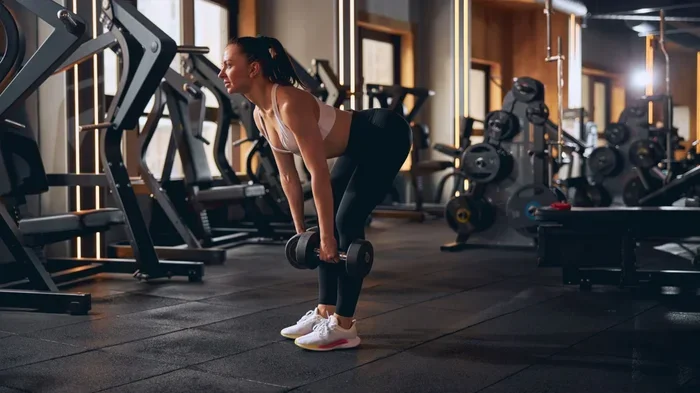
This is the most important part of the movement. Push your hips back behind you while keeping your chest up and your back flat. Do not bend your knees too much. The movement should feel like you are reaching your hips toward the wall behind you.
Lower your body until you can comfortably grip the dumbbells. Your shins should be close to the dumbbells but not touching them. Your arms should hang straight down from your shoulders.
Step 3: Grip the Dumbbells
Grab the dumbbells with an overhand grip or a mixed grip if you are using heavier weights. Your hands should be just outside your knees. Squeeze the dumbbells firmly to engage your forearms and create full-body tension.
Step 4: Drive Through the Floor
Take a deep breath and brace your core. Push through your heels as you stand up, driving your hips forward. Keep the dumbbells close to your body throughout the entire movement. They should travel up your shins and thighs.
At the top, squeeze your glutes hard and stand tall. Do not lean back at the top. Your shoulders should be over your hips, and your body should form a straight line.
Step 5: Lower the Dumbbells Back Down
Push your hips back and hinge at the waist to lower the dumbbells. Control the descent. Do not just drop the weights. Lower them until you feel a stretch in your hamstrings or until the dumbbells reach the floor. This completes one rep.
If you want to learn more about proper deadlift technique with another piece of equipment, our article on how to do a proper deadlift with kettlebell covers the same hip hinge mechanics in detail.
Common Dumbbell Deadlift Mistakes to Avoid
Even the best exercises can cause problems if you do them wrong. The dumbbell deadlift is no exception. Here are the most common mistakes and how to fix them.
Mistake 1: Rounding Your Back
This is the number one danger with any deadlift variation. A rounded back puts enormous pressure on your spinal discs. Keep your chest up and your back flat throughout the entire movement. If you feel your lower back starting to round, stop and reset.
Mistake 2: Using Too Much Weight Too Soon
Everyone wants to lift heavy. But starting with dumbbells that are too heavy leads to sloppy form. Choose a weight where you can complete all reps with perfect technique. You can always add more weight later.
Mistake 3: Lifting With Your Arms
Your arms are hooks, not movers. The power comes from your legs and hips. If you find yourself pulling with your biceps, the weight is probably too heavy or your setup is off.
Mistake 4: Letting the Dumbbells Drift Away From Your Body
The dumbbells should stay close to your shins and thighs throughout the lift. If they drift forward, you lose leverage and put more strain on your lower back. Keep them tight to your body.
Mistake 5: Forgetting to Brace Your Core
A strong core brace protects your spine. Before you lift, take a deep breath into your belly and tighten your abs as if someone is about to punch you in the stomach. Hold that tension throughout the rep.
Avoiding these mistakes will keep you safe and help you get the most out of every rep. For more dumbbell exercise tips and proper form guidance, check out our guide on how to do a bent over row with dumbbells, which also emphasizes keeping a flat back during a dumbbell hinge movement.
Dumbbell Deadlift Variations to Try
Once you have mastered the standard dumbbell deadlift, you can mix things up with these variations. Each one targets your muscles slightly differently and adds variety to your workouts.
Sumo Dumbbell Deadlift
Stand with a wide stance and your toes pointing outward. Grip the dumbbells between your legs. The sumo version places more emphasis on your inner thighs and glutes. It also allows for a more upright torso, which some people find more comfortable.
Romanian Dumbbell Deadlift
This variation starts from a standing position with the dumbbells held in front of your thighs. You hinge at the hips and lower the dumbbells along your legs while keeping a slight bend in your knees. The Romanian deadlift isolates the hamstrings and glutes more than the standard version.
Single-Leg Dumbbell Deadlift
This is an advanced variation that tests your balance and stability. Stand on one leg, hinge forward, and extend the other leg behind you while holding a dumbbell in the opposite hand. This is a fantastic exercise for building unilateral strength and fixing muscle imbalances.
For those interested in single-leg deadlift variations, our article on how to do single leg deadlift with kettlebell provides excellent guidance that applies to dumbbells as well.
How to Program Dumbbell Deadlifts Into Your Workout
Knowing how to do the exercise is only half the battle. You also need to know how to program it effectively. Here are some practical guidelines to get the most out of your dumbbell deadlift training.
For Beginners: Start with 3 sets of 8 to 10 reps using a light to moderate weight. Focus entirely on learning the movement pattern. Rest for 60 to 90 seconds between sets. Practice 2 to 3 times per week with at least one rest day in between.
For Intermediate Lifters: Increase to 4 sets of 6 to 8 reps with a heavier weight. You can also try alternating between the standard and Romanian variations. Rest for 90 seconds to 2 minutes between sets.
For Advanced Lifters: Use 4 to 5 sets of 4 to 6 reps with challenging weight. Incorporate single-leg variations and tempo training (slow lowering phases). Rest for 2 to 3 minutes between heavy sets.
The dumbbell deadlift pairs well with many other exercises. For a balanced lower-body workout, you can follow it up with hip thrusts with dumbbells and some goblet squats. This combination targets your glutes, hamstrings, and quads from multiple angles.
| Level | Sets | Reps | Rest | Frequency |
|---|---|---|---|---|
| Beginner | 3 | 8-10 | 60-90 sec | 2-3x/week |
| Intermediate | 4 | 6-8 | 90 sec-2 min | 2-3x/week |
| Advanced | 4-5 | 4-6 | 2-3 min | 2-3x/week |
Quick Tips for a Better Dumbbell Deadlift
Here are some quick, actionable tips to improve your dumbbell deadlift right away:
- Wear flat shoes: Avoid cushioned running shoes. A flat sole gives you a stable base and better force transfer.
- Use chalk or grip aids: If your hands slip, a bit of chalk makes a big difference.
- Film yourself: Recording your sets helps you spot form issues you cannot feel.
- Warm up your hips: Do some hip circles and light stretching before you start lifting heavy.
- Breathe properly: Inhale before you lift, brace your core, and exhale as you stand up.
- Start light: Perfect form with a lighter weight beats sloppy form with heavy weight every time.
Expert Insights on Dumbbell Deadlift Training
Many strength coaches agree that the dumbbell deadlift is one of the most underrated exercises in home fitness. Unlike barbell deadlifts that require a lot of space and specialized equipment, dumbbell deadlifts can be done in a small room with minimal setup.
The key to getting stronger is consistency and progressive overload. This means gradually increasing the weight, the number of reps, or the number of sets over time. Your body adapts to stress, so you need to keep challenging it to keep growing stronger.
Another important insight is to listen to your body. Soreness is normal, but sharp pain is not. If you feel any pain in your lower back or joints, stop the exercise and reassess your form. Sometimes less weight and better technique produce far better results than pushing too hard.
For a well-rounded home workout routine that includes the dumbbell deadlift, you might also want to explore our article on how to workout with dumbbells at home for beginners. It covers essential dumbbell exercises and programming tips that complement your deadlift practice perfectly.
Conclusion
The deadlift with dumbbells is one of the most effective, accessible, and rewarding exercises you can do. It builds full-body strength, improves your posture, and boosts your confidence in the gym and beyond. With the proper setup, a focus on form, and consistent practice, you will see real results in no time.
Remember to start light, master the hip hinge, and avoid the common mistakes we covered. Try different variations to keep your workouts fresh and challenging. And most importantly, enjoy the process of getting stronger.
Your journey to better strength starts with a single rep. Grab a pair of dumbbells, follow the steps in this guide, and take the first step toward a stronger, more confident you.
Frequently Asked Questions
Can beginners do a deadlift with dumbbells?
Absolutely. The dumbbell deadlift is one of the best exercises for beginners because it is easier to learn than the barbell version. Start with light weights, focus on your form, and gradually increase the load as you get comfortable with the movement.
What weight should I use for dumbbell deadlifts?
There is no one-size-fits-all answer. Beginners should start with 15 to 25 pounds per dumbbell and focus on technique. Intermediate lifters can go up to 40 to 60 pounds, and advanced lifters can use even heavier weights. The key is to choose a weight where you can maintain perfect form for all your reps.
How is a dumbbell deadlift different from a barbell deadlift?
Dumbbell deadlifts allow a more natural stance and a freer range of motion. They are generally easier on the lower back and joints. Barbell deadlifts typically allow for heavier loads but require more space and technical proficiency. Both are excellent exercises with their own unique benefits.
What muscles do dumbbell deadlifts work?
The dumbbell deadlift primarily targets your glutes, hamstrings, and lower back. It also engages your quadriceps, core, forearms, and upper back. This makes it a fantastic full-body exercise that builds functional strength across multiple muscle groups.
Can I do dumbbell deadlifts every day?
It is best to allow at least one rest day between sessions targeting the same muscle groups. For most people, 2 to 3 sessions per week is ideal. This gives your muscles and joints enough time to recover and grow stronger between workouts.
Are single-leg dumbbell deadlifts effective?
Yes, single-leg dumbbell deadlifts are highly effective for building unilateral strength, improving balance, and addressing muscle imbalances. They are an advanced variation that takes more balance and stability, so master the standard two-leg version first before trying this one.