How to Practice Rowing Without a Rowing Machine
Practicing rowing without a rowing machine is easier than you think. You can build strength, boost endurance, and refine your stroke using simple bodyweight moves, resistance bands, and household items. This guide covers every method you need to get a real rowing workout at home with no equipment required.
You do not need a rowing machine to get a great rowing workout. Whether you are at home, traveling, or just do not own one, you can still train like a rower. Practicing rowing without a rowing machine is a smart move for beginners and pros alike.
Many athletes use dry land drills to sharpen their form and build the muscles rowing targets. The good news is that these same methods work for anyone. You can build a strong, cardio-rich routine using just your body, a few simple tools, and a little space.
This guide walks you through every practical way to practice rowing without a rowing machine. You will learn drills, exercises, and tips that make your next session on the water or machine feel easier and more powerful.
Key Takeaways
- Bodyweight rowing drills let you mimic the rowing motion anywhere with zero equipment.
- Resistance band exercises replicate the pulling power needed for a real rowing stroke.
- Household item substitutes like towels and water bottles can mimic the feel of a rowing machine.
- Proper form matters more than equipment — practicing the right technique prevents injury and builds real strength.
- Dry land rowing training improves your water or machine performance surprisingly fast.
- Consistency beats intensity — short daily sessions without a machine still build endurance and power.
📑 Table of Contents
- Why Practice Rowing Without a Machine?
- Bodyweight Rowing Exercises You Can Do Today
- Use Resistance Bands to Simulate Rowing
- Turn Household Items Into Rowing Gear
- Master Your Rowing Form on Land
- Build a Full Rowing Workout Without a Machine
- Common Mistakes to Avoid When Training Without a Machine
- Expert Tips to Maximize Your No-Machine Rowing Practice
- Conclusion
Why Practice Rowing Without a Machine?
There are many reasons you might not have access to a rowing machine. They can be expensive. They take up space. Or maybe your gym does not have one available. Whatever the reason, skipping a machine does not mean skipping the workout.
Training without a machine also helps you focus on form. When you remove the machine, you pay closer attention to how your body moves. This awareness carries over when you finally sit on a rowing machine for beginners or hit the water.
Benefits of Dry Land Rowing Training
- Builds core strength — Your abs and lower back do the heavy lifting in every rowing stroke.
- Improves flexibility — The reach and pull motion stretches your hamstrings and shoulders.
- Boosts cardiovascular health — Bodyweight rowing drills get your heart pumping fast.
- Zero cost — You need nothing more than your own body to start.
- Portable and convenient — Do these drills in your living room, hotel room, or park.
Bodyweight Rowing Exercises You Can Do Today
The best way to practice rowing without a rowing machine is to mimic the rowing stroke with your own body weight. These exercises target the same muscle groups a machine works: legs, back, arms, and core.
The Bodyweight Squat to Reach
Stand with your feet shoulder-width apart. Squat down and reach your arms forward like you are grabbing the handle of an oar. Stand back up and pull your arms back toward your chest. This movement copies the drive phase of a rowing stroke perfectly.
Do 15 reps for 3 sets. Keep your back straight and your core tight. You will feel your legs and back working right away.
The Prone Row Hold
Lie face down on the floor. Extend your arms straight out in front of you. Now pull your elbows back toward your hips, squeezing your shoulder blades together. Hold for 3 seconds at the top.
This exercise builds the pulling strength you need for every stroke. It also strengthens your upper back, which helps prevent slouching and poor posture.
The Standing Pull Apart
Hold your arms straight out in front of you at shoulder height. Pull them apart until your arms form a T shape. Squeeze your back muscles hard at the end. Return slowly.
This simple move targets your rear delts and upper back. It is one of the best rowing exercise at home without machine options you can do.
Use Resistance Bands to Simulate Rowing
Resistance bands are cheap, light, and incredibly effective for rowing without equipment. They give you something to pull against, which makes your muscles work just like they would on a machine or in a boat.
Band-Assisted Rowing Drill
Anchor a resistance band to a door handle or sturdy post. Stand facing it and grab the band with both hands. Step back until the band is taut. Now pull the band toward your chest, keeping your elbows close to your body.
This drill closely matches the feeling of pulling an oar or a machine handle. Do 12 to 15 reps for 3 sets. You can adjust the band strength to make it harder or easier.
The Seated Band Pull
Sit on the floor with your legs extended. Loop a band around your feet and hold the ends in each hand. Pull the band toward your torso while leaning back slightly. This position closely mirrors the seated row on a machine.
This exercise is perfect for indoor rowing alternatives when you want to feel the full-body pull without standing up.
Turn Household Items Into Rowing Gear
You probably already have everything you need at home to simulate a rowing workout. A little creativity goes a long way when you are learning how to row at home without a rowing machine.
The Towel Row
Take a bath towel and fold it in half. Hold each end and step on the middle with one foot. Lean back slightly and pull the towel toward your chest. This mimics the handle of a rowing machine surprisingly well.
Switch feet halfway through your set. This simple trick gives you a balanced workout for both sides of your body.
Water Bottle Weights
Fill two water bottles with sand or rice. Hold one in each hand and perform a rowing motion by pulling them back toward your hips. The uneven weight challenges your stabilizer muscles, which helps improve balance and control.
Use bottles of equal size to keep things fair. Start with lighter bottles and work up as your strength grows.
The Table Row
Grab a sturdy table and sit on the floor facing it. Hook your heels under the table edge. Hold the table surface and lean back. Now pull your chest toward the table. This exercise hits your back, arms, and core all at once.
Make sure the table is stable before you try this. A wobbly table can tip and cause injury. Use a heavy wooden table for best results.
Master Your Rowing Form on Land
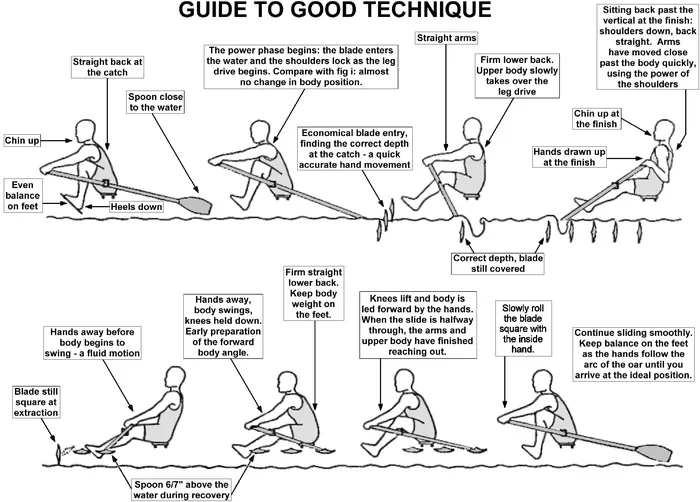
One of the biggest advantages of training without a machine is that you can slow down and focus on technique. Good rowing form training translates directly to better performance on the water or a machine.
The Catch Position
The catch is the starting point of every rowing stroke. Stand with your knees slightly bent and lean forward from your hips. Reach your arms out in front of you. Your shoulders should be relaxed and ahead of your hips.
Practice this position slowly. Feel the stretch in your hamstrings and calves. This is where power begins, so getting it right matters a lot.
The Drive Phase
From the catch, push through your legs first. Then lean back slightly. Finally, pull the handle toward your lower chest. The sequence is legs, body, arms — in that exact order.
When you do rowing exercise at home without machine, focus on this sequence. Doing it slowly and deliberately builds muscle memory that kicks in automatically when you are on a machine or in a boat.
The Recovery Phase
The recovery is the return to the catch. Extend your arms first, then lean forward from your hips, and finally bend your knees. This should feel smooth and controlled, not rushed.
A slow recovery gives your muscles a brief rest before the next powerful drive. It also helps you maintain a steady rhythm, which is key for building endurance.
Build a Full Rowing Workout Without a Machine
Now that you know the exercises, it is time to put them together into a real workout. A good rowing workout at home without machine should include a warm-up, main set, and cool-down.
Sample 20-Minute No-Machine Rowing Workout
Warm-Up (3 minutes): Jumping jacks, arm circles, and gentle squats to get your blood flowing.
Main Set (14 minutes):
- Bodyweight squat to reach — 15 reps
- Resistance band row — 12 reps
- Prone row hold — 10 reps
- Towel row — 12 reps each side
- Rest for 30 seconds, then repeat the circuit 3 times
Cool-Down (3 minutes): Gentle hamstring stretches, shoulder stretches, and deep breathing.
Do this routine 3 to 4 times per week. You will notice improvements in your strength, endurance, and rowing technique within just two weeks.
How This Compares to Machine Rowing
Machine rowing gives you smooth, consistent resistance and precise metrics like split time and stroke rate. Bodyweight and band work build raw strength and technique but lack that smooth, fluid feel. The best approach combines both when possible.
For more on how long sessions should last, check out how long to row 5K on a rowing machine to set realistic goals for your training.
Common Mistakes to Avoid When Training Without a Machine
Training without a machine is effective, but it is easy to make mistakes that slow your progress or cause injury.
Skipping the Warm-Up
Cold muscles do not perform well and tear easily. Always spend 3 to 5 minutes warming up before you start any rowing without a rowing machine session.
Rounding Your Back
A rounded back puts dangerous pressure on your spine. Keep your chest lifted and your core engaged during every rep. If you feel your back rounding, slow down and check your posture.
Using Only Your Arms
Rowing is a full-body movement. If you pull with just your arms, you miss the power from your legs and back. Focus on driving through your legs first in every exercise.
Going Too Fast Too Soon
Speed means nothing without proper form. Start slow and master each movement before trying to go faster. Quality always beats quantity.
Expert Tips to Maximize Your No-Machine Rowing Practice
Experienced rowers use these simple tricks to get better results from their land-based training.
- Film yourself. Set up your phone and record your form. Watch the video to spot issues you cannot feel in the moment.
- Breathe with the stroke. Exhale during the drive and inhale during the recovery. This breathing pattern improves endurance and rhythm.
- Add a balance challenge. Stand on one leg during your squat-to-reach to build stability and engage your core even more.
- Train your antagonist muscles. Do push-ups and shoulder presses alongside your rowing moves to keep your body balanced and prevent muscle imbalances.
- Set a consistent schedule. Short daily sessions beat long sporadic ones. Aim for 15 to 20 minutes every day for the best results.
For more guidance on using a rowing machine properly when you do get access to one, read how to properly use a rowing machine for beginners to build a strong foundation.
Conclusion
Practicing rowing without a rowing machine is one of the smartest things you can do for your training. You do not need expensive gear or a gym membership. Your own body, a resistance band, and a few household items are all you need to build strength, improve your form, and boost your cardiovascular fitness.
The exercises in this guide cover every part of the rowing stroke. You can train your legs, back, arms, and core with movements that closely match what you would do on a machine or in a boat. Stay consistent, focus on form, and you will see real results.
Start with one or two exercises today. Build up slowly. Before long, you will be ready to take your rowing without a rowing machine practice to the next level — whether that means hitting the water or sitting down on a machine with more power and confidence than ever before.
For more tips on training at home, also check out how to do rowing exercise at home without machine and how to train for rowing without a rowing machine for deeper insights into building your routine.
Frequently Asked Questions
Can I get a full cardio workout from rowing without a machine?
Yes, absolutely. Bodyweight rowing drills and resistance band exercises elevate your heart rate and build endurance. The key is to keep your rest periods short and maintain a steady pace throughout your session.
What is the best substitute for a rowing machine at home?
A resistance band is the closest substitute. It provides adjustable resistance and mimics the pulling motion of a rowing stroke very well. A towel or a sturdy table can also work for creative rowing simulations.
How often should I practice rowing without a machine?
Aim for 3 to 4 sessions per week, lasting 15 to 20 minutes each. Consistency matters more than duration. Daily short sessions will build strength and technique faster than long occasional workouts.
Will practicing without a machine improve my rowing machine performance?
Yes. Training without a machine builds the same muscle groups and improves your technique. When you return to a machine, you will notice better form, more power, and improved endurance.
Do I need any equipment to start practicing rowing at home?
No equipment is required to start. Your body weight is enough for most exercises. A resistance band and a towel can enhance your workout, but they are optional additions, not necessities.
Is rowing without a machine safe for beginners?
It is very safe. Bodyweight rowing drills are low impact and easy to modify. Start with fewer reps and focus on proper form. If you feel any pain, stop and adjust your position before continuing.