How to Keep Yoga Mat from Sliding on Carpet

Dealing with a sliding yoga mat on carpet is frustrating and unsafe. The key to stopping the slide is understanding that carpet absorbs moisture and creates a smooth, low-friction surface. Effective solutions include using a high-traction mat pad, the clever towel trick, selecting the right mat material, and maintaining both mat and carpet. This guide breaks down every method, from quick fixes to permanent upgrades, ensuring your practice remains stable and focused.
Key Takeaways
- Problem Source: Carpet’s texture and lack of moisture absorption are the primary reasons yoga mats slide, not necessarily a mat defect.
- Mat Pad is King: A dedicated non-slip yoga mat pad or ” gripper” is the most effective and reliable solution for carpeted surfaces.
- The Towel Trick Works: Placing a microfiber or cotton towel (dampened for hot yoga) under your mat creates instant, temporary grip via increased friction.
- Material Matters: PVC and TPE mats generally offer better inherent grip on carpet than smooth natural rubber or jute, but a pad optimizes any mat.
- Cleanliness = Grip: Regularly cleaning your mat’s underside and the carpet area removes dust and debris that act as lubricants, significantly improving traction.
- Carpet Type is Key: Low-pile commercial carpet is easier to manage than deep, plush residential carpet, which may require a thicker pad or alternative flooring.
- Safety First: Never use double-sided tape or adhesive strips on carpet, as they damage fibers and create an unstable, lumpy surface.
📑 Table of Contents
- Why Your Yoga Mat Slides on Carpet (And Why It’s a Bigger Problem Than You Think)
- Solution 1: The Gold Standard – Invest in a Non-Slip Yoga Mat Pad
- Solution 2: The Ingenious & Inexpensive Towel Trick
- Solution 3: Choose a Mat with a Better “Grip Profile” for Carpet
- Solution 4: The Critical Role of Cleaning and Maintenance
- Solution 5: Advanced & Creative Fixes for Stubborn Situations
- Conclusion: Finding Your Perfect Stable Practice
Why Your Yoga Mat Slides on Carpet (And Why It’s a Bigger Problem Than You Think)
You unroll your mat, step onto your downward-facing dog, and suddenly you’re doing a very wobbly, very un-yogic version of the pose as your mat skids across the floor. If this sounds familiar, you’re not alone. Sliding on carpet is one of the most common frustrations for home practitioners. But it’s more than just annoying—it’s a genuine safety hazard. A sliding mat can cause muscle strains from overcompensating, disrupt your flow, and break the sacred concentration of your practice. The core issue is a physics mismatch: most yoga mats are designed with a sticky top surface for hands and feet, and a smoother, often nubby bottom surface intended for *hard* floors like wood or tile. Carpet, however, is a soft, fibrous, and absorbent material. The mat’s smooth bottom can’t “grip” the carpet’s loops or pile. Instead, it rests on top, allowing the entire mat to act like a sled on snow. Furthermore, carpet traps dust, hair, and carpet fibers, which can create a tiny layer of lubrication between the two surfaces. So, the solution isn’t about finding a “stickier” mat for carpet; it’s about creating a bridge between two incompatible surfaces.
Solution 1: The Gold Standard – Invest in a Non-Slip Yoga Mat Pad
If you want a permanent, reliable fix, a yoga mat pad (also called a gripper, rug pad, or underlay) is your best friend. These are specifically designed to sit between your mat and the floor, providing the necessary friction. They are not the same as the thin, rubbery pads sometimes sold for hard floors.

Visual guide about How to Keep Yoga Mat from Sliding on Carpet
Image source: wigglywisdom.com
Types of Mat Pads for Carpet
- Open-Cell Foam Pads: These are dense, often black or grey foam pads with an open, bumpy texture. The bumps press into the carpet pile, anchoring the pad in place, while the top surface provides a high-traction base for the mat. They are excellent for low-to-medium pile carpet.
- Rubber-Backed Pads: Some pads feature a natural rubber or PVC dot pattern on the bottom. The dots sink into the carpet, creating hundreds of tiny anchor points. These are very effective but can be harder to pull up from deep-pile carpet.
- Gripper Fabrics: Brands like Manduka and others sell their own proprietary gripper pads made from a textured, felt-like material. They are washable and designed to work seamlessly with their mats.
How to Choose the Right Pad
Measure your mat and get a pad that is the same size or slightly larger. Thickness is critical: for standard home carpet (1/2″ to 1″ pile), a 1/4″ to 3/8″ thick pad is ideal. For very plush, deep carpet, you may need a 1/2″ pad. The pad should feel substantial—flimsy pads won’t provide enough downward pressure to engage with the carpet fibers. Look for pads labeled “for carpet” or “for rugs,” as these have the aggressive texture needed.
Installation and Care
Lay the pad flat on the carpet. Its weight and textured bottom should hold it in place. Then, center your yoga mat on top. The combination of the pad’s grip on the carpet and the increased friction against your mat’s bottom will virtually eliminate movement. Most quality pads are washable—check the label. A quick vacuum of the pad’s surface occasionally will keep it free of carpet fibers and maintain its grip.
Solution 2: The Ingenious & Inexpensive Towel Trick
Before you buy anything, try this hack that yogis have used for decades, especially in hot yoga studios where sweat is a factor. It works brilliantly on carpet too. The principle is simple: you increase the coefficient of friction between two surfaces by introducing a third, grippier material.

Visual guide about How to Keep Yoga Mat from Sliding on Carpet
Image source: matspick.com
Step-by-Step Towel Method
- Select a towel: A medium-weight cotton or microfiber bath towel (around 24″x48″) is perfect. It should be larger than your mat’s footprint but not so big it drapes excessively onto the floor.
- Lay it out: Place the towel flat on the carpet where you intend to practice.
- Position your mat: Center your yoga mat directly on top of the towel.
- For Hot Yoga: Lightly dampen the towel with a spray bottle. The slight moisture creates a temporary “suction” effect between the towel fibers and the carpet, and also adds weight. Important: The towel should be damp, not soaking wet.
- For Regular Practice: A dry towel works perfectly fine.
Why This Works
The terry cloth loops of a cotton towel or the textured weave of microfiber are far more aggressive at catching onto carpet fibers than the smooth bottom of a yoga mat. The towel essentially “grips” the carpet. Your mat then grips the towel. The towel also acts as a barrier, preventing carpet fibers from working their way up and getting trapped under your mat, which can also cause shifting. This method costs you nothing if you already have a towel, and it’s instantly reversible.
Pro-Tips & Variations
- Use a dedicated old towel you don’t mind getting some carpet wear on.
- For extra security, you can lightly mist the carpet *under* the towel with water (test for colorfastness first!).
- Some practitioners fold the towel lengthwise and place it only under the hands and feet zones of their mat for a more targeted approach.
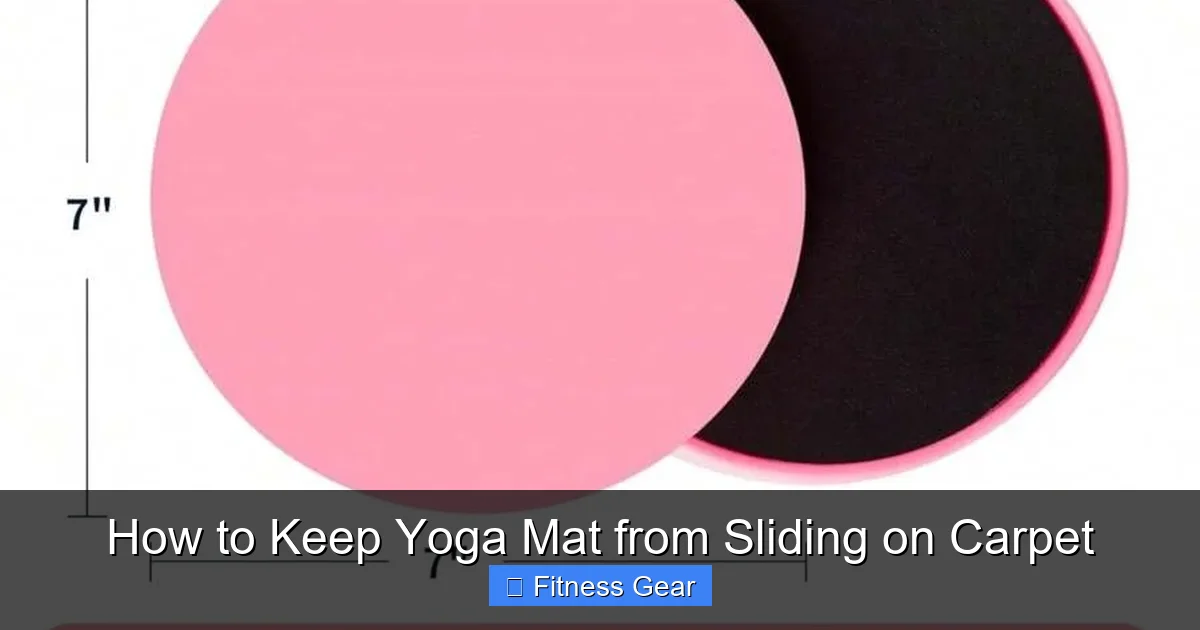
Solution 3: Choose a Mat with a Better “Grip Profile” for Carpet
While no mat is engineered for carpet, some designs and materials perform better than others due to their bottom texture.
Visual guide about How to Keep Yoga Mat from Sliding on Carpet
Image source: img.ltwebstatic.com
Material Breakdown
- PVC (Polyvinyl Chloride): Traditional, durable, and often has a slightly more textured, nubby bottom surface than natural rubber. This texture can catch on low-pile carpet better.
- TPE (Thermoplastic Elastomer): A lighter, more eco-friendly foam. The bottom is usually smooth but can have a subtle pattern. Performance varies widely by brand.
- Natural Rubber & Jute: These offer fantastic grip on *hard* surfaces but are notoriously slick on carpet. Their bottoms are designed to suction to smooth floors, not interlock with fibers.
- PER (Polymer Environmental Resin): A high-end, non-toxic material. Like rubber, it’s optimized for hard floors and will slide on carpet.
Texture is Everything
When shopping, flip the mat over. Look for a bottom with pronounced, raised textures—dots, waves, or a “dimpled” pattern. These physical protrusions are your best bet for mechanically engaging with the carpet pile. Avoid mats with a completely smooth, featureless back. Some brands, like Gaiam or BalanceFrom, specifically market “all-surface” mats with more aggressive bottom textures that claim better performance on carpet. Read reviews specifically mentioning “carpet” or “rug.”
The Double-Sided Mat Option
A few brands make double-sided mats with different textures on each side. You can use the grippier, textured side down for carpet and the sticky side up for your practice. This is a great all-in-one solution if you practice on multiple surfaces.
Solution 4: The Critical Role of Cleaning and Maintenance
Often, the problem isn’t your mat or carpet, but the invisible layer of debris between them. A clean mat bottom and a clean carpet area are non-negotiable for good traction.
Cleaning Your Yoga Mat’s Underside
This is the step most people forget. Flip your mat over. You’ll likely see a buildup of carpet fibers, dust, hair, and general grime. This creates a slick film. Use a vacuum cleaner with a hose attachment to thoroughly clean the entire bottom surface. For a deeper clean, mix a solution of mild dish soap and water. Dampen (don’t soak) a cloth with the solution and wipe down the bottom. Immediately wipe with a clean, dry cloth. Never soak the mat, as water can seep into the core and degrade materials, especially foam mats. Hang or lay flat to dry completely before using.
Cleaning Your Carpet Area
Before you roll out your mat, vacuum the exact spot where you’ll practice. This removes loose particles that can act as ball bearings. For a weekly deep clean of the area, consider using a carpet cleaner or even just a damp cloth on the high-traffic zone. A clean, slightly “toothy” carpet pile will grip a mat pad or towel far better.
Mat Top Maintenance
While this affects your hands and feet more than sliding, a sweaty, dirty top surface can cause you to slip *on* the mat, which might make you think the whole setup is moving. Clean your mat’s top regularly according to its material (most can be wiped with a yoga mat cleaner or diluted vinegar solution). A clean top ensures you stay planted, so any movement you feel is genuinely the mat sliding on the floor.
Solution 5: Advanced & Creative Fixes for Stubborn Situations
For those with extra-plush carpet or who need a more integrated solution, consider these options.
1. The DIY Rug Pad Hack
Visit a home goods store and buy a piece of non-slip rug pad. Look for the kind with a bumpy, rubberized or felt surface. Cut it to your mat’s size. This is often cheaper than a branded yoga pad and just as effective. Ensure it’s a “pad” and not a “liner”—you want the grippy kind that goes under rugs.
2. Strategic Furniture Placement
If your yoga space is in a room with a low-pile area rug, try positioning your mat so that part of it is on the rug and part on the hard floor. The transition zone can sometimes create enough friction to stop full sliding. Or, practice against a wall or heavy piece of furniture. The mat can’t slide into the wall, creating a natural barrier.
3. The “Mat-in-a-Bag” for Storage & Transport
This is a pre-practice fix. When your mat is stored, it can develop a permanent set or crease that makes it lie unevenly. Always store your mat rolled loosely, not tightly, and preferably in a breathable bag. A mat that lies flat from the start has full contact with your chosen solution (pad, towel, carpet).
4. Consider Your Flooring Situation
If you practice in one spot regularly and have a deep-pile carpet that defies all solutions, it might be worth investing in a small, portable piece of flooring. A 4’x6’ piece of interlocking foam tiles (like those for kids’ playrooms) or a thin piece of plywood can create a hard, stable island in your room. Place your mat on that. It’s a bigger project but a permanent fix for dedicated practitioners.
Conclusion: Finding Your Perfect Stable Practice
Sliding on carpet doesn’t have to be your yoga’s new normal. The path to a stable practice is a simple progression: start with the free and easy towel trick to test if a simple friction boost solves your issue. If you need more, invest in a proper non-slip mat pad designed for carpet—this is the most reliable, long-term solution. Always pair any solution with diligent cleaning of both your mat’s underside and your practice spot. When buying a new mat, prioritize a textured bottom and read reviews from carpet users. Remember, your mat is your foundation. A solid, non-moving foundation allows you to focus on the true purpose of yoga: connecting breath, body, and mind, without the constant distraction of Readjusting your mat. Experiment with these methods, find what works for your specific carpet and mat, and reclaim the stability and safety your practice deserves.
Frequently Asked Questions
Will a regular yoga mat work on carpet without any accessories?
It might, especially on low-pile carpet if the mat has a textured bottom. However, most standard mats are designed for hard floors and will slide to some degree on carpet. Using a pad or towel is highly recommended for safety and stability.
Is the towel trick better than buying a mat pad?
The towel trick is an excellent, zero-cost solution that works very well for many people. A dedicated mat pad is more convenient (no folding/positioning a towel), often more durable, and can provide a slightly more integrated feel. For a permanent, set-and-forget solution, a pad is superior.
Can I use double-sided tape to keep my mat from sliding?
No, you should avoid adhesive tapes or strips. They can damage delicate carpet fibers, leave a sticky residue, and create an uneven, lumpy surface that is itself a tripping hazard. The tape will also degrade quickly from carpet abrasion and foot traffic.
How often should I clean the bottom of my yoga mat?
You should wipe or vacuum the bottom of your mat at least once a week if you practice regularly. If you notice it’s collecting visible carpet fibers or dust, clean it immediately. A clean bottom is essential for maintaining any kind of grip on any surface.
What if I have very high-pile, plush carpet?
Deep-pile carpet is the toughest challenge. You will likely need a thicker (1/2″) mat pad to bridge the gap and press down into the pile. The towel trick can also be more effective here, as the towel fibers can reach deeper into the carpet. In extreme cases, consider a portable flooring platform as mentioned in the advanced section.
Does mat thickness affect sliding on carpet?
Indirectly, yes. A very thin mat (1-2mm) can be more prone to sliding because it has less mass and can conform to minor carpet irregularities. A standard 4-6mm mat has more weight and stability. A thicker mat paired with a proper pad is an ideal combination for carpeted surfaces.