Can You Do Barbell Rows on a Smith Machine
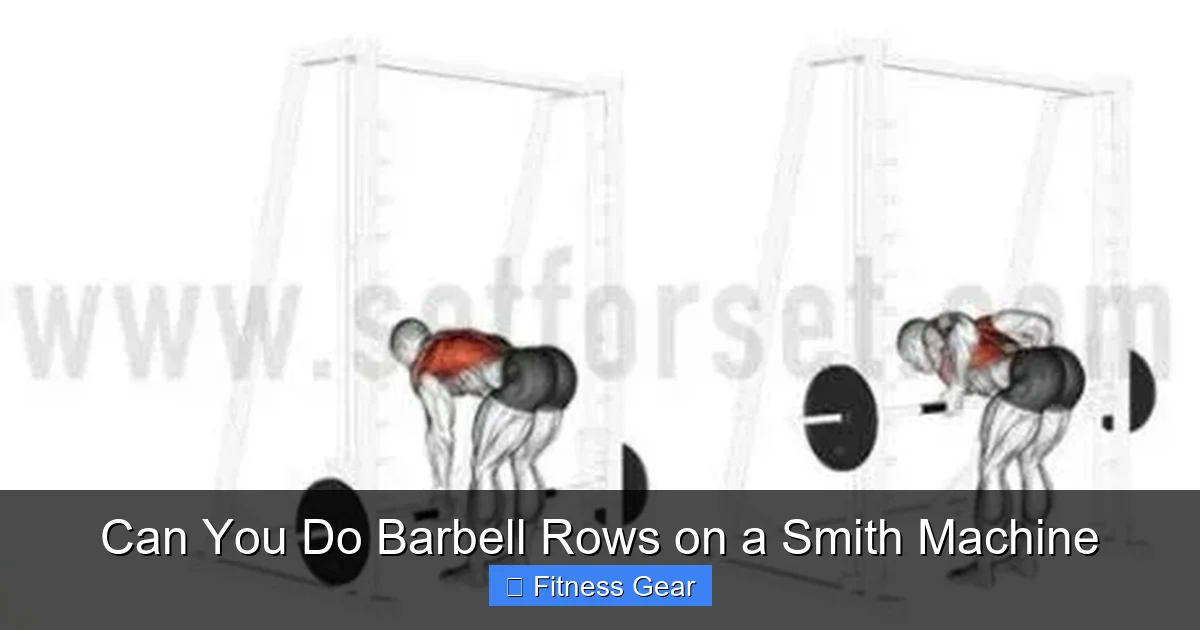
Yes, you can do barbell rows on a Smith machine, but you must adjust your technique to avoid injury and maximize results. We break down the setup, form cues, pros, cons, and smarter alternatives so you can decide what works best for your back training.
Key Takeaways
- Smith machine rows are possible: The fixed path can be used safely with proper foot placement and grip.
- Form changes matter: Slight torso angle and elbow positioning compensate for the machine’s limited range.
- Pros and cons: Smith rows offer stability for beginners but reduce core activation for advanced lifters.
- Safety first: Use collars, keep the bar close to your body, and never lock out your knees.
- Alternative exercises: Free‑weight barbell rows, dumbbell rows, and cable rows often provide better muscle balance.
- Programming tips: Rotate Smith rows with free‑weight rows to keep training fresh and prevent plateaus.
- Progress tracking: Log weight, reps, and range of motion to see real improvements over time.
📑 Table of Contents
- Introduction: Why the Question Matters
- Understanding the Smith Machine
- Setting Up for Barbell Rows on a Smith Machine
- Executing the Smith Machine Barbell Row
- Pros and Cons of Smith Machine Barbell Rows
- Alternatives to Smith Machine Barbell Rows
- Programming Smith Machine Rows Into Your Routine
- Conclusion: Should You Do Barbell Rows on a Smith Machine?
Introduction: Why the Question Matters
When you walk into a gym and see a shiny Smith machine, it’s tempting to ask, “Can you do barbell rows on a Smith machine?” The answer isn’t a simple yes or no. It depends on your goals, experience level, and how you set up the movement.
Back training is a cornerstone of any strength program. A strong back improves posture, boosts pulling power, and protects the spine. Traditional barbell rows with a free bar are a classic choice, but many gyms have limited free‑weight space, and the Smith machine is always there, waiting.
In this guide we’ll explore the mechanics of doing barbell rows on a Smith machine, compare them to free‑weight rows, and give you practical tips to keep the exercise safe and effective. By the end, you’ll know exactly when to reach for the Smith bar and when to stick with the dumbbell.
Understanding the Smith Machine
What Is a Smith Machine?
A Smith machine is a weight‑training apparatus that guides a barbell along a fixed vertical or slightly angled track. The bar is attached to the track by rollers, which means it can only move up and down (or a little forward‑back). Most models have safety catches that lock the bar at any point, providing a built‑in spotter.
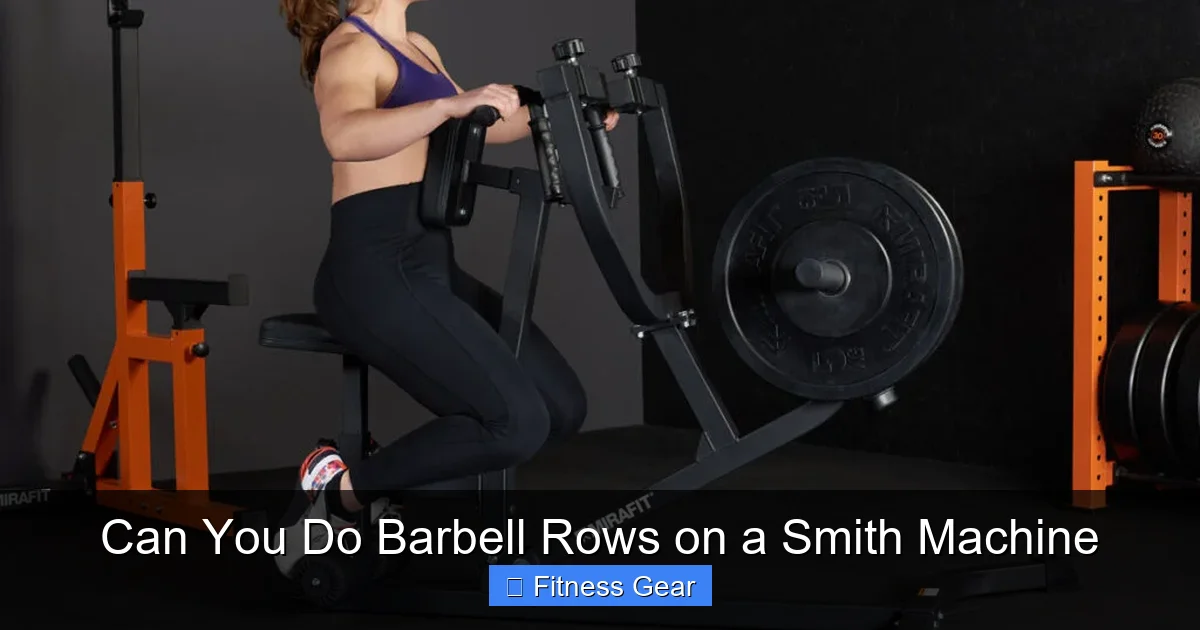
Visual guide about Can You Do Barbell Rows on a Smith Machine
Image source: mirafit.co.uk
How the Fixed Path Affects Pulling Motions
Because the bar can’t swing freely, the body must adapt. In a standard barbell row, the bar moves in a slightly curved path as you pull it toward your torso. On a Smith machine, the bar’s path is straight, so you need to adjust your torso angle and elbow trajectory to keep the bar close to your body.
Who Benefits Most?
- Beginners: The safety catches and guided motion reduce the fear of dropping the weight.
- Rehab athletes: Controlled motion can limit stress on the lower back during early recovery.
- Time‑pressed lifters: The Smith machine is often less crowded, making it easier to fit rows into a busy workout.
Setting Up for Barbell Rows on a Smith Machine
Equipment Checklist
- Smith machine with adjustable safety catches.
- Standard Olympic bar (or the built‑in Smith bar).
- Weight plates that fit the machine’s sleeve.
- Flat, non‑slippery floor surface.
- Optional: lifting straps for grip assistance.
Foot Placement and Stance
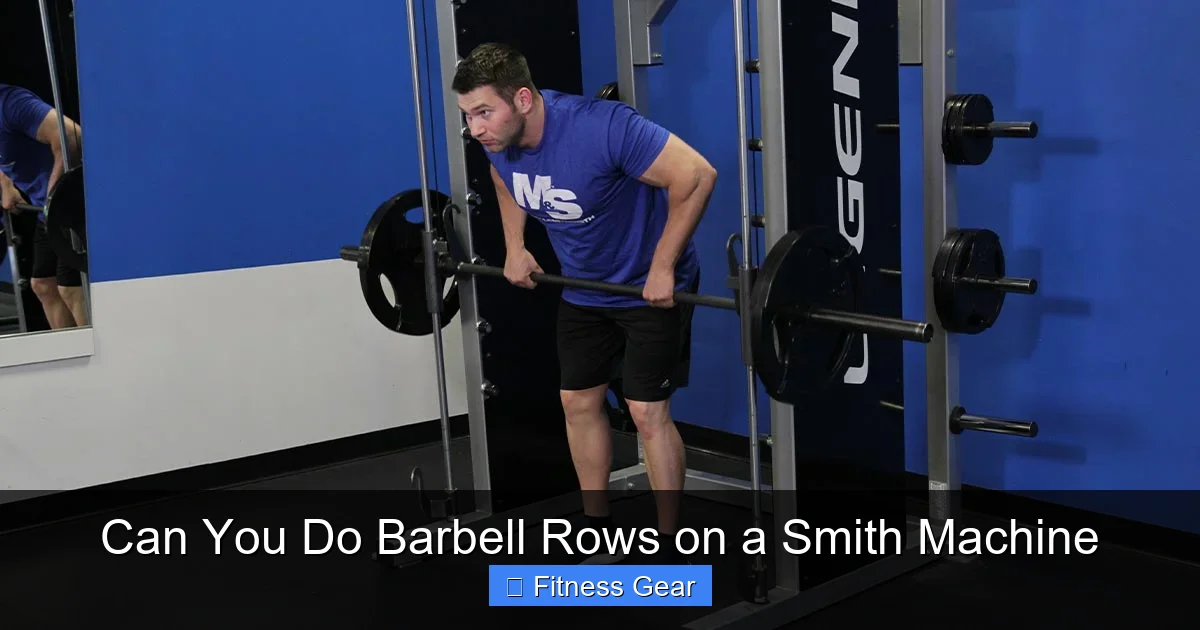
The first thing you’ll notice is that your feet need to be wider than in a free‑weight row. Place them shoulder‑width apart, toes slightly turned out. This stance gives you a stable base and lets your knees bend a little, which is essential for maintaining a neutral spine.
Visual guide about Can You Do Barbell Rows on a Smith Machine
Image source: cdn.muscleandstrength.com
Grip Width and Hand Position
Use a pronated (overhand) grip slightly wider than shoulder width. A wider grip reduces stress on the biceps and forces the lats to do more work. If you have wrist discomfort, a neutral grip (palms facing each other) can be used on some Smith machines that allow rotating handles.
Torso Angle and Hip Hinge
Because the bar moves straight up and down, you’ll want to lean forward more than you would with a free bar. Aim for a torso angle of about 45‑60 degrees from the floor. Keep your hips hinged, not rounded, and engage your core to protect the lower back.
Safety Catch Settings
Set the safety catches just above your chest level. This way, if you can’t finish a rep, the bar will lock safely without you having to drop it. Always double‑check that the catches are locked before loading weight.
Executing the Smith Machine Barbell Row
Step‑by‑Step Technique
- Load the bar: Add weight plates evenly on both sides. Use collars to prevent plates from sliding.
- Unrack the bar: Stand tall, grip the bar, and lift it off the safety catches. Keep your shoulders retracted.
- Set your stance: Step back a few inches, knees slightly bent, hips hinged, torso at 45‑60 degrees.
- Pull the bar: Drive your elbows toward the ceiling, pulling the bar to just below your ribcage. Keep the bar close to your body throughout the motion.
- Squeeze at the top: Pause for a second, focusing on contracting the lats.
- Lower the bar: Control the descent, letting the bar travel straight down along the Smith track until your arms are fully extended.
- Repeat: Perform the desired number of reps, then rack the bar safely.
Common Form Mistakes
- Rounding the back: This puts excessive stress on the spine. Keep the chest up and shoulders back.
- Using momentum: Swinging the torso to lift the bar defeats the purpose of the row.
- Elbows flaring out: Keep elbows close to the body to target the lats effectively.
- Bar too high or low: Pull to the lower rib cage; going too high turns the movement into a shrug.
Tips for Maximizing Muscle Activation
- Pause briefly at the top to enhance the mind‑muscle connection.
- Use a moderate tempo (2‑0‑2) – two seconds up, no pause, two seconds down.
- Incorporate a “double‑peak” set: after reaching failure, drop 10‑15 % of the weight and continue for a few more reps.
Pros and Cons of Smith Machine Barbell Rows
Advantages
- Safety: Built‑in catches reduce the risk of injury.
- Stability: The guided path lets you focus on the pulling motion without balancing the bar.
- Convenience: Often less crowded than free‑weight zones.
- Consistent range of motion: The bar follows the same path each rep, which can help track progress.
Drawbacks
- Reduced core engagement: The fixed path means your abs and lower back do less work.
- Limited natural movement: The bar’s straight line can feel unnatural for some lifters.
- Potential for joint stress: If you force a poor angle, shoulders and elbows may take extra strain.
- Less functional: Free‑weight rows mimic real‑world pulling patterns more closely.
Alternatives to Smith Machine Barbell Rows
Free‑Weight Barbell Rows
Traditional barbell rows let the bar travel in a natural arc, engaging the core and stabilizers. They’re ideal for advanced lifters who want maximal muscle recruitment.
Visual guide about Can You Do Barbell Rows on a Smith Machine
Image source: cdn.shopify.com
Dumbbell Rows
One‑arm dumbbell rows allow a greater range of motion and can correct asymmetries. They’re also easier on the lower back because you can adjust torso angle independently for each side.
Chest‑Supported Rows
Using an incline bench to support your chest removes lower‑back stress entirely. This variation isolates the lats and can be a good finisher after heavy Smith rows.
Cable Rows
Cable machines provide constant tension throughout the movement, which can be useful for hypertrophy. Adjust the pulley height to mimic the barbell row path.
Choosing the Right Exercise for Your Goal
- Strength & power: Free‑weight barbell rows.
- Hypertrophy: Combination of Smith rows, dumbbell rows, and cable rows.
- Rehab or beginner work: Smith machine rows or chest‑supported rows.
- Functional pulling: One‑arm dumbbell rows and TRX rows.
Programming Smith Machine Rows Into Your Routine
Sample Weekly Split
Below is a simple 4‑day split that incorporates Smith machine rows without overtraining the back.
- Day 1 – Upper Body Push: Bench press, overhead press, triceps work.
- Day 2 – Pull (Smith Focus): Smith machine rows 4×8, lat pulldowns 3×10, face pulls 3×12.
- Day 3 – Lower Body: Squats, deadlifts, lunges.
- Day 4 – Pull (Free‑Weight Focus): Barbell rows 4×6, dumbbell rows 3×10, hammer curls 3×12.
Periodization Tips
- Linear progression: Add 2.5–5 lb to the bar each week for the first 4–6 weeks.
- Deload week: Reduce weight by 40 % every 5th week to allow recovery.
- Switching angles: Alternate between a more horizontal torso (30°) and a steeper angle (60°) every 2–3 weeks to hit different fiber orientations.
Tracking Your Progress
Keep a simple log: date, weight, reps, tempo, and any notes on form. Over time you’ll see patterns—maybe you’re stronger at a 45° angle than at 60°, or you need a grip change.
Conclusion: Should You Do Barbell Rows on a Smith Machine?
Yes, you can do barbell rows on a Smith machine, and they can be a valuable tool in a well‑rounded program. The key is to respect the machine’s fixed path, adjust your torso angle, and maintain strict form. Use Smith rows as a safe, beginner‑friendly option or as a supplemental movement when the free‑weight area is crowded. Pair them with free‑weight rows, dumbbell rows, and cable work to ensure balanced development and avoid the pitfalls of reduced core activation.
Remember, the best exercise is the one you can perform consistently with good technique. Test the Smith machine row, listen to your body, and adjust the load and angle until it feels natural. Your back will thank you.
Frequently Asked Questions
Can I replace all my barbell rows with Smith machine rows?
It’s not advisable. While Smith rows are safe, they don’t engage the core as much as free‑weight rows. Mix both for balanced development.
Do Smith machine rows hurt the lower back?
If performed with a proper hip hinge and neutral spine, they are safe. Rounding the back or using excessive weight can cause strain.
What grip is best for Smith machine rows?
A pronated grip just wider than shoulder width is ideal for lats. A neutral grip can be used if you have wrist issues.
How many reps should I do for muscle growth?
Aim for 8‑12 reps with a moderate weight and a controlled tempo. Add a “double‑peak” set for extra hypertrophy.
Can beginners use the Smith machine for rows?
Yes. The safety catches and guided motion make it a great starting point for new lifters learning the pulling pattern.
Should I adjust the foot placement for different back muscles?
Wider stance emphasizes the lower lats, while a narrower stance targets the upper back more. Experiment to find what feels best.